Those Pesky DNA Surprises

In this age of inexpensive DNA testing and matching – it happens. In The Guardian’s advice column by Annalisa Barbieri, a woman notes and then asks LINK>”I just found out who my real father is. What do I do now?” To which the columnist offers some reasonable advice – “DNA tests can reveal some huge hidden secrets. Take time to process your own feelings before coming to terms with your new family tree.”

The woman writes – I’m happily married with adult children, and grandchildren. One of my children bought me a DNA testing kit and when I received the results I was taken aback to discover that the man I thought was my father was not actually my biological parent.

She further adds these details – My parents were married for some years before I arrived and I have no siblings. My mother was a loving, kind person and growing up I was surrounded by a loving maternal extended family. My father was a “difficult” character, emotionally abusive and distant. He never told me he loved me and I know he made my mother’s life hell at times.

Adding some more details, she continues – I’ve discovered that my biological father was a work colleague of my mother’s. At the time of my conception he was also married with a 10-year-old daughter. We lived in a rural community and I met him and his wife on many occasions. He seemed to be a kind, intelligent man. Both he and my mother died a few years ago.

My mind’s in turmoil; I have so many questions that I know can’t be answered. I’m frustrated that I will never know the truth of the situation. Did other people in the family know when I didn’t?

I’ve told my husband but I’ve decided to not tell my children – I don’t want to upset their memories of a loving grandmother but I don’t know if this is the correct thing to do.

The other issue is his daughter, my half-sister. I’m sad that I’ve never had the chance to have a sibling relationship with her and never will because I will not tell her of my discovery.

I would appreciate your thoughts.

Annalisa Barbieri begins her response compassionately – “What a shock for you. I hope you are taking time to absorb it because this is seismic news. And it’s becoming more common now that DNA testing is so readily available. Lots of secrets that were once thought buried are being exposed. It makes it even harder when the people involved are dead and you can’t ask questions.”

A family psychotherapist, Reenee Singh, acknowledged – “it’s so de-stabilizing to realize the reality you grew up with isn’t what you thought.”

Both the advice columnist and the family psychotherapist agreed – she really should tell her children. The rationale was “Your children are adults and there’s a natural ‘in’ there as your daughter bought you a DNA test. what you don’t want is your children or grandchildren discovering this one day when they may take a DNA test.”

It’s always a good idea to process your own initial feelings first. You may wish to avail yourself of therapy. When you tell your children, you want to be neutral and factual. After you tell your own children, leave it to them to tell your grandchildren.

It was not clear whether this woman already had contact with her half-sibling. So, it was suggested that after she’s told her own children, to post the results on the genealogy site that processed her DNA. The half-sibling might then find that result and make contact in the future.

They emphasized that coming to terms with an unexpected surprise is a process. The advice columnist notes that “there’s a lot for you to work through, not only a new father figure but a whole new family story.” The psychotherapist wondered if this news doesn’t provide a sense of relief, as the father the woman knew as such was a complicated relationship for her. Going forward, in order to resolve her feelings towards her deceased mother, she should try to understand the situation that her mother lived through. This revelation certainly doesn’t mean that she still doesn’t love her mother.

Cold Cruel Adoptive Mother

“For not an orphan in the wide world can be so deserted as the child who is an outcast from a living parent’s love.” ~ Charles Dickens

In the BBC 2008 Mini Series – Little Dorrit – Arthur Clennam’s “mother” never lets him see his beautiful biological mother, who dies of grief from being separated from her son. That is the “secret” revealed near the end of this excellent series. It is easy to note early on how cold, cruel and dismissive the woman that Arthur thinks of as “his mother” is towards him.

There is so much that could be said and I found tons of perspectives and essays about Dickens and orphans with a quick Google search. Charles Dickens’ oldest son, Charley, once wrote that “the children of his brain were much more real to him at times than we were.” He really wasn’t a sterling character in his own life. After 10 children and a series of post-partum depressions, his wife Catherine had grown fat, tired, and dull. He met a young actress named Ellen Ternan, a girl the same age as his daughter, Kate. It is said that they had a son who died in infancy. Dickens’s children may have disappointed him, but he almost always got what he wanted. When he died, Kate joined her siblings in summoning Ellen Ternan to his deathbed.

Dickens involvement with the imaginative and emotional implications of orphanhood and of the horror of abandonment is inscribed in Dickens’s fiction. All the forms that give shape to the self – status, work, citizenship, marriage, parenthood, property – are explored from the subjective vantage point of what may be termed the orphan imagination. Dickens was relentless in critiquing child labor, both in legal and criminal enterprises, and exposing the hypocrisy of a society that allows children to live on the streets. In a Dickens novel, orphans, women, and the mentally disabled repeatedly suffer.

In Dickens’ 11th novel, Little Dorrit, he tells the story of a little girl, Amy Dorrit, who is raised in a debtors’ prison, where she spends much of her life. Yet she develops into a capable and caring person. She works as a seamstress for a family whose son, Arthur, falls in love with her. With time, the Dorrits prosper and Arthur falls into debt. Later, it is revealed that Arthur’s “supposed” mother has been cheating him and the Dorrits.

High mortality rates made orphans commonplace during that time in England. Dickens tendency to obsessively include orphaned children throughout his literature. Little Dorrit is capable of standing up for herself and for what she believes is right and what is wrong. In the end Mrs. Clennam is forced to reveal that Arthur is not really her son and that she has been keeping money from him and the Dorrits for many years. Mrs Clennam’s unloving attitude drove her husband to infidelity, which resulted in a son, Arthur. Mrs. Clennam raised him as her own, without any motherly feeling. When Arthur’s birth mother died, his paternal grandfather bequeathed money to Amy, who was born in the Marshalsea the day Arthur’s birth mother died there.

Little Dorrit is a novel by Charles Dickens, originally published in serial form between 1855 and 1857. The novel satirizes some shortcomings of both government and society, including the institution of debtors’ prisons, where debtors were imprisoned, unable to work and yet incarcerated until they had repaid their debts. The prison in this case is the Marshalsea, where Dickens’s own father had been imprisoned. Imprisonment – both literal and figurative – is a major theme of the novel, with Clennam and the Meagles quarantined in Marseilles, Rigaud jailed for murder, Mrs Clennam confined to her house, the Dorrits imprisoned in the Marshalsea, and most of the characters trapped within the rigidly defined English social class structure of the time.

Here is a preview of the series we finished watching last night –

Sometimes Reunification Fails

Today, I read this from a foster parent – the foster children in our home are almost 3, 4.5, and 6.5. They’ve been with us almost 2 years, a decision to terminate parental rights was made yesterday. The Div of Children and Families (DCF) wants to tell the 6 year old alone, and the other two together at a different time. We’ve fought so hard for reunification and establishing other kin relationships, unfortunately with no success. There will still be contact with mom but DCF has refused an in-person goodbye visit.

In looking for an image to illustrate today’s blog, I found this WordPress LINK>Reunification is Meant to Fail by Yvonne Mason Sewell. She shares an article – A Critical Look at the Child Welfare System Reunification Plans by Kevin Norell, who is a foster care caseworker.

He explains what is required of parents who want their children returned home. They have to find a job and housing. Parents are ordered into therapy, parenting classes, perhaps drug rehabilitation, and they have to find time to visit with their children. “Even an organized parent might have trouble with all that. And many of these parents are anything but organized,” Norell says.

The intent behind court ordered reunification plans may be admirable, but the reality appears to be that many plans are designed for failure, according to the 1991-1992 San Diego Grand Jury: Testimony was received regarding the hours of time which must be spent in order to comply with these plans. Defense attorneys have testified that they have told clients that it is impossible for them to work and comply with reunification. Judges and referees were observed, seemingly without thought, ordering parents into programs which require more than 40 hours per week. Frequently, these parents have only public transportation. Obviously, there is no time to earn a living or otherwise live a life. A parent often becomes a slave to the reunification plan.

From what I have read, it is not uncommon for the Department of Health and Human Resources to change the plan goal. For example, one father, through sheer determination, managed to comply with the provisions of the performance agreement. But was HRS satisfied with the result? No, HRS filed a motion for change of goal, and requested that the father’s rights regarding the child be terminated because he had failed to benefit from services in a reasonable length of time. The lower court terminated the father’s parental rights. The determined father appealed to the District Court of Appeal who reversed the decision of the lower court, holding that HRS had not met its burden of proof. The case was remanded for further proceedings. By this time, the child had been in foster care for three years.

There is more at the link if you are sincerely interested but clearly parents are not being supported in what is arguably the most important issue in their lives.

Baby Name Mourning

I saw an interesting article this morning in The Huffington Post about LINK>Baby Name Mourning. It is not an unfamiliar issue with adoptees that the name their genetic biological parents wanted for them before they were born was rejected by the adoptive parents due to a preference for the name they wanted to give to their adopted child.

From the article – Deema Soufan, a psychotherapist who specializes in perinatal mental health, notes that “As we move through life, we discover meaning in experiences that have been important to us . . . Essentially what can end up happening is we can focus on this idea in our head of what we thought something would look like, what we thought something would represent. And if that idea is shattered or ruptures, a lot of grief can follow suit.”

Expectations and dreams, especially long-held ones, trend to bring up big feelings. The article notes that there are a variety of reasons why people can’t use a particular name that they love. Maybe they are unable to have a child or choose not to do so. The pregnant person may feel ‘silly’ for sharing that they are grieving that their journey to parenthood has become challenging. It can feel like a massive loss of control as well.

She notes a variety of reasons for sadness – “The grief of not listening to your internal guidance, the grief of not advocating for your needs and desires, the grief of people-pleasing, and the grief of ultimately not using the name you love can send parents into a spiral of deep, dark name regret.”

“The advice that I have for anyone who is coping with baby [name] mourning is to approach your stance with curiosity and without judgment,” Soufan said. “I implore you to dig deep and explore what is at the root of this distress for you. Normalize your grief and accept it! Two things can exist at once.” You can feel like you are “completely out of control, especially when one of the first parenting decisions that you get to make feels like it was taken away from you.” She recommended sitting with your thoughts and examining what is reality. “The more that we can develop compassion and curiosity for our feelings, the more that we can accept and move through them.” And this would be common among mothers who surrender their child to adoption.

“We imagine ourselves parenting and nurturing this little spirit, helping them navigate life’s inevitable twists and turns. When we rub up against the reality . . . it only feels right to grieve the loss of these people that we’ll never get to know in the flesh,“ Taylor Humphrey, the baby name consultant who coined the term: baby name mourning.

Let Her Lead

Not the teenage girl in today’s story.

From an adoptee (not myself) – I’m currently the foster parent of a teen girl. Recently she brought up the prospect of my husband and I adopting her.

Right now her biological mother is wanting to retain custody, but my foster is adamantly opposed to this.

Foster has been in the system for several years, and we are the first family she has done really well with. My husband and I definitely want to adopt her, if reunification can’t happen, but I’m concerned about the longer term fallout if we proceed.

We will not interfere with reunification at all, we also will not lie and say she wants to go back to her mother if she is telling us (and therapists) otherwise. After years in the system she just now found her voice to speak her mind and not feel guilty.

I’ve been in contact with the mother and send her regular pictures and updates, and even if we adopt her, I’ll continue to do so.

I guess I’m looking for some guidance? My own background: I was adopted through kinship at 16 after I was sold to a random family in another state. Thankfully, my grandparents found out and intervened.

One adoptee wisely noted – She cannot give fully informed consent to adoption until she’s an adult. She’s in trauma brain/survival mode. She likely wants the security of what she *thinks* adoption will bring, not actual adoption.

Another shared –  I was in similar shoes as a foster kid. My biological mom was horribly abusive and addicted. I was placed back and forth for 11 years. By the time they started seriously considering a Termination of Parental Rights, I was so ready to just be done with it and adopted. She was NOT going to get it together – we tried multiple times and failed and each time was traumatic for ME – and I always felt the system was more concerned about HER feelings than my own. I was happy and healthy where I was. I don’t know what the age is, but I feel there should be an age where the child’s say is considered pretty significantly considered for their own permanency plan.

Guaranteed Fertility

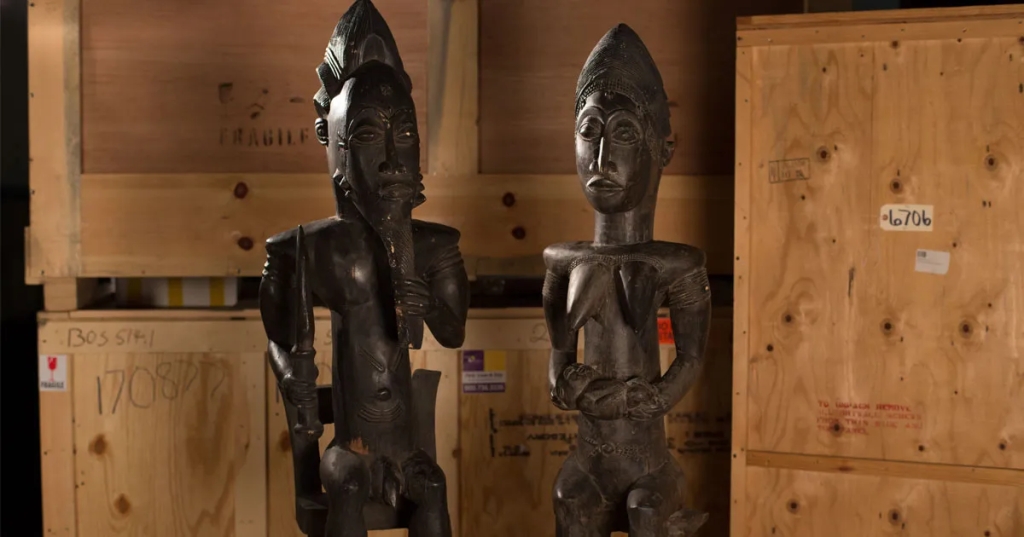
Fertility Statues at Ripley’s

The legendary fertility statues have been credited with helping thousands of happy couples conceive. They have been on display at Ripley’s in Ocean City MD, where guests are free to touch them without paying an admission fee.

The Fertility Statues were positioned in the lobby because admission is required for entrance to the Odditorium and other attractions. That has allowed those who wish to touch and receive the magic of the legendary works of art free access.

Ripley’s acquired the statues, which measure 5-feet-tall and weigh more than 70 lbs each, in 1993. The statues are made from ebony wood and were hand-carved by craftsman of the Baulé tribe of the West African nation of Cote D’Ivoire in the 1930s.

According to tribal legend, to ensure a couple’s fertility, the statues should be placed on both sides of the doorway leading into the bedroom. If a woman or her spouse touches either statue as they enter the room, they will soon get pregnant.

While Ripley’s cannot loan the statues to prospective parents for their bedrooms, the power of the statues is still strong. Thousands of women have written to Ripley’s claiming that after years of trying to conceive, one rub of the statues soon brought a bundle of joy.

More proof of effectiveness is here at LINK>Ripley Entertainment. It did say that “The statues are only in Ocean City for a limited time! Please contact the location before making your visit by calling 410-289-5600.” So, I can’t guarantee they are still there, you will have to call them.

Not A Fun Experience

Okay, just a moment of humor before diving in –

(From someone else, not your blogger) – Recently a young woman who confides in me and looks up to me came to me and told me she thinks pregnancy is disgusting and wants to only pursue surrogacy and adoption when she gets married. Mind you she’s young and nowhere close to getting married. She thinks being pregnant and giving birth is repulsive — zero trauma, just grossed out.

Our religion has similar views of adoption and surrogacy, basically it’s a no go from that angle. I also gently let her know that as a mother myself, I think if you are absolutely disgusted by pregnancy, you will not survive being a parent. My pregnancy was no picnic but it did not compare still to one day of being a mom. I said it was unfair to offload her disgust and apprehensions into someone else and just buy the baby in the end.

She lashed out and said I’m saying that women who can’t or don’t want to get pregnant don’t deserve to be mothers. I said there’s a huge difference between can’t get pregnant and absolutely don’t want to. And that regardless, adoption and surrogacy are unethical “solutions” to not wanting to or not being able to birth a baby.

She is still blowing up my phone angry as hell. Am I wrong for these statements?

(Offensive adoptee perspective incoming) – I’ll say it: it’s not that women who can’t or refuse to get pregnant, don’t *deserve* to be mothers, it’s that women who can’t or refuse to get pregnant *aren’t* mothers. No matter how they acquire it, these young role players can be wonderful guardians! And caretakers! And make huge positive impacts on a child’s life! But they’ll never be that child’s mother. Sorry not sorry.

Denigrating An Important Woman

This term “birth giver” was a new one to me. I feel squeamish just seeing this. I have seen some adoptees call their biological father their sperm donor, that troubles me too. Separating families cause a lot of issues for the children thus impacted.

Language matters. There has been a lot written about the term – birth mother. Some prefer first mother or natural mother. There may be others that have been suggested. It is often said that the woman who carries and gives birth to a child is that child’s mother – period. I will often be more precise in identifying those in my own familial situation as biological, genetic parents or adoptive grandparents including adoptive relatives, due to both of my parents having been adopted as babies.

When I was growing up, it was considered somewhat disrespectful to call your mother your “old lady” (even if she was – old). Same was sometimes said of a father – my old man. The meaning of certain words does change with time and cultural impacts. Sometimes, the meaning of phrases becomes convoluted. That certainly happened during my youth. As words appear and disappear, it can be difficult to establish definitive explanations. Vocabulary speaks of values, customs and ideals but the words are constantly changing and it can be difficult to keep up with what is intended by a word.

It is true that a newborn certainly has no connection to whatever name their biological parent wrote down (if they even had a chance before adoptive parents swooped in to take the baby). A name is not truly part of one’s heritage, though it can be indicative, or more accurately their DNA. Many adoptees DO care about whatever their genetic, biological parent wanted to name them. Often, that is not something that they may ever discover because the adoptive parents almost always change the name of the child they are adopting.

A Safe Place To Grow

Kristi, Ekko and Heidi

This is the second story that I’ve become aware of where a grandmother gestated her own grandchild for her daughter. In general, I am against surrogacy because I believe that mother child separations cause harm to the young infant. However, in the case of a grandmother who intends to remain involved in her grandchild’s life, doing this for her daughter who has dealt with the challenges of infertility and miscarriage – it is an entirely different situation that makes such a surrogacy acceptable.

My grandson was born before my oldest son. My sense of genetic biological connection to him was unmistakable. No, I wasn’t a surrogate for his gestation. However, a mother and daughter are so much alike in many cases that such a situation is not damaging to the child who is gestated in that manner. At least, this is my own perspective on it. My own sons are conceived – both – with the help of the same egg donor and as my OB impressed upon me during their gestation, it does make a difference that they grew in my womb. They also both nursed at my breast for about one year. And I’ve been present as the only “mom” they have known 24/7 for their entire lives (one is almost 20 and the other one is 23). Their love towards me and appreciation for me seems authentic so far and it is my hope that will always be the case with them and their affections.

The Guardian’s story LINK>”I gave birth to my granddaughter” published on June 21 2024 and written by the gestational grandmother, Kristi Schmidt, is the newest such story to come to my own attention. I was already 50 years old when I gave birth to my youngest son. Kristi was 52 when she agreed to gestate her daughter Heidi’s baby. The daughter had been pregnant with twins after 4 years of attempts to conceive through fertility treatments. However, at 10 weeks Heidi lost one of the babies, and at 24 weeks she lost the other twin. Watching Heidi’s grief was awful for Kristi. 

“Please let me speak to your doctor about being your surrogate,” Kristi said to Heidi. “What safer place for your baby than their grandmother’s womb?” When asked as the pregnancy became more obvious – she’d say – “I had nothing to do with conceiving this child, I’m just a safe place for it to grow.” Having her granddaughter in her arms was amazing – but she felt like a proud grandmother, not a mom. Two years later, when her granddaughter calls her Gigi and runs into her arms, it’s always the same happy experience.

If this happy story appeals to you, you can read it entirely at The Guardian link above.

A Common Modern Choice

A woman writes in my all things adoption group today – What can I say that would be a very pithy reply to the inevitable questions regarding my present and possibly future lack of biological children?

Technically, it is possible, though not probable, for me to conceive, but as of yet I have not, and I have worked through the emotional issues enough that I am now okay with being barren for the rest of my life.

It seems like freakin’ everyone who meets me and finds out that I don’t have kids after 14 years of marriage wants to know if I have considered adoption. Yes, I have considered it, and thanks primarily to this group, I don’t think it’s something that I can ethically proceed with now that I know about the trauma and negative effects.

I would like to have a short response (rather than a long, passionate speech) which assures the person that I have indeed considered the options, and have concluded that adoption is not for me (even though I’d love to convince them it’s not for everyone).

It’d be ideal if we could weave into the answer that we believe that we should seek to have as many children that God want us to, which at present is zero. Something that points out the impropriety of the very personal questions and shuts down further discussion due to the person’s embarrassment in asking would be great.

One suggestion – I would almost be inclined to say if God wanted us to have kids, he would have given us some, not by taking them from someone else. Or I don’t think that’s part of God’s plan for us and we are ok with that. Nor none of your flipping business.

An adoptee suggested – “God has other plans for me.” Or “I am not called to raise anyone else’s children as my own.”

An adoptive parent shares – you don’t owe anyone an explanation. Simply say “That’s too personal, I only discuss these things with my spouse” and leave it there. I went through this because my husband and I were the “type to want children” and I was infertile/chronically miscarrying. Now it’s never ending questions about my children and their stories/our process. So I say that’s our story alone and we prefer to keep it that way. Another adoptive parents notes – “That is not a kind or appropriate question to ask.” She said – I use this for the thousands of things people ask me as an adoptive parent.

This from a therapist, who was formerly a hopeful adoptive parent – “I don’t believe God wants me to buy children.”

Another adoptee suggested – “That’s an incredibly personal question. Did you mean to say that out loud?” And if the topic of adoption comes up, I’d make a comment about how children from families in crisis shouldn’t be used to build the families of others. They’re not there for our benefit. Or as another said more bluntly –  “No thank you, I’m not interested in purchasing someone else’s child to perform a role they were not meant for.”

Blogger’s comment – The consensus seems to be trending towards presenting the fairy tale adoption narrative more honestly now. Just saying No to adoption generally.