Does anyone remember ?

Someone asked – Does anyone remember the day they were abandoned ?

Even if your parent/s came back eventually or if you were adopted into a nice family.. does anyone remember the day their parents willingly left them (like in terms that they either just didn’t want you anymore or left without a fight) ? Does it bother anyone else ? My “anniversary date” is coming up again (next week) and it always throws me off for a few days.. it’s been 9 years but I don’t know, it still feels like a reverse birthday or something..

I’ve never heard anyone talk about it, so I don’t know if its just me…

If there is anyone in the same boat, how do you guys get over it/push through it.. I have an exam for university right before and right after my “dates” and I can’t have it bother me but I already feel it coming..

Please, I can’t handle nasty messages right now…

This came in response – July especially, the first 2 weeks, is hard for me. I suggest reading “The Body Keeps Score” by Bessel van der Kolk – once you are past the trauma-versary. In the meantime, lots of self care and only do what has to be done (like your test). Other things can wait. Then she shares, “I was 12, when I was placed. Had to talk to a detective (due to sexual abuse), and then, go to the doctor’ office s a few hours later. I remember being angry at my biological mom for making me go. I wouldn’t let her (I’m not sure the doctors would have let her anyways) go into the doctor’s office with me. When she found out I was pregnant (I already knew but didn’t say anything), the detectives told her I was going into foster care. They asked if she wanted to come back and see me, before I was placed, and she chose to just leave without a word.”

National Adoption Awareness Month

I’ve been pretty much “out of it” this month as regards my blog here. My apologies. With the month almost over, I’m just now learning that it has been National Adoption Awareness Month. What I might wish for people to have an awareness of – is that there is always an aspect of trauma associated with adoption. My suggestion would be to listen more to adoptee voices and less to the rainbows and unicorns narratives of the FOR PROFIT adoption industry.

One adoptee suggested a topic – what is something you should NOT do / say to an adoptee ? One example was – you should never use the way an adoptee was conceived (in this case, a one night stand) against them. It was further pointed out what should be obvious – “we didn’t ask to be here.”

Another – Never say “she loved you so much that she gave you up.“

Or this – “We *chose* you”. I don’t even know what this means, other than *she* did not…? Or that other parents were stuck with their kids ? Like they don’t have a choice…? Or that they looked at others and picked me…?  It’s insincere… and untrue. It alludes to picking the ripest fruit or something… we were in the market for a kid and we chose you. As I got older, it felt much more cringe when they said it. (Especially given their treatment of us.)

“Have you ever thought about finding your birth parents?” Immediately followed up with “What do you mean you (want to/don’t want to) find your birth family?” From another – Never tell your adopted child to “go find your real parents”. 

Never tell adoptees that they are “lucky” for being adopted. It certainly doesn’t feel lucky to be sold to the highest bidder. Or, you were chosen. To which this adoptee said – No, I was stolen and used for a lonely woman to project her own twisted maternal fantasies onto. To which one noted – “oh, you must feel so lucky that you got picked to be apart of such an amazing family !”

From yet another – I get sick of people saying that this was designed by God for us to be put in our adoptive families because that means that God made a mistake by putting us in the wrong womb. As a transracial adoptee, it was always who are your real parents ? Why do you not look like your parents ? Also, how much did I cost ?  It’s also a hard question to process for us to know that we cost people money and in turn feel that we have to live up to that cost in someway. 

An interesting story then got shared due to that cost question – I don’t know if this is “better” or “worse” but I know my adoption was very inexpensive, just a couple hundred dollars in court costs back in the 80’s. I remember telling a ‘friend’ of mine what the amount was in high school (don’t ask why, I don’t remember) and he figured out how many bottles of Fruitopia I was “worth”. It’s probably the only time I personally felt shame about being adopted and the only time I felt like a “commodity”. I was/am fortunate to have a good relationship with my AP’s, but that memory will always hurt….

One notes – Using my adoption as a talking point about your pro-life stance. That’s a MAJOR pet peeve of mine. Assuming how I feel about either set of parents…. ugh. I hate the use of the term *real parents*. Assuming my race is annoying.

One responded to that with this – In response to the “pro life prop” – it’s not like we had any say or choice or memory about coming into existence ! At nearly 40 years old, I’m just recently (as in the past couple of months) understanding that some of the feelings I’ve held for decades are actually trauma responses. Seeing other people that are scarred similarly has been triggering and painful, but it’s also really helped validate some of these emotions and is helping me realize I’m not alone. 

Another adoptee shares – You had a better life. You should be grateful. At least your biological mom didn’t abort you. You look just like your parents (the adoptive ones). Happy “gotcha day”! She goes on – Not recognizing the loss of an adoptee’s biological family and anyone making ANY comment about them to an adoptee in a negative light. Other people telling MY story. It’s not your story STFU. My adopted parents commenting about how my life “wasn’t that bad” when I talk about how traumatic my life has been. Minimizing our loss or our trauma. Any comment that includes “I know someone who’s adopted” or your cousins adopted etc etc. If you don’t know anything about the subject matter, just move along. I literally could keep going.

A birth mother says – It’s not adoption APPRECIATION month.. it’s national adoption awareness month. Big difference. We don’t want to appreciate it, as it sucks. Nor do we wish others to grow in this appreciation, as that’s the false narrative. We want them to be aware of the realities.

Some adoptees are trying to take this month back, as national adoptee awareness month. Since adoptees are the most affected by adoption, their voices should be the ones heard.

Previous Experience

Today’s story – An adoptive parent previously adopted 2 siblings. A year later, their biological mom gave birth. So this adoptive parent took placement of the new baby and baby has been with them for over two years. It’s looking like a reunification with the child’s mother will take place in 4 months. The adoptive parent is worried about any continuing contact after reunification and thinks it’d be too hard for the adopted children to see their sibling but not be living with them. The adopted kids are in therapy but they struggle with so much already.

So this person had questions – Would a clean break be better for the adoptees ? One of them worries about the “bad” life the sibling would have after reunification because they didn’t have a good life with their biological parent. They are worried that their parent didn’t really change and don’t want to see their sibling hurt. What would you want in this situation, if you were the adopted kids ?

In response, there was this heart wrenching plea – Please allow them to keep in contact. My youngest brother was adopted, we barely got to see each other growing up. He killed himself and we can never get those years back. He may still be alive today, if my 2 other siblings and myself were able to remain actively in his life to give him a support network beyond his adoptive parent.

From another adoptee – There’s no such thing as a clean cut/clean break. From someone who’s natural mom was told it was the best thing for me, it absolutely was not. While I don’t have known natural siblings, I would assume the same is true for siblings. Keep. All. Family. Ties. ALL OF THEM. The ONLY acceptable reason for a foster parent or adoptive parent to EVER cut ties is that the child of the natural parent is unsafe, if there was contact – and even then, it’s almost never going to mean completely cutting them off. There is the possibility of limited or supervised visits between them.

From an adoptee’s personal experience – I have siblings that were adopted by other homes and my sister got to go back to live with our mom eventually. We were unable to keep in contact before I was 19 because I wasn’t allowed. I’d give anything to have those years with my sister back. I think having my sister accessible would have been better for me, even if we couldn’t live with each other. Someone who looked like me. Had the same memories. Loved the same people. Had the same family. I think it would have been beneficial.

No Wonder

I’m 30 and I just found out I was adopted.

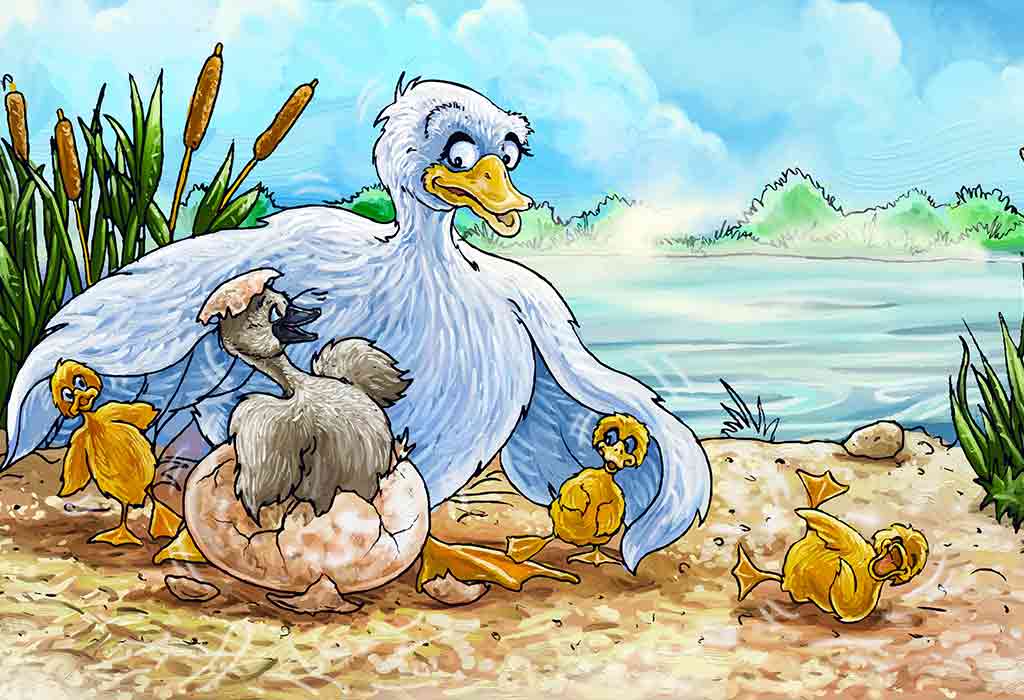
I was raised in a family always making comparisons… everyone’s like “ah you’re just like your *insert relative*” in looks, behaviors, etc… However, since everyone tried to hide the fact that I was adopted, no one EVER compared me to anyone. Unfortunately, my mom always said I looked like a spitting image of my dad… I always have felt like the ugly duck. Always really sad as a child that I didn’t have anyone to look up to, who I shared silly facial expressions, mannerisms, or physical features with, etc. My baby cousins were always called beautiful with their eye color matching the coveted eyes of my mother.. my other cousins were all petite, while I stood out like a sore thumb, SUPER tall… growing up my cousin (like a sis) was never been able to share clothing with me or beauty hacks because I’m so different from the rest. I feel like I’ve always been an outcast and so, I’ve been unable to bond in any of the ways, I should’ve…

Awful, that it’s always meant so much to me, looking at photographs of family and their history/culture was so big to me, and now, learning all my background has nothing to do with me at all!? My adoptive mom died 15 years ago and my adoptive dad disappeared when I was 1.

Babies ?

With the state of the world, it is understandable that many young people are NOT planning to have children. My oldest son has said that with conviction and he has proven over the years that he does know his own trajectory in life.

I do understand the enormous responsibility of bringing children into this world. I also do have 2 grandchildren. My thoughts today were triggered seeing an article in the current issue of Time by Jamie Ducharme titled “Baby Talk”. Reddit has a group titled “fence sitters” – people who aren’t sure whether they want to have children. It is a group of over 70,000 members.

In a footnote of a draft opinion on abortion access, Supreme Court Justice Samuel Alito quoted from a 2008 government report on the demand for adoption in the U.S., which used the phrase, “domestic supply of infants.” Posts on social media critical of the opinion have misleadingly suggested that Alito himself came up with the phrase. The 2008 Report from the Centers for Disease Control and Prevention said “… nearly 1 million women were seeking to adopt children in 2002 (i.e., they were in demand for a child), whereas the domestic supply of infants relinquished at birth or within the first month of life and available to be adopted had become virtually nonexistent.”

According to the Time article – “About a third of US adults under 35 who don’t already have kids say they don’t know whether they want them, and only 21% people in that age group say having kids is very important for living a fulfilling life, according to 2024 statistics from Pew Research Center. A stunning half of US adults under 50 who don’t already have kids think they’ll stay child-free forever. Most say they simply don’t want kids. But financial strain and concern about the state of the world and the environment are also common reasons, according to other Pew data. People are feeling so much angst about when, how and whether to procreate that new psychological concepts have emerged to help make sense of how people make these decisions.”

When one throws into the mix Republican panic about demographic changes, it explains a lot about their perspectives. From an article at the Case Western Reserve website by Girma Parris PhD titled LINK>The Republican Party and Demographic Change

Since before the turn of the millennium, many commentators have argued that long-term demographic change, especially the shrinking proportion of “white” voters, would create a Democratic majority in U.S. politics. This analysis explicitly referred back to Kevin Phillips’ 1969 The Emerging Republican Majority, which argued that the Democratic embrace of civil rights would move white southerners and some of the northern white working class, and so the balance of power, into the Republican column. The Republican choice to become (or allow themselves to be seen as) mainly a “white” party was in spite of arguments among some Republican campaign professionals, especially after the 2012 election, that the party needed to increase its appeal to growing demographic groups. In spite of such appeals, the nomination, election, and subsequent domination of the party by President Donald Trump appear to have doubled down on making the Republicans a party dominated by white voters – and the Democrats something different.

From a reforming adoption perspective, maybe it is all good news. Banning abortion may NOT be enough to reverse that trend nor will it result in an increase in the domestic supply of infants relinquished at birth or within the first month of life. Young people don’t want to have to make that choice. And adoptee voices are loud and clear about the damage that being given up can cause for the rest of that child’s life.

Do Better

From an adoptee – the number of adoptive parents I encounter in the wild, who had no idea they needed to do real work on themselves before adopting, is insanity. You took someone else’s child and you thought you were just a perfect person I guess??? I’ve been working on myself since I knew that was a thing – for my biological children. You should want way better for your adoptive children. Do better.

Hard Things

It has taken me longer than I expected but I’m still trying to get myself back on track with what I want to do going forward. This post (not my own story) inspired me to do something in that direction today.

I am the parent of a preschooler adopted from foster care who has been with our family since birth. We are in contact with some biological family members. There are some really painful things in kiddo’s history and birth family, including for example NAS (Neonatal Abstinence Syndrome – withdrawal secondary to intrauterine drug exposure) and FASD (Fetal Alcohol Spectrum Disorder – exposed to alcohol before birth) diagnoses and a birth parent incarcerated for what I would consider one of the worst crimes to commit. I have taken on board the wisdom of making sure kiddo has all the information I have about birth family by pre-teen / early teen years. No way should their first encounter with these hard things be through a search engine. I can imagine some ways I might verbalize these hard things. But I would really appreciate example scripts, models, and personal stories. How have others introduced hard pieces of kids’ stories? How have you worded these things? How did you age- appropriately build in all the pieces? What kinds of questions have your kids asked in response, and how did you answer them? Getting input from others would be useful.

First response – Age appropriate language and honesty is the only way. No opinions, no hearsay, only what you know to be true and can verify through records. The earlier they can begin to process the hard stuff at an appropriate level, the better the long-term outcomes for their mental health.

Second response – Be sure to frame it as choice, illness, circumstances, etc (whichever it may be) vs the person themselves being “bad”. This can help your child understand that they themselves are not inherently “bad” just because a family member lost rights, was incarcerated, etc.

From personal experience – My incredibly humble two cents….because of some “garbage” as I term it that has happened to me, I have been forced to learn a lot about trauma and the impact of intergenerational trauma and mental health. I would suggest that any family background you can learn *might* be useful for giving your child a full story.

From another parent – I’m in this boat too. Very similar story and a lot of medical implications for my son consequently. I’m trying to explain adoption and all the history in an age appropriate way to a child who also has impairment. It is HARD. He can’t ask questions in a normal way so you never know how much to tell without flooding him but still wanting to build a foundation of honesty.

This suggestion – Look into creating a Life Book for them as a tool for discussion. Maybe you can work on it together? It will help you put things in context and use it as talking points. Be sure to remove all aspects of judgment about a situation or action, use simple plain language terms. Something else to think about it “truth” as we know it today changes over time. New revelations may come out over the years that alter what you think you know now. (It happened with one of my kiddos.) Listening to adult adoptees talking about how they were told their stories made me realize how important it is to frame information as “we were told this…” and not to make a statement that implied we KNEW the whole truth about something. It can be a bit tricky.

Unfortunate experiences along the way – What occurred with my kids, re: the life and death of their one parent and the crime their stepparent committed was horrible. Students in my 7, 8, and 12 year old classes bullied my kids because their parents found information about my kids parents on the web. Some kids told my 7 year old, that their parent who died was in hell, because all drug dealers belong in hell. My 12 year old never had friends, because parents didn’t want their kids around a kid whose parent’s crime was so horrific. I have talked with compassion to my kids, about the parent who died. I’ve talked in small pieces about other people who have committed the crime of the other parent. I have not been specific to anything that is not information found on the web. I’m letting their therapist address this, but the kids are now 12 and 13 and have told me I need to be honest with them, so I do answer specific questions they ask me. I let them be in control of what they want to know. I wish I had words of wisdom to share, but I don’t. Your family is in my thoughts.

Forgiveness With Boundaries

I have read so many stories about adoptees that were abused in some way (whether physical, mental or emotional) by their adoptive mothers. I know my own mother’s experience with her adoptive mother growing up and into adulthood was not easy. I had my own difficult experience with that woman as well. But she could also be very thoughtful and generous as well. People are simply complicated.

So, your struggles as adoptees are not my own life’s experience and I have no ready answers. I was reading a story this morning about one man’s struggle to forgive the abuse he suffered from his father and I liked the concept that is the title of this blog today.

Things have been intense and then upsetting. I have neglected this blog. I do intend to begin posting here again, if not tomorrow, hopefully by next week – after I process through some more of my own disappointment that the future (for the foreseeable next few years) is not what I had hoped. Take good care of yourselves. Temper your willingness to attempt to understand those who have hurt you as a kind of forgiveness that has good boundaries to protect you from future pain, whatever your own particular boundaries are.

Celebrating A Life

Teri Garr with adopted daughter, Molly O’Neill

Teri Garr passed away on Tuesday, Oct. 29th. The singer died after a battle with multiple sclerosis. Teri had one child, her adopted daughter, Molly O’Neill. The actor adopted her daughter on Nov. 11, 1993, during her marriage to contractor John O’Neill. His marriage to Teri Garr took place on the same day their daughter Molly was born. Teri and John were married for three years and divorced in 1996. They split custody of Molly. John credited their then-8-year-old daughter for being a light for her mom while she was facing her diagnoses.

“If ever Teri feels down, Molly is there to lift her spirits,” John told an interviewer. “Molly is the most wonderful child in the world.” John added that Teri was fully present in their daughter’s life and, despite her own challenges, ensured her daughter felt loved and seen by both parents. “Molly is gold — she means the world to us. We are the luckiest two people in the world to have this child. The only thing that is important is raising our daughter.”

Like her mother, Molly is private and has no public social media. However, she attended several multiple sclerosis benefits with her mom as a child in the early 2000s. According to Variety, Molly has a son named Tyryn, who is also mourning the loss of his grandmother.

After The Emotional Storm

A kinship adoptive parent shares – I looking for help on how to support a 7 year old. In his dark moments, he struggles with feeling loved no matter what we do. Most of the time he feels loved but those dark moments are coming more and more. I assume it’s because of age, awareness and higher demands at school. He is in trauma therapy and we are trauma knowledgeable due to family history. We just started meds and they are helping but we all know that while meds can help, they are only a bandaid/short term fix to the storm in his head. My heartaches that he is in so much pain. I want to hold him forever and assure him he is loved, (and that’s what he has me do when he comes out of these dark moments). I know every individual is different. Each of my older kids have needed different kinds of supports through their storms. I’m just trying to get a handle of what supports this needs.

One adoptee shares – I’m 53 and still struggle with not feeling loved. It’s not that my current family doesn’t do enough, it’s the rejection of my natural and adoptive family that makes me feel that way. Its just part of who I am as an adoptee. I just wanted to pass on what my son’s psychiatrist told us. Meds should “fix” about 80% of his depression/issues. If it doesn’t, then he’s on the wrong meds. And until he reaches certain developmental milestones, he won’t be able to understand and process some things – so meds are the only thing that will help.