Competition and/or Comparison

It is inevitable for an adoptee to feel some tension or conflict regarding their reunion with biological family and a perceived threat by adoptive family to the relationship they have long possessed with that adoptee. These are difficult waters to navigate.

Some good advice I read today suggested –

Try to disentangle yourself and the decisions you make from any/all of your parents. You have every right to have a relationship with anyone – if you are blood-related to them or not. You also have the right to step away from any relationship. I encourage you to go for it. Enjoy getting to know your father and sisters. This will not take away from your relationship with your adoptive parents or your mother.

Think of it this way: When you married, did your adoptive parents throw a fit? Were they shocked that you were (possibly) changing your surname? Did they demand that you not have a relationship with your husband’s parents? If you have children, did they declare that only THEY were the grandparents, the *real* grandparents, and these others were imposters? The same could be said about birth parents. That they are not “real.” Where everything is a competition and/or comparison. Thing is, you don’t have to play. All four of these people are your parents one way or another. That was the hand you were dealt. You deserve to develop a relationship with any person you choose, including DNA relatives. The feelings may ebb and flow with time and circumstances and that’s okay, too.

The person this was suggested to answered – it’s funny cuz my adoptive mom was upset when I changed my maiden name and she is jealous of the relationship I have with my mother-in-law too! But she’s better at hiding it these days. There just isn’t pleasing her and there never has been. I have decided not to tell her or my adoptive dad, at least not for a long time until I’ve sorted through all this myself.

What started this is – she has found her biological dad. He didn’t have a clue she existed. So far he has been nothing but kind and welcoming. She has also discovered that she has two baby half-sisters. She is nervous because when she was 18, she was finally allowed information about her adoption. Only her birth mother’s name was available, and she quickly found her on Facebook. She adoptive mother expressed feelings of betrayal. She felt the adoptee was replacing her. Eventually, she did allow the adoptee to have her biological mother attend her wedding. Then, her biological mom basically ghosted her and now she very rarely hears from her after years of what she thought was a great friendship. Her biological aunt, with whom she is close, tells her this is just normal behavior for her biological mom – she cuts people off and prefers to be alone. Ok, fine. After years of counselling and medication, the woman has gotten over this (for the most part). She is simply terrified it’s going to happen all over again with her biological dad. 

Not Giving Her Up

Isabel and Lucy

In The Light Between Oceans, eventually truth and one’s conscience force a fierce mother to give up the child which isn’t actually hers. This sometimes happens in adoptions when the biological genetic parent decides they are not going to surrender their child to others to raise.

The story is a study in consequences. Every action begets a reaction. Every decision has its consequences, some unintended, but which have the capacity to cause the loss of happiness for the people involved. A lighthouse keeper and his wife discover a baby in a small boat alongside the child’s dead father. Isabel, his wife, has suffered through two miscarriages. The baby is like a gift from the sea and what the woman needs to heal the grief of her infertility. So, of course when the baby girl washes ashore in a small boat, Isabel adopts the infant as her own. Though truth be told, even though he loves his wife dearly, the husband has misgivings from the beginning, which will eventually force him to do the right thing by the woman who’s child the little girl actually is.

The movie is all about love, and the various forms of love; that between a husband and his wife, and that of a mother for her child (whether or not biological). The lighthouse keeper knows that he is required by law to report the discovery of the dead man and baby. However, his wife fears that the baby will be sent to an orphanage. She persuades her husband to pass the baby off as their own daughter, and though reluctant, he agrees out of the love he has for her and concern for the pain she suffers. He buries the baby’s father on the island and the couple names the infant girl Lucy.

When the man sees a woman kneeling in front of a grave bearing the names of her husband and infant daughter who were lost at sea, the date on the memorial stone matches the date that they found the baby girl. This causes him to realize that Lucy is likely the woman’s biological daughter. He writes anonymously to that woman to tell her that her husband is dead but that her infant daughter is safe, loved and well cared for.

This woman’s husband was German and she had married him shortly after the end of World War I. That marriage had therefore been controversial in their local community. When her husband is accosted in the street by a drunken crowd, he then jumped into a rowboat and fled with his baby daughter. In the boat with the baby was a unique silver rattle. Tormented by his conscience, he sends the child’s mother the rattle anonymously as proof that the baby actually is her lost child. Ultimately, this action leads to the lighthouse keeper’s arrest. His wife, Isabel, is angry that he is willing to give Lucy away after she has lived with them for several years.

After the little girl is returned to her biological family, she  runs away in an effort to return to the lighthouse and her “real parents.” She is found and taken back to her biological mother. The child’s original name was Grace and after she has begun to finally bond with her biological mother and maternal grandfather, they agree to call her “Lucy Grace” as a compromise with the little girl’s demands. At the end, though Isabel has passed away, the now 27-year-old woman finds the lighthouse keeper who had maintained the “no contact” ruling handed down for 18 years. Before her death, Isabel had written a letter to Lucy, in case she ever sought contact with the couple on her own. After reading it, the emotional young woman thanks the only father she knew for the first four years of her life, for rescuing and raising her on the lighthouse island.

The story reminded me of my cousin. She spent several years being raised by her (our) grandmother. It was traumatic for her to be wrest away by her biological mother’s return. She resented her aunt who was able to remain with the grandmother, when she was forced to leave someone she dearly loved.

Most of the time, when biological parents demand the return of a baby they had previously given up for adoption, the child has not had several years to bond with someone else. When that does happen, it can be very difficult for a child to give up the “fantasy” of the only parents that child has ever known. This happens rarely but on occasion, especially in the case of a father who did not originally consent to the adoption but is later given custody by a court of law.

The movie trailer –

I Just Want To Know Why

The story of LINK>Penelope Cumler from the Right To Know website.

She was the youngest of 6 children – her father an ordained minister and her mother a housewife, then a teacher, then a nurse. Her parents “fought a lot. There was little affection, considerable distrust, and a general sense of chaos and hopelessness. Resentments and anger always seemed to simmer close by. Financial hardships that didn’t make sense for educated, middle class parents, and the shame of this that must be hidden.”

At 32, she begged her father to tell her why he didn’t like her—had never liked her. He became angry. He denied that he treated her differently, and told her to grow up, adding “What’s wrong with you, anyway?” And then, her father dropped dead of a heart attack, and then she was blamed for “causing trouble”. She just wanted to know why the whole family shunned her.  It never seemed to be about her, about who she was, or her behavior. It was just her existence. Her presence. 

Ten years later, she remembered visiting a cabin by the sea and playing with a little boy who was 3 years younger than she was. She asked her mother, “who that man was that we visited at his cabin by the sea. Why did we visit him?” The first time, she said he was just a family friend. “But…”, she began to say. And then something entirely unthought came out of her mouth before she could even consider it. “Was he my father?” Without meeting her gaze, her mother answered, “Why would you think that? That is crazy. You’re crazy.”

Several years later, she was in her fifties by now and her mother was in her 80s. She tried asking again but this time her mother surprised her by how strong her reaction was – “You’re abusing me! Stop abusing me!” Before leaving her after that visit, she couldn’t even look at her mother, couldn’t give her a hug goodbye. Then her mother died.

Then, she shares how she finally got her answer – Four years later, working in the garden on an autumn day, the name of the son of the man in the cabin by the sea, with whom I had played as a little girl, fell into my head like the whisper of a ghost in my ear. Within minutes I found him on social media. Within hours he responded. Within ten sentences sent back and forth he asked, “Can I be honest with you?” and then, “You are my half-sister.”

All she had ever wanted was the truth, a truth she had the right to know, a truth consciously and aggressively denied her. She notes – The universe seems to be tapping more frequently and insistently lately, “Tell your story, tell the truth, get it out there…and let it go.” She admits – “I feel surprisingly unaffected by the shame my parents must have felt. I attribute this to the sense that I never felt cared for and didn’t trust them and, because they showed me no mercy, I have no sympathy for how their reputations may suffer.” She believes that finally knowing the truth has in many ways saved her life.

Unexpected Breakdown

The challenges of trying to help in an impossible situation from today’s story.

I signed up to foster teens and older kids. Had an emergency placement as my 1st. Teen was essentially homeless – no family would take her. She would have spent the night on Div of Family and Child Services’ (DFCS) floor or in a hotel. This type situation is pretty much what I envisioned as far as the kind of placements I would get.

She did well a few weeks. I treated her like a visiting niece. Introduced her to family and kids her age. Took her places. Got her all food she wanted from grocery store. She cooks and likes a lot of ingredients. Did normal things I’d do with any teen relative, watched movies, played with dog she loved, got her nails done. She wants to age out and be in an LINK>Independent Living Program. I asked for a DFCS meeting to discuss options according to her wishes.

Some of her family refused contact with her. They could/would not foster her for certain reasons. It was not a financial issue – all her family had money. I don’t have their contact info. Per her suggestion, I made friends via phone with her other extended family who live several hours away. We got along great.

DFCS, for legal reasons, had many restrictions placed on her. I will not get into those. I am not looking to adopt. She’s in serious legal trouble. I have to abide by the rules. Due to the strict restrictions, she had a huge mental occurrence from that. She is smart but has mental health diagnoses that will make anything like this worse. The restrictions were not from any self harm or violence towards others, but still very serious.

DFCS removed her from my home, due to her mental issues, and they said she needs a group home or a strict experienced therapeutic home. I agree because she was very mentally ill. Had she been my biological teen, I’d have put her in lots of therapy and maybe sent her to a reputable overnight summer camp, if she wanted to go. DFCS would not grant permission for her to do either, based on her legal situations.

Her personality was outgoing, she loved doing activities like in certain kinds of teen summer camps. I did not sign her up for any, as I didn’t know how long she’d be with me. She has some extended family who might have changed their mind and taken her in. That would have been great.

I asked DFCS from day one for a recommendation of mental health therapy for her. The teen actually also asked for it herself – many times. Long story shorter, I could not get it for her – DFCS said they were working on it. It took a month to get a call back just to set up an appointment. On that day, by sheer coincidence, she had her big crisis/breakdown. It was so bad – they did not give me an option as to whether to terminate the placement or not. Her issue was from the DFCS situation she was in.

Now, I’m really wishing I had gone against DFCS and personally tried even harder get her the mental health therapy faster, even though they said to wait for their referral to call.

One good thing is I got her a job. I think she still has it but I will not be able to go by to check. I gave her a small allowance and she only had to clean her areas in the house. She smiled a lot but also cried a lot.

Div of Family and Child Services in my area has a policy that non-kin fosters can not contact a child, if a placemat is disrupted. I understand. I’ll never see or hear from her again. After her breakdown, she said she hates everyone, she named them by name. Extended family, me, even pets she used to love.

My question: I’m wondering if there’s anything else I could have done to help her. Mental health assistance sooner, I guess. But without DFCS ? They would not help, until it was too late.

I did not know she was that bad off mentally. The breakdown was unexpected. She was great otherwise, only the kinds of minor issues many teens have. They won’t let her come back to me, even though she liked it ok here. The breakdown she had was unfortunately severe.

Trying to make sense of it. Could I have helped a little more somehow ? It was all unfair, how things happened, especially the lack of mental health assistance – after she had asked for it herself.

blogger’s note – this is how the system is. If anyone reading this is contemplating being a part of it, this is the kind of situation you may be getting yourself into.

The Legacy Of Family Separation

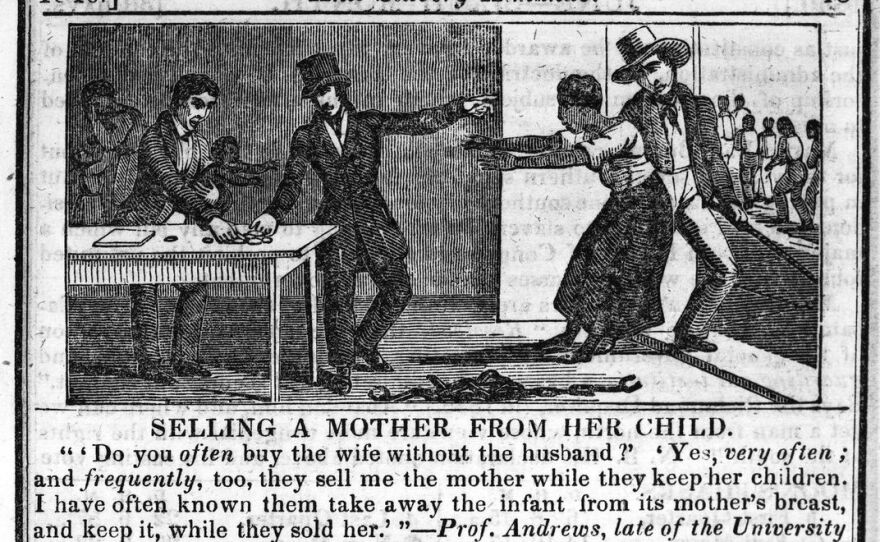
Since today is Juneteenth, a federal holiday that recognizes the date when the last enslaved persons were finally informed of their freedom, I thought about all of the children that were taken away from their parents, primarily from their mothers, during the period when slavery of Black people was common in these United States.

Black Perspectives is the award-winning blog of the African American Intellectual History Society (AAIHS). They are deeply committed to producing and disseminating cutting-edge research that is accessible to the public and is oriented towards advancing the lives of people of African descent and humanity. From the Black Perspectives website, LINK>Slavery and America’s Legacy of Family Separation by Vanessa M. Holden. Forced family separation was always a fixture of the lives of enslaved people. Enslaved children were a lucrative business. The expansion, maintenance, and future of slavery as an economic system depended on these children, particularly after the close of the American trans-Atlantic trade in 1808. 

One such story comes from Harriet Mason, who remembered her mistress forcing her to leave her home and family in Bryantsville, Kentucky, to work in Lexington as a servant at the age of seven. She remembered, “when we got to Lexington I tried to run off and go back to Bryantsville to see my [mother].” The grief of a childhood spent away from her family at the whim of her owner led her to suicidal thoughts, “I used to say I wish I’d died when I was little.” Even in her old age she was firm that, “I never liked to go to Lexington since.”

Slaveholders borrowed against their human property. They gifted enslaved children to their white sons and daughters as children, upon their marriages, or as they struck out to begin their slaveholding legacy. And of course, slave children could be sold down the road and down the river. Children knew that at any moment this could happen to them.

Blogger’s Note – Last night, my oldest son wanted to know if anyone in our family had benefitted from the labor of slaves. Eventually, it was suggested that every American has. I know that among my mother’s own genetic, biological family there were slave owners (I saw one will that was stipulating slaves by first name and who they were to be given to). I also know that side of my family also fought on the side of Confederates in the US Civil War. I’m not proud of being the descendent of these realities.

From the linked article – To profit from slavery and participate in slaveholding, Lexington’s white residents did not even need to own, buy, or sell a single slave. Someone made the shackles. Someone ran slave jails. Someone generated the official documents needed to transfer property. Someone hired enslaved children to work in their homes and businesses. Adults running with children from officials who would separate them was a feature of fugitivity during American slavery. To produce the “fugitive” category, a range of institutions sprang up. Local money paid sheriffs, courts, and officials to uphold the law that protected slaveholders’ rights to their human property. Someone printed runaway ads. Someone made money on enslaved peoples’ bodies at every juncture.

Along with physical labor, children deemed by the state to have unfit parents and placed into adoptive homes, perform emotional labor. Adoptees not only lose their birth families in the process, but they also lose ties to culture, language, country, history, and identity, and must contend with societal expectations that they be grateful for a “better life” in the face of it all. Children of color adopted by white parents also face racism in their new homes and communities. There is emotional labor too in being the physical body that allows white families to appear more liberal or multicultural, even if the opposite is true. In the United States, adoption is an industry and, as adoptee advocates continue to warn, it is poised to profit from family separation. There is already precedent for keeping children in the United States after a parent has been deported and awarding custody to American adoptive parents over immigrant parents caught up in immigration proceedings or because they were detained or incarcerated.

Black families are separated by the bond and bail system, incarceration, the child welfare system, and the criminalization of poverty. All can lead to family separation and the loss of one’s children. Child welfare advocates also recognize the link between the disproportionate number of Black children in the foster care system and the pipeline from foster care to prison.  All of these contemporary systems of power are echoes of legal and social structures that devalued enslaved parents and profited from enslaved children during American slavery.

We need to acknowledge these links to the history of American slavery and the ways that African Americans continue to endure discrimination. Following the money exposes the truth.

When Dad Is A ?

My dad never knew his genetic father which is a shame because they would have been great fishing buddies. There is an adoptee who’s writings I follow, Tony Corsentino. He wrote a piece for this day. He titled his LINK>D.N.A. You can read the entire piece there. I’ll just excerpt it a bit here.

He mentions that he had received a copy of his original birth certificate two months before he received an email from his birth mother. He learned his biological father’s name in that email. On his original birth certificate nothing appears in the blank labeled “father.” blogger’s note – my father’s birth certificate had no name for a father either.

Yet, Tony had a name. He found his father’s Facebook page. He didn’t do anything else with the information for 8 years. He had built relationships with his birth mother and her siblings. He feared upending his new and (what he feared was a) fragile relationship with his birth mother. She and his father had ended contact when she discovered she was pregnant. 

Yet, he did want to learn more about his father and so he went the Ancestry route. blogger’s note – It certainly proved very useful in my own roots journey quest. His father had not submitted a DNA sample, although he had joined the site and created a rudimentary tree. At Ancestry, Tony was able to reconstruct an extensive family tree. He messaged a few DNA matches on his father’s side. It took 4 months before he got a reply from any of them. One of them was not kind.

Yet, he knew that to send that message out was to signal to his biological relatives that he was not going to hide who he is from anyone: not his biological relationships from his adoptive family, and not one half of his biological tree from the other half.

His father’s first cousin, (his second cousin once removed) conferred with her sister. They welcomed him as family. They were in contact with his father and agreed to serve as intermediaries for an eventual contact. He notes that a few weeks later, he spoke with his father for the first time. Here is how it went –

“He was most eager to share family history and lore—about his uncles who had perished in World War II, about his career, about his two sons, my half-brothers. And with evident discomfort he explained that his wife, who had known that he had possibly fathered a child, was opposed to my making contact with people in her family. He said he was “working on” this. That was the last I’ve heard about it. In the months since we have exchanged a handful of text messages on holidays and birthdays. His two cousins are Facebook friends. I am planning to meet them this summer. It might be the only branch of my father’s family—my family—that will accept me.”

This Father’s Day, he has questions – “Does it make sense to wish my biological father a happy Father’s Day? Did he feel my absence from his life in anything like the way my birth mother did, who carried me and gave birth and watched as they took me out of the room on the understanding that the absence would be forever? . . . Father’s Day gives me nothing to say to him. Not, anyway, as long as my existence remains a problem—a threat just outside the walls of the family stockade.”

blogger’s note – I like his ending – “Let this be a note pinned to the stockade door. Dad, you know where to find me.”

Missing Dad

Father’s Day is Sunday, June 18th. Today, I read this in my all things adoption group from an adoptee – Fathers day this Sunday. I’ve been crying on and off all day, heartbroken that another father’s day will be spent without my dad. My adoptive dad is a good dad. It took work and therapy but both of my adoptive parents are trying to prove they have changed.

But I just want a hug from my dad. All I’ve ever wished for is a hug from him. He knows I want contact, says his schizophrenia and addiction are bad at the moment. He wasn’t an addict until I was 10/11. Because he knew he’d never see me again.

My mum put me in foster/adoptive care behind his back, when I was 6 months old. She abused me and he tried to take me out of the house. So she called the police, lied about it and they told him he had no rights to take me. I know my mum should never have had custody, but I didn’t need to be adopted. My dad was such a capable man and I hate the fact I’ve missed out on 23+ years with him.

The year was 2000 and she later adds more detail – My mum also lied about him sexually abusing me, after he reported her beating me and was saying he’d take me out of the house. The police said, if he left with me, they’d charge him with kidnapping. His whole foster family were wanting temporary custody, while he got his meds right and my mum chose to lie and put me in care with others instead.

She later explains – he wants contact but doesn’t want to hurt me, not realizing this is rejection and hurts me more. I want to respect his wishes of no contact but at the same time, I feel I’ve always put others before me and I deserve answers.

Someone replied – Just keep in mind that his disease is not your fault and it’s not a representation of his feelings for you.

Another adoptee admitted – my biological mom was schizophrenic and the removal of her kids spiraled her into addiction as well. I never met her. Only spoke to her on the phone.

blogger’s note – schizophrenia matters to me personally. It appears that it was latent but that an accident triggered it into an active state with my youngest sister. It really is a complicated situational relationship, when one has a family member caught up in the effects.

A Win for the ICWA

It came as a huge surprise yesterday when the Supreme Court ruled in favor of the Indian Child Welfare Act. I was not surprised that Justices Clarence Thomas and Samuel Alito dissented. They have become thorns causing the perception that the Supreme Court has a few problems. I was surprised that Justice Amy Coney Barrett wrote the opinion as she has adopted two children from Haiti. Maybe that was intended to soothe adoptive parents who could be upset at the court’s ruling.

I have written about this case several times since it first appeared on my own radar. Just search on ICWA and you will find blogs posted on November 10, 2019, twice in 2021 on August 24, 2021 and September 24, 2021 as well as twice in November 2022 on the 7th and 15th and again this 2023 year on March 10th.

The leaders of tribes involved in the case issued a joint statement calling the outcome a major victory for tribes and Native children. “We hope this decision will lay to rest the political attacks aimed at diminishing tribal sovereignty and creating instability throughout Indian law that have persisted for too long.”

Congress had passed the law in response to the alarming rate at which Native American and Alaska Native children were taken from their homes by public and private agencies. The law requires states to notify tribes and seek placement with the child’s extended family, members of the child’s tribe or other Native American families.

Three white families, the state of Texas and a small number of other states claimed the law is based on race and is unconstitutional under the equal protection clause. They also contended it puts the interests of tribes ahead of children and improperly allows the federal government too much power over adoptions and foster placements, areas that typically are under state control.

The lead plaintiffs in the Supreme Court case — Chad and Jennifer Brackeen of Fort Worth, Texas — adopted a Native American child after a prolonged legal fight with the Navajo Nation, one of the two largest Native American tribes, based in the Southwest. The Brackeens are trying to adopt the boy’s 5-year-old half-sister, known in court papers as Y.R.J., who has lived with them since infancy. The Navajo Nation has opposed that adoption.

It is important to note that Justice Brett Kavanaugh, who was in the majority on Thursday, wrote – “In my view, the equal protection issue is serious.” Kavanaugh also commented that the race of prospective parents and children could be used to reject a foster placement or adoption, “even if the placement is otherwise determined to be in the child’s best interests.” The Supreme Court dealt with that issue by determining that neither Texas nor the parents had legal standing to make that argument in this case. The Brackeens and others can make those arguments in state court proceedings and so the case is not over.

Matthew McGill, who represented the Brackeens at the Supreme Court, said he would press a racial discrimination claim in state court. “Our main concern is what today’s decision means for the little girl, Y.R.J . — now five years old — who has been a part of the Brackeen family for nearly her whole life. The Court did not address our core claim that ICWA impermissibly discriminates against Native American children and families that wish to adopt them, saying it must be brought in state court.”

All the children who have been involved in the current case at one point are enrolled or could be enrolled as Navajo, Cherokee, White Earth Band of Ojibwe and Ysleta del Sur Pueblo. Some of the adoptions have been finalized while some are still being challenged. More than three-quarters of the 574 federally recognized tribes in the country and nearly two dozen state attorneys general across the political spectrum had called on the high court to uphold the law.

Before the Indian Child Welfare Act was enacted, between 25% and 35% of Native American children were being taken from their homes and placed with adoptive families, in foster care or in institutions. Most were placed with white families or in boarding schools in attempts to assimilate them.

~ most of the details in today’s blog came by way of LINK>The PBS News Hour.

The Whys and What Ifs

This was posted in my all things adoption group creating a bit of outrage and controversy. Some people here have such negative opinions about adoption or trying to find a family member to take them. What if the parents are messed up and sometimes it goes back generations? What if the other family members don’t want the kids? Adoption is not a bad word and helps many kids find stability. I have 6 adopted children with 3 different mothers involved and we all get along. I don’t judge them or bring up their past and they may not like the fact that they have to go through me to be in their children lives. I will tell you it works. I share everything with them about their children and even let them come to events. I deal with grandma’s and aunts and uncles and it works. They thank me for standing up, when relatives sat down and refused to take part. In a world where it takes a village, you are extremely naive to believe one person can get it done. I get it things don’t always work out as planned and the path you are on may all the sudden change. Foster and adoptive parents are heroes who take on challenges and many times don’t see the results of their labor. The situation is not perfect because you place people together with hopes, dreams and expectations and it never works out the way you’ve planned. Let’s face it though – that’s life.

Unsurprisingly, there were a lot of comments (188) and I won’t be sharing all of them but will selectively share a few. This person’s perspective on adoption and the need for it is not uncommon in adoptionland or among adoptive parents. No one wants to know that any child is abused or neglected. That should go without saying but sometimes it still must be said.

One said – you don’t think my messed up family loves their children??? These people need to stop taking children, they’re not saving them.

Another one notes (and I have seen this more times than I have a number for) – my adoptive parents were messed up.

Someone else said what must be said – All children deserve to be raised in a safe and loving home with parents who want them and are equipped to raise them. The issues arise when there are barriers to that happening and society prioritizes giving the child away over removing the barriers. Describing adoptive parents as ‘heroes’ feeds into that mistaken prioritization.

One noted – pretty sure my family has a book on surviving fucked up!!!! We still fought to keep our family together!! I will always, always argue family is best!!

The current activist/reformist perspective is – Stewardship or Guardianship. Then there is no need for “adoption” AT ALL.

One asked the hard questions – Why does helping families in crisis include owning their children? You said it yourself, “it takes a village” – so why does the one with most resources get to own the children? Why is it such a hard concept that the whole family should be lifted up out of crisis? Why does a child have to lose everything just to receive care?

An adoptive parent writes – the reality is that adoption is not all joy and perfection. The trauma that adopted children face is a reality, there are many different factors behind the trauma but there is no denying that taking a child from their mother is trauma. Are you able to set aside how amazing you think you are, in fact can you take off the superhero cape that you wear from long enough to try and understand the words of adult adoptees? Adoptive parents are not saviors, we are not hero’s. All of our stories and experiences are different but we can learn so much from adult adoptees and try to do better.

Someone else notes – We aren’t saying that adoption is evil, we are just saying it is mostly evil (today as things are). It is a corrupted system where children are the fodder for the selfish. We are trying to make changes so there is more help for families to stay together and less child trafficking. Children, should only be removed from their natural parents in the most dire of circumstances (Rape, Murder, Incest, etc.) And even then, being adopted is and will be traumatizing. The children suffer for it and will need life long access to therapy. If it is safe enough for children to visit with and see their parents, then it is safe enough for total reunification. It is a sick world we live in, where stealing a baby is commended but helping someone through the struggles of human life, so they can parent their own kids is rarely brought up.

Blogger’s Note – No wonder I spend time nearly every day trying to be part of the answer to what is wrong about adoption.

Staying With Mom Is Best

From my all things adoption group today. In a parenting group, the admin shared a post to open discussion. It was written by a hopeful adoptive parent whose plans fell through shortly after birth.

I was pleasantly surprised that many of the comments focused on the fact that staying with mom is best for baby. Many also expressed empathy for the woman who wanted a baby and couldn’t have one. Knowing my own deep joy at being a mother, I empathize with those who cannot… but not to the degree that it clouds my judgment about what real love for a child is (protecting their relationship with their mother, if at all possible).

I can’t know the pain of infertility, because I’ve not lived that life. I’m sad for those who do. But I HAVE lived the life of someone separated from my genetic mirrors and raised as second class in a family that wasn’t mine. Filling a hole in a would-be mother’s heart doesn’t justify the creation of holes in the child’s. Ever.

One comment in particular struck me. It was disgusting, and I don’t have the ability to respond to it without being very nasty. A woman claimed that getting up a woman’s hopes of receiving a child and then taking it away at birth is the same pain as delivering a stillborn baby.

I am so angry. Just… so, so angry.

Their logic doesn’t logic.

She went on and on about the pain of infertility, which I don’t at all seek to minimize. She wrote about the hopes of carrying her “own” baby. The truth is right there in her words. They know the difference. Given a choice, OF COURSE they’d choose to carry their “own”. But since they can’t, they selfishly want to steal or buy someone else’s for the sake of their own feelings, over the child’s or the true mother’s.

Her words recognize the profound, undeniable, biological, emotional, and spiritual difference of producing offspring versus stealing them. And yet in the next breath, she wants to claim the pain is identical to losing one carried in the mother’s own body. Gross.

One commenter made a strong case –  it’s not always just warped selfishness with humans. There is the component of it being an evolutionary instinct. This doesn’t excuse us from doing the work and therapy to keep from seeking the injury to other people’s children that adoption is. We need to be better than our natural instincts. We can hold people to higher standards, while still recognizing that turning off the deep desire to raise children, for some, is about as easy as turning off clinical depression for others.

Another one admitted – I’m “maternally driven”, and I had an emergency hysterectomy. I have one biological child. I always wanted to have a lot of kids, but it wasn’t in the cards. I went to therapy. I got a dog.  I sought out dogs and cats. Because my inability to have more children doesn’t give me the right to someone else’s children. But my pathological need to care for someone/something makes animal rescue PERFECT for me. And yes, it’s absolutely a pathology. I think that needs to be recognized and openly talked about more. It’s not BAD. It just IS, and there are healthy outlets for it.

One noted – This is such a parent focused view, to equate their loss as a death – when the baby is alive – just shows how much the focus is not on the child whatsoever.

One said – I went through infertility and it never even occurred to me to want to adopt. I wanted my own babies, not someone else’s. The thought of raising someone else’s child is honestly so unappealing to me. I bet it’s unappealing to a lot of infertile women.

To which someone else replied directly – It’s baffling to me that this *completely reasonable and valid position* is somehow controversial to a lot of people. And unfashionable. We’re supposed to think that the ability to pretend a child that isn’t your own, *is* your own, is a sign of being a good person, somebody who has ~evolved~ beyond our ~stupid~ animalistic need for tangible, biological connection. I’ve been told I’m a sociopathic monster, a narcissist, devoid of empathy, just because I feel the same way as you. Somebody else’s baby would not be my baby. It’s not the same as my baby. To deny that is ridiculous, it’s anti-science, it’s an actively harmful delusion. I’ve not been through infertility, but I can say that recently birthing my own first child has cemented this so firmly in my heart. My son is not a token who could be swapped interchangeably with any other random infant and I could not be swapped interchangeably with any other woman to be his mother. Our relationship is specific to the two of us, even six days into his life.