Consider What You Do To Another

It was contentious. Someone wrote – Infertility sucks, but adoption is not meant for people that can’t have their own kids. People that can’t have their own kids should not be able to adopt. It should be an automatic disqualification. Infertile parents have a high probability of piling on trauma for adoptees intentional or unintentional. Infertile people adopting should not be a thing.

There are so many struggles in life that there is just no fix for. You can’t take someone else’s organ because yours failed. You can’t move into someone’s home because you were evicted. You can’t take other peoples’ children because you can’t have them. To me though this also opens up why people who CAN have kids shouldn’t adopt either. Because, then it becomes all about designer babies . . . we have 3 boys but we want a girl, we want blue eyes, we want international. It shouldn’t be that way either. Infertility and its impact on mental health need to be taken more seriously in the US. It’s a grieving process and the only reason buying a child is encouraged is because of the way our adoption practices are set up. People profit and that is all this country cares about. But people on an individual level need to work through it. Sometimes shit happens that cannot be fixed. It is a part of life. We all get slapped something at some point. Your money just insulates you and entitles you to do things that, if others did, it would be unacceptable.

Someone suggests – would a prerequisite for adoption would be a fertility test? To which the original commenter said –  yes, testing would be an option. I don’t have all the answers to how, just sick of seeing infertile people treating vulnerable humans as second choice options. How about just staying childless?

What about someone who is anti-natalist? Anti-natalism is the philosophical position that views birth and procreation of sentient beings as morally wrong: anti-natalists therefore argue that humans should abstain from procreating. This was more of a concern when it appeared that population would continue increasing. Recently, that concern related to over-population has been downplayed. Whether over-population remains an important driver of climate issues is debated. You could read this in Sustainable Review – LINK>3 clear reasons why overpopulation is a myth. One conclusion – a sustained population decline (mainly due to lower fertility rates) is already becoming a realistic outcome.

That is never-the-less not an argument for adoption, though some anti-natalists support adoption as an avenue of possibility for those who wish to raise children. Some reality – fertility issues are heartbreaking. There are plenty of people who want so badly to be parents but are not able to. That does not justify ripping apart another human being’s family. It does not justify predatory behavior towards children and their parents who are simply facing hard times. It does not justify enriching a system that is profit motivated. A person who wants to parent but isn’t able to do so, should seek to fill that need in ways that aren’t blatantly selfish. Find ways to fulfill their own goals, rather doing that at the expense of inflicting trauma on others. Love for children should always be child-focused. Nobody is put here to fulfill the desires of somebody else.

The issue of LGBTQ people came up but that doesn’t change the calculation – someone’s sexual orientation does not give them right to take someone else’s children.

One last thought (I am aware of this back in my own childhood) – it is a known phenomenon that some adoptive parents go on to conceive that biological child they wanted all along. Adoptive parents don’t want to admit it but some were probably told that very thing because adoption has been put forth as a solution for infertility. About 30% of the time, people who were struggling with infertility issues, manage to conceive after adopting a child. Some of them go into adopting, knowing this, straight up using their adopted child to ‘trigger’ their own fertility. Strange but true.  Simply – human beings have a bias toward their own offspring, though many adoptive parents try to argue that isn’t the case. 

Did You Know About Me ?

Today’s story – I had genuinely come to terms with the fact that it was likely my biological, genetic father was no longer alive or just wanted to remain no contact. I’m trying to process going from being at peace with never meeting these people to INSTANTLY having family overnight.

VERY long story short, I just confirmed that I will have a phone call with my biological grandmother. The problem is, I’m literally in so much shock, I’m so out of my normal brain right now, I have no idea what to say to her. I don’t know what to ask. My mind is blank. All the questions I’ve asked hundreds of times inside my head, just in case I ever got the chance to speak with my family, all blank. 31 years of questions and now I can’t come up with a single one.

*If you were in my situation, regarding the phone call with my grandmother, what questions would you ask? What would you want to know? Did you have a list of questions in your head in case you ever met your biological relatives? If you’ve met your biological family, what questions were you happy you asked? *

One offered this advice – just start the conversation like you’re meeting someone for the first time and save the hard questions, ease into them.  The simple questions just kinda led to the hard parts coming out without it being awkward.

Another suggested something simple, like “what can you tell me about my dad?” They will probably bring up the qualities that stood out for them most and maybe some stories. Open ended questions work well.

Yet another shared – I had a similar situation last fall but it was in person, instead of a call. It was my grandfather. I tried to prepare my questions and then, they all went out the window when I saw him. That’s very unlike me. Instead of asking questions I just listened. What I’d wanted to ask mattered less than what he had to say.

Someone else suggested – it’s ok to say that you’re overwhelmed and there’s so much you want to talk about, but you just want to hear her voice and start learning about her. It’s ok to ask her to do a majority of the talking until you’ve gathered your thoughts.

One acknowledged –  It’s overwhelming to wonder about something for so long, then all of a sudden have access to that information. It’s really shocking.

Biggest question is always: Did you know about me?

Blogger’s note – having gone through some in person and some by email or phone reunions with my own genetic relations, I can relate. Learning that my mom’s half sister always wondered about her and wanted to meet her was amazing. This was the paternal side for my adoptee mom. I think her biological mother had felt abandoned by her husband (and that is one piece of information I will never be able to know – sometimes one can only accept the unanswered questions). Some of that may have passed down to my mom while she was in her mother’s womb or shortly after birth. I know my grandmother was frantically trying to find the support she needed to keep my mom. Therefore, while my mom showed an intense desire to know about her original mother, she showed little desire to know about her father’s other children (though she was aware of the existence of two – even though he had had five children before their own mother died).

As time went on and I discovered other genetic relations, I also discovered that the existence of my adoptee father was known by his mother’s family. It is my feeling that my father was afraid of knowing why he was given up. He was not supportive of my mother’s efforts to find out about her own origins, therefore, she turned to me as her oldest daughter to share her feelings with.

Enforcement Inequality

Back when we were expecting my oldest son, I really wanted a homebirth. I had been knocked out for my daughter’s birth and I really wanted to experience my next birth fully. Sadly, it was not to be. I was eventually convinced that the risk of passing on the hepC virus was greater with vaginal birth, than with a cesarean. Though deeply disappointed, it mattered to me not to pass on the virus (which I only recently was cured of). During the pregnancy, I became a member of the Friends of Missouri Midwives because midwifery was illegal in Missouri and they were working hard to get midwives accredited in my state.

This is why a recent story about a Black couple caught my attention. You can read the latest in The Guardian at this LINK>‘Family policing system’: how the US criminalizes Black parenting. Temecia Jackson told the story of the moment when police officers and child protection services agents had “stolen” her baby from her Dallas home. Her story was about how her newborn baby was taken from her because she opted to follow a midwife’s recommendation over a physician’s. Dr Anand Bhatt was concerned the family had the wrong idea about the treatment he recommended. Therefore, Bhatt wrote in a letter to child protective services (CPS) indicating that he had trouble getting in touch with the family.

The story has sparked outrage across the country. The family policing system is a structurally racist apparatus that disproportionately separates Black and Indigenous children from their families, one that traces its origins to chattel slavery, according to Dorothy Roberts, a University of Pennsylvania law professor. She is also the author of Torn Apart: How the Child Welfare System Destroys Black Families – and How Abolition Can Build a Safer World.

Temecia chose to give birth at home with a licensed midwife. Her daughter Mila Jackson was born on March 21st. Mila had developed a severe case of jaundice. The family chose to pursue the treatment recommended by Dr Bhatt at home with their midwife. Mila remains in a foster home. The family’s next hearing has been delayed until April 20th.

I believe I have previously written about another case in this blog. That would be the one related to Bianca Clayborne and Deonte Williams’s five children. Tennessee authorities “kidnapped” their children in February after a highway police officer stopped the family as they drove to Chicago for a funeral and found a small amount of marijuana in their car. The couple has since regained custody of their children but the kids spent more than a month and a half traumatized in foster care.

Roberts believes that the inequality in enforcement actions is due to the racial stereotyping of Black families, who are seen as unfit to take care of their own children. Black families are disproportionately impoverished and therefore encounter a child welfare system that, Roberts added, was designed “to handle the problems and struggles of impoverished families and to handle them in a very punitive and a cruel way by accusation, investigations and separation – and in many cases, termination of parental rights.” Temecia Jackson and her family’s conflict with their doctor in Texas about their newborn’s medical treatment raised a similar question about whether the Black parents’ decision-making – to choose at-home care instead of hospital care – had been devalued, Roberts added.

I would note here also that my grandson had jaundice after birth and was successfully treated AT HOME using phototherapy. This is treatment with a special type of light (not sunlight) which is used to treat newborn jaundice. The light makes it easier for the baby’s liver to break down and remove the bilirubin from the baby’s blood. Phototherapy aims to expose the baby’s skin to as much light as possible.

Not Being Mom Is Not Easy

I was reading some instructions in my all things adoption group and something there really hit home for me personally. I want to begin saying that in this particular group there is a hierarchy – adoptees and people who have experienced foster care as a youth are given unfettered freedom of expression. Below them, next come the biological/genetic parents. The lowest level is the adoptive (even if only hoping to adopt) and foster parents. It is as it should be. Those at the top have spent much of their lives without personal autonomy or control over their daily experience – in effect – they have been marginalized in a society that lifts adoptive and foster care parents up on a pedestal.

I did not intentionally give up parenting my daughter but it happened. As I have become more informed about adoptee issues, my daughter and I have discussed how very like having been adopted her experience of growing up without me after the age of 3 was, very much like having been given up for adoption. At the end of my marriage to her dad, my self-esteem was low. I really didn’t know how important a mother was. I thought any of the two parents one was born of would be equally good (but at least birth parents still involved – and I did remain involved at a distance). I know better now but it is what it is and life doesn’t give us do-overs. Thankfully, I remain heartfully and decently close to my daughter, though I have not earned that, I am thankful she accepts the realities of her life and knows that I always have loved her immensely. That is the point of today’s blog.

There were no role models for absentee mothers in the early 1970s. I felt very alone in that regard and definitely felt judged as though – if I was not raising my daughter, I must be a terrible mother – and I still struggle with some belief that I was terrible as a mom. Having my 2 sons late in life has convinced me that under the right circumstances, I could have also been a good mom to my daughter. Still, I cannot recover all that I lost during those years.

From my all things adoption group today, it was said to the custodian parents (adoptive, foster, etc) – you are in the power position. Don’t expect moms to jump for joy when you offer visits, calls, etc. just because you think they should and you think you are doing something good for them. The thought of that is likely OVERWHELMING for many moms and it’s coming from someone raising their kid, essentially giving them “permission” to see their own child.

Can you understand how that might feel? I certainly do. I gave my daughter a telephone calling card, so that I wouldn’t cause her trouble at home by calling her first. Sometimes, I had to wait a very long time for the next phone call. I always felt judged. If I didn’t get her back from a visit by the time I had been expected to return her, I could feel the judgement as well.

It is true – society drives the expectation that a mother is supposed to love and nurture her child. A mom who loses her child to the system, or gives her child to someone else to raise, is automatically and instantaneously dealing with the shame that comes with doing that. It knocks their self-worth, and that was likely not so high to begin with, lowering it further down many pegs. It can cycle into greater depression, self-loathing, anxiety, self-harming behaviors and a general feeling of just giving up. It takes A LOT of work to build that sense of self back up. Some never do.

Moms DO love their kids – even if, for whatever reason, they are unable to raise them. That was always true with me.

Curiosity Is Natural

I found this situation interesting. A 16 yr old in a kinship adoption (by grandparents) wants to go back to her biological mother. She recently came out as pan (Pantheism is the philosophical religious belief that reality, the universe and the cosmos are identical to divinity and a supreme being or entity) and she wants to study witchcraft and her grandparents are strongly Catholic, therefore this goes against their beliefs. Personally, I can relate. I remember having a curiosity about Wicca when I was a teenager and looked into such alternative spiritualities more deeply when I was much older. 

A reasonable response was this – living with people that do not support her beliefs can do a lot more harm in two years (when she would be 18). She may not be here in 2 years, if she has to endure not being able to be her true self. Forcing her to stay there could end her life. She needs supportive people around her, while she freely explores her own spiritual possibilities.

This young woman is the niece of the husband of the woman who is seeking to be supportive of her, She adds – she’s not studying it to fully commit, she just wants to be able to read about it and he grandparents totally flipped out. She was only curious about it and she likes to read and learn about different things.

Someone else noted (which I also already understood) – witchcraft is an actual religion called Wicca. Surely 16 is old enough for religious freedom.

A foster parent of teens writes – if she leaves and goes back to mom, there’s basically nothing the state can do to intervene. The brilliant and frustrating thing about teenagers is that NO ONE can force them to do anything, which is both a strength and a weakness. As long as she communicates where she is and doesn’t cross state lines (which could open up charges of kidnapping), it’s unlikely anything will happen. The adoptive grandparents can report her as a runaway and call for a wellness check, but as long as the teen and mom are found to be okay, they won’t remove her. The more complicated aspect would be getting her identifying documents from her adoptive grandparents. Sometimes these documents are “held hostage” in order to manipulate the situation. Then, there are all the times she will need a parent-guardian signature until she is 18. Ideally, the grandparents would acquiesce in order to save their relationship with their granddaughter and be willing to set up a legal guardianship for her mom.

I did look into the state in question, Florida – and found this legal information at Law for Families LINK re: Florida Laws About Moving Out of Your Parents’ Home – Florida minors who want to move out of their parents’ home will find very limited options. Emancipation guidelines stipulate that the minor must be at least 16 years old, able to display a clear need to be emancipated and also have both parents or guardian’s permission. Even if a minor meets all those requirements, a judge makes the final ruling. The only other option for a child to legally move out of a parents’ home in Florida is turning 18, at which point that child is a legal adult.

Another noted the honest truth – Millions of foster youth and adoptees “vanish” and they never ever look for us. She’s just another number in that figure except she would actually be home. Is it legally bad advice? Yes. But lots of us do it and then just move on to the next part of our life. My cousins were kin adopted from foster care but one left at 16 even though she was still involved with the system and still nothing. The other waited until enlistment age and moved out that way. Adoptees don’t usually have active and ongoing supervision like foster youth and can slip under radars easier in that age bracket.

Time Is Of The Essence

An adoptive parent writes – With my older two kids with unknown fathers I waited until they asked and then purchased the kit (both around 13 years old).

My oldest got no results (only very distant cousins) but he was okay because his older half sister’s dad claimed him when he was born and even though unable to parent continues to have a strong parental bond with him. I still monitor the account on occasion to see if we have any new leads with his permission.

With my middle daughter it went horribly wrong. I take some blame as I should have taken steps to make sure she received the information in more appropriate ways. There isn’t any possibility of meeting for several years and at this point it isn’t something my daughter wants to pursue. It has been devastating for her.

I now have a 3 year old with an unknown father. His mom doesn’t know who he is and only meant him once. Part of me wants to do the DNA test so when he has questions I hopefully have some answers and maybe even contact his dad prior to see if he has any interest in contact. But I almost feel like that is a violation of his privacy. He is too young to give consent too it which is why I waited until my kids asked.

A donor conceived person wrote – I have heard of hundreds of cases of children or adults becoming connected with genetic relatives, sometimes establishing loving relationships in the process, and learning important information about themselves in the process, including by obtaining a fully updated family medical history. Even if the biological parent turns out to be someone who isn’t good for your child to get to know, it’s arguable that this can be important information to find out ASAP to set reasonable expectations for talking about who this person is, what they are like, and how they might connect with them in the future. Importantly, they might find other close relatives who connect beautifully with them and offer love/support in some capacity for the rest of their lives. Some of these relatives (for example, a biological grandparent) might tragically pass away before a child reaches adulthood and pursues the testing on their own, and so I personally believe time is of the essence in exploring/building genetic family connections from as early an age as possible. I believe this is a decision parents can reasonably make for their young children without “consent” while keeping their best interests at heart, just like how children are introduced to extended family members without being asked for their interest or consent (or like how children are born or adopted away from biological parents without consent).

Media Issues

Short on time, as I sometimes am, but did think this might be helpful to some who may read this blog.

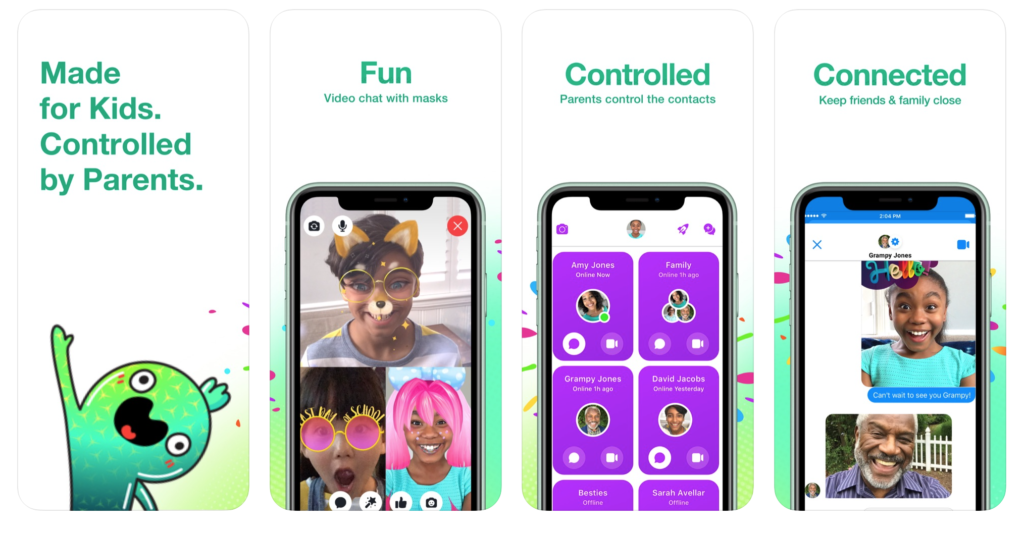
Today’s concern – I’m a Permanent Guardian/Auntie/Will be adopting. We got our child an iPad. He has Kids’ Messenger. Mom wants to be added so that she can freely speak to him. He was originally remove due to physical and emotional abuse. I want him to have the ability to communicate with her. However, I do fear not being able to control that communication. Is this me being controlling, or is it warranted given her past with the kids?

A response from a Foster Parent – I keep my biological daughter’s Kid’s Messenger account on my phone too, so I can check it periodically (4th grade girls, man…). She can do everything on her iPad, but it mirrors to my phone. Maybe just let everyone who communicates be aware of that. I’m a media specialist, and I don’t agree with so much unsupervised screen time for kids anyway, but I would think all parties would want to know that you had access to their conversations (and conversations with friends, etc) so it doesn’t look sneaky.

Making Adoption Easier

It has been a long standing Conservative project to make adoptions easier – hence an article from 2015 in The Federalist titled LINK>We Need To Make Adoption Easier. All Sides notes that this publication LINK>displays media bias in ways that strongly align with conservative, traditional, or right-wing thought and/or policy agendas. A “Right” bias is the most conservative rating on the political spectrum. As to the photo above, Slate did a reveal that LINK>The Real Story Behind the “We Will Adopt Your Baby” Couple Is So Much Worse Than the Meme.

The effort continues as written about by an adoptee blogger, Tony Corsentino, that I follow in his latest LINK>In the Woods. Several states are actively aiming to “streamline” the process of relinquishing and adopting a child. One is Indiana who is poised to pass a bill to “streamline” abandonment and adoption of newborn infants, which would omit any oversight and regulatory safeguards to prevent anonymous trafficking of those infants, through the state’s so-called “newborn safety devices,” commonly known as “baby boxes.”

He links to an article posted just in the last week at the Adoptee Rights Law Center titled LINK>Indiana’s Secret Adoption Pipeline. He asserts that SB345 will facilitate corrupt off-the-books adoptions with direct baby box referrals from fire station to adoption agency to “pre-approved” adoptive parents to final adoption, all completed in the span of a single month and all without any state oversight. Tony also links to Marley Greiner’s site LINK>Stop Baby Boxes Now.

Indiana is not alone in these efforts – enter now Alabama and Tennessee seeking to “streamline adoption. They suggest that they are only “trying to get kids into a permanent home as fast as possible.” The principal change is to speed the timeline for termination of parental rights. Reading about foster care and the goal of reunification of children who have been removed from their parents informs me that rarely do such parents actually get the support and time they need to meet the requirements of the state.

Tony shares an excerpt from Ann Fessler’s – The Girls Who Went Away. She notes that losing her son to adoption had a profound effect on her. She goes further to say “a few years after I was married I became pregnant and had an abortion. It was not a wonderful experience, but every time I hear stories or articles or essays about the recurring trauma of abortion, I want to say, ‘You don’t have a clue.’ I’ve experienced both and I’d have an abortion any day of the week before I would ever have another adoption—or lose a kid in the woods, which is basically what it is. You know your child is out there somewhere, you just don’t know where.” 

He goes on to say – Given adoption’s unpopularity and the resulting mismatch between the domestic demand for infants and the domestic supply, it is no surprise that proposed measures to “streamline” adoption by making it faster and easier to terminate parental rights amount to an even deeper undermining of vulnerable pregnant people’s agency. We do not ameliorate the injustice of banning abortion by “streamlining” relinquishment and adoption. We compound that injustice. Both for those who seek abortions, and for their offspring.

Tony ends his essay with this – For adopted people to make progress in defending our rights, we need first to be heard. It’s a big forest.

ADOPTIVE PARENT FRAGILITY SELF-TEST

Thanks to LINK>The Adoptee Diary.

Ask yourself the following:

1. Do I feel defensive when an adoptee or (birth/first) mother says “adoptive parents tend to…?”

2. Do I feel angry when people tell me I benefit from Adoptive Parent privilege — that the adoption industry works in my favor, or that my socioeconomic class and/or race enabled me to adopt?

3. When an adoptee or mother talks about adoption, do I feel defensive because they’re describing things that I do or think?

4. Do I feel angry or annoyed by the above questions?

5. Do I have a history of embracing Hopeful and/or Adoptive Parent behavior that I now feel ashamed of, so I need to show people that I’m no longer “like that”?

6. Does saying “not all adoptive parents” or similar phrases make me feel better when someone calls Adoptive Parents out for something?

7. Do I expect an apology when I feel like I’ve been unfairly accused of poor Adoptive Parent behavior?

8. Do I feel better when I say, hear, or read, “every (adoption) experience is different?”

9. Do I try to convince adoptees and mothers that they’re wrong about adoption by pointing out people from their position in the triad who agree with me?

10. Do I feel the need to talk about my own hardships (such as infertility, a “failed” adoption, or a difficult childhood) when an adoptee or mother talks about their pain?

11. Do I think the adoption community would benefit if people stopped talking about the hard stuff, were more supportive, learned from “both sides,” or focused more on the positive?

12. Does being told that something I say, think, do, or otherwise value is harmful make me want to shut down, leave, or express my discomfort/displeasure in some way?

13. Do I feel the need to state that I have friends/family who are adoptees when someone points out problematic behavior?

14. Do I feel the need to prove that I’m one of the good ones?

15. Do I feel that my opinions and perspectives about adoption should be given equal weight to that of an adoptee or mother, that I have something unique and important to contribute to the adoption conversation, and/or that it is unfair to be told to listen more than I speak?

16. Do I feel the need to defend myself on any of the above points?

If you answered yes to any of these questions, you are dealing with Adoptive Parent fragility. Take time to reflect on why you feel the way that you do. Take time to listen to adoptee and mothers’ perspectives. Adoptive Parent fragility is a hindrance to healing because it prevents adoptees/mothers from being able to engage Adoptive Parents in honest conversation without also having to bear the burden of catering to Adoptive Parents’ emotional comfort. At its worst, Adoptive Parent fragility can cause an emotionally unhealthy situation for adoptees/mothers because of the power dynamics and the weight of being responsible for Adoptive Parents’ feelings, while not having space to express their own. If we cannot talk honestly about the issues, then we cannot make progress.

Adoption Is Only The Beginning

Image by Madelyn Goodnight

Today’s blog is inspired by an article in The New Yorker – LINK>Living in Adoption’s Emotional Aftermath. From the article –

Deanna Doss Shrodes believes that a child who starts life in a box will never know who they are, unless they manage somehow to track down their anonymous parents. It distresses her that many of her fellow-Christians, such as Amy Coney Barrett, talk about adoption as the win-win solution to abortion, as though once a baby is adopted that is the end of the story. If someone says of Deanna that she was adopted, she corrects them and says that she is adopted. Being adopted is, to her, as to many adoptees, a profoundly different way of being human, one that affects almost everything about her life.

“I explain to friends that in order to be adopted you first have to lose your entire family,” Deanna said. “And they’ll say, Well, yes, but if it happens to a newborn what do they know? You were adopted, get over it. Would you tell your friend who lost their family in a car accident, Get over it? No. But as an adoptee you’re expected to be over it because, O.K., that happened to you, but this wonderful thing also happened, and why can’t you focus on the wonderful thing?”

This is the less than fairytale ending – There are disproportionate numbers of adoptees in psychiatric hospitals and addiction programs, given that they are only about two per cent of the population. A study found that adoptees attempt suicide at four times the rate of other people. Adoption begins with the ending of the connection to the people who conceived and birthed the adoptee.

“Coming out of the fog” means different things to different adoptees. It can mean realizing that the obscure, intermittent unhappiness or bewilderment you have felt since childhood is not a personality trait but something shared by others who are adopted. It can mean realizing that you were a good, hardworking child partly out of a need to prove that your parents were right to choose you, or a sense that it was your job to make your parents happy, or a fear that if you weren’t good your parents would give you away, like the first ones did. It can mean coming to feel that not knowing anything about the people whose bodies made yours is strange and disturbing. It can mean seeing that you and your parents were brought together not only by choice or Providence but by a vast, powerful, opaque system with its own history and purposes. Those who have come out of the fog say that doing so is not just disorienting but painful, and many think back longingly to the time before they had such thoughts.

Adoptees are often looking for those pieces of their lives or their selves that were missing, or had been falsified or renamed, trying to fit them to the pieces they had. I think those missing pieces were what motivated me to go looking and find out what could be found out. And I did. Families of people I was genetically related to that I never knew existed, living lives I had no idea about. Some knew my parents had been born and given up for adoption but didn’t know about me. DNA has helped with being accepted as being another one who is actually part of their family but building relationships has not proven as easy as finding out about these.