Not The Adoptee’s Celebration

My blog today was inspired by this comment by an adoptive parent – We’ve all seen a million ways of handling adoption day and the anniversary of that day done wrong. Sadly, I haven’t seen it done well. What is an emotionally appropriate way of handling adoption day anniversaries ? I know it’s not one size fits all, just looking for the majority/ideas/growth. And I’m sick to death of people telling me to let the kids lead, which I view as putting the work/responsibility on them, when I’m the adult.

From an adoptee –  I always thought it was weird when other adopted kids parents made a big deal out of the day they were adopted… so strange. I am happy that I don’t know it and my parents never “celebrated” it or made it a thing. My birthday was always made super special and every other holiday, like a normal kid.

And another adoptee – I prefer to just ignore it altogether.

An adoptee from foster care – It was never really acknowledged in my home. The day that they picked me up to foster was spoken about a few times but only because it was my brother’s birthday and apparently he thought my adoptive parents had got him a baby sister for his birthday. I can’t imagine my adoption day as anything to be celebrated. Why does it have to be spoken of at all?

Another one explains – what was lost in that moment is not worthy of a celebration. If I could go back in time and save my family from their own self destruction that led me and my daughter to our adoptions, I would.

Yet another adoptee – This one is easy. You don’t. Why celebrate the day you bought your kids ? Celebrate the day they were born. I think there are ways to communicating your openness to have discussions without mentioning it on the day the final loss of their family took place. Less is definitely called for.

This adoptive parent continually responded to each adoptee response with the same “canned” message rather than more personal replies – never intended on celebrating the day. Just thought I should acknowledge it, so they know it’s okay to feel whatever it is they feel and I’m here for support if needed/wanted. I’m seeing that this is one of those times when less is more though.

To which an adoptee responded – so reading your canned response, it seems you want to acknowledge it because so many people involved were affected by it. Lose that mindset. It’s not a happy day, if they bring it up, just listen to their feelings and make sure they feel validated. Trauma should not be memorialized.

Not A Failed Adoption

It happens more often that some people expect – a new mom changes her mind and decides to parent.

From one comment – Two things 1) words mean things. A “failed” adoption is one in which the adoption was completed and the adoptive parents later return or “re home”. What she is experiencing is not a failed adoption. 2) I worked in adoption in the past (it simply wasn’t for me). I would tell birth and prospective adoptive parents that there’s an appeals period, even in private adoptions. It’s usually shorter than public (Foster Care) adoption but it’s still there. One of the things that drew mixed reactions when I did my birth parent assessments was that I would really have the parents evaluate why adoption was their choice. If it was something temporary that could be resolved with financial or housing resources, I would note that. The reality is that if those things are addressed, many are willing to parent. They should not be made to feel ashamed for that. People are not obligated to sign over their children.

Not A Fun Experience

Okay, just a moment of humor before diving in –

(From someone else, not your blogger) – Recently a young woman who confides in me and looks up to me came to me and told me she thinks pregnancy is disgusting and wants to only pursue surrogacy and adoption when she gets married. Mind you she’s young and nowhere close to getting married. She thinks being pregnant and giving birth is repulsive — zero trauma, just grossed out.

Our religion has similar views of adoption and surrogacy, basically it’s a no go from that angle. I also gently let her know that as a mother myself, I think if you are absolutely disgusted by pregnancy, you will not survive being a parent. My pregnancy was no picnic but it did not compare still to one day of being a mom. I said it was unfair to offload her disgust and apprehensions into someone else and just buy the baby in the end.

She lashed out and said I’m saying that women who can’t or don’t want to get pregnant don’t deserve to be mothers. I said there’s a huge difference between can’t get pregnant and absolutely don’t want to. And that regardless, adoption and surrogacy are unethical “solutions” to not wanting to or not being able to birth a baby.

She is still blowing up my phone angry as hell. Am I wrong for these statements?

(Offensive adoptee perspective incoming) – I’ll say it: it’s not that women who can’t or refuse to get pregnant, don’t *deserve* to be mothers, it’s that women who can’t or refuse to get pregnant *aren’t* mothers. No matter how they acquire it, these young role players can be wonderful guardians! And caretakers! And make huge positive impacts on a child’s life! But they’ll never be that child’s mother. Sorry not sorry.

The Now Way

LINK>Adoption Birth Vlog example
MaryJane Lance – once again in pursuit of a child

Blogger’s note – This post is from an adoptee and is about children who are adopted and exploited on social media. The adoptee’s post is below –

Documenting the adoption journey has been an integral part of the overall adoption story. At one time the creation of lifebooks was meant to be a way of helping the child understand what it meant to be adopted. It served an important purpose to ensure that the child’s sense of self was rooted in their adoption..

Once social media became the established way of capturing our lives, lifebooks became obsolete in favor of blogs and vlogs. We now live in the age in which people make a living as content creators, much to the thanks of YouTube. From traditional profile books and listings with adoption agencies, to creating their own websites, featured news coverage and social media hashtags, prospective adoptive parents sought out every possible way to let the world know their story in the hopes of being matched with a child for adoption.

Posting one’s life on social media is native in today’s culture. And because it has well-established ways to monetize online content, these prospective adoptive parents have learned the business. So what is the big deal? It’s normal to post content about your family, right? Many family-run Youtube channels get views in the hundreds of thousands and millions. Everyone loves feel-good reality content.

Right now, the media is shedding light on the failings of the adoption industry. The Netherlands, home to the Hague Adoption Convention, has officially closed its international adoption program (again). South Korea is undergoing a comprehensive investigation revealing hundreds of adoptions involving the falsification of records. Holt International is linked to many of these cases. Dillon International has shut down. The Russian president was accused of committing war crimes by kidnapping Ukrainian children and adopting them into Russian families.

The Asunta Case was in the top 10 Netflix series based on the true story of Asunta Fong Yang. In the U.S. the media is putting a spotlight on the Stauffer Family scandal (2020) involving the rehoming of the boy they had adopted from China. The Stauffers became a YouTube sensation story having monetized their adoption journey. So, what is the scandal exactly?

Tik Root wrote an eye-opening Time magazine article, “The Baby Brokers: Inside America’s Murky Private-Adoption Industry” published in 2021. Prior to that was the Reuters report, “The Child Exchange” exposing the Yahoo child rehoming groups published in 2015. Last year, the media descended on the issues and ethics of child influencers. The Stauffers are one of countless adoptive families who have taken to social media monetizing their adoption journeys effectively exploiting Huxley for profit.

Exploiting children is nothing new, neither is adoption. So, where does the Stauffer Family fit into this picture? Why is this a big deal?

Here’s the adoptee’s perspective:
The adoption industry has reached critical mass and has been developing new ways to sustain it’s multi-billion dollar operation. No longer a taboo subject conducted through back doors held in secrecy only priests could hear, adoption has saturated virtually every level of society. In the confusion and chaos of a divided media, social opinion, subplots found in the DC and Marvel universes, K-Dramas, and TV shows, sports, gold-winning olympiads, tech leaders, musicians saying they will adopt a child, and celebrated family reunions on Good Morning America, the adoption industry is free to carefully and gradually change its course with little attention or resistance.

Issues from the current adoption system become course correction for the industry’s next leap forward into the already multi-billion dollar surrogacy market. With all of this attention on the adoption side of the industry, the surrogacy market grows virtually unnoticed. Children like Asunta Basterra and Huxley Stauffer (formerly known as), are victims of a known corrupt, exploitative industry. They are commodified and dehumanized in the name of adoption. They are bought and sold in a child trafficking scheme to later be disposed of or “rehomed” once their use has run out.

Despite the ongoing efforts of investigative journalists to expose these truths, the adoption industry has proven its power of propaganda ensuring people remain ignorant, confused and brainwashed at the expense of children’s lives. We must continue making every effort to send a clear and unified message to stop this crime. Stop commodifying and exploiting women and their children for profit. There are now 9 million adopted people in the U.S today. Our numbers are going to grow exponentially in the coming years. We have taken a stand against violating our rights. We have taken a stand against being stolen, kidnapped, and trafficked. And now we are taking a stand against being made into disposable people.

When The Name Is Changed

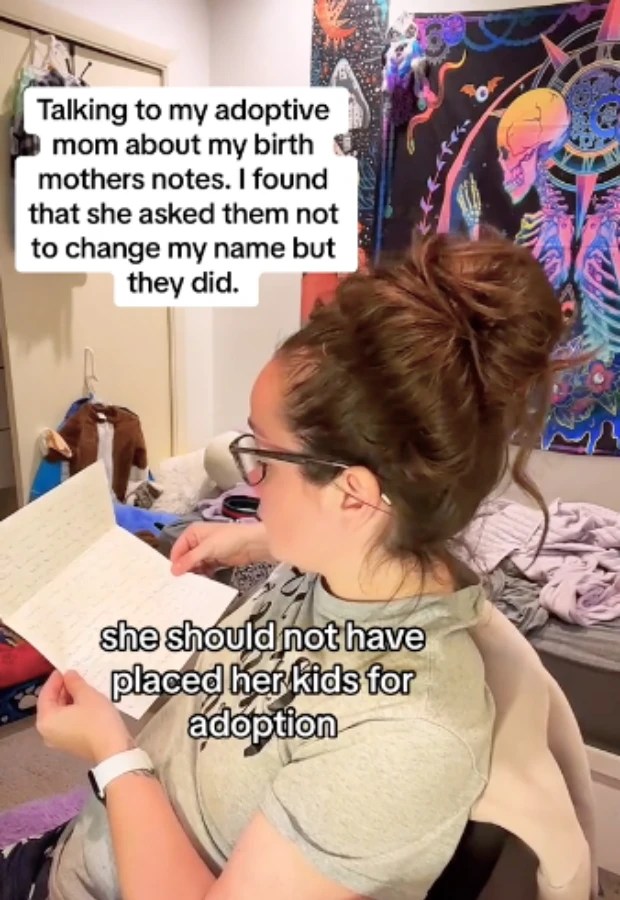
The image above comes from an essay at YourTango LINK>Woman Confronts Adoptive Mother. Thirty-six years after being adopted, the woman discovered that her birth mom had made a request to not change the name she was given at birth. The adoptive mother explained that in their religion, they name children after the people in their family they care about. The adoptive mother further stated that if her birth mom did not want her daughter’s name to be changed, she should not have placed her child up for adoption. 

An adoptee asked those who are mothers of loss (surrendered a child to adoption) in my all things adoption group – If you know about your children and what became of them, do you think of that child by the name you gave them, or the name the adoptive parents gave them ?

One of those mothers of loss shared her experiences – I am my son’s natural mother but we always had an open adoption relationship and his adoptive parents got together with me before he was born to plan his names (ie they wanted me to choose what I would name him and they were going to keep one of those names as a middle name with the name they had already planned).

I have always called him by the name they chose (except while he and I were in the hospital together and I didn’t really use a name. We just cried together a lot).

My 23 yr old niece who was adopted into my family found her mom and brother in recent years after no contact throughout her life (my brother and sister-in-law closed the adoption very early) and at that first meeting, her mother and brother struggled to call her by her current name. They asked her preference and I think hoped she would prefer her original name.

Of course, none of this can tell you how your first mother thinks but based on my and my niece’s experiences I might guess that moms who have been able to stay in regular contact probably adjust to the new name easier than moms who lose their baby and don’t see them again until adulthood. It makes sense to me that they might be more likely to think of their child by the name they originally chose.

An adoptive parent shared – I didn’t change her first name after adoption. She recently found her biological mom and extended family at age 15. They all still referred to her as that original birth name. It has made reunification and their current relationship so much better than if she had another name. I have no doubt they think and talk about you as your natural birth name. I also advocate now that no one change a kid’s name.

One adoptee shared – my mom called my brother Luke. The adoptive parents changed it to Luis (he was over a year old when they adopted him). I don’t agree with them regarding their changing it. My mom still calls him Luke – her own long time habit of thinking of him as that name.

Preventing Pregnancy

If there is no pregnancy, there can be no need for adoption in response to an ill-timed birth. The LINK>Guttmacher Institute Study details the social and economic benefits that accrue when women can determine when to have children, including the impact on preventing teen pregnancy and the correlation with education outcomes. Study after study documents the positives of access to birth control. Women will go back if that access is revoked.

From that study – Historical research has linked state laws granting unmarried women early legal access to the pill (at age 17 or 18, rather than 21), to their attainment of postsecondary education and employment, increased earning power and a narrowing of the gender gap in pay, and later, more enduring marriages.

Contemporary studies indicate that teen pregnancy interferes with young women’s ability to graduate from high school and to enroll in and graduate from college. Conversely, planning, delaying and spacing births appears to help women achieve their education and career goals. Delaying a birth can also reduce the gap in pay that typically exists between working mothers and their childless peers and can reduce women’s chances of needing public assistance.

Unplanned births are tied to increased conflict and decreased satisfaction in relationships and with elevated odds that a relationship will fail. They are also connected with depression, anxiety and lower reported levels of happiness. Contraceptive access and consistent method use may also affect mental health outcomes by allowing couples to plan the number of children in their family.

People are relatively less likely to be prepared for parenthood and develop positive parent/child relationships, if they become parents as teenagers or have an unplanned birth. Close birth spacing and larger family size are also linked with parents’ decreased investment in their children. All of this, in turn, may influence children’s mental and behavioral development and educational achievement.

Because not all women have shared equally in the social and economic benefits of contraception, there is more work to be done in implementing programs and policies that advance contraceptive access and help all women achieve their life goals if and when they decide to become mothers.

LINK>Joyce Vance writes – Senate Republicans blocked a measure that would have created a federal right to contraception access. That seems like it should have been noncontroversial. It’s 2024. But it was not. It failed to pass, with Republicans saying the legislation was both unnecessary and government overreach. I suppose it’s only unnecessary if you don’t care about the right to contraception going the same way as the right to get an abortion.

In his concurrence in the Dobbs v Jackson Women’s Health Organization, in support of the decision to overturn Roe v Wade, US Supreme Court Associate Justice Clarence Thomas directly called into question the right to contraception as a logical outgrowth of the Dobbs decision.

Contact Agreement

An adoptive mother writes – I adopted a sibling group from foster care a few years ago. At the time, there was no written agreement of contact between myself and biological parent. Bio parent never asked for anything official and because I knew I was open to contact, I really didn’t see the need in doing anything official either. Over the years, there has been contact, including in person visits, but everything was just on our own. Nothing official. Bio parent approached me recently about having something legal and official as far as contact. I am not opposed to this idea, even though I do not have to agree to it (as the adoption was finalized years ago). Anyway, here is where I need help…….

I want to make sure the kids are protected from being forced to do certain forms of contact if they ever don’t want to have contact. In a written agreement, what age would you put for when the children are able to have a say in contact? I am not going to be forcing a teenager, for example, to go to visits if they don’t want to. I really don’t want to be forcing an eight-year-old either so I’m not really sure how to word it to ensure the kids have rights in their contact. Maybe it shouldn’t be written down as a certain age?

Adoptees…..if you were in this situation, what would you want in the agreement? Anything you wouldn’t want? How can I support my adoptees the best with this agreement? Would it be better to not do one and just keep it unofficial?

Some responses – I would include the children, if they are old enough to comprehend, in the conversation. If not, then make it an amendable document with terms you set now and terms you can set as the children age and life evolves. But the decision to have visits can and should always be on the kids. Forcing visits can lead to resentment for both you and their natural family. Make a document that is continually agreed upon by all parties, mainly the children.

Another adoptee admits – it makes me uneasy that the biological parent wants a contract now. I do feel like it could cause the children to be forced into visits down the line, which obviously you should encourage contact and encourage visits, but they should never be forced if the children are old enough to have a say. If you’re already doing that and are willing to keep doing that, I don’t think you need anything legally binding at this moment. I would maybe draft up an informal agreement/schedule to help ease bio parent’s mind, but would put a clause in it saying that ultimately the children have the right to request more calls/visits/contact and to decline any calls/visits/contact.

One had questions – Is there even a legally binding way for bio parent to get visitation? I do feel that supporting the kids in having a relationship with their parent is extremely important, but I’m not even aware of how you would make it legally binding. Do the kids want contact with this parent? How often are they in contact now? I guess I’m wondering if the parent is feeling like they’re being kept from their kids or something, so they feel the need to do this? Sorry for all the questions but I feel like this is missing some context.

The obvious from another adoptee – Because adoption centers on the adoptee, I would ask your adoptees. But … they may not feel comfortable sharing what they really want. So much would depend on their birth family’s situation. I’m pretty sure I would not agree to a legal document now. No way. That said, I would do everything in my power to encourage relationships with their family. Something has shifted for the birthparent. I know my own actions would all be situationally dependent.

This adoptee goes straight and to the point – I so appreciate you centering the children’s wishes in this situation. Contact with the original parents should be child-led.

Another notes and suggests – discuss with the children and see what they would like to do. For now and discuss the possibilities for the future. I don’t know what kind of legally binding contract there could be as it would not likely hold up in court. But even a written, formal contract seems like a lot. Keeping the communication and opportunities for contact open is the most important.

The reality from another – I would not get anything in legal writing. I would just say that you are legally the parent and are uncomfortable with anything in writing forcing visitation as anything can happen down the road. I would ensure her that as long as things remain as they have been and the kids want to visit, you are open to always continuing things with all forms of contact phone etc. But you are not putting anything in writing, especially without an attorney opinion and that costs money and you cannot afford to get an attorney to do that. She has no choice but to take what you offer. Once you put your child up for adoption or your rights are terminated in foster care you cannot try to get rights back.

One person lends their opinion – You legally adopted them, they’re YOUR children now. Why consider anyone else having a say in what they do and giving them legal power ? As someone who worked in the law field, I personally would never encourage this. Don’t allow anyone else, bio parents included, to sway or bully, insinuating they have control or a say over you or your kids. If your kids and you are okay going for a visit – go for a visit ! If not, don’t. Just like any other visit to a cousin’s house or a soccer tournament. Do not sign any legal document that takes any type of decision making power out of your – their mother and guardian – hands. The fact they’re asking for a legal doc is a red flag. The adoption has gone through and is final. Now, no other person should have any legally binding document seeking control of your minor children.

And this important consideration – I would not do anything official personally, especially if drugs were involved. My 11 year old decided she no longer wants contact after mom no showed 20+ visits. It was just too hard on her to get excited for those visits and then, she began to resent her. My story is kind of similar, my dad was on drugs and while my adoptive mom didn’t force us to go, she would allow us to go anytime we wanted to (weeks for breaks, weekends, holidays, etc). I continued to go because he never made good choices due to drugs and I didn’t want my younger sister going alone when she wanted to go. I still have no contact with my father to this day. While I have a good relationship with my adoptive mother and do not resent her, I do wish she would’ve said no to him sometimes too. I know she was trying to allow us to maintain relationships with family but it was just a lot. Especially if drugs are involved, I wouldn’t do it. You never know if she will continue to be a healthy person for the kids. I’d allow a lot involvement as long as she’s showing up, healthy and they’re happy to see her, and leave it at that.

Using Adoptees for Social Media Clout

This came up in my all things adoption group. Many were aware that this couple had adopted their daughter. Some of the comments included –

From an adoptee – They make themselves seem like these saviors – baby’s mom chose them. They have so much access to resources, they couldn’t help baby’s mother???

From a kinship adoptee – Using their adopted children for clout. Some even use their adopted child’s race for clout.

Another adoptee – these two make me absolutely sick to my stomach. They adopted her right around when I was learning lots about the primal wound. I ended up having to block/hide any content from them because the thought of that little baby being taken away from her mother was effecting me massively.

A mother of loss to adoption writes – it’s alarming to me how many people use adoptees for social media clout.

Evolving Perspectives

I know that my perspectives have evolved since I began learning about my own genetic roots. I don’t know how many of these blogs I have written but they do in some way reflect my own journey to understanding adoption trauma. Ass the child of 2 adoptees, I understand how not knowing anything about your own family history feels. And what a struggle it is to find some peace with the relatives I grew up with who are not actually genetically related to me.

Today, I read a lament from a woman about what her perspectives were in the past before she learned the realities of the adoption marketplace. She compared her thoughts in 2013 (my evolution began in 2017) with what she understands today. She writes –

In the past, I never understood the entitlement that people had, which allowed them to adopt babies. I didn’t understand why pro-lifers weren’t fostering or adopting children who already had their parental rights terminated. The story that was on the radio broke my heart. I heard older children in foster care talking about wanting a family, so they had somewhere to go for Christmas and Easter – or just to celebrate life with, as they grow up into adulthood. And I used the term unwanted baby – not even realizing that an unwanted pregnancy doesn’t mean that the baby wasn’t wanted. I didn’t know anything about how Child Protective Services would try and terminate parental rights for babies, so that the people who were fostering to adopt could get the babies they wanted.

Now I look at my old post from 2016 and think how insensitive and dehumanizing it is to bring adoptees into the abortion debate. I wish every kid had a home that was safe and loving. And more than that I wish that every home had the ability to be safe and loving. I wish first families had the resources that adoptive and foster families are given. I wish people didn’t look at parents facing poverty and tell them they should never have had children, instead of making a social safety net available to every family.

Her wishes are my own (this blogger’s) wishes as well.