When Does It Happen ?

From an adoptee – Sometimes I wonder if there is something wrong with me because I stopped loving my adoptive father. I don’t understand (this isn’t me judging anyone that feels differently) how adults can forgive and still love their abusive parents. I don’t love my father. I used to. Then I was sad. Now indifferent.

I stopped loving him when my daughter arrived because I finally understood how easy it is to love your child.

I don’t know if this is because I’m adopted or because he was abusive. Or maybe combo of the both. I stopped loving him. I know this because when he died, I didn’t care. I had used all my tears up by then. I felt indifferent.

Can you relate?

This person did – my father was abusive. I don’t think I ever loved him. I used to look up to him before I realized how bad the abuse was. When my son started to look more like me than his dad I broke down in tears wondering how he could decide to hurt me. I didn’t cry when he died until several years after, then I cried for the lack of the father I deserved in my childhood. It’s hard for me to love someone whose only job was to love me but completely failed.

blogger’s note – I am winding down how much I post here. Soon, I will be making a long distance move and really won’t have the time but there is a lot here that I think can be helpful and some that another person may want to push back against – it happens – and I am grateful for the reality checks. Wishing all a good holiday season and a better new year (or at least as good of one as life can hand you).

A Happy Outcome

Jay Kuo and Riley Puyue Kuo

Jay Kuo is one of my favorite Substack writers, LINK>The Status Kuo, for his insights into all things legal and political. Therefore, I have been aware of his journey towards fatherhood.

Generally, I am against surrogacy but in this case, I am happy for Jay and his daughter. He has been respectful and considerate of his gestational carrier. My objection to surrogacy in general is simply the separation of a baby from the mother’s womb the baby grew in.

Sometimes, it makes sense to take that path as it certainly did in this case. The baby girl will have a wonderful genetic mirror in Jay. She already looks so much like him !! I’ve no doubt she will want for nothing, especially there will be a continuing abundance of love in her life, as there has been since her beginning. Jay’s sister Mimi will be a great help for him in raising a daughter and there is a large extended family as well. They are actually embarked on a road trip to introduce her to them as I type.

He joyfully shared her early moments in the outside world – “Riley already seems to know what she needs and demand it readily! She grabbed the bottle with her hands when the nurse and I fed her, she cried when she wanted to be held, and she definitely let us know when she had her first poop!”

I almost feel a sense of kinship – she was born in La Jolla CA where my dad’s genetic, biological mother and father were living when he was conceived. I look forward to occasional updates from Jay as he and his daughter grow together as a family. Congratulations.

Men Caring For Their Children

The Guardian had an article that caught my attention – LINK>Men are spending more time looking after their children – and it’s not just cultural, it’s in their genes by Jonathan Kennedy. (blogger’s note – I have only excerpted, you can read the entire interesting article at the link.) A great deal has changed in the past 50 years. In the 1970s, a young father would go straight from the labor ward to the pub to wet the baby’s head and be back in the office first thing the next morning.

Now fathers tend to be much more involved in looking after infants than previous generations. Women still have primary responsibility for looking after infants in most heterosexual relationships. The average dad in the 70s did just 22 minutes of childcare a day. Today, the figure is up to 71 minutes. For moms it is still much higher at 162 minutes. Fewer than a third of eligible fathers take the two weeks of paternity leave they are entitled to. Underpinning these disparities is the deeply entrenched belief that it is natural for men to go out to work and women to look after the children. The latest scientific research, however, demonstrates that we must rethink this assumption.

According to a certain understanding of evolution, the most selfish, competitive and even violent males are more likely to survive long enough to pass on their genes to the next generation. Over millions of years, less belligerent, more caring males have been eliminated by natural selection. From a biological perspective, it seems that human women are uniquely suited to looking after babies. They gestate, give birth, and breastfeed; and these processes cause hormonal changes that enhance mothers’ ability to care for their offspring. Oxytocin stimulates contractions during labour and the let-down reflex in breastfeeding, and the “love hormone” also helps mums bond with their babies. Prolactin – the “mothering hormone” – enhances empathy and nurturing instincts in addition to milk production.

However, research shows that men can be remarkably caring parents. (blogger’s note – I have definitely seen this up close with both of the fathers of my children.) In the mid-20th century, Margaret Mead concluded that “motherhood is a biological necessity, but fatherhood is a social invention”. And Sarah Blaffer Hrdy has written that “although there are obvious biological differences between men and women, we have almost the same genes and very similar brains. Consequently, men’s bodies retain the potential to do things typically associated with women, and vice versa.”

Interesting is a man’s hormonal response to fatherhood. When dads have prolonged periods of intimacy with babies, their bodies react in similar ways to new mums. Prolactin and oxytocin levels rapidly rise. Levels of testosterone – the male sex hormone – fall.

Human fatherhood is not this full-on, but when culture, choice or happenstance gives men caring responsibilities for infants, it triggers a similar endocrine response to mothers. Oxytocin and prolactin course through the brain, enhancing the father’s emotional wellbeing and social connections. For many fathers spending time with their baby, sharing the burden with their partner, or doing their bit to bring down the patriarchy is enough of a reward. But now we know there is another benefit: access to a part of the human experience that until recently was assumed to be closed to men.

For too long, simplistic interpretations of biology have been used to argue that traditional gender roles, in which women take on primary responsibility for childcare, are natural and immutable. We now know that biology can, in fact, free women and men from these binary straitjackets.

Delicate Situation

Today’s – an adoptive mother of an 8 yr old boy who really wants to know his father and has fantasies about meeting him. She is in contact with his extended family and is now struggling with how to address his desire because it is said that the father is not a good person without really explaining why. So she has tried to explain to her son what they have been told by his siblings. She notes that he is an extremely generous and kind boy who has a hard time understanding that someone could be bad or dangerous and so still very badly wants to meet him.

It occurs to me that this might be somewhat a male thing. Both of my parents were adoptees. When I started out on my own roots discovery journey in 2017, I only really wanted to fulfill my mother’s desire to know about her own mother which she was thwarted from learning by closed and sealed adoption records. I had amazingly good success after my mom died, mostly because the state of Tennessee gave me her adoption file. Then, my nephews really wanted to know who my dad’s father was and encouraged me to pursue that. I am very glad that I did. Honestly, I have received many more blessings from pursuing that side of my genetic relatives than I had on my mom’s side, with the exception of one wonderful cousin, my mom’s step-sister’s daughter.

Now, back to today’s issue because delicate situations require sensitive or careful handling. The first advice I read, I believe was important. A mother of loss said – I’d rephrase your description of his father. Telling him his father “is not a good person” with no background about why he is not “good” is confusing to an 8 year old. I’d say something like, “at this time your father may not be in a healthy place for contact. I will work on getting more information for you and we can revisit your desire to know him.” His father may be horrible/unsafe/etc; but until you get accurate info, I would not label him as “no good”. Even a “no good” might be safe enough to have supervised contact in time. There are just too many unknowns…..

An adoptive parent agreed – I was going to say the same thing, editing that language may be helpful because “not a good person” is so vague and hard for a kid to understand what the problem is. At the age of 8, I think the kiddo needs as much age appropriate info as you can share. If you don’t know the reason the adult children have safety concerns, I think it’s okay to say that. “My job is to take care of you and keep you safe, and your siblings who have known your dad for a long time believe it may not be safe to spend time together right now.” Allowing him to write letters, draw pics etc for dad may be a good way to help the boy feel some connection until you have more information to make a decision about further contact.

Someone else shared their perspective – this would just make me resent everyone involved because my siblings got to know him at all and I didn’t and I desperately want to.

And then, there was this important point – I think that you’re forgetting that no matter what the father has done or not done, he’s still his father. As his father, he’s part of him. Saying that the father is bad means that HE is bad. Trust me, that’s the impact, regardless of your intent. Also, you are going off of information without knowing just what he’s done. That’s not fair to anyone. If he’s been a jerk to the NM and her family, that’s not a good enough reason. Unless you know for sure what’s going on, I say let him meet. Tell the genetic mother and extended family that you NEED to know what’s going on. Is he a gang member? A child molester? In prison? Living on the street? What exactly is being “bad”?? This doesn’t pass the smell test. It is unreasonable for them to say don’t contact without specifics. Your son deserves to know his father and father’s family. I say this as one who wasn’t crazy about my child’s father, but still knew that my child had rights.

Even so, one adoptee noted –  this may be an unpopular opinion but if they say he isn’t safe and don’t let him have access to their children, I wouldn’t either.

Then, there was this personal experience – my father was allowed to adopt a child, and I remember being shocked (at 7) that we passed the home inspection because of how he was. (They didn’t talk to me. Classism is wild.) I say this to establish that I grew up with an unsafe parent. Your son needs more information than “he’s bad” (which will make him feel bad about himself too). Explain that his father made choices that make him not safe to be around, that his brother and sister don’t want their kids around him, for their safety, and that his brother and sister look sad and scared when they talk about him. Let him know It’s your responsibility to keep him safe. He will understand if you are careful and sufficiently specific.

One adoptee asked – why did it take so long for his genetic mother to tell you who he is ? She replied – His mom later told us she was scared that if we contacted him he would come for her. She also does not like to talk about him. She never has said anything negative, but it is things like this. Or she said she ran away from him when she got pregnant. When I ask for more details she stops talking and I have respected that so far. We know who he is, confirmed with a DNA test with my son’s brother, but we have no contact info for him and have respected that his brother and sister are “no contact” with him and that this was a condition for our having a relationship with them.

And this was an important perspective – from experience – I grew up very heavily categorizing people into “good” and “bad” labels. But it’s more nuanced than that. Even if his father is the vilest person you’ll ever know of… that’s not ALL there is to him. My mother wasn’t equipped to parent me. She made selfish, immature choices that resulted in us being separated by Child Protective Services. Those bad things are true. She’s admitted to them herself, in recent years. But she did other things before and after that which allow me to connect with her as a HUMAN. And that has been a crucial part of my process. When we hear that they’re bad, and that’s all we hear, it dehumanizes them… and by association, us.

From an adoptee – Without knowing what the father has done, I’d be hesitant to classify him as anything other than “unavailable” at this time. I am in a situation where several family members are no (or very little) contact with another. They have history and a relationship with that person that I was not a part of. I don’t know any details of their past or why they’ve gone no/little contact. I respect their boundaries.

She adds – But, I have a right to navigate my own relationship with this person. My experience with this individual is different than those of the others. It’s been nothing but lovely. I’m cautious in my interactions, knowing that several people stay away, but that is their history, not mine. I don’t know the version of the person they know, and it’s been so many years and I don’t know that they’re aware of the version I know. I believe people are capable of growth or change. And that doesn’t change the experience of the other people. Mine is just different. I haven’t seen any red flags yet, or yellow flags for that matter. I’m watching for them. If any of the individuals shared their history that included red flag moments, I’d likely cut ties. But for now, I continue building my relationship. Since you don’t have any details, I would do your own investigation about the father and draw your own conclusions before bringing the child into it. I would respect the personal boundaries of the others, but their boundaries are theirs not yours. I’d be cautious and move incredibly slowly because of their warnings, but you do have a right to make contact if you wish for the sake of the child in your care. And stay incredibly vigilant for the yellow and red flags that might be present.

How Foster Care Changed Him

Billie Oh and Z going for a walk around their neighborhood.

My day has been eaten up with technical issues in my household. Because foster care often leads to adoption and because I care about fathers – this article in The Huffington Post caught my attention. LINK>I Didn’t Know If I Was Ready For Kids. Then I Became A Single Foster Dad At 27. Got to get on with the other demands of my day. Thank you for understanding.

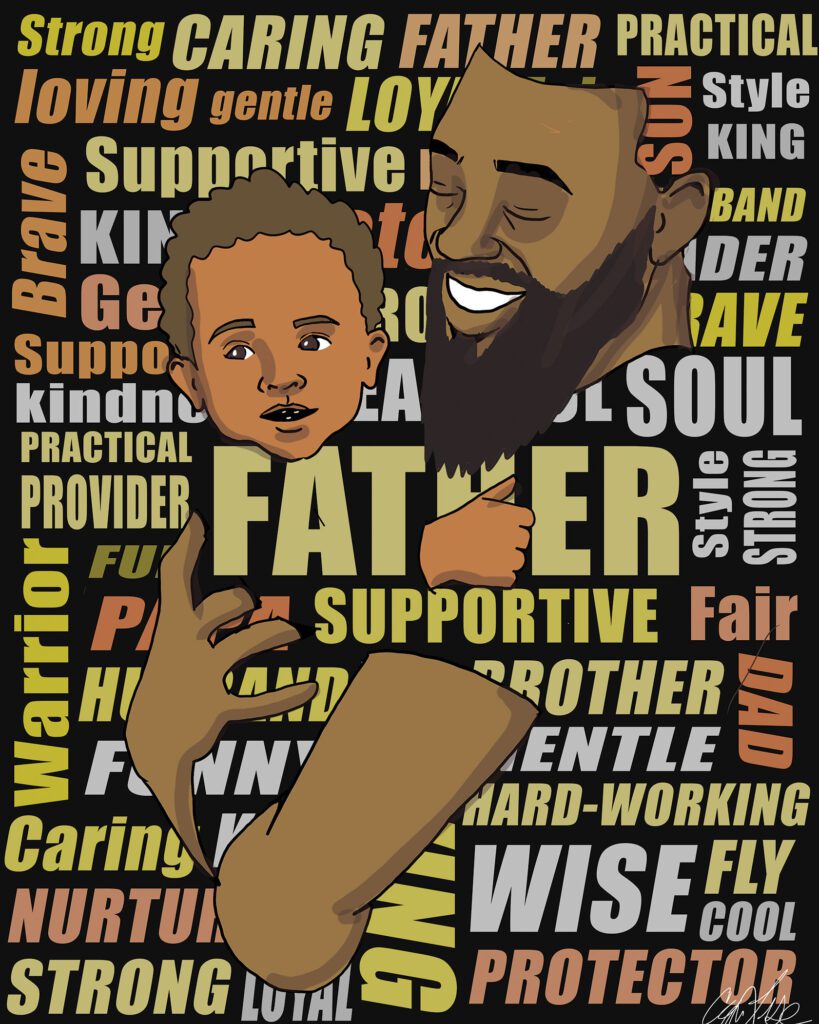
Shout Out To Fathers

It’s Father’s Day and so I should acknowledge that other gender in humanity and what they give to kids when they want to be a father. All too often, fatherhood comes upon a male of our species unplanned and unasked for. That can have a tragic outcome for the child who’s mother is also unprepared to parent. Many times these children end up adopted with all the complications and trauma that entails. Sometimes, the mother tries but the children end up in foster care – either adopted eventually or again out of the system.

In my own case, the three children I have birthed were all planned. I am grateful for that. Both fathers have been good fathers to their children. My own dad, gone now for almost a decade, did the “right thing” by my teenage mom and me when she turned up pregnant, still in high school, and after he had only started at a university. He gave up his own dreams of higher education to go to work in a refinery – often very long, double shift hours – to support his family which eventually included 2 younger sisters for me as well.

My own daughter ended up being raised by her dad and step-mother when I proved unable to financially provide for the two of us as a single mom. Though that left me feeling like a failure as a mom, when I remarried later in life, my husband surprised me by telling me after a couple of Margaritas that he had been thinking he wanted to be a dad after all (he had been grateful I had already done that and that there was no pressure on him). He has been an awesome, dedicated father willing to drop whatever else he was doing if called up by his sons. I was healed of some of my earlier motherhood issues by discovering I could actually be a decent mom.

Many times, in my all things adoption related group, men have stepped up and actually fought the legal system to regain a child that was given up for adoption by their single mom. I have a huge admiration for such men and they do an awesome job of parenting. Happy Father’s Day to all men who have found themselves, one way or other, parenting a child – especially those who had to do so without the mom’s involvement, for whatever reason. You are true heroes !!

Contact Preference

Father’s Day is Sunday. Today’s story asks adoptees a question about contact preference – Adoptees, would you have wanted your natural father to reach out to you or your adoptive parents ? Or would you have rather they let you find them, when you were ready ?

Background (not my own story) – My husband has a child that was placed with a family and just turned 18. He has not had contact with her since she was placed, when she was a toddler. He would like to reach out to let her know that he’s available, if she wants a relationship moving forward but isn’t sure if he should wait until she reaches out or go through her adoptive parents.

One adoptee laments – I wish my dad would contact me. I am 36 now and still wish for that.

One person thoughtfully notes – I’m not sure how is react if my father gave me up for adoption and then I found out he adopted another child. Whatever you do you’ve got to really think about the best way to break that news to her. That’s potentially very crushing. An adoptee says –  I’m adopted and I would be hurt if one of my birth parents adopted another kid after giving me up.

The person asking the initial question adds more context – we already had the challenge of us having a biological child after we were married – then adopting. So our children are areas that may invoke hurt. It’s part of why he hesitates to reach out. From my point of view, I figured not reaching out for fear of hurting her is worse than reaching out and causing potential pain that can be discussed and worked through.

Another adoptee adds – I would much prefer my parents to reach out to *me* than through my adoptive parents. That feels weird and invasive and uncomfortable. And not all adoptive parents welcome this connection — mine don’t and I’m in my 30s. So.

The one who initially asked the question responded – totally makes sense and I figured as much. He didn’t want to step on their toes and undermine but he’s not trying to take over either, just provide her the option to reach out to him, should she want a connection at some point.

An Adoptee Rights Activist says (who is also an Adoptee and the Daughter of an Adoptee) – Definitely reach out to her directly.

Looking For Context

Today’s complicated situation –

12 years ago my brother got married and had a baby very young. About two years into the marriage his wife wanted to separate, so they were co-parenting. She then decided she wanted full custody and made a laundry list of allegations against my brother in order to obtain that, but ultimately was not successful. When that failed, she told him he was not the father— which turned out to be true. At this point my brother had raised this child for 3 years and loved being a father and was absolutely devastated. A series of events led to him making the decision to step aside and sign away his parental rights so that the mother, real father, and baby could be a family. It shattered him and he processed it like a death of a child.

9 years have past since he stepped away. Since then the biological father has completely disappeared and she has been remarried 4 separate times. She has been placed in an involuntary psych hold on 2 separate occasions and has some serious mental health struggles.

Fast forward to this month. Everyone in my family, including myself and my husband, have received letters from Texas Child Protective Services (where the mother lives— all of us are in New York) looking for family of this child and saying there is an open case. We responded saying that we know of the child in question and are awaiting more information.

My questions are: Does this letter mean the child is in CPS (Child Protective Services) custody/the system ? What happens here, since we are not actually blood related to this child ? Does this mean the mother has been deemed unfit in some way ? Or that other family has been unresponsive to this search for connections to this child ?

The grandparents on the mother’s side are incredibly abusive, and her sibling is in jail for shooting a gun at someone in a park. It seems the biological father’s family wants no part of this child’s life. I have no idea what any of us in my family would do from here— my brother is married and now has a 4 month old— and no one in my family is in a great place to take in a child, nor am I sure that would be the right thing to do ? But we are all very concerned— we loved this child deeply and were heartbroken when all of this took place. I know at this point she is a traumatized pre-teen who has probably been through hell and back. I guess I’m just wondering what the right thing to do in this situation is, and looking for context for what this CPS letter means in terms of the child’s welfare.

One knowledge response was – They are clearly looking for Fictive Kin. Please try to discover more and if / how your family (especially your brother) can get involved for the youth’s sake.

Similarly – They are looking for fictive kin. This can be anyone who has had any connection with the child (neighbors, parent’s co-workers, religious community, teachers, etc.). It’s heartening to know that CPS has actually contacted you all. The best way to get a better picture of what’s going on to with the child is to respond to the CPS letter. You’ll most likely be placed in contact with a social worker who’s been working on the case. I have a list of questions you can ask (see below). Hoping for the best for the child, her natural mother, and your brother.

Here is a list of questions for a situation such as this –

Reason for Placement:

Can you tell me a bit about what led to the child being placed in foster care ? Just trying to understand their backstory a bit.

How’s the child handling the transition into foster care ? Any particular challenges they’re facing ?

Legal Proceedings/Termination of Parental Rights:

Has there been any progress or updates regarding legal proceedings or the possibility of terminating parental rights ?

How’s the child navigating through any legal stuff ? Are they aware of what’s happening, and how are they coping with it ?

Child’s Development:

What’s the current living situation like for the child ? How are they adjusting to it ?

Can you tell me a bit about the child’s personality and interests ? Just trying to understand what makes them tick.

How’s the child doing in school ? Are there any particular subjects or activities they excel in ?

Do they have any hobbies or talents that they’re passionate about ? Just curious about what brings them joy.

Family Dynamics/Relationships:

How often does the child get to see or communicate with their biological family ? And how are those interactions going ?

How do they get along with their foster family and peers ? Any budding friendships or challenges they’re facing ?

Support and Services:

What kind of support services are available to the child and their foster family ?

Are there any particular cultural or religious considerations we should keep in mind while caring for the child ?

Future Plans/Goals:

What are the long-term goals or plans for the child’s placement ? Any steps you’re taking to work towards those goals ?

How can we, as their foster family, best support them in their growth and development ?

Health and Well-being:

Are there any health concerns or medical needs we should be aware of ? How are you addressing those ?

How does the child express their feelings or emotions ? And how can we help them develop healthy coping skills ?

Saved From Foster Care

Evgeny Anisimov with Misha

We have discovered in my all things adoption group the strong love some fathers have for their children. More than once, that group has provided financial assistance and emotional support to fathers who’s children were given away by the mother without the father’s consent. This story is heartwarming and special for me, the boy’s name is the same as my daughter’s. We did know the name had Russian roots. Her dad chose it and gave it to the hospital authorities before I knew he was going to name her that (we had thought we were having a son and so a female name had never come up). My daughter was born in El Paso Texas which is on the border with Mexico and in the Spanish language, female names end with an “a”, so it worked and I love that it is her name.

Back to the story, provided by LINK>My Positive Outlooks, Mom wanted to give up baby with Down syndrome to Foster care, so dad decided to raise him all on his own. “My determination, activity, curiosity, and so on—everything was with me. Everything happened as I planned, my son was born. But the child is special, his life and future destiny are already very significant,” Evgeny said in an interview. He realized the child was his responsibility and that he should be up to the task of taking care of him, no matter how difficult that may be. His wife however wanted to surrender their son to foster care.

While every task is simple, the single dad admits doing it every day is difficult. Luckily for him, his mother helps him, so he can have time for himself. “I understand that the future might bring more issues, but I hope that we will be able to overcome everything,” he said. He also hopes to support and inspire by his example those people who are or will be in the same situation as him.

The Luck of the Irish

Mary Jane Davis Hempstead

The luck of the Irish, may not actually be lucky. I never forgot my dad’s birthday (actually March 18th) because he was coincidentally named Patrick, even though his actual great grandmother was full-blooded Irish. I say coincidentally because he was adopted from The Salvation Army. His unwed mother had an affair with a married Danish immigrant, not yet a naturalized citizen. She had lost her mother at the age of 3 months. She had stubbornly refused to return to North Carolina with her father, sister and an abusive step-mother after visiting her aunt (the sister of her father) in La Jolla, California. She handled the pregnancy with the same self-resiliency that she handled everything life threw at her.

My ancestral line is this – Mary Jane was born in New York City in 1840. Mary’s parents were both born in Ireland – Robert (born 1808) and Mariah (born 1813) Davis were married in 1867. Mary had lots of brothers and sisters. Austin E and Mary J Hempstead had two children, Raphael Vandervort Hempstead (my dad’s grandfather) and Laura Eldridge Hempstead (my dad’s great aunt). Raphael was born January 28 1870 at Greenport New York. Laura was born 1873 at Oyster Bay New York. Austin E died in San Diego near his daughter Laura on May 18 1932 at the age of 90.

My dad feared what was behind his surrender to adoption. When my adoptee mom wanted to find her own mother, he cautioned her that it might be opening a can of worms. Sadly, my dad’s biological, genetic half-sister was living only 90 miles away from him in New Mexico when he died. PS – my dad LOVED to drink beer but not the green kind.

My dad on my wedding day in 1988