Post-Partum Depression

Giving a baby after giving birth is not the end of the story for many birth mothers. To be fair, there are a lot of links about adoptive mothers suffering post-adoption depression. Mostly due to unrealistic expectations about getting what they wanted. Some become depressed because adopting didn’t fix their underlying issues. Few think about the birth mother after she gives up her baby. Post adoption depression is the depression that a woman feels when her child is adopted away from her.

The reported rate of clinical postpartum depression (PPD) among new mothers is between 10-20%. In many cases of postpartum depression occurs within four to six weeks after birth because of the extreme hormonal changes; however, symptoms can appear up to 18 months after birth. Many birth mothers believe that they can’t experience postpartum depression after adoption. However, postpartum depression after adoption is as common. 

I found content at this website – LINK>Texas Adoption Center – helpful for discussing the issue. There is much more there than I have time to cover in this blog today.

What are the signs that you are experiencing post-partum depression after giving up your baby ? Postpartum depression is defined as an episode of major depression associated with childbirth. Almost 600,000 women are diagnosed with postpartum each year and many cases of PPD go undiagnosed and untreated.

The symptoms of regular and delayed PPD are the same. However, the symptoms of postpartum depression and the “baby blues” are different. The “baby blues” refers to the feelings of sadness, worry, fatigue, and self-doubt that nearly 80% of birthmothers feel after delivery. This typically only lasts for a few days or weeks and resolves on its own. 

In postpartum depression, estrogen and progesterone levels decrease significantly after delivery. As you work to balance the physical and emotional demands of giving birth and placing your baby for adoption, these changes can affect the chemistry of your brain. Physical exhaustion, sleep deprivation, self-esteem issues, and the emotions of making the best decision for you and your baby play a significant role in developing delayed PPD. Postpartum depression after adoption is similar to other episodes of depression that can occur during life. While the “baby blues” typically go away within 10-14 days, PPD is characterized by a daily loss of interest and joy in life that lasts. 

The most common signs include:

  • Loss of interest in activities you used to enjoy
  • Weight gain or loss that isn’t associated with your diet
  • Changes in your appetite
  • Unexplained crying or constant crying
  • Fatigue
  • Loss of energy
  • Feelings of guilt, worthlessness, or hopelessness
  • Changes in your sleep patterns
  • Suicidal thoughts or attempts 

In addition to talking to a doctor or therapist (postpartum depression is a medical condition), you can be kind to yourself. Focus on your health and well-being. Don’t isolate yourself and be patient as you process such a major event in your lifetime.
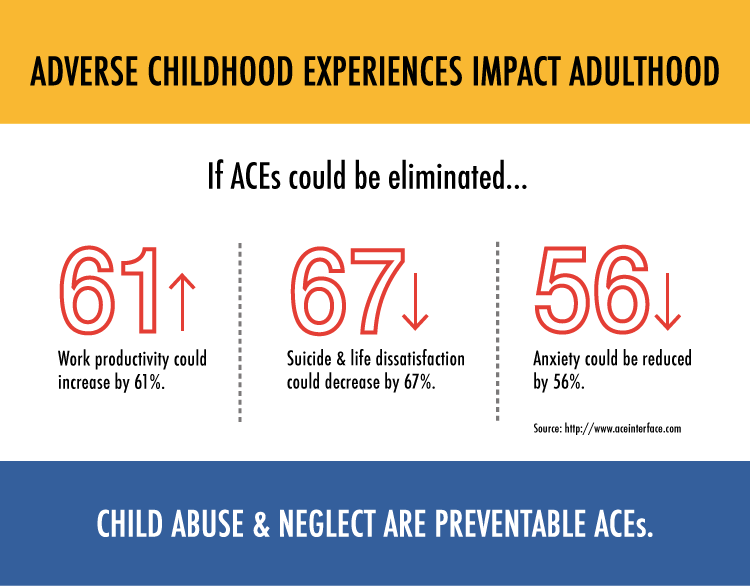
Adverse Childhood Experiences

For several months now our entire country and most of the world has been living with toxic stress.  It’s the kind of stress that puts you on edge and keeps you there, day after day after day.  If you have felt stressed, imagine what it would be like to experience adversity and/or abuse — not having enough to eat or being exposed to violence – then think, what if the one experiencing this is still a child.

Factors such as divorce, domestic violence or having an incarcerated parent are called adverse childhood experiences (ACEs). Four or more ACEs can result in chronic health conditions such as heart disease or diabetes. In the long term, living with ACEs or other negative factors, such as poverty, can literally change your brain chemistry.

What does it look like for a young person to live with several ACEs and no supports ?  What does a foster parent experience when bringing a middle school or teenage foster youth into their home ?

It might be not being able to sleep without a light on. Or it could be eating even when one is full or not hungry. Some children become “runners” — they leave school whenever they become upset.

And the symptoms can become even worse.  The child may become a cutter; may be suicidal. Such children can have trouble forming appropriate friendships. Maybe they trash their room; in one fight-or-flight moment, climb out of their window and tumble to the ground. Even jump out of a moving car.

A foster parent could find themselves restraining the child physically by wrapping their arms around the child’s shoulders or waist, using all their strength to keep the child from leaving or hurting their self. Maybe you raised your hand only to motion toward something and the child flinched or even ducked.

And your heart breaks for this young person.  You had hoped they knew you would never hit them.  You are a foster parent.  You signed up for this because you thought you had something to give — time and care and love — to kids who desperately need that.

You might become the person the county calls when a child is removed from a home and has nowhere else to go, or when a foster family needs a break. This is known as emergency respite.

Most foster kids want to be happy.  After a lifetime of abuse and neglect, they may not know how.  A foster parent is also there to be a support for reunification with the biological family.

The best foster parents build a fortress of protective factors around their foster children. Protective factors are those things that most of us take for granted — a friend to call when we need advice; someone to help whenever we aren’t enough on our own.

Some of us are born privileged to have built-in protective factors (a supportive family, enough money).  Most foster kids will need to collect them from somewhere else (perhaps a chosen family made up of friends). At school, they require trauma-informed teachers and staff who understand how ACEs can be reflected in behavior.

National data shows that more than 20 percent of children up to age 17 have experienced two or more ACEs.  Beyond abuse (physical, emotional, sexual) and general neglect these include the loss of a parent to death, divorce and abandonment.  A family member addicted to drugs or alcohol.  A family member that is incarcerated. Being exposed to domestic violence and mental health issues among the family’s members.

Brain toxicity exists. A child can have post-traumatic stress disorder. ACEs are not limited to low-income neighborhoods, domestic violence and substance abuse take place in higher income homes and are every bit as toxic. Learn to look at all people through a trauma-informed lens. Ask, if you suspect this, “What happened to you?” and then listen without adding your own opinions.

Every domestic-violence shelter worker or child-care provider, anyone who works for child-protective services, anyone associated with family court, law enforcement personnel and physicians – ALL need to be trained appropriately to deal with trauma related behavior

Trauma is not the fault of any child.  Understanding ACE impacts allows adults to see the reason behind the behaviors.  Baby steps in a positive direction are progress.