When Does The Sadness Stop ?

An adoptee writes – I just want to know: when does it stop? The pain? The crying for no apparent reason when my boyfriend leaves my townhome after a night together? The deep, abiding loneliness? I think that is what it is, anyway. It is so hard. I’ve been in therapy since the divorce over five years ago. Hell, I’ve been in therapy off and on my whole life. I thought there was something “wrong” with me until VERY recently when I heard the adoption trauma lecture on YouTube and after listening to the audiobook “What Happened to You?” by Oprah Winfrey.

This had me looking for the book. I found a review by by LINK>Sarah O’Connor on WordPress. She writes – What Happened To You? is an incredibly detailed book. The book looks at what happened to a person to cause certain behaviors, reactions, and lifestyles instead of assuming something is wrong with a person based on how they act. She thought it was a very accessible way of writing a book on trauma.

I also learned there is something called the Dart Center for Journalism & Trauma which is a project of Columbia Journalism School. They have YouTube where their executive director Bruce Shapiro had a conversation with Oprah Winfrey and psychiatrist Bruce Perry MD.

So, good to know about this book. Back to the adoptee’s thoughts. One replies – I am trying to find words. Because mostly, this resonates. I think something people forget that us domestic infant adoptees are built on trauma. Like our first out of the womb experience is LOSS. How can we be “normal”? And just when I think I have dealt with a part of it, a new part of the pain and loss pops up and says hello. Just know you are not alone. (And I am very close in age to you.) The first woman responds – You’ve described it well: just a sense of deep loss… For as long ago as I can remember.

Another writes – I thought something was wrong with me until I hit 40 and learned about adoption trauma. I’m deconstructing too, so I can relate to the added layer of complexity and questions of belonging and identity. I also have complex post-traumatic stress disorder. I’ve been doing intense therapy for several years, which helps. I try to take a lot of time for self care. Sometimes that looks like a cry and a nap. Other times it’s something more creative so I don’t fall into a funk. I don’t know if I will ever feel “normal.”

One writes –  I was adopted as a small child internationally. I am now a mom of 4. Amidst the daily tasks and just life, I carry with me a deep sadness that can’t be pinpointed. It’s just there. The absence of my first parents and being far from my siblings is really soul fracturing. It feels like a brokenness in me I will live with forever.

Yet one more adoptee writes – I think I’ve realized it will never stop and I just have to learn to live with it in a way that doesn’t destroy me, which certainly isn’t an easy feat.
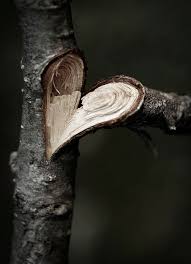
The Wounds and Heartbreak of Adoption

In truth, we have to integrate our wounds into our understanding of who we are and what we are really capable of so that we can be whole human beings.  Only from there can we begin the process of healing the brokenness, the broken-heartedness within ourselves that is then the foundation for beginning to heal that in our larger society.
~ Rev Angel Kyodo Williams, Radical Dharma

Many adoptees seek a reunion with their original families to heal the woundedness and heartbreak of being abandoned (the adoptees’ perspective) by their original parents. If it goes well, it goes a long way toward healing those wounds. If it goes badly, the wound becomes further infected unless the adoptee can somehow reflect upon the disappointing experience to find wholeness within their own self.

An adoptee may ask –

When do I get good enough so that my despair goes away ?

Who will love me enough when they see who I really am ?

The shadows and vague memories of what happened to me are hard to sit with. Why do I keep running everyone away ?

Will I suffocate in the silence of my lack of identity, my lack of knowing the origins of my birth ?

What use does crying my tears really do for this pain in my heart ?

Systems of power and abuse depend upon not acknowledging the suffering they cause.  The rainbows and unicorns version of all the good adoption does fails to acknowledge the suffering that the adoptee experiences and the suffering the mother who gives up her child carries the rest of her lifetime.  Often that suffering is so painful, the mother will reject her child, who is only seeking to reconnect with her, because the mother fears being rejected by her child, when her child knows the reality of the mother that gave birth to her.

It is a horrendous cycle of unending suffering in many cases.  My heart breaks for the reality.  And I really don’t have answers, only empathy and compassion for the entire situation.

Am I capable of enduring suffering, facing martyrdom ?
And alone ?
Again the long loneliness to be faced.
~ Dorothy Day

Is Gotcha Day Offensive ?

Personally, I have always found this disturbing.  I really can’t believe an adoptive parent thinks like this but it does seem to be a common thing.  I wonder how the child might feel growing up knowing their own birthday wasn’t important.

“We celebrate our children’s Gotcha Day not birthday. The birthdate is the day they were born not when their life began. Gotcha day is what we celebrate and acknowledge as their new birthday. It’s when we became a family, their family. That’s when they were born into our family. Gotcha day is their birth into our family and as their parents. The moment all of our struggle was worth it and forgotten, similar to when a woman gives birth. All the pain washes away, when you finally meet your child”.

One adoptive parent said, “I understand that most people who have not adopted a child simply do not know that their questions may be rude or offensive or not the politically correct adoptive term.”

Families celebrate this day in many different ways and it can vary from a large party type celebration to a minor recognition to nothing at all.  Adoption comes from a place of loss and brokenness.  It also carries with it heavy emotions for everyone involved.

The term “gotcha” is too casual for the arrival of a child into the family. It can be insensitive to all parties involved in the adoption process.

One adoptive parent prefers to use the term Finalization Day but would be equally comfortable with Adoption Day.  Still, she prefers finalization as it’s more specific to what the day actually is.  She also admits that over time this may evolve and change.

As she explains her reasoning, she shares that she and her husband talked about it and put a lot of thought into it.  They arrived at the decision to mark “Finalization Day” on their calendar and to consider it a celebration of the day that their family became whole and complete.

As a somewhat enlightened adoptive parent (I would not say completely enlightened but adoption is going through a definite reform in perspective that is painfully slow for some of us but progress never-the-less) she acknowledges that it is very, very important to always honor her son’s birth family and his story.  However, it’s also not something she wishes to focus on all the time. It’s a PART of who he is and she sincerely hopes it does NOT define him.  Only time and maturity will prove whether that is true or not.

While he’s the original mother’s son and always will be, he’s also their son and their other children’s brother.  It is understandable that she would want him to never feel singled out or like he’s any less loved or less part of their family.

She goes on to admit that it is a very delicate balance. And every adoptive child and adult will feel differently about their adoption journey and story. Each adoptees’ story is special and unique and it’s not a “one size fits all” situation.  Adult adoptees go many directions in how they feel regarding their adoption. That’s honest.

It seems that her hope is that he’ll never, ever want to think or talk about adoption. Maybe he’ll just want to BE and not think deeper about how he came to be who he is. Not consider himself an “adoptee.”  That is probably wishful thinking but oh well.

She goes on to also explain that all of their children have adoption as part of their personal story. They have all been touched by it and are walking this path together.  She acknowledges that as they grow up, they all may have their own thoughts, feelings and questions.  To her credit, she always wants to be an open book with them and readily share anything – at ANY time of the year – that they might want to know.