Doing A Good Work

A woman writes – I wanted to thank the adoptees in this group for what you have done. (Blogger’s note – I usually do not post a link to that group but if you are wanting to know about it, ask and I will point you in that direction.)

A little about me – I joined the group early this year as a hopeful adoptive parent because I was curious about your perspectives having never really heard them in the mainstream. My personal philosophy is that the internet’s best use is to help platform voices of marginalized people. This group continues to impress me with the rules and moderators who protect adoptees’ voices – in all my perspective-hunting, I have not seen an equal to this group and recommend it to everyone at any mention of adoption. You all taught me SO much.

Earlier this year (about 2 months after joining the group) I learned of a young mother in my area with a 2-year-old and 6-week-old who was homeless. Her parents attempted to weaponize the state against her to take her children. With all your voices in my head, another woman with a heart for our community and I started a group to support our homeless population, with my own focus being the many young mothers with no safety net (we have shelters for single men in my area but nothing for women or children).

Our young mother is now flourishing; she has a home, a job, and a support system. She has a PFA (Protection from Abuse) order against her parents and is legally protected. She wanted to pay it forward, and helped us support another young pregnant woman who was prepared to give up her child – instead, Mom #1 threw her a baby shower and held her hand through every step of the process. Now that baby is thriving happily with his momma, and she wants to help pay it forward to the next mother.

Because of your emotional labor, there are 3 children still with their mothers and a support system in my community to protect future mothers and help struggling ones. There are at least 4 more mothers who thought they couldn’t do it but are now off the streets and have their kids at home with them. Christmas with all these families was an absolute blessing; we were able to get all the kids gifts without their mothers having to dip into their funds. Someone dressed up as Santa to deliver them. A lot of the moms cried because they never expected to see the holidays with their kids.

You made that possible. (Blogger’s note – and any person who has the desire could do as much.)

Living In Delusional LaLa Land

Delusions are beliefs that are held by many people based on inadequate information. Often, such people are resistant to rational arguments or evidence to the contrary. In other words, there are beliefs about adoption and adoptees that are based on incorrect information about the actual experience or even worst still, a bias based upon a profit motivated agenda. Adult adoptees are speaking loud and clear today about what their own experiences have been. From the all things adoption group that I am a part of, an adoptee (who is also a former foster care youth, former foster parent and a mother) expresses herself quite bluntly, but honestly –

So many assumptions, stereotypes about adoptees, and whataboutisms. I just wanna say that most of us have jobs, lives, relationships, children (or grandchildren!) of our own and plenty of other life obligations. Yet we are there to share with you our honest experiences.

Talking about your own adoption and adoption in general, when you’re a grown adult who has spent years and years in therapy, healing and growing, is A LOT of emotional labor for many adoptees. So, the adoptee posting this, doesn’t care about nor does she want to hear opinions from adoptive parents. So, please don’t comment with some self righteous, “I am not like THOSE people” story.

In a space that is supposed to prioritize adoptee voices, adoptive or hopeful adoptive parents seem to want adoptees to hold their hand and coddle them, by sharing the adoptee’s own trauma. That group space is literally called “facing realities” for a reason. So many adoptive or hopeful adoptive parents are just living in a delusional lala land. That simply isn’t the reality for many of the adoptees who are there. If you find yourself is such a space – please be considerate of the reasons that adoptees are there.

What are those reasons ? Most of the adoptees that are there, are there, because they care about your children. Deeply. They don’t want more children sitting at a window wondering if their mom is going to come get them. They don’t want more children being told their feelings are wrong or that they should be grateful. They don’t want children to grow up and be treated like they are bad, when they finally start to come to terms with their feelings.

Adoptees are not in that kind of space to be there for adoptive parents. I say that respectfully. They are there for the kids. If you truly care about your children and want to learn, then pay attention and learn, when you encounter a space like that.

To any of the other adoptees and former foster youth that are there – please do prioritize yourself over any obviously self-centered people. Yes, it IS triggering to see the selfishness. YOU really do matter more. If you need to, take a day off. Start your preferred self-care ritual. Do not let selfish people drag you out of the happy place you’ve built for yourself. I see you. I’m proud of you. Your voice and feelings matter.

The Legacy Of Family Separation

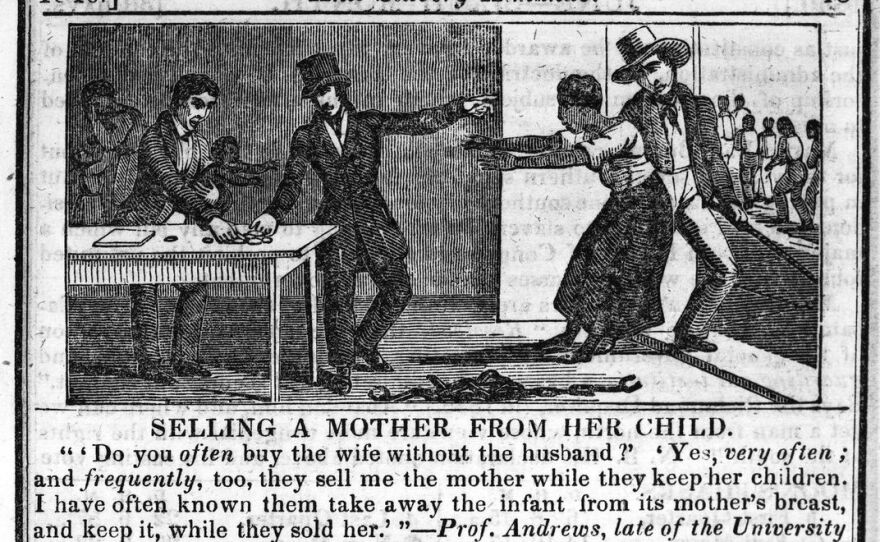
Since today is Juneteenth, a federal holiday that recognizes the date when the last enslaved persons were finally informed of their freedom, I thought about all of the children that were taken away from their parents, primarily from their mothers, during the period when slavery of Black people was common in these United States.

Black Perspectives is the award-winning blog of the African American Intellectual History Society (AAIHS). They are deeply committed to producing and disseminating cutting-edge research that is accessible to the public and is oriented towards advancing the lives of people of African descent and humanity. From the Black Perspectives website, LINK>Slavery and America’s Legacy of Family Separation by Vanessa M. Holden. Forced family separation was always a fixture of the lives of enslaved people. Enslaved children were a lucrative business. The expansion, maintenance, and future of slavery as an economic system depended on these children, particularly after the close of the American trans-Atlantic trade in 1808. 

One such story comes from Harriet Mason, who remembered her mistress forcing her to leave her home and family in Bryantsville, Kentucky, to work in Lexington as a servant at the age of seven. She remembered, “when we got to Lexington I tried to run off and go back to Bryantsville to see my [mother].” The grief of a childhood spent away from her family at the whim of her owner led her to suicidal thoughts, “I used to say I wish I’d died when I was little.” Even in her old age she was firm that, “I never liked to go to Lexington since.”

Slaveholders borrowed against their human property. They gifted enslaved children to their white sons and daughters as children, upon their marriages, or as they struck out to begin their slaveholding legacy. And of course, slave children could be sold down the road and down the river. Children knew that at any moment this could happen to them.

Blogger’s Note – Last night, my oldest son wanted to know if anyone in our family had benefitted from the labor of slaves. Eventually, it was suggested that every American has. I know that among my mother’s own genetic, biological family there were slave owners (I saw one will that was stipulating slaves by first name and who they were to be given to). I also know that side of my family also fought on the side of Confederates in the US Civil War. I’m not proud of being the descendent of these realities.

From the linked article – To profit from slavery and participate in slaveholding, Lexington’s white residents did not even need to own, buy, or sell a single slave. Someone made the shackles. Someone ran slave jails. Someone generated the official documents needed to transfer property. Someone hired enslaved children to work in their homes and businesses. Adults running with children from officials who would separate them was a feature of fugitivity during American slavery. To produce the “fugitive” category, a range of institutions sprang up. Local money paid sheriffs, courts, and officials to uphold the law that protected slaveholders’ rights to their human property. Someone printed runaway ads. Someone made money on enslaved peoples’ bodies at every juncture.

Along with physical labor, children deemed by the state to have unfit parents and placed into adoptive homes, perform emotional labor. Adoptees not only lose their birth families in the process, but they also lose ties to culture, language, country, history, and identity, and must contend with societal expectations that they be grateful for a “better life” in the face of it all. Children of color adopted by white parents also face racism in their new homes and communities. There is emotional labor too in being the physical body that allows white families to appear more liberal or multicultural, even if the opposite is true. In the United States, adoption is an industry and, as adoptee advocates continue to warn, it is poised to profit from family separation. There is already precedent for keeping children in the United States after a parent has been deported and awarding custody to American adoptive parents over immigrant parents caught up in immigration proceedings or because they were detained or incarcerated.

Black families are separated by the bond and bail system, incarceration, the child welfare system, and the criminalization of poverty. All can lead to family separation and the loss of one’s children. Child welfare advocates also recognize the link between the disproportionate number of Black children in the foster care system and the pipeline from foster care to prison.  All of these contemporary systems of power are echoes of legal and social structures that devalued enslaved parents and profited from enslaved children during American slavery.

We need to acknowledge these links to the history of American slavery and the ways that African Americans continue to endure discrimination. Following the money exposes the truth.

Thinking About Adopting ?

A woman writes in my all things adoption group –

I’m not sure anyone cares about validation but I guess the administrators can decide. I just wanted to say thank you. I joined the group like many do, I was interested in adoption and really just putting a toe in the water. I waited my read only period. I went through the “wtf are these people talking about, anyone who adopts is a Saint”. Then I went through the “uh oh, is everything I know about the world even right?” Then I went through trying to explain this to my husband which didn’t go well. I’m getting ready to leave the group. Adoption is completely off the table and I’ve set up time to volunteer at my local teen pregnancy center.

Being a human is a wild thing. Thanks for being vulnerable and doing emotional labor. You really are impacting the world.

Edited to Add: I’ll gladly stay! I hadn’t thought about it but would be happy to stay and help where I can.

She was not the only one, soon others were chiming in. The one below was NOT the only one to express similar sentiments. This is also why I write this blog because I can reach others not in such a group or with such aspirations but who are uninformed about adoption trauma.

I was a Former Hopeful Foster-Adoptive Parent because of white saviorism. This group opened my eyes on so many fronts – I honestly feel like I see the whole world differently. I’ve learned so much about racism, classism, and ableism. The adoptees and former foster youth who share their stories are the smartest wisest people I’ve had the privilege of listening to. I am immensely thankful you allow people not in the triad to be transformed by this group. I have completely changed my behavior in the real world. I will never again speak about adoption as anything other than trauma. I talk to my friends also interested in foster care about why the child welfare system needs to be abolished and rebuilt, not changed from the inside bullshit. I can’t believe at one time I was willing to provide my home to a child in need but not the resources to their family so they could stay together. I find that incredibly effed up now. I am working on my CASA training so I can help get kids back home and prevent unnecessary adoption from foster care.

The Rev Keith C Griffiths (deceased adoption scholar and activist) quote exploded my brain: “Adoption loss is the only trauma in the world where the victims are expected by the whole of society to be grateful.”

And Paul Sunderland’s theory about developmental trauma caused by a newborn being separated from their birth mother. The trauma of not growing up with genetic mirrors, not knowing one’s medical history or having legally falsified identity documents. I had no idea about these things because I had never centered adoptees’ experiences in my perspectives. This group has truly transformed my outlook on the world !

Looking Back Before Moving Forward

It’s typically a time of the year to reflect on everything that has happened during the last year. It’s always grounding to look back and reminisce on every moment that has stood out. Our local newspaper does this every year – the first 6 months in the issue before New Years and the last 6 month in the first issue published after New Years. It doesn’t matter whether our moments have been positive, negative, happy, sad, or a mix. Every moment we live through shapes us into the individuals that we are today.

I will probably continue to try and write a new blog every day. I learn so much doing this as I don’t constrain myself to repeating my own family’s story over and over again because that really would get boring not only for me but for any readers of my blog. I often share other stories related to adoption that I come across – usually excerpts with a link to the full article. Often I make personal comments within my blog that an article triggers me to think of.

So, yes it’s also a time to look towards the future. Maybe you’ve heard the saying, “New year, new me!” but I don’t perceive anything really new about me or anything truly new under the sun that might be shared in this blog. I never know however when someone may discover an old one in a google search or come across my blog in some random way, so I don’t really expect there will be any earth shattering changes in the content that I write about. Just pounding on many of the same points over and over again, to maybe reach someone who has become receptive to the way I am viewing adoption now – thanks to so much emotional labor shared on social media by adoptees and former foster care youth. I have NO New Year’s resolutions related to my own work here, which my daughter has referred to as my seeming mission. My goal remains trying to come up with something I have not written or shared before and to do so almost every day (I do occasionally miss one). I expect that I will just keep going because I am not ready to give it up yet.

Some foster children or newly adopted ones have been through a lot of trauma. It is reasonable to understand that the holidays may have a negative connotation for them, or they have nothing to relate enjoying a holiday to. One woman writes – I know for my adopted siblings, they were able to look at the first new year that they spent with us as a clean slate. They had lived a life that no child should live before and during foster care. Since we were planning to adopt them before my parents went to meet them, this was the first time that they had a sense of stability. I understand that this is a hard concept to grasp, especially for those who didn’t grow up in the system. Imagine not knowing where your next meal is coming from, who you’re going to be with, where you’re going to be, and if this foster family loves you and willingly keeps you. These thoughts are constantly nagging in the back of their heads, but now it’s like a breath of fresh air.

And so, to you who are foster parents, it may be difficult to not use language regarding the future of your foster kids. It is completely full of unknowns and can be scary for these kids. Put emphasis on the future they can expect with YOU. It may be helpful to reassure them that you will be there for them – while they’re in your home and that you will make sure that they are taken care of.

Acknowledging that some parts of today’s blog were assisted by – How to Celebrate New Years As a New Adoptive/Foster Family? by Emily Perez a stay-at-home mom with a BS in Elementary Education from Eastern Oregon University. When she was younger, her parents did foster care and adopted 5 children from all walks of life to become her siblings.

What Gives Me The Right ?

This is a tricky issue that I have encountered here on this blog. What gives me the right to talk about issues related to adoption or foster care ? Am I an adoptee ? No. Have I spent time in foster care ? No. I do have a connection to adoption – Yes, I do. Both of my parents were adoptees and both of my sisters have given up a baby to adoption – but these are not the reasons I have become passionate about the subjects I write about in this blog. I am almost 67 yrs old and honestly, until about 3 years ago, I was in what is called “the fog,” not seeing anything to be concerned about when it comes to adoption. And I needed enlightenment and educating.

So I joined a group where the voices (thoughts) of adoptees and former foster youth are “privileged,” meaning given the most deference. However, in the group are adoptive parents, foster carers, hopeful adoptive parents and oddballs like me. And so, I have read and read and read there. I have bought books to inform me from the perspective of adoptees and former foster youth. And I get it and now I care about family preservation. I know that most parents actually DO want to raise their own children and those children want to be raised by their natural parents. Most of the time, children are removed from their parents over issues of poverty or solvable problems. Many an unwed woman who finds herself pregnant ends up convinced and coerced to surrender her baby – often to her lifelong regret. That happened to both of my natural grandmothers.

So the issue came up in my all things adoption group today. The woman identified herself as being a hopeful adoptive parent when she was younger. currently a teacher and someone who would like to become a CASA (Court Appointed Special Advocate) when her own kids are a bit older. She admitted that she no other links to adoption. Her question was – Should I stay out of discussions of adoption ? Or should I share opinions that I’ve gained from listening to the members of this group ? When I see posts in other groups or have conversations in real life, I’d like to amplify the voices of adoptees and former foster youth, but I’m wondering if that’s not welcome. She noted in closing – Obviously, you can speak for yourselves on posts like these, but I know it is with emotional labor and at the risk of being gaslighted and all of that.

Someone who tried to speak up was told that she needed a reality check because some adoptees value life and don’t dwell in the past, and that the only trauma is for birth parents who are found years later and have privacy violated. And this is old misinformed thinking. It is the adoption agency line as to why adoptions should be closed and kept secret and it has been proven to be abundantly false by many adoptees who have had successful reunions with their natural parents. Yes, some of these fail or are awkward or come at an inopportune time in a mature adult’s life, especially if they are now married with children from that current spouse. It happens and it is painful and heartbreaking when it does but fear of rejection (which honestly happened to some degree when the child was given up and they know this) is no reason to prevent the effort.

One adoptee shared her own experience – Most first mothers want to be found. Mine was terrified of it but I think she’s glad I found her.

Another one encouraged the effort – Preach it…..pffffftttt on those who fuss ….. remind them that they can not speak for anyone but themselves. The truth will ruffle feathers. That’s ok. I personally don’t mind a dialog about differing view points….but many adoption focused groups don’t want that and delete/block a naysayer.

The one who originally posted the question shared – the adoptive parent I was communicating with felt comfortable speaking on behalf of the child’s birth mother. It bothered me. To which someone else noted – Remind her that it is okay to share her own story but NOT the child’s story! Then it is further revealed –  She also brought up racism her daughter has experienced, so it’s a trans-racial adoption on top of everything. And clear that they are living in a very white neighborhood.

And so, in this particular case, it had become clear that the adoptive mother is wrapped up in some heavy adoption issues. Someone like that becomes so enmeshed, their only recourse is to carry on with adoption speak and in favor of what they created…..a big case of, pretend. That last word is an adoptee’s perspective on what adoption is – someone who pretends to be the parent who birthed you or that they have somehow saved you from a fate worse than death – called saviorism when it is trans-racial adoption.

So, this is partly why I write this blog. To spread some light in the darkness that has been adoption practice for decades as well as share my own personal stories, illustrating one or the other with one or the other. Yes, it has become a cause (family preservation) that I am admittedly passionate about.