Why Is It Different Here ?

How come infant adoption doesn’t exist in countries with social safety nets??

Because women don’t willingly give up babies without coercion and desperate circumstances.

The point above is that many countries outside the US have less than 200 adoptions annually…some only a handful. WHY?

  • Because they don’t allow it to be a multi billion dollar industry
  • It is NOT privatized
  • It is illegal to adopt on your own – no internet/friend matches
  • They have a social support system to help families stay together.

Some additional comments –

The social nets in the US need serious overhaul. I work in a hospital and some of the situations I’ve seen people in are heartbreaking, infuriating, sickening. It makes sense that countries with ACTUAL support see fewer broken families all around.

It was sad to see this one – I wish it was like this everywhere. I’m from Ukraine and it’s a sh*tshow – lots of kids abandoned, horrific dysfunction, zero support. It’s terrible.

Safety nets include but are not limited to: proper science based sex ed, access to birth control of the patients choice, access to medical care, plus abortion accessibility. Access to housing and therapy. I have found a lot of people assume support is $$$ and while that is true to a degree, it is not the whole picture. Building community is the best thing we can do. To which someone else noted – but realistically money solves a ton of issues.

From an adoptee – Safety nets and social resources are so important. It is deeply disturbing that we pay so much lip service to “children are our greatest resource” and pretending that we are all about “family values,” but when push comes to shove, it’s really about greed and selfishness. We need to elect politicians who are more interested in people than money and power.

A transracial adoptee notes – I hate it when they try to make it seem like there are soooo many abandoned babies. Even if there is an expectant mom who wants to give birth (which how many pregnant people are truly willing to give birth, especially in a country with a high mortality rate, to just relinquish the baby) but does not want to parent (as in they have the ability/support/the means to parent but truly do not want to & wouldn’t/couldn’t abort), then what about the father? And if he really absolutely does not want to parent, do they really not have a single family member or honestly even close family friend who would take in the baby? Like the leap to having absolute strangers adopt the baby is just too much for me honestly. I frankly find it a bit hard to believe that there are so many situations where there are 2 capable expectant parents who simply don’t want parent and for not a single family member be capable/willing to take care of the child.

Another explains –  it’s the private adoption industry taking the foster care statistic of approximately 100,000 post-Termination of Parental Rights youth in this country, and just conveniently not mentioning that almost none of them are babies or toddlers. And then, if challenged, they will say ‘but this prevents them from ending up in foster care, aging out without a family,’ although I imagine that would not be relevant to the majority of parents who relinquish privately.

Which brought this recognition – I’ve actually found it incredibly bizarre how some very educated and intelligent people in my life, people who understand systems of oppression in regards to other demographics, a) don’t seem to get that no one gets pregnant to happily turn around and relinquish and b) refuse to understand that different age groups in the foster care system likely have different needs and require different approaches.

And this story from an expectant mother – I’m 42, expecting my 4th. My 1st, I was a single mother when her father left when she was 15 months old. I was a single mother for 10 years when I met my husband. But I thrived. I had a career, bought my own house, could afford a comfortable life. When I married, we had 2 boys over 8 years of marriage. My husband comes from a long line of mental illnesses, which he inherited. Both our boys are special needs, ASD among others. I’m in the middle of a long divorce as my husband is dragging it out and controlling it all as long as he can. I’m now a single mother for a second time. Eventually started casually seeing someone and got pregnant the second time we were together. He immediately jumped ship and was adamant he doesn’t want anything to do with it. Doesn’t want to be on the birth certificate. Nothing. This pregnancy will make me a single mother for essentially a 3rd time, at the age of 43. I am over being a single mother. I don’t want to do this for 40 years straight. I am older. I have no family that would take a baby. I had zero interest in abortion, I live in a state where it’s still legal, but that’s not something I agree with and I couldn’t live with myself. So, yes, I’m the mom that would carry to term just so I wasn’t killing the baby. I also couldn’t live with the what if’s with adoption. So I’m simply left with parenting. Do I want to? No. It’s simply the only option that doesn’t leave me with what ifs for the rest of my life. I fit everything you said is a far stretch. Father does not want, I would not abort, I have already been a single mother most of my entire adult life, so I know I CAN do it, but I don’t want to anymore. I’ve lived that phase of my life. I’m currently reliving that phase of my life with 2 challenging kiddos. And now, my awful luck has me starting all over again a 3rd time. And being in this position, I’ve come to realize there are lots of older women in my position for different reasons. Thought they went through menopause, Birth Control failed, whatever. Married, divorced, there are lots of us. So many people think this is a “young mom” issue, but there is an older crowd no one considers because we aren’t the norm.

Another agreed – the majority from the statistics I’ve seen who are getting abortions are married or divorced older women. I don’t see many choosing adoption at that age.

And a perspective from the United Kingdom – The UK has plenty of adoption, largely because our social services and safety net are so full of holes, struggling families don’t get help and their kids get taken away. What we don’t have is abandoned babies or people voluntarily giving up their infants. Because we have free, readily available abortion for people who really don’t want a kid, free healthcare (even if the government is currently running the service into the ground) and enough of a basic safety net (however fraying) that is usually sufficient that people who choose to give birth don’t feel they have to then give away their children due to poverty. I have a mountain of criticism for the ways our society is failing families, and letting them fall apart, but I still look at the United States in horror at how much worse it is.

Only Ever About Babies To Adopt

I thought this over a year ago, when the Dobbs decision was first leaked, before it was announced by the Supreme Court. Yesterday, I came across a widely diverse piece in the LINK>Politico Magazine Friday Read where “Thinkers from across the political spectrum reckon with the dramatic and unpredictable ways the country has already changed since the historic Supreme Court decision.” They titled their piece – ‘I Underestimated the Depth of Outrage’: A Year in Post-Roe America.

One piece written by Robin Marty, author of The New Handbook for a Post-Roe America, reads – “. . . the Christian conservative activists and politicians behind our total abortion ban abandoned their pretext that this was ever about anything other than making babies for their families to raise.” It occurs to me that with dwindling numbers of people going to brick and mortar churches, taking the babies of “heathens” (woman who did not remain chaste and conceive in marriage) and indoctrinating them in the faith is one way to increase their numbers.

She notes “. . . we have not seen one single public policy introduced that would help a person avoid pregnancy — no subsidizing of affordable, accessible contraception, no expansion of Medicaid for pregnancy prevention or earlier prenatal care, no additional funding for hospitals, clinics or other medical centers that are feeling the burden of additional pregnant patients needing services.”

“Instead, we saw a Legislature that created more subsidies for adoption and fostering — despite the fact that the foster care system is already underwater. The Legislature couldn’t even muster enough support among themselves to pass tax breaks for the predominantly Christian crisis pregnancy centers that are allegedly supporting mothers during pregnancy. We passed death certificates for stillbirths and “baby boxes” for abandoning newborns (now up to 45 days post-birth instead of just three). We saw an attorney general who argued that pregnant people could be jailed for taking abortion pills — who was then forced to walk back his words. We saw a lawmaker try to codify that same threat into law before his colleagues killed his bill in committee.”

She asks – What (do) the conservatives really want out of an “abortion-free” nation ? It is a place where people are forced into pregnancy, where their personal health and liberty has no relevance, and where the ideal outcome is a live infant by whatever costs. After all, they have plenty of “good” Christian families to raise them.

blogger’s note – I wonder what the real outcome will be ? – more single, unwed, mothers are choosing to keep and parent their own babies. There will be more children raised in poverty and more stressed out mothers trying their best to provide for their families. Maybe the “extra” number of babies they actually get out of this will be less than they thought there would be.

Another one, Abby M. McCloskey (who is a Republican) admits – “I have been disappointed that the rollback of abortion rights in red states — like mine, Texas — hasn’t been met with more robust financial support and protection for mothers and children. I understand that more government support is a turnoff for conservatives, especially in our fiscal environment. But in this case, I believe it’s the wrong place to draw a red line. As someone who values life and believes in the importance of strong families, it is a logical extension of the pro-life argument to protect and value life at all of its stages.”

She notes – One basic way to improve support for families is to provide a baseline level of wage support and job protection if a parent chooses to take time off of work to care for their baby, (which we know is associated with better outcomes for both parents and kids). Lack of job protection and financial insecurity are the leading reasons why (more parents don’t take time off from work following the birth or adoption of their child); few low-wage or hourly employees have paid family leave options from their employers.

She adds that she will be looking with great interest at what GOP presidential candidates propose this next cycle to support families, especially for the women impacted by the end of Roe.

blogger’s note – Of course, if people who can afford to pay for adoptions end up with the “extra” babies, the actual genetic, biological parents won’t need to the government to help them fund the raising of their own children. There are many more points of view in the Politico article at the link above.

Unexpected Breakdown

The challenges of trying to help in an impossible situation from today’s story.

I signed up to foster teens and older kids. Had an emergency placement as my 1st. Teen was essentially homeless – no family would take her. She would have spent the night on Div of Family and Child Services’ (DFCS) floor or in a hotel. This type situation is pretty much what I envisioned as far as the kind of placements I would get.

She did well a few weeks. I treated her like a visiting niece. Introduced her to family and kids her age. Took her places. Got her all food she wanted from grocery store. She cooks and likes a lot of ingredients. Did normal things I’d do with any teen relative, watched movies, played with dog she loved, got her nails done. She wants to age out and be in an LINK>Independent Living Program. I asked for a DFCS meeting to discuss options according to her wishes.

Some of her family refused contact with her. They could/would not foster her for certain reasons. It was not a financial issue – all her family had money. I don’t have their contact info. Per her suggestion, I made friends via phone with her other extended family who live several hours away. We got along great.

DFCS, for legal reasons, had many restrictions placed on her. I will not get into those. I am not looking to adopt. She’s in serious legal trouble. I have to abide by the rules. Due to the strict restrictions, she had a huge mental occurrence from that. She is smart but has mental health diagnoses that will make anything like this worse. The restrictions were not from any self harm or violence towards others, but still very serious.

DFCS removed her from my home, due to her mental issues, and they said she needs a group home or a strict experienced therapeutic home. I agree because she was very mentally ill. Had she been my biological teen, I’d have put her in lots of therapy and maybe sent her to a reputable overnight summer camp, if she wanted to go. DFCS would not grant permission for her to do either, based on her legal situations.

Her personality was outgoing, she loved doing activities like in certain kinds of teen summer camps. I did not sign her up for any, as I didn’t know how long she’d be with me. She has some extended family who might have changed their mind and taken her in. That would have been great.

I asked DFCS from day one for a recommendation of mental health therapy for her. The teen actually also asked for it herself – many times. Long story shorter, I could not get it for her – DFCS said they were working on it. It took a month to get a call back just to set up an appointment. On that day, by sheer coincidence, she had her big crisis/breakdown. It was so bad – they did not give me an option as to whether to terminate the placement or not. Her issue was from the DFCS situation she was in.

Now, I’m really wishing I had gone against DFCS and personally tried even harder get her the mental health therapy faster, even though they said to wait for their referral to call.

One good thing is I got her a job. I think she still has it but I will not be able to go by to check. I gave her a small allowance and she only had to clean her areas in the house. She smiled a lot but also cried a lot.

Div of Family and Child Services in my area has a policy that non-kin fosters can not contact a child, if a placemat is disrupted. I understand. I’ll never see or hear from her again. After her breakdown, she said she hates everyone, she named them by name. Extended family, me, even pets she used to love.

My question: I’m wondering if there’s anything else I could have done to help her. Mental health assistance sooner, I guess. But without DFCS ? They would not help, until it was too late.

I did not know she was that bad off mentally. The breakdown was unexpected. She was great otherwise, only the kinds of minor issues many teens have. They won’t let her come back to me, even though she liked it ok here. The breakdown she had was unfortunately severe.

Trying to make sense of it. Could I have helped a little more somehow ? It was all unfair, how things happened, especially the lack of mental health assistance – after she had asked for it herself.

blogger’s note – this is how the system is. If anyone reading this is contemplating being a part of it, this is the kind of situation you may be getting yourself into.

The Legacy Of Family Separation

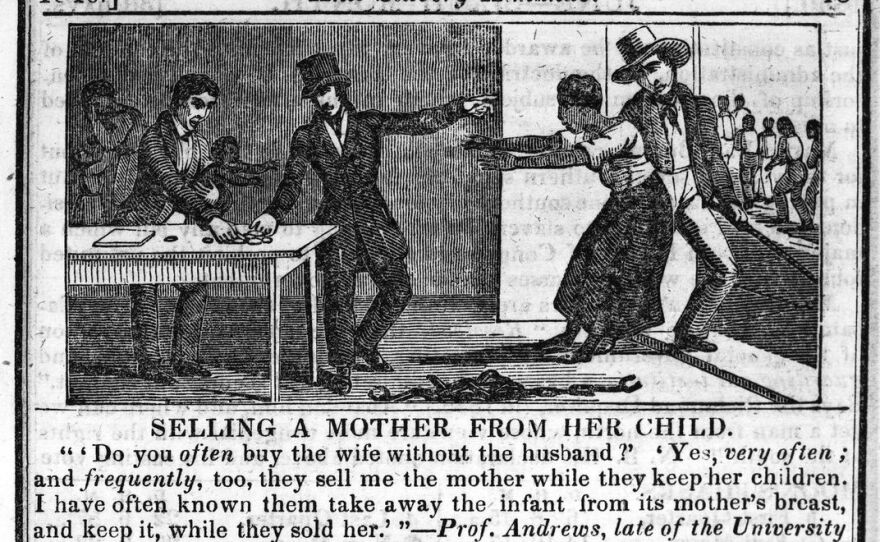
Since today is Juneteenth, a federal holiday that recognizes the date when the last enslaved persons were finally informed of their freedom, I thought about all of the children that were taken away from their parents, primarily from their mothers, during the period when slavery of Black people was common in these United States.

Black Perspectives is the award-winning blog of the African American Intellectual History Society (AAIHS). They are deeply committed to producing and disseminating cutting-edge research that is accessible to the public and is oriented towards advancing the lives of people of African descent and humanity. From the Black Perspectives website, LINK>Slavery and America’s Legacy of Family Separation by Vanessa M. Holden. Forced family separation was always a fixture of the lives of enslaved people. Enslaved children were a lucrative business. The expansion, maintenance, and future of slavery as an economic system depended on these children, particularly after the close of the American trans-Atlantic trade in 1808. 

One such story comes from Harriet Mason, who remembered her mistress forcing her to leave her home and family in Bryantsville, Kentucky, to work in Lexington as a servant at the age of seven. She remembered, “when we got to Lexington I tried to run off and go back to Bryantsville to see my [mother].” The grief of a childhood spent away from her family at the whim of her owner led her to suicidal thoughts, “I used to say I wish I’d died when I was little.” Even in her old age she was firm that, “I never liked to go to Lexington since.”

Slaveholders borrowed against their human property. They gifted enslaved children to their white sons and daughters as children, upon their marriages, or as they struck out to begin their slaveholding legacy. And of course, slave children could be sold down the road and down the river. Children knew that at any moment this could happen to them.

Blogger’s Note – Last night, my oldest son wanted to know if anyone in our family had benefitted from the labor of slaves. Eventually, it was suggested that every American has. I know that among my mother’s own genetic, biological family there were slave owners (I saw one will that was stipulating slaves by first name and who they were to be given to). I also know that side of my family also fought on the side of Confederates in the US Civil War. I’m not proud of being the descendent of these realities.

From the linked article – To profit from slavery and participate in slaveholding, Lexington’s white residents did not even need to own, buy, or sell a single slave. Someone made the shackles. Someone ran slave jails. Someone generated the official documents needed to transfer property. Someone hired enslaved children to work in their homes and businesses. Adults running with children from officials who would separate them was a feature of fugitivity during American slavery. To produce the “fugitive” category, a range of institutions sprang up. Local money paid sheriffs, courts, and officials to uphold the law that protected slaveholders’ rights to their human property. Someone printed runaway ads. Someone made money on enslaved peoples’ bodies at every juncture.

Along with physical labor, children deemed by the state to have unfit parents and placed into adoptive homes, perform emotional labor. Adoptees not only lose their birth families in the process, but they also lose ties to culture, language, country, history, and identity, and must contend with societal expectations that they be grateful for a “better life” in the face of it all. Children of color adopted by white parents also face racism in their new homes and communities. There is emotional labor too in being the physical body that allows white families to appear more liberal or multicultural, even if the opposite is true. In the United States, adoption is an industry and, as adoptee advocates continue to warn, it is poised to profit from family separation. There is already precedent for keeping children in the United States after a parent has been deported and awarding custody to American adoptive parents over immigrant parents caught up in immigration proceedings or because they were detained or incarcerated.

Black families are separated by the bond and bail system, incarceration, the child welfare system, and the criminalization of poverty. All can lead to family separation and the loss of one’s children. Child welfare advocates also recognize the link between the disproportionate number of Black children in the foster care system and the pipeline from foster care to prison.  All of these contemporary systems of power are echoes of legal and social structures that devalued enslaved parents and profited from enslaved children during American slavery.

We need to acknowledge these links to the history of American slavery and the ways that African Americans continue to endure discrimination. Following the money exposes the truth.

Missing Dad

Father’s Day is Sunday, June 18th. Today, I read this in my all things adoption group from an adoptee – Fathers day this Sunday. I’ve been crying on and off all day, heartbroken that another father’s day will be spent without my dad. My adoptive dad is a good dad. It took work and therapy but both of my adoptive parents are trying to prove they have changed.

But I just want a hug from my dad. All I’ve ever wished for is a hug from him. He knows I want contact, says his schizophrenia and addiction are bad at the moment. He wasn’t an addict until I was 10/11. Because he knew he’d never see me again.

My mum put me in foster/adoptive care behind his back, when I was 6 months old. She abused me and he tried to take me out of the house. So she called the police, lied about it and they told him he had no rights to take me. I know my mum should never have had custody, but I didn’t need to be adopted. My dad was such a capable man and I hate the fact I’ve missed out on 23+ years with him.

The year was 2000 and she later adds more detail – My mum also lied about him sexually abusing me, after he reported her beating me and was saying he’d take me out of the house. The police said, if he left with me, they’d charge him with kidnapping. His whole foster family were wanting temporary custody, while he got his meds right and my mum chose to lie and put me in care with others instead.

She later explains – he wants contact but doesn’t want to hurt me, not realizing this is rejection and hurts me more. I want to respect his wishes of no contact but at the same time, I feel I’ve always put others before me and I deserve answers.

Someone replied – Just keep in mind that his disease is not your fault and it’s not a representation of his feelings for you.

Another adoptee admitted – my biological mom was schizophrenic and the removal of her kids spiraled her into addiction as well. I never met her. Only spoke to her on the phone.

blogger’s note – schizophrenia matters to me personally. It appears that it was latent but that an accident triggered it into an active state with my youngest sister. It really is a complicated situational relationship, when one has a family member caught up in the effects.

Does Anyone Ever Chose Drugs Over Their Kids ?

There is no way I can do justice to such a large and complex topic in a blog. I have experienced the difficulty of dealing with a spouse who has a substance use disorder. In my case, it was both alcohol and heroin that my spouse was using and it did impact our financial situation and our relationship. In fact, he left the region to try and get clean but came back. After that, I left because I lost hope that he could overcome it. Then, I left my daughter with her paternal grandmother, temporarily, only to discover that eventually, the grandmother turned her over to her father. I would NEVER have left her with him. However, he had remarried and her step-mother was very important in her life during those years. I did not know about the challenges that occurred in her household until very recently. I thought for many years that they gave her a family that I could not as a single mother – and I was not entirely wrong about that part – as her step and half siblings are very important to her. However, I also never knew about the domestic violence that she was forced to witness. It did not entirely surprise me when I learned of it. He had once threatened me with a pair of scissors due to a jealous outburst (which I had actually done nothing to cause). I was fortunate that he never hit me. If I had stayed longer, the outcome may have been worse.

In my all things adoption community today I read this discussion topic – Substance Use Disorder Views.

“Drugs are more important than their kids”

“The parents chose drugs over their kid”

“If they loved their children, they would get it together so they could get them back”

“She was given all the resources she would need, but it didn’t matter, she chose drugs over her kids”

All of the above can be read in any Foster/Adoptive Parent forum on any given day. Usually shared with clear disgust.

1) Are these statements accurate? Be prepared to back up why you say yes or no

2) Does removing children act as a wake up call or an avalanche effect?

NOTE: when discussing, please do not use the term addict, drug addict or any other derogatory term to identify someone dealing with SUD. Addiction is termed here as substance use disorder or SUD. We do this because we have members in recovery and we respect that language matters.

While there is not time to seriously address this, I did find something that is worth some time to consider, if you or someone you love is dealing with this issue. I will note that children are often removed from their parents for SUD. Some of will spend their entire childhood in foster care. The younger ones (typically they are more desirable) sometimes end up being adopted.

From Rutgers University – LINK>How much of addiction is genetic?
More than half of the differences in how likely people are to develop substance use problems stem from DNA differences, though it varies a little bit by substance. Research suggests alcohol addiction is about 50 percent heritable, while addiction to other drugs is as much as 70 percent heritable.

How many genetic risk factors have we discovered?
Hundreds, but there are hundreds more to be discovered. We just did a study where we measured how well the best current polygenic scores, combined with environmental risk factors, predicted substance use disorders in 15,000 people who participated in long-term studies, and we found that they only predicted about 10 percent of the outcome variations we saw. That said, people with the highest levels of risk were four times more likely to develop a substance use disorder than people with the lowest levels of risk, so we can already help people understand their risk level and optimize their health choices.

No Contact

It is not uncommon now to see adoptees who have gone “no contact” – either with adoptive families or with their original genetic families. I will admit that I had to go no contact with my youngest sister, so I get why sometimes this is the best decision.

For example, this adoptee –

I’m no contact with all of my adopted family and most of my biological family. They’ve hurt me repeatedly by gaslighting, emotional manipulation and abuse, silence, lies (not to mention the outright physical abuse I experienced in childhood)….. and I’m done. Even my biological brother, whom I thought I’d always be close to, has joined in.

When I say I’m cutting toxicity out of my life, I MEAN IT. Friends, family, coworkers, jobs, personal behaviors and mentality – Wherever toxicity might be found, I won’t be. I’ve spent too much of my life trying to please others and fit in because then MAYBE they won’t leave me.

I no longer care.

I’m tired of going out of my way for “family” just to have them talk about me behind my back. I’ve dropped everything to help people who wouldn’t even lend me a smile.

No. More.

Goodbye and good riddance to them all. Best of luck on their future endeavors, but count me out. And though I know it’s the right choice, I’m really needing some emotional support and validation.

And the emotional support comes . . . from an adoptive parent. Removing toxic people from your life may be hard but so worthwhile. Rebuild your relationships with a family of choice. Good friends, partners, can go a long way in supporting you. Congratulations on the beginning of a life away from guilt and toxicity.

And this from another adoptee – Hugs! I went no contact with my adoptive parents years ago, no regrets. I had one brief unavoidable blip, which reinforced what a good choice I made. My younger sister, who was only 1 when she was adopted/went into foster care (I was 10 at the time) has minimal engagement with them. They will ask about me but she puts up the boundary. She’s not comfortable giving them updates about my life, since I have no relationship with them. 

Irony is – she used to gatekeep me from my sisters, after I was forced from their home at 17 (just one of many previous times) and my biological family before that, so I find it validating that my families don’t get what they want now (at one time, my adoptive mother liked to brag about how I’m doing well because of their sacrifice and the hard decisions they made to help me help myself). When she told me about the reason why my adoptive mother thinks she was cut off (ie not invited to another family event with their biological son) I laughed because it just goes to show how clueless she really is and how little she actually DID listen to me, before I cut her off.

I have little to no contact with my biological family, least of all with their own monkeys and circus. The contact I do have is mostly initiated on my part (zero effort on the sibling’s part to connect with me, minimum from my mother and other relatives) and I’ve gone full no contact at times with my dad, depending on where he’s at in his addiction cycle.

I have no regrets. Only a slight regret for not putting up boundaries earlier because I felt I had to have some contact with some family because you know, I have no family otherwise (my in-laws are not super fans of me either, they are judgmental and don’t understand CPTSD (complex post traumatic stress disorder) or why my husband is with someone as ‘broken’ as I am (they see us minimally – maybe a handful of times per year now.) I now no longer give a f**** about what I do or do not say, that may or may not upset them. It used to tear me up and I’d think OMG was I too loud ?, too this or too that, and feel like a big POS and not worthy of their love, until I realized their lack of acceptance had to do with THEIR stuff and NOT mine. Mine was just easier to focus on because I was so transparent about everything, which is not how they roll.

You Should Be Grateful

From her own website LINK>The Adopted Life“Your parents are so amazing for adopting you. You should be grateful!”

Angela Tucker is a Black woman, adopted from foster care by white parents. She has heard this microaggression her entire life, usually from well-intentioned strangers who view her adoptive parents as noble saviors.  She is grateful for many aspects of her life, but being transracially adopted involves layers of rejection, loss and complexity that cannot be summed up so easily. Tucker centers the experiences of adoptees through sharing deeply personal stories, well-researched history and engrossing anecdotes from mentorship sessions with adopted youth. These perspectives challenge the fairy-tale narrative of adoption giving way to a fuller story that includes the impacts of racism, classism, family, love and belonging. 

The search for her biological family was documented in the 2013 film “Closure.”

From the LINK>Seattle Times – Her new book from Beacon Press, “You Should Be Grateful: Stories of Race, Identity, and Transracial Adoption,” explores Tucker’s life experience, her work with transracial adopted youth and the history of adoption in America. It’s both a powerful manifesto and a hopeful text that calls for reshaping how we talk and think about adoption.

The book uses terms from John Koenig’s “The Dictionary of Obscure Sorrows.” Angela uses terms like “ghost kingdom” and “postnatal culture shock.” Angela says, “in the same way John Koenig feels there aren’t enough words to adequately describe all of our emotions, I feel that way about transracial adoption. We’re kind of boxed into things like, for kids, you’re an Oreo: Black on the outside, white on the inside. That morphs in adulthood, and what I hear adoptees I mentor talk about is [being a] racial imposter. I think it’s important we find new words that can articulate the complexity of our layers and also honor the truth of it.”

“It’s a beautiful thing to grow up having parents who understand at the root that an adoption is a sad thing, that we wish an adoption didn’t have to happen. I had parents who acknowledged that pain for all of us. I know so many adoptees for whom that part is not allowed any space. Even for those adopted for reasons that are legitimate, there’s still a loss. And bypassing that and going straight to, ‘You’re here now, look at this great life,’ many adoptees now can articulate it feeling like gaslighting. ‘Maybe I am crazy to wish for and to long for being connected to my kin. I have my own room, I have three square meals a day, I get to do all these extracurriculars. I must be crazy for not being more thankful for it.’ That gaslighting is, in this sense, synonymous with confusion.” 

More in the Seattle Times interview linked above.

Doing Great Harm Unintentionally

A question was asked in my all things adoption group – why when foster and adoptive parents are asked a question and answer it honestly, are they bashed or told they are doing wrong ?

One, a former licensed state foster caregiver who placed her home on hold until she could learn or prepare how to best serve kids and families in crisis, answered – MAYBE because of a rational perceived injustice, based on or due to a reasonable fear. Being complicit in systemic inequities and the oppression of marginalized people. For exercising an INTENTIONAL choice to volunteer one’s privilege to care for families in crisis. Doing so generously with genuine reciprocity and care, being greater than the conditions of extraction and exploitation, is rare. Such preparation includes learning from survivors and the victims who have been the most impacted. A tolerance of ignorance is tremendously difficult for one who knows the realities. The “unintended” harm is inexcusable. Implementing a GROWTH MINDSET is taught in training for FOSTER CAREGIVING – PARTNERSHIP PARENTING. It is a critical cornerstone of any hope of doing good. Hostility is expressed by survivors after having experienced injustice. It is VALID and to be EXPECTED by their OPPRESSORS or those PERCEIVED as representatives of that OPPRESSION. Harm, neglect, emotional neglect through gaslighting and abusive tactics are all too common. It is difficult to not to REACT, impossible to respond RATIONALLY, when faced with distressing questions, apparent or perceived willful ignorance, or simply in the appearance of continuing to promote that INJUSTICE.

The argument always comes up – so you believe a child should be with their parents no matter what the situation is?

One reasonable reply to that was this – there is a lot of room between being with their parents and being adopted. There are some parents who are not safe for their children but that doesn’t have to automatically mean adoption either.

And this response – do you want us to all tell you that your adoption will be the exception to the rule? That you’ve obviously found the ethical way to do things? That your desired child is definitely going to be one of the ones who should have lost their entire family, identity, medical history? That you won’t have to worry about inherent trauma because you’ll pray hard enough and love them hard enough and that’s all you need to do? Sorry, that’s not how this works.

Then this long but rational response – I understand where you are coming from because I was there a couple years ago. This is why we need to read, listen and learn. As adoptive parents, we need to listen to the former foster care youths and adoptees. so we can do better.

We may need to seek out the support of a therapist to process our own hurts…there are therapists out there who are themselves former foster care youths and adoptees. They are more than able to support or coach you through this. Adoptive parents need to heal their own wounds, to make the space needed to acknowledge their own responsibility and the harm they have done by adopting.

We also need to bear the responsibility of supporting the adoptees in our care. That is acknowledging our own place in the trauma first. Then seeking supports to help these children process their own trauma. Finding a qualified therapist (adoption trauma informed) for the adoptee would be the ideal.

We need to be in relationship with the biological families, no matter our prejudice. These children need to be safe, yes, but also in relationship as much as possible. We need to take responsibility to build those bridges – no matter how frustrating it can be – for the benefit of the children. If we can return the children to their family, we need to attempt to do that. If the family needs support, we need to be willing to support them. We need to do everything we can to support reunion no matter the age of the child. Of course, we need to maintain their safety but that doesn’t mean a child needs to be taken away from their biological family. There are many options that don’t include adoption.

I have faced these questions in my own circumstance and recognize that in my situation there were other options I was ignorant of…I regret adopting. I was already the legal guardian but I was not informed by adoptee voices. I was listening to adoption lawyers and adoption agencies – who are only in it for the money. I made a huge mistake not being adoption informed. A mistake that if the affected parties (such as the biological family or adoptee) wanted changed, I would.

We need to acknowledge that we will fail miserably in everything we do because we care for a child who is not our own and is traumatized. If that is the reality, we have to be ok with that. We need to be ok with fighting for trauma informed support – both in the home, at school and in the greater community.

We need to stop blaming the children or the biological families for the children’s mental health issues.

If there weren’t people willing to foster or adopt, the system would operate differently. We need to see this and then, become advocates for the adoptees we care for but also against the foster and adoption systems already in place.

The old narrative of fostering and adoption needs to be torn down and it is our responsibility as adopters to lead this fight…the former foster care youths and adoptees have fought hard enough already.

I love our adoptee but love isn’t enough. I need to do more and I learn about what I need to do by listening to the voices of former foster care youths and adoptees as well as their biological families.

Satanic Panic

Melvin Quinney

I heard the story about this man (who could be any white person’s kindly grandfather) on NPR last night. He is a San Antonio man wrongfully convicted in 1991 during the so-called Satanic Panic hysteria. In court last Monday, Melvin Quinney had his charge dismissed by 227th District Court Judge Christina Del Prado. The state exonerated Melvin Quinney of his conviction of indecency with a child back in February but Monday’s hearing made the exoneration official. “It’s like the beginning of the end of a very long nightmare,” Quinney said.

I wish I could say these kinds of “miscarriage of justice in the name of religion” cases were only in the past but unfortunately, even today, I know evangelicals who still believe these kinds of things. Satan and evil in this world especially related to child trafficking (QAnon certainly is on that page). It’s not that I don’t think that such things happen and I do feel that anytime a child is sexually abused – it is a travesty. But under religious fervor, these heartfelt feelings, can do a lot of harm. A friend said to me once, “It has everything to do with pagan rituals and actual Satanic influence in many places. It’s because of my love for children that I will fight with all I have to rid this world of those things. If I had not studied Biblical Prophecy and Pagan rituals I probably wouldn’t understand what I am seeing now.” Sigh. I understand it is heartfelt for her.

Today, I found this blog – Friendly Atheist by Hemant Mehta LINK>A victim of the “Satanic Panic,” Melvin Quinney has finally been exonerated. The “Satanic Panic” was a conspiracy theory that really took hold among a certain kind of Christian in the 1980s. Perfectly innocent people were accused of ritualistic child abuse, bad behavior was blamed on the devil, and the modern-day witch hunt ruined countless lives. No evidence ever proved this organized abuse was occurring—certainly not the way accusers insisted it was—but as with so many conspiracy theories, its power had nothing to do with the facts.

Melvin got trapped by this when he and his wife were going through a divorce in 1990. It was she that accused the 43-year-old Quinney of leading a Satanic cult that murdered people. His kids were soon taken into custody by Child Protective Services. John, his 10-year-old son, accused Quinney of sexual abuse. After weeks of coercion from therapists, their mother and other adults, Sarah and John developed “memories” of abuse and occult rituals. John came to believe that their father was the leader of a satanic cult that had committed murder and sexually abused him and his sister Sarah as part of satanic rituals. Melvin was arrested in 1990 and charged with indecency with a child. John testified at trial about his “memories” of his father’s abuse of himself and Sarah.

Melvin was released from prison in 1999, an early release for good behavior. However, even then, he was forced to register as a sex offender. This deprived him opportunities to get his life back on track. It wasn’t until 2012, that he finally attempted to get back in touch with his kids (who had grown up believing their father abused them). His children had grown up in foster care. Finally, in 2020, his children testified that there was no evidence that their father ever did those things he was accused of. His son told the court he realized much later, that those stories were entirely fictional. They had been fed to him by his mother, her evangelical friends, and other adults working against his father as a way to override the “good memories” he had of him.

His ex-wife was unable to care for the children not long after he was imprisoned and so, they were pushed into the state’s foster care system. His wife mother passed away in 1999. Her son says that she was clearly mentally ill. He says, “Instead of getting help with the real mental problems she was experiencing, she was persuaded and kept mentally ill with pseudoscience and superstition.” For years, the children thought they would be targeted by satanic cult members. He has since forgiven her.

The blog ends on this thought – the Satanic Panic has always been that no matter how many bad faith actors use Satan as a metaphor for what they hate, there are many pastors who spend every week convincing their congregations that Satan is real and needs to be eradicated from their lives. They’ll never admit they’re lying because they genuinely don’t believe they are. As long as that belief perpetuates in churches, it’s next to impossible to convince people that Satan and the abuse associated with Satan are entirely fictional. That means, much like sin itself, conservative Christians have invented their own problem out of thin air, while presenting themselves as the only solution.