Keeping Them Together

My husband heard this story on NPR and knowing it would be of interest to me, told me about it. I grew up in a different kind of Texas than we usually think about the state in these modern times. I am grateful to have something good to say exists in that state today.

LINK>Casa Mia is a refuge for mothers with opioid use disorders and their infants in San Antonio Texas. Through a partnership between the School of Nursing at the University of Texas and Crosspoint Inc (a local nonprofit organization), mothers and their young children are offered housing while the mothers are enrolled in a recovery program and receive support services.

Casa Mia is located on a quiet street in a predominantly historic neighborhood near downtown San Antonio. It is a two-story house filled with laughter, baby bottles, diapers and toys. It includes a garden in the back. Gardening is proven to be therapeutic and helps with recovery, and nutrition is important to recovery as well. “A lot of our ladies have grown up with food insecurity,” says Dr. Cleveland. “People who are in recovery from a substance use disorder often have cravings, and it is important to discuss nutrition for mom and for baby.” There are clean beds for the women to sleep on at night. It is a far cry from the streets where these women formerly resided. Back in 2019, they were able to help 32 women and 26 children.

Dr Lisa Cleveland co-founded Casa Mia after witnessing the traumatic separations of mothers, who were diagnosed with opioid disorders, and their newborns shortly after birth. She partnered with Crosspoint Inc who had previously used the building as a women’s recovery support home. Crosspoint is a local nonprofit organization that provides transitional and behavioral health services to San Antonio’s most marginalized and vulnerable citizens.

“Casa Mia follows a social recovery-housing model. The focus is on teaching moms to live their lives without substances. We show them that they can have a great life without them,” Dr. Cleveland says. They provide a comprehensive wellness program for the mothers and also teach them life skills, while offering them a safe place to live with their children, while they recover.

While nationally there are numerous transitional or recovery homes for women, only 3 percent of that housing offers beds for their young children. As a neonatal nurse for 28 years and a mother, Dr Cleveland understands the mental and physical need for a child and mother to be together from birth. The maternal bond is important for each of them. “We need to help women become moms in a supportive environment before we put them out into the world,” she says.

Local and county statistics further solidified her resolve to take action. One-third of all Texas infants diagnosed with opioid withdrawal are born in Bexar County, the highest rate in the state. This equates to 300 to 400 babies each year; more than Dallas-Fort Worth and Houston combined. Casa Mia is a one-of-a-kind program designed to turn the tide.

“The statistics just really floored me,” says Dr Cleveland, “and I thought why is no one talking about this, especially since it has a really large impact on our community. With those numbers, it stands to reason that Bexar County really needs to set the standard for the state, and we are now. Bexar County truly is the leader in best practices and best care for these families.”

Traditionally, pregnant mothers who are diagnosed with substance use disorder have only two options after they give birth: either have a family member take care of their infant while they go to a treatment center or Child Protective Services places the infant in foster care. “Even if the infant is placed with a family member, the mother and baby are still separated. This separation is very traumatic for the mother and very traumatic for the baby. It is traumatic for the staff at the hospital as well. It just doesn’t make sense to me,” Dr Cleveland says. “Why are we taking these babies away from mothers who need help? Why are we not helping the mothers instead?”

Funded by the Texas Department of State Health Services, the Baptist Health Foundation and the Sisters of the Holy Spirit, Casa Mia is staffed 24 hours a day and can house up to 20 mothers and their young children at a time. Each woman must continue her recovery or treatment plan and follow the rules of the house. The first phase is fairly restrictive. Residents are not allowed to stay overnight elsewhere and must be in the house by a set curfew. They must let the staff know where they are going when they leave, even for treatment; they have to call when they get where they are going from the landline phone at their location, not a cell phone; and they have to call when they are on their way back to the house. As they progress through their recovery, the restrictions are relaxed until they eventually get ready to exit the program. There is no set timeframe for a resident to stay or exit the program.

“I think recovery is very individual,” Dr Cleveland says. “One of the things that makes our program unique is that if someone relapses, they do not get thrown out of the house. We know that recovery is a process and sometimes people relapse and that is part of the learning process. I have heard of women who have relapsed after leaving the program and then get right back on track. To me, that is a huge success.”

At Casa Mia, women may arrive expecting a child, having just given birth, or hoping to be reunited with their child. One case study is Becky who arrived at Casa Mia one January, six-months pregnant with her seventh child. After using drugs for six years, now at the age of 33, is thankful the judge sent her to Casa Mia. As a result of her drug use, she had lost custody of three of her children to their father and has joint custody of three others with a different father. She has been in recovery for more than a year and is finally excited about her future. While living at Casa Mia, Becky continues her recovery program, works a steady job (which she has had for almost two years) and takes classes to complete her GED. She plans to become a real estate agent.

“Now that my baby is born, I haven’t left her side, not even once. I am very happy because I think the Lord gave me another chance. He showed me these young women and how they take care of their children and that planted seeds in my head. Now that I have my little girl, he has given me another chance to be a mom again, and I’m very thankful for that.” She adds, “I love the staff at Casa Mia. They want what’s best for us, and they really try to help you. Having your children with you is the best thing, and I just see how everything works together.”

Crosspoint brings its expertise in recovery housing and support, the School of Nursing provides its expertise in women and children’s health as well as nutrition and childhood development. Classes for the mothers range from child nutrition and parenting to yoga and infant care.

Mentoring

Just today, learned about this organization. Many youth in foster care remain there if not adopted at a relatively young age until they “age out” as it is called. Are forced out on their own. I first discovered the Atlanta Angels whose Mission Statement reads – to walk alongside children, youth, and families in the foster care community by offering consistent support through intentional giving, relationship building, and mentorship.

They go on to define these 3 aspects – Intentional Giving is the giving of thoughtful and personal resources, gifts, and care packages that meet the real needs of the child and their entire family. Relationship Building is devoting time and energy to fostering healthy relationships that promote healing through connections and interpersonal bonding. And finally, Mentorship is equipping and empowering the youth in their program to be prepared for independent living and to reach their fullest potential.

The Atlanta Angels are a chapter of a national organization – the National Angels – which seems to have grown out of another more local organization – the Austin Angels. I’m glad to know there are other similar organizations across the United States. This program created the Dare to Dream (for youth ages 15-22) and Dare to Dream Jr (for youth ages 11-14) outreach efforts. These are intended to provide one-on-one mentorship to youth in foster care. Their mentors are advocates, guides, role models, valued friends, and available resources who guide youth that they may successfully accomplishment their developmental milestones.

Young people who have grown up within the foster care system have experienced instability in their lives and often disproportionately suffer with learning disabilities, limited life skills, health issues, and emotional and behavioral struggles that lead to negative developmental outcomes. Youth who age out of foster care without having been adopted or reunified with their families have less financial, emotional, and social support than their peers, yet they are often expected to be as self-sufficient as those who have familial support and guidance. This lack of assistance and resources combined with the various traumas these youth have experienced negatively affects their success and overall well being. As a result of having to overcome a childhood of abuse and neglect, removal from their parents, unstable living arrangements, multiple foster placements, and weak support systems, youth who age out of care enter young adulthood without a healthy foundation upon which they can build their futures and work to break the generational cycles that affect youth in care. 

Mentors provide the wisdom, advice, encouragement, and community that these youth need to thrive later on in life. A mentor involved in this program commits to meeting with the youth every other week to set goals and help them achieve their dreams. The organization hopes these relationships will last a lifetime, but the program only asks for a year’s commitment in some cases. Mentors matched with a high school student are strongly encouraged to stay with the youth until high school graduation. The simple act of a mentor telling their youth “I believe in you,” “You are special,” and “You are going to do great things” can change their path completely.

How Poverty Affects Adoptions

I don’t know if anyone has done a study on the percentage of children given up for adoption due to simple poverty (and poverty is not simple, I realize this).  I know it was a factor in both of my grandmothers losing custody of my parents and it was certainly a factor in my losing custody of my daughter.  Divorce and lack of child support left me desperate enough to temporarily leave my daughter with her paternal grandmother.  That ended up with her staying with her dad and a step-mother for the remainder of her childhood.  It was a factor in my sister losing custody of her daughter – she was denied government assistance because she was living with my parents during her pregnancy.  Therefore, because they didn’t want financial responsibility for my sister and her child, they pressured her to surrender her daughter to adoption.  This is all in only my own family of birth.

Someone asked – Do you believe that financial illiteracy is the reason people are poor and that programs teaching life skills like checking, bank accounts, and savings would work to eliminate poverty ?  While these skills are useful for any maturing adult, I don’t think they would eliminate poverty. Rich people have bigger safety nets. Financial illiteracy is not the reason people are poor and there are rich people who don’t know how to manage their money as well.

Someone answered the question – why are people poor ? With this – Capitalism. Rich people exploit others to gain wealth, keep money/land/resources for themselves, create systems that work to their advantage (and poor people’s disadvantage), pass it on to their kids who in turn use their wealth to get richer. Scarcity mindset is real and in my experience rich people are the most paranoid about losing any wealth. There is more than enough to take care of each other but our system doesn’t by choice. Some people think “if only poor people managed their money, they could accumulate wealth.” This completely misunderstands how wealth is acquired and horded in this country.

Generational and systemic poverty plague the poor. How can you climb a ladder in a system built to make the rich richer and keep the poor poor ? Our economic system is built upon the 1% wanting to make that difference bigger every day.  How can anyone achieve socioeconomic upward mobility when your grandparents were poor.  Therefore, your parents had to sacrifice an education and instead find work to support themselves and their families.  Then their children end up in the exact same situation. The deck is simply stacked against the impoverished.  This tends to become a *major* generational trend.  Even assistance is created in such a way that it keeps the poor poor.

Case in point – Medicaid and Food Stamps. As soon as a person gets a non-minimum wage job, they lose  their benefits.  Without these, health care and groceries are significantly more expensive than slightly above minimum wage will cover. The result ?  You’ve either got a person making $20/hour, but barely making ends meet if at all.  Or a person without resources and access to food and healthcare, simply because they would rather be self-supporting.

One mother wrote – I gave up my first two kids to adoption because I was broke.  I didn’t know how much help shelters could be.  I kept my third child thanks to a shelter and I got on my feet.  I now have a place of my own for us to live in.  I wish I would have known how to keep my children before.

I do believe as a society we can do better than we have been doing.  I don’t know how we get there.  If we supported families adequately, children could remain where they want to be – in the family they were born into.


Alone And Aging Out

I don’t often address issues related to foster care because I really don’t have any direct experience with that system – thankfully.

Even so, homelessness is an issue close to my heart since my own youngest sister was homeless for 4 years and somehow survived that and even managed to extricate herself from that about 10 years ago.  Her situation remains precarious and my heart hopes she doesn’t end up in those dire straits again but there is no certainty.

I have learned that when children in foster care reach a certain age, they are put out without much in the way of resources.  Some even run away from foster care before they reach that age.  These are children who lack any kind of supportive family to love and care for them.  Their parents may be in prison or addicted to drugs and self-absorbed.  Or their parents may have even died.

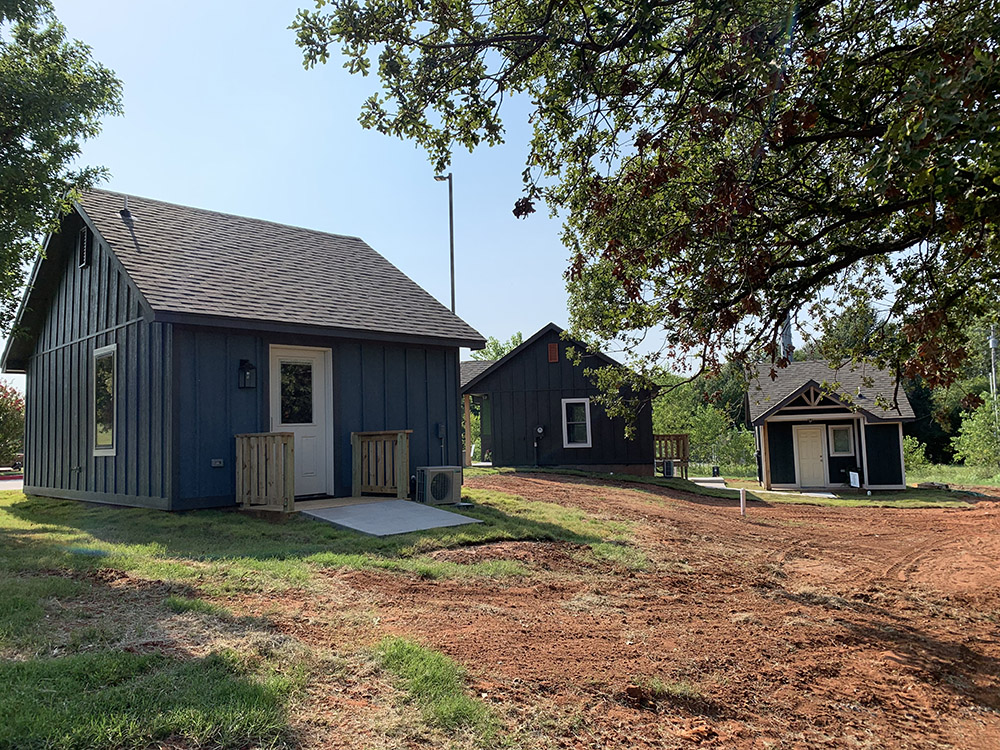
There is a non-profit known as Pivot in Oklahoma that is trying to do something substantial to help youth who would be homeless otherwise.  They are building a community of tiny homes to primarily serve the needs of 16 to 19 year old youth.  These are located right outside of the organization’s headquarter.  In addition to providing a bed, small kitchen and bathroom (a roof over their heads), the organization provides services.

They help the teen get a job. They teach them life skills. And they provide therapeutic attention to help these youth heal from a less visible internal hurt.  So regardless of the reason their parents are absent, a youth is understandably upset that the person who was supposed to take care of them, is not there for them.

All children still do love their parents at that level of attachment from birth. There is a grieving process that needs to be addressed – what should have been, could have been – wasn’t.  This healing is necessary if a person is truly to move forward with their lives in a productive manner.