Some From Foster to Adopt Thoughts

The image is NOT the person who’s thoughts I will share today but it is not uncommon that people who foster end up adopting one of their foster care children. And so, here’s the story for today.

I’m a foster parent and have adopted from foster care. I’ve been in this (adoption related) group for a bit and I have been trying to learn and listen to all of you. I absolutely hate the toxic positivity and saviorism in the adoption world and the lack of understanding about trauma and the systemic issues that cause removals and adoptions that can largely be prevented. This needs to stop. However, I’m not understanding what you would suggest current foster parents do?

We didn’t go into foster care in order to adopt, we went into it to prevent family separations. We have always been active in helping the parents, in anyway that we can, get their kids back and keep a relationship with them. We have only adopted in cases that were extremely abusive and dangerous to the kids.

I don’t understand what your solution for these kids would be besides adoption? Kids that themselves have chosen not to continue a relationship with their family. Kids that say they want a new family. I see people in this group say to do permanent guardianship, but how is that not treating them as less than your other kids? Not letting them call you mom/dad if they want and not legally being a member of the family.

My kids were old enough to understand what happened and they asked for us to adopt them. They wanted to heal and have a safe and stable family. I’m in no way a savior or a hero or anything close to that for adopting. I just want to be there for these kids. I’m open minded, I want to hear from the adopted adults on their thoughts, which is why I joined this group. I want to do what’s best for them now and for their future and I have no desire to erase their history or original family from them.

So in response, not in regard to this specific situation, but from the big picture point of view came these important perspectives –

The solution is actually really simple. Address the reasons kids end up in care. Neglect is the number one reason and usually stems from addiction. So, tackle addiction with better programs that work that are not just accessible to the rich. Better social supports so families are not struggling. We need to reduce removals.

Guardianship has been practiced forever. Families have raised kids not their own since the dawn of time. It does not require legally severing a child’s identity. It does not require falsifying documentation. You can love and care for a child without that. They don’t need your last name to feel loved and cared for. It’s literally just paperwork. Adoption is not necessary.

A good adoption story (they exist, in fact, it can be said that both of my parents who were adopted, had good lives) does not make children being removed from their parents ok. Families need to be helped BEFORE they get to a point of their kids being removed. As a society, we need to truly care about family preservation.  Society needs to wake up enough to stop seeing adoption and foster care as something that saves children. Until that awareness becomes common, nothing about foster care or adoption will change.

Adoptees may never feel a sense of belonging to their adoptive family because it’s not their family. That may be hard for people who believe in adoption to accept but it is the obvious reality. If there were less foster/adoptive homes, the system would have to change. A change in what qualifies for removal, a change in what it takes to get kids home. All the money now wasted on foster homes could go back into social programs to help families.

If you want to help families, get out of the foster system if you are a part of it. Start working with local shelters and other organizations that help struggling families avoid Child Protective Services. Join programs that help foster youth aging out. Be an ally to parents caught up in the system. It’s a warped system that profits off of the destruction of families.  It is also that simple.

Unbelievable But Sadly True

“I am a believer in ripping the bandage off the wound. This is why I believe the biological family should have 6 month maximum to get their act together or move immediately to adoption and have those children in a permanent home by 12 months.” ~ Foster Care Parent

Hummmm, if people were band-aids…. sure. But people aren’t band-aids. We have memories and psychological effects from everything, from smells to interactions. We are a little bit more complex then band-aids.

These types of thoughts are based on the information the general public hears. They also come from “stories” shared about kids languishing in the foster care system, until they are too old and considered unwanted.

The truth is that in some states biological parents are only given 3 to 6 months to “get their act together” before their children are allowed to be adopted by strangers.

Each foster care case begins with the goal of reunification. The parents will be given a case plan with things that they need to do in order to have their children returned home. Children are removed when the situation they are in is deemed unsafe. The case plan is intended to remedy any issues that are considered unsafe, and help the home become one that is more stable and safe.

Some examples of what a case plan may include an alcohol or other drug abuse assessment, counseling, periodic drug testing, therapy, parenting classes, mental health assessments, home visits, even a change in residence if that is deemed necessary, the parent must secure a job or prove dependable income, etc.

How long would it take you to get your act together – if you were dealing with addiction or alcoholism, lacked the privileges a lot of people take for granted, had generational poverty, heck generational experiences with foster care placement ? What if you had lost EVERYTHING, your home, every penny you ever possessed ?

There are former foster youth who are now parents. Some are third generation foster kids. There are generations of a family line that have all spent time in foster care. It’s sad. Trauma is so hard to heal, especially with no support.

Thankfully, reunification does happen. It could take a mom almost two years to completely turn her life around. She might have to face up to some pretty difficult stuff. Some of these successful efforts will go on to help other parents make it through the requirements to reunification with their children, just like the successful person did.

Languishing isn’t the right term for most cases. There are kids who languish in foster care but it’s the older kids and teens with no real permanency goal in their case plans. They will eventually “age out.” A baby being with a foster parent for six months isn’t languishing.

People who say what the foster care parent at the beginning of this essay said are ignorant. Many hopeful adoptive parents turn to foster care with an intention to be able to adopt a baby. Many foster parents can’t even get their own situations together when a placement comes into their home in six months or a year’s time. There shouldn’t be a time frame for the biological parents. People who want to adopt should get the hell out of foster care.

And consider what happens to the older kids the foster parents don’t want to adopt ? Do they believe only babies come into foster care ? What about the 12 year old ? Are they going to adopt the 12 year old ? Most likely – no. They only want the babies.

And it has been shared that some states actually do a better job in supporting family reunification after a disruption like this. In ARKANSAS, the state gives biological parents 12 months. If need be/ if the parents are “progressing”, an extension can be granted. Many parents take as long as 12 to 15 months to complete everything the state requires of them to become compliant in every way.

It is said that ARIZONA or TEXAS are not good states to find yourself in this predicament. Termination of Parental Rights and subsequent adoptions are having to be reversed because the department in charge of protecting children is not doing their jobs properly.

Case in point, this case in ARIZONA. It ended in lawsuits that undid the adoptions. The state had to pay the family $25,000 x 2 kids. Yet, the parents did not get the help they needed. Sadly, 2 years later, the kids were back in foster care. The grandma now has permanent guardianship of her grandkids. These children were adopted, then un-adopted, got to go home to their parents, then ended up back in foster care. The state basically forced permanent guardianship on the grandmother – it all happened very fast (though not adoption). Then, thankfully, the state stepped back out of it again.

This is our foster care system at work or not working.

What Could Go Wrong ?

Regarding a kinship guardian placement vs temporary foster carer ?

An adoption community acquaintance writes –

I’m supposed to take custody of a relative’s baby tomorrow (hopefully.) The caseworker is coming back out tomorrow to see things are in order for him. He’s been in a foster carer’s home for 5 days and they are already claiming he’s bonded to them and begging the caseworker to keep him. Now I’m scared the caseworker is going to come up with an excuse why he needs to stay with them vs coming to me. Selfish, selfish, selfish.

His mom is on track to start overnights in December with reunification in January. Of course, whatever stuff I have for him, will go with him, when he goes home. He was previously with dad’s mom and she lost custody because she allowed dad to have him unsupervised.

Fostering is about reunification, not adoption.

One responder wrote – THIS is a huge problem for the foster care programs. Does the state/program/whatever get money when an adoption occurs????

Another one noted – 5 days is a transition time, no way to bond enough in that time frame. He is not bonded. He is surviving. He’s clinging to a bit of kindness in the midst of chaos. At five days in, he’s likely still confused every time he wakes up and opens his eyes! When there is family that should always be the only choice. If he can be so “bonded” after 5 days with strangers, imagine how much more bonded he’ll be after five days with FAMILY.

And this advice – Let them know that with you, baby will still be able to spend time with safe relatives, which they wouldn’t be able to do in foster care. (Safe is the key word they will be looking for. They will prefer foster care, if they think kinship will allow “unsafe” interactions.)

And finally, this from experience, a woman writes –

Bonding happens faster with family. My instant “bond” with my daughter was due to her losing her mother and attaching herself to me. She is related to my husband by blood… their connection was unspoken and immediate. Ours was initially her needing me, and later it grew into something deeper. They are confusing bonding with a desperate need for human connection… they could have been anyone and the baby would cling to them after being separated. You might have a true bond that is immediate rather than earned. (I have seen this with my own eyes! My relationship with her is now a true bond and we are very close, but her connection to my husband was just a given.

A Sad Fact of Life

~ Childhood Sexual Abuse ~

So here is the story (not my own personal story, just making that clear) –

So my brother and I got taken away from my mom at a young age (I was 6 or 7) my brother was an infant and we were put into foster care. I went with my aunt and my brother went to a stranger foster family. My mom was able to get me back before she got my brother back. (From what I remember my brother had been hurt and they thought he was being abused, so we both were removed from the home.) Around the time my mom had us both back in her custody, my brother’s father started sexually abusing me. I told my mom and she ended her relationship with him and told him to leave. I always wondered why she never told the police but I now realize that maybe she didn’t tell law enforcement because she didn’t want us taken away again. As a mature person now, that seems like a reasonable explanation.

One adoptive mother replied –

I think your explanation of your Mom’s failure to report is plausible. She got you back and wasn’t going to let you go… also she managed to take you out of immediate future harm by making him leave. It sounds as if this is maybe an older story, and I don’t know the timeline, or your relationship with your Mom right now, but: do you think you could ask her why? She might not have an answer or know why she didn’t report. But asking her and talking openly about it can deepen your connection.

I have a very good adult relationship with my Mom, but we went through a really rough patch due to me having difficulty coming to terms with why she didn’t have the capacity to take me out of harm’s way when I was abused as a young child (not by a family member), by a person I knew she strongly (and justifiably) suspected. I have compassion and empathy for why she didn’t report and that eases the pain of the fact that she didn’t… and also, discussing it with her was zero fun but it ended up deepening our relationship and connection.

Another part to this is, and I can’t tell from your post how you feel, but do you want him reported? That is something to consider asking yourself. For my part..: By the time I came to terms with the abuse, I was well into adulthood and my abuser was dead. If I could have gone back in time and reported him myself, I would have done it. But I ironically wasn’t ready until my late 30’s… I’m not saying you want to do this, that’s only for you to know, but if you find yourself wanting to report him, there are resources that don’t have to include your Mom, if that’s not going to help your connection with her.

You could talk it through with a counselor who will know the laws in your state and know whether you are jeopardizing your and your brother’s ability to stay in your Mom’s home. IF you want to report. Which many people don’t. I just regret that I wasn’t able to come to the decision to report before the f**ker was dead. You have no responsibility to anyone but yourself in this. I am so sorry you’re carrying this burden. If you have access to a trauma therapist, I encourage you to consider engaging one. While I won’t tell you to report, I will tell you that getting support to work through childhood sexual abuse is better than white knuckling it for decades.

And another person with some thoughts about Child Protective Services (CPS) –

If your mom had knowledge or experience of how reporting abuse works, that could explain her silence about it. My son was abused by a 14 year old boy when he was 11. Last year CPS did a mandatory assessment to see why or how my child wound up in the position of being abused! Luckily for u,s it was a boy from school and it happened at school. No blame could be laid at my feet. I was abused as a child. My mother believed me but didn’t report it as she “didn’t want the family to get a bad name!” I know how that felt, so I never thought twice about reporting my son’s abuse. However, doing so did throw us into the bureaucratic ringer! Both with CPS and in actually having to go to court! The boy was found guilty of 5 charges but wasn’t jailed. We were made to feel at fault and under the microscope. Had it been a family member, I’m damn sure I would have lost all my kids. I would not go through reporting again. A lot of victimizing comes with taking action, especially blaming of the accuser by CPS.

Answer These Questions If You Dare

So in my ALL THINGS ADOPTION related group, I saw this –

When should adoptive parents start taking responsibility for their unethical behavior?

They aren’t innocent either. Anyone want to help me compile a list?

Did you use an agency with unethical practices?
Did you pay tens of thousands of dollars?
Did you participate in pre-birth matching?
Were you in the delivery room/at hospital?
Did you seek out states without a revocation period?
Did you troll Facebook groups looking for expectant mothers?
Did you send your profile to OB offices and leave “business cards” on college campuses?
Did you aggressively advertise on social media and Craigslist?
Did you fight the parents if they tried to revoke?

Foster to adopt parents:
Did you support reunification?
Did you sabotage reunification?
Do you realize you chose to also participate in a corrupt system?

While it may seem harsh, this is the reality in adoptionland and its close cousin foster care.

One answer that came was this – Even though I know the system is a MESS and needs reform I still can’t regret my participation in it because all of our boys would likely be growing up in group homes or homes for the disabled that’s where each was headed before coming to us.

A leading edge advocated for guardianship.  When it was suggested to one woman, she answered – My teenage son’s team explored that with him and I was in support of that, or of him remaining with us while in foster care. He did not want that and was very adamant about adoption being the best choice for him. Do you feel that adoption is a better option if the child is asking for that, or do you think guardianship is still best in that case? Sometimes I wonder even at 16 if he knew what he was advocating for.

Another one shared – No to all except, her birthmom asked us to be in the room. I never thought about adoption as I didn’t know much about it. I wish I was part of this group and knew what I have learned from everyone the last 4+ years that I have been in here. I feel horrible for the pain and heartache our beautiful daughter will go through. We have a good open adoption with her mommy and we see each other once a year I wish it was more as we lived in the same town and she then moved. We get together every year to celebrate our little girls birthday. I so ache for all of them including our daughter. I am and will continue to be open as can be for her and her birthmom and siblings.

That was answered with –  Once a year? Please do better. That’s hardly a relationship.

To which she did answer – I will try to meet up more or however it may work out I will make better attempts on my end.

Another one said – Stopping participation in the system won’t change it, change needs to come from within. Do families need more support to keep them together, absolutely!  She went on to say –  I will admit when I first started as a foster parent over a decade ago there may have been some saviorism ideologies in my mind because that is the message that gains the most traction when it comes to adoption, I’ve been doing this for over a decade now and those have long since passed from my mind. I don’t feel like a savior, I feel how I believe most mothers feel – like I am just doing the best I can and some days I fail and some days I rise.

Finally, one added this –  I’ve taught training classes and help pushed for bills to prevent foster care and support families. Saviorism is the foundation of the system. Kids need to be saved. Even by caseworkers who remove kids especially Black kids at a high rate. We have to admit the system is set up to serve everyone but children or families.

And lastly came this honesty – I made several errors that I take responsibility for, and I’m also the first person to say unequivocally that adoption is an unethical institution, and I’m responsible for participating in it. I have to own that. There are reasons why things happened how they did, but reasons aren’t excuses and don’t make anything better.


Adverse Childhood Experiences

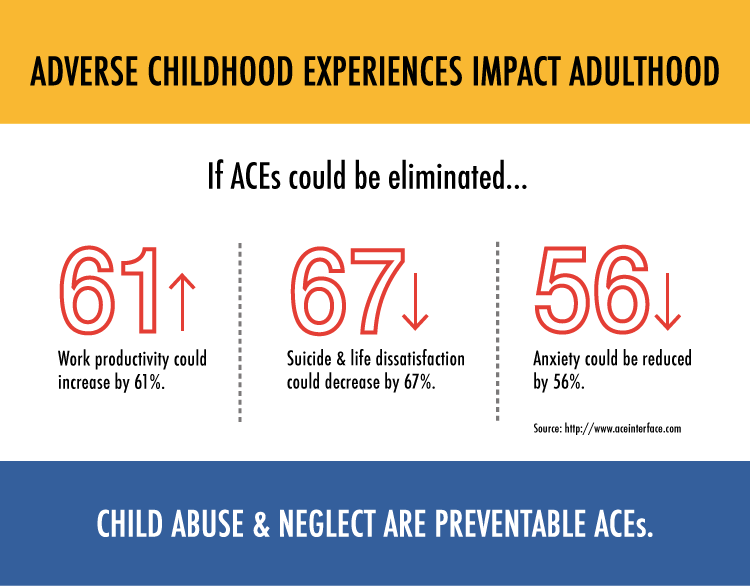
For several months now our entire country and most of the world has been living with toxic stress.  It’s the kind of stress that puts you on edge and keeps you there, day after day after day.  If you have felt stressed, imagine what it would be like to experience adversity and/or abuse — not having enough to eat or being exposed to violence – then think, what if the one experiencing this is still a child.

Factors such as divorce, domestic violence or having an incarcerated parent are called adverse childhood experiences (ACEs). Four or more ACEs can result in chronic health conditions such as heart disease or diabetes. In the long term, living with ACEs or other negative factors, such as poverty, can literally change your brain chemistry.

What does it look like for a young person to live with several ACEs and no supports ?  What does a foster parent experience when bringing a middle school or teenage foster youth into their home ?

It might be not being able to sleep without a light on. Or it could be eating even when one is full or not hungry. Some children become “runners” — they leave school whenever they become upset.

And the symptoms can become even worse.  The child may become a cutter; may be suicidal. Such children can have trouble forming appropriate friendships. Maybe they trash their room; in one fight-or-flight moment, climb out of their window and tumble to the ground. Even jump out of a moving car.

A foster parent could find themselves restraining the child physically by wrapping their arms around the child’s shoulders or waist, using all their strength to keep the child from leaving or hurting their self. Maybe you raised your hand only to motion toward something and the child flinched or even ducked.

And your heart breaks for this young person.  You had hoped they knew you would never hit them.  You are a foster parent.  You signed up for this because you thought you had something to give — time and care and love — to kids who desperately need that.

You might become the person the county calls when a child is removed from a home and has nowhere else to go, or when a foster family needs a break. This is known as emergency respite.

Most foster kids want to be happy.  After a lifetime of abuse and neglect, they may not know how.  A foster parent is also there to be a support for reunification with the biological family.

The best foster parents build a fortress of protective factors around their foster children. Protective factors are those things that most of us take for granted — a friend to call when we need advice; someone to help whenever we aren’t enough on our own.

Some of us are born privileged to have built-in protective factors (a supportive family, enough money).  Most foster kids will need to collect them from somewhere else (perhaps a chosen family made up of friends). At school, they require trauma-informed teachers and staff who understand how ACEs can be reflected in behavior.

National data shows that more than 20 percent of children up to age 17 have experienced two or more ACEs.  Beyond abuse (physical, emotional, sexual) and general neglect these include the loss of a parent to death, divorce and abandonment.  A family member addicted to drugs or alcohol.  A family member that is incarcerated. Being exposed to domestic violence and mental health issues among the family’s members.

Brain toxicity exists. A child can have post-traumatic stress disorder. ACEs are not limited to low-income neighborhoods, domestic violence and substance abuse take place in higher income homes and are every bit as toxic. Learn to look at all people through a trauma-informed lens. Ask, if you suspect this, “What happened to you?” and then listen without adding your own opinions.

Every domestic-violence shelter worker or child-care provider, anyone who works for child-protective services, anyone associated with family court, law enforcement personnel and physicians – ALL need to be trained appropriately to deal with trauma related behavior

Trauma is not the fault of any child.  Understanding ACE impacts allows adults to see the reason behind the behaviors.  Baby steps in a positive direction are progress.


Why Did You Adopt ?

My husband and I made a conscious decision not to adopt when we had been trying unsuccessfully to conceive.  I believe our main concern was that uncertainty factor.  We decided that we preferred to start “fresh” using an alternative form of medicine (obviously the main response to the question in the survey above).

Many adoptive parents are driven by altruistic reasons – it is not because of infertility – but they truly would like to be there in a positive way for a child who they believe needs them.  It is a form of rescuer or savior motivation.

DIA is not through an agency but is a disclosed identified party adoption aka an open adoption.  The inconvenient truth is that regardless of the type of adoption –  agencies are manipulative, hopeful adoptive parents are clueless and often blinded by their own wants, expectant mothers are coerced into giving up their babies because they are led to the false belief it will be better for their infant, and infants experience tremendous trauma when they are separated from their original mother. The whole system of adoption is sadly a mess.

Hopeful adoptive parents usually have good intentions, even if they are blinded to more selfish and personally oriented reasons for adopting.   Wanting to be a parent and acting on that is a selfish decision via adoption, regardless of how you get there.  These adoptive parents may have more than they need for just their own selves.  They want to share from their abundance because for some people sharing feels good.

Many original mothers were  forced. One example that I read about – she was told either she place her son for adoption or they were going to report her to Child Protective Services – she was in extreme poverty, she did not have a job, she was depressed, unmarried and her my son was originally conceived through a man no longer in the picture. She was told she wasn’t good enough to raise her own son and that he deserved better.

It is important to change the narrative about adoption – it is not a beautiful circumstance. It is damaging and painful and should only happen in the very rarest of circumstances, and then it should be within the family, if possible (and honestly, it usually is possible).  I am pro-reunification.  It is important that the pain of separation is not permanent if at all possible.  My perspectives on adoption, I will admit, have gone 180 and mostly against.  There are exceptions, of course, and good ones.

Reform

Late last night I waded into a lengthy thread in a private group here at Facebook related to adoption.  More specifically, they are on a mission to mostly, if not completely, end adoption.  The most compelling and highlighted “voices” are those of adoptees with the mothers who lost a child to adoption given the next highest priority.  Adoptive Parents (or those who hope to) can find themselves under heavy fire and not all of them can cope with that.

I do believe the voices in this group speak honestly a perspective that really needs to be seriously considered.

Other than financial inheritance questions which primarily affect wealthy adoptive parents and the children they adopt (I am familiar with that from my own family’s dynamics), there really is NO good argument for ever adopting a child.

There are alternatives – taking in a foster care child who really needs a home and providing for it (not adopting it and accordingly to my understanding, foster care is generally considered temporary and reunification with the natural family is the goal).  Another alternative is guardianship and NOT changing the child’s identity at all (no name change, falsified identity, birth certificate tampering).  When the child (who generally has no say in the adoption process) becomes an adult, then they can decide what kind of formal or informal relationships they want going forward.

One other suggestion would be for a couple who believes they want to adopt to basically become a kind of loving aunt and uncle to a mother and her child.  Provide the support that the mother’s own family and society may not be willing to give to her.

Though not all adoptees admit to being harmed by having been adopted, the majority have wounds, may be in therapy or commit suicide at a higher rate than the general population.

ALL adoptions require the separation of a child from its natural mother and all children would chose the natural mother if financial support and mental health requirements could be met to allow them to stay together.