Mississippi Appendectomy

I am happy to acknowledge LINK>Fannie Lou Hamer this Juneteenth. She rose from humble beginnings in the Mississippi Delta to become one of the most important, passionate, and powerful voices of the civil and voting rights movements and a leader in the efforts for greater economic opportunities for African Americans. She was a community organizer and vice-chair of the Freedom Democratic Party, which she represented at the 1964 Democratic National Convention. She went into the hospital to have a uterine tumor removed and was instead given a hysterectomy. The title of today’s blog comes from her having that experience. She died at only 59 years old.

I learned about her in a Time Magazine article by Alana Semuels LINK>How Women Get Pressured Into Long-Term Birth Control. In late 2020, news broke about an ACLU lawsuit related to LINK>Immigration Detention and Coerced Sterilization of Mexican woman. It was NOT the first time in US history that this happened. In 2021, the state of California compensated such women. Starting in the year 1909, women of Mexican descent were used as targets for the eugenics movement to reinforce population control and purity.

The Mirena IUD is mentioned. I once had an IUD during my adult journey into birth control but had to have it removed after a few months due to the pain it caused. Mine did not have the long lifespan of the new ones which came out in the 2000s. You can read the Time Magazine article at the link above.

Systemic racism and classism have a long history in US medicine. Even now, some doctors are pushing LARCs (Long Acting Reversible Contraceptives) on Black and Latina, as well as other lower-income women (especially those on Medicaid) coercing them into receiving these, sometimes even immediately after birthing a baby. According to Mieke Eeckhaut, a sociologist, “These ideas of who should and shouldn’t have children are still very much influencing our policies.”

Possum Trot

I’m more than average familiar with Possums (the animal is common where I live in Missouri). A mom’s friend of mine once named her first born Possum – I was stunned. She passed away and both of her kids (the other one she named Lynx) changed their names according to their dad who I once met and stayed in contact with for awhile.

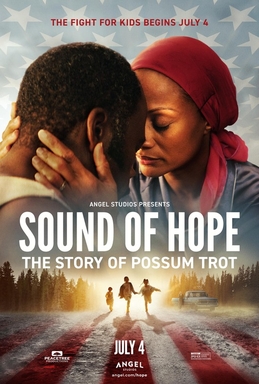
imdb says of this film – Sound of Hope: The Story of Possum Trot is the true story of Donna and Reverend Martin and their church in East Texas. 22 families adopted 77 children from the local foster system, igniting a movement for vulnerable children everywhere.

One reviewer described it this way – “not your typical feel good adoption story. This movie is raw, real, and gives you an honest glimpse into the harsh reality of the traumas that children in foster care have experienced and what it takes for families to love them to healing and wholeness. The power of love, community, and hope was a clear message throughout !”

However, in my all things adoption group (which got me to look at this upcoming theatrical release) wrote – “It looks like there yet another movie pushing the savior agenda within foster care and claiming that foster children are unwanted. I volunteer for an annual summer camp that provides teens in local foster care with 3 days of fun activities and the organization sent me an invite to go see this movie with volunteers as a group. The trailer gave me enough information to know it’s not something I can support. I’m assuming the goal of the movie is to tug on people’s hearts and make them want to “save” children by fostering/adopting.”

Here is that trailer –

One adoptee said – I want to crowd fund Jordan Peel to make a horror film of the exact same to opposite plot.

One former foster now adoptive parent noted – LINK>Angel Studios is also heavily involved in the Tim Ballard/OUR drama. I wouldn’t support anything they make anyway. blogger’s note – so I went looking, as I suspected they are known for making “Christian” movies. I also looked up LINK>Tim Ballard and he was associated with the Operation Underground Railroad. Unfortunately, I do believe that we once watched LINK>Sound of Freedom with Jim Caviezel on dvd. He portrays Ballard.

One adoptee added –  “I would be curious though to know what gets classified as neglect. I feel like that’s a catch all phase that isn’t applied equally. Obviously, no kid should be abused. How does this actually support kids ? I feel like this will just piss people off without providing real concrete action to change lives. Adding, I just wanna see a movie/read a book from an adoptee that centers them.”

Another Kind Of CPS

I have mentioned CPS (Child Protective Services) frequently in this blog. They are part of the government that removes children from what are deemed unsafe environments. I have documented frequently that their actions are not always as sterling as most citizens might believe.

Today, it was suggested that I take a look at LINK>Dr Ross Greene who is a clinical psychologist. He has been working with children and families for over 30 years. His influential work is widely known throughout the world.

In the perspectives of Dr Greene, CPS stands for LINK>Collaborative & Proactive Solutions. Many adoptive parents find themselves dealing with a traumatized adoptee who exhibits challenging behaviors. This is probably one of the main reasons that hopeful adoptive parents prefer to adopt an infant who may present less already baked in behaviors.

Dr Greene choses not to emphasize the kids’ challenging behaviors – whether it’s whining, pouting, sulking, withdrawing, crying, screaming, swearing, hitting, spitting, biting, or worse. He prefers to look at how they’re expressing the fact that there are expectations they’re having difficulty meeting. In the CPS model, those unmet expectations are referred to as unsolved problems. The goal is to solve those problems, rather than trying to modify the child’s behavior by using rewards and punishments.

The goal in CPS is to foster a problem-solving, collaborative partnership between adults and kids by engaging kids in solving the problems that affect their lives. The CPS model is non-punitive and non-adversarial. This decreases the likelihood of conflict, enhances relationships and improves communication within the family.

The skills developed include empathy, appreciating how one’s behavior is affecting others, resolving disagreements in ways that do not involve conflict, taking another’s perspective, and honesty. His book LINK>Raising Human Beings details how to create a collaborative partnership with your child.

Shout Out To Fathers

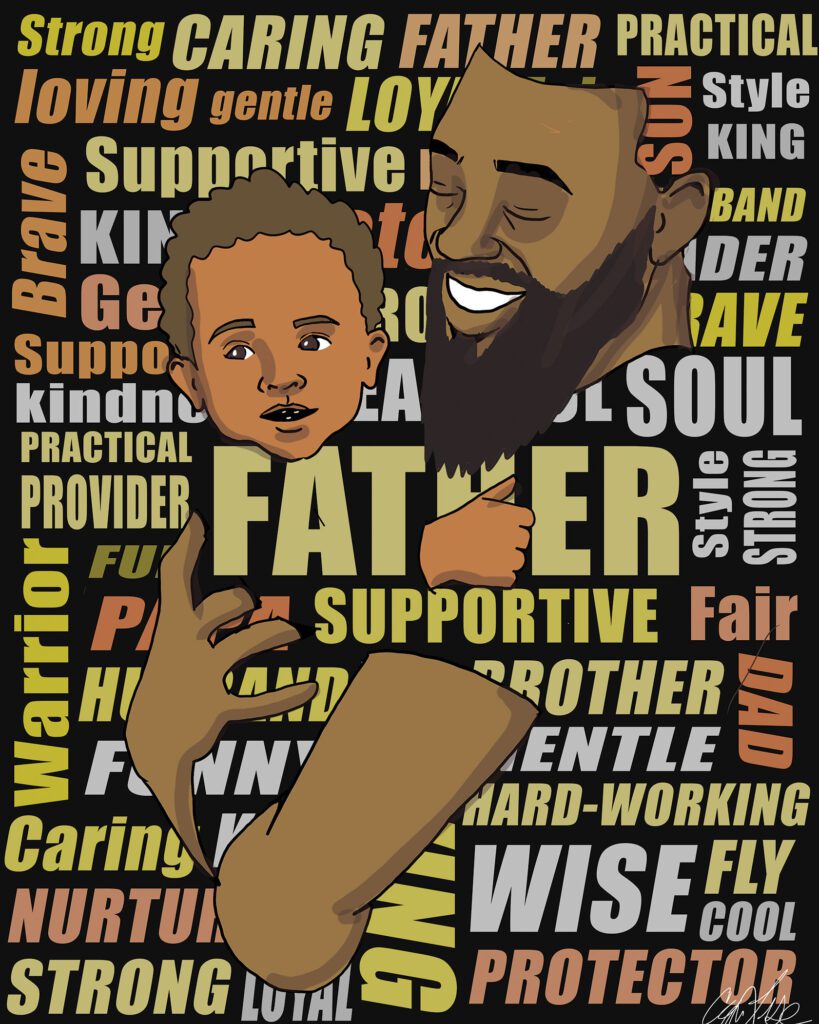
It’s Father’s Day and so I should acknowledge that other gender in humanity and what they give to kids when they want to be a father. All too often, fatherhood comes upon a male of our species unplanned and unasked for. That can have a tragic outcome for the child who’s mother is also unprepared to parent. Many times these children end up adopted with all the complications and trauma that entails. Sometimes, the mother tries but the children end up in foster care – either adopted eventually or again out of the system.

In my own case, the three children I have birthed were all planned. I am grateful for that. Both fathers have been good fathers to their children. My own dad, gone now for almost a decade, did the “right thing” by my teenage mom and me when she turned up pregnant, still in high school, and after he had only started at a university. He gave up his own dreams of higher education to go to work in a refinery – often very long, double shift hours – to support his family which eventually included 2 younger sisters for me as well.

My own daughter ended up being raised by her dad and step-mother when I proved unable to financially provide for the two of us as a single mom. Though that left me feeling like a failure as a mom, when I remarried later in life, my husband surprised me by telling me after a couple of Margaritas that he had been thinking he wanted to be a dad after all (he had been grateful I had already done that and that there was no pressure on him). He has been an awesome, dedicated father willing to drop whatever else he was doing if called up by his sons. I was healed of some of my earlier motherhood issues by discovering I could actually be a decent mom.

Many times, in my all things adoption related group, men have stepped up and actually fought the legal system to regain a child that was given up for adoption by their single mom. I have a huge admiration for such men and they do an awesome job of parenting. Happy Father’s Day to all men who have found themselves, one way or other, parenting a child – especially those who had to do so without the mom’s involvement, for whatever reason. You are true heroes !!

Damn-It Missouri

Today’s story (and as usual – not mine) –

I had court today and I was told by the judge that she can’t safely reunify me with my four children because I allegedly have a history of having multiple boyfriends/toxic relationships. I’ve been in a relationship with two men in 5 years. She said the case has been opened for 14 months and time is running out. My lawyer told me after court I can pick adoption or guardianship for two of my children (with a new foster family who are strangers with either choice). There is no guarantee they will be together. My oldest son will go to his dad’s house. My baby is 4 months old and I can still work towards reunification, since I’m not at my year mark yet.

I got granted weekend overnights on May 2nd and 3 hours later they showed up, after a guy I was briefly seeing reported it. They removed my newborn for allegedly allowing a man to live with me and my newborn for 2 months. I didn’t have anyone living with me, other then my newborn. I had 4 people verify that – my parents, my baby sitter, and my service provider. The court moved me back to supervised visits.

I’m desperately trying to get my kids out of foster care. I was adopted as a child and it was extremely hard. I can’t fathom it for my children. I don’t know what to do. I’m not on drugs, never have been. I’ve been a homeowner for 4 years. I’ve worked in healthcare for 4 years. I own my own car. My kids have everything they need. I just don’t understand what’s going on with this case.

When asked, she confirmed she is in Christain County, Missouri, 25 min south of Springfield. Her attorney is paid by the state and goes along with whatever the Juvenile Officer says. One former Missouri caseworker suggested she “contact the Office of Child Advocate about how your case is being managed, specifically mentioning the change in visitation.” However, she had already done that and her request for a review was denied. The Children’s Division made her wait 39 days before she could see her newborn and 44 days before she could see her other 3 kids, as well as the court moving her back to supervised visits.

The caseworker noted –  if they are giving you the option to consent to guardianship that typically means they don’t have a solid case for Termination of Parental Rights (TPR). So even though you are almost at the 15 month mark, they probably won’t formally change the plan quite yet. There aren’t any long-term consequences in not consenting to guardianship, like there are with TPR when it comes to their ability to remove any future children you might have. However, after 6 months of guardianship the placement providers can file for adoption, so keep that in mind. Guardianship is also reversible, meaning you can petition the court to have it dissolved at any point, after it is granted. I would hope that your caseworker would explain all of this to you, but just wanted you to know, in case they don’t.

LINK>Current Missouri Foster Care Statistics

From the LINK>Missouri Independent – More than half the frontline staff working in the Children’s Division at the start of the last fiscal year left by the end of the year. Children’s Division Director Darrell Missey said the system has long trended toward the “reactive” over “proactive,” and is “driven by our fear of what might happen later, [which] results in a lot of kids in foster care.” 

Other general (not specifically Missouri related) details – Child welfare professionals remove children from their parents more than 250,000 times per year. Across the country, removal decisions are based on inconsistent standards and practice — often applied disproportionately — and result in trauma for children and families. While separating children from their parents should be an intervention of last resort in child welfare practice, there is little guidance about how to prevent removal, mitigate trauma, and connect families to more appropriate supports when needed.

The current process for deciding when to remove a child is flawed and inconsistent, which causes harm and prevents families from getting the support they actually need. Revisiting the standards for removal is critical. Only public officials with training in both the legal standards for removal and how to mitigate trauma should remove children, and only when all other interventions have been exhausted.

Contact Preference

Father’s Day is Sunday. Today’s story asks adoptees a question about contact preference – Adoptees, would you have wanted your natural father to reach out to you or your adoptive parents ? Or would you have rather they let you find them, when you were ready ?

Background (not my own story) – My husband has a child that was placed with a family and just turned 18. He has not had contact with her since she was placed, when she was a toddler. He would like to reach out to let her know that he’s available, if she wants a relationship moving forward but isn’t sure if he should wait until she reaches out or go through her adoptive parents.

One adoptee laments – I wish my dad would contact me. I am 36 now and still wish for that.

One person thoughtfully notes – I’m not sure how is react if my father gave me up for adoption and then I found out he adopted another child. Whatever you do you’ve got to really think about the best way to break that news to her. That’s potentially very crushing. An adoptee says –  I’m adopted and I would be hurt if one of my birth parents adopted another kid after giving me up.

The person asking the initial question adds more context – we already had the challenge of us having a biological child after we were married – then adopting. So our children are areas that may invoke hurt. It’s part of why he hesitates to reach out. From my point of view, I figured not reaching out for fear of hurting her is worse than reaching out and causing potential pain that can be discussed and worked through.

Another adoptee adds – I would much prefer my parents to reach out to *me* than through my adoptive parents. That feels weird and invasive and uncomfortable. And not all adoptive parents welcome this connection — mine don’t and I’m in my 30s. So.

The one who initially asked the question responded – totally makes sense and I figured as much. He didn’t want to step on their toes and undermine but he’s not trying to take over either, just provide her the option to reach out to him, should she want a connection at some point.

An Adoptee Rights Activist says (who is also an Adoptee and the Daughter of an Adoptee) – Definitely reach out to her directly.

The Now Way

LINK>Adoption Birth Vlog example
MaryJane Lance – once again in pursuit of a child

Blogger’s note – This post is from an adoptee and is about children who are adopted and exploited on social media. The adoptee’s post is below –

Documenting the adoption journey has been an integral part of the overall adoption story. At one time the creation of lifebooks was meant to be a way of helping the child understand what it meant to be adopted. It served an important purpose to ensure that the child’s sense of self was rooted in their adoption..

Once social media became the established way of capturing our lives, lifebooks became obsolete in favor of blogs and vlogs. We now live in the age in which people make a living as content creators, much to the thanks of YouTube. From traditional profile books and listings with adoption agencies, to creating their own websites, featured news coverage and social media hashtags, prospective adoptive parents sought out every possible way to let the world know their story in the hopes of being matched with a child for adoption.

Posting one’s life on social media is native in today’s culture. And because it has well-established ways to monetize online content, these prospective adoptive parents have learned the business. So what is the big deal? It’s normal to post content about your family, right? Many family-run Youtube channels get views in the hundreds of thousands and millions. Everyone loves feel-good reality content.

Right now, the media is shedding light on the failings of the adoption industry. The Netherlands, home to the Hague Adoption Convention, has officially closed its international adoption program (again). South Korea is undergoing a comprehensive investigation revealing hundreds of adoptions involving the falsification of records. Holt International is linked to many of these cases. Dillon International has shut down. The Russian president was accused of committing war crimes by kidnapping Ukrainian children and adopting them into Russian families.

The Asunta Case was in the top 10 Netflix series based on the true story of Asunta Fong Yang. In the U.S. the media is putting a spotlight on the Stauffer Family scandal (2020) involving the rehoming of the boy they had adopted from China. The Stauffers became a YouTube sensation story having monetized their adoption journey. So, what is the scandal exactly?

Tik Root wrote an eye-opening Time magazine article, “The Baby Brokers: Inside America’s Murky Private-Adoption Industry” published in 2021. Prior to that was the Reuters report, “The Child Exchange” exposing the Yahoo child rehoming groups published in 2015. Last year, the media descended on the issues and ethics of child influencers. The Stauffers are one of countless adoptive families who have taken to social media monetizing their adoption journeys effectively exploiting Huxley for profit.

Exploiting children is nothing new, neither is adoption. So, where does the Stauffer Family fit into this picture? Why is this a big deal?

Here’s the adoptee’s perspective:
The adoption industry has reached critical mass and has been developing new ways to sustain it’s multi-billion dollar operation. No longer a taboo subject conducted through back doors held in secrecy only priests could hear, adoption has saturated virtually every level of society. In the confusion and chaos of a divided media, social opinion, subplots found in the DC and Marvel universes, K-Dramas, and TV shows, sports, gold-winning olympiads, tech leaders, musicians saying they will adopt a child, and celebrated family reunions on Good Morning America, the adoption industry is free to carefully and gradually change its course with little attention or resistance.

Issues from the current adoption system become course correction for the industry’s next leap forward into the already multi-billion dollar surrogacy market. With all of this attention on the adoption side of the industry, the surrogacy market grows virtually unnoticed. Children like Asunta Basterra and Huxley Stauffer (formerly known as), are victims of a known corrupt, exploitative industry. They are commodified and dehumanized in the name of adoption. They are bought and sold in a child trafficking scheme to later be disposed of or “rehomed” once their use has run out.

Despite the ongoing efforts of investigative journalists to expose these truths, the adoption industry has proven its power of propaganda ensuring people remain ignorant, confused and brainwashed at the expense of children’s lives. We must continue making every effort to send a clear and unified message to stop this crime. Stop commodifying and exploiting women and their children for profit. There are now 9 million adopted people in the U.S today. Our numbers are going to grow exponentially in the coming years. We have taken a stand against violating our rights. We have taken a stand against being stolen, kidnapped, and trafficked. And now we are taking a stand against being made into disposable people.

Why Me And Not Her ?

Hi my dearest sister. How are you? What’s new? How is everything? I miss you a lot.

A mother of loss asks for advice – It’s a closed adoption and the rules are strict about writing letters through the team I’m with to the adoptive parent. My daughter that was adopted is now 12 years old and my raised/kept daughter is 6. She’s seen all my stuff on her adoptive sister and has read the letters. She wants to join me in writing my next one.

There are things we can and can’t put in them but with that understanding, what ideas could I give her about writing to her sister’s adoptive parents from her? This is new for me with her wanting to join in. I’ve been writing mine for 10 years now. I know what I can write but I feel stuck with helping her write one. If this was you, what would you put in a letter like that. Even things I know I can’t write, may still us some ideas.

One adoptee writes – If I could have received letter from my birthmother’s kept children, I would have wanted to know more about them. Maybe what a typical day was like for her. Her interests and hobbies. Whether or not she had pets. I can assure you, at 12, I had questions I’m sure can’t be discussed like – why me and not her ?

Another adoptee seconds that – I would’ve wanted to know all about my sister. What’s her name, what color of hair does she have, does she like the same things as me ? I would want to know everything. Does she get these letters as a child or when she turns 18 ? This is really awesome, I wish I had letters or a natural mom who cared about me. In answer, the mom says – they get saved by the adoptive parents, if she’s not having them read to her. If it’s not suitable to read yet, I am still allowed to give it to the adoptive parent; then my daughter has to wait until she’s 18. It depends, really. It’s only letters back and forth. I’ve been doing these for 10 years and I’m thankful, though there’s a lot about that I hate too, especially the rules about writing them and what we’re allowed/can do and say. Otherwise, I appreciate being able to write and receiving the letters back as well.

A kept sibling responds – I was about 10, when my brother found our mom. He was in his early 30s. We wanted to know absolutely everything about each other. I’m 36, we both still have the letters we wrote back and forth in the mid-90s. My 10 year old self wanted to know favorite color, food, bday, siblings, all those trivial things. I couldn’t wrap my mind around him being my brother. Then I spent time in and out of foster care, and we lost contact for years. We got back in touch when I was mid-20s.

An adoptive parent responds – I know a little about what you are/aren’t allowed to say, usually it would be identifying information but I’m not sure if that’s just about minor children or if it’s about adults as well. For your daughter, I imagine she will have ideas of what she wants to write to her sister but do check that your adopted daughter knows she has a sister. My adopted children, who are biological siblings, ask about their other siblings, how old are they, what do they look like, what are their names (and they keep asking this, even though they know the answers, I think just for reassurance or to check that their memories are correct). These are the kinds of questions kids ask each other – do they have pets, where do they live, do they like the “XYZ” TV program, what kinds of food, what games do they play ?

Some Lives Are Difficult

Not the Girl in this story

Today’s story comes out of a foster parent help and support group. It concerns a 4 yr old girl who was placed with them when she was only 2 years old. Her biological mom passed away 3 mos after she had been placed with a foster family. Her biological dad has been in prison the entire time. She calls her foster parents mom and dad and has no recollection of her original parents.

She is now going to be transitioned to an adoptive home. The foster parents have tried to explain to her that they are not her parents and that she’s going to have new parents. To their credit, they are concerned about the trauma this may cause her.

They don’t want her to feel abandoned but their agency is not giving them any guidance about how to handle this situation. The agency is giving the foster parents 2 months to prepare the little girl and she will have a lot of visits with her new parents during that time period.

One adoptee stated – You should adopt her if she is fully integrated into your family and calling you Mom and Dad. You have no other option. If you don’t want to adopt her, then how has this gone on for 2 years?

Another blamed the agency – The agency failed the child too. They never should have let this go on, and should have been facilitating at least phone calls with dad in jail. To which the original commenter (who is not the foster parent in question) replied – I am not downplaying how the agency has messed up. I just do not understand how you can have a child living in your home and not advocate and be honest with them. It sickens me.

Then came a reality check from someone who experienced foster care – that depends what he’s in prison for. If he’s been in prison the entire time, then his parental rights were terminated before the child had conscious and accessible memories. If he’s serving time for any restricted offenses, then the state does not allow any contact with that incarcerated relative. My biological dad was incarcerated and not allowed to have contact with me because one of his charges was child endangerment and the others were drug related offenses within school zones. Therefore, there was no mandate or legal channel for visiting or communication with him, while I was in active foster care, even as a teen, and especially not with my foster parent facilitating it.