Lost Birds

Learned about this book reading the December issue of New Mexico Magazine. When I read it is a riveting mystery underscoring the complexities around the adoption of Indigenous children by non-Indigenous parents – I had to know more !!

I found this at ReadingReality.net – LINK>Book Review. From that I had to google a definition for bilagáana. I learned that is an early Navajo term for white American male. My in-laws were fond of books by Tony Hillerman. He died in 2008. Anne is his daughter.

Joe Leaphorn, a retired Navajo Tribal Police detective, discovers that his client’s adoption was questionable, and her adoptive family not what they seem. 

From the review – “Exploring the emotionally complex issues of adoption of Indigenous children by non-native parents, Anne Hillerman delivers another thought-provoking, gripping mystery that brings to life the vivid terrain of the American Southwest, its people, and the lore and traditions that make it distinct.”

Home Children

I had not heard the term Home Children, though it is not surprising as it relates to Canada. We have been watching the Acorn series – Murdoch Mysteries – though last night’s episode titled “Child’s Play” did not play properly for us – freezing and skipping – so we never got to the conclusion. After our local library “cleans” the disk, maybe we can check it out again and be able to see the full story.

The story was about a ragamuffin group of boys that were called Home Children. These were children rounded up from the streets of London and shipped off to Canada – there was also an adoption theme in the story. So, I went looking to learn more about these children. More than 100,000 children were sent from the United Kingdom to Australia, Canada, New Zealand, and South Africa. The program was largely discontinued in the 1930s but not entirely terminated until the 1970s. Research in the 1980s, exposed the abuse and hardships endured by the relocated children.

The practice of sending poor or orphaned children to English and later British colonies, to help alleviate the shortage of labor, began in 1618, with the rounding-up and transportation of one hundred English vagrant children to the Virginia Colony. In the 18th century, labor shortages in the overseas colonies also encouraged the transportation of children for work in the Americas, and large numbers of children were forced to migrate, most of them from Scotland. This practice continued until it was exposed in 1757, following a civil action against Aberdeen merchants and magistrates for their involvement in the trade.

The Children’s Friend Society was founded in London in 1830 as “The Society for the Suppression of Juvenile Vagrancy through the reformation and emigration of children.” In August 1833, 230 children were shipped to Toronto and New Brunswick in Canada. In the first year of the operation, 500 children, trained in the London homes, were shipped to Canada. This was the beginning of a massive operation which sought to find homes and careers for 14,000 of Britain’s needy children. As they were compulsorily shipped out of Britain, many of the children were deceived into believing their parents were dead, and that a more abundant life awaited them. Some were exploited as cheap agricultural labor, or denied proper shelter and education. It was common for Home Children to run away, sometimes finding a caring family or better working conditions.

Many of these themes were part of the story we attempted to watch last night. It certainly piqued my interest in exploring it this morning. Much of today’s blog is courtesy of the Wikipedia page – LINK>Home Children.

Too Inconvenient ?

A friend who knows I write this blog, sent me an article about a baby stolen from her family in Korea to feed the demand for adoptable babies in the US. However, I have written about that issue more than once. Below that article was another one that caused me to go – oh Wow !!

Here is that story from Slate by Allison Price – LINK>My Sister-in-Law Asked Us to Adopt Her Twins Because She Missed Her Old Life. Somehow, We Said Yes.

Last year, when our kids were 3 and 4, we decided to explore adoption and/or fostering, as we felt like we still had room and love for more children in our life. Around the same time, my sister-in-law got married and pregnant with twins. She had never expressed much desire to have children and was definitely stressed to discover it was twins. When the twins were about 6 weeks old, they all came to stay with us for a weekend to attend SIL’s friend’s wedding, during which we agreed to watch the babies. They ended up texting around 11 p.m. that they’d had more to drink than they’d planned and the party was still going, so would we mind if they just got a hotel room and we’d keep watching the babies overnight? We were fine with it. The next day, when it was 3 p.m. and they still weren’t back and hadn’t answered any texts, my husband called them. They’d decided to take advantage of sleeping in, had brunch then had a few shops they wanted to check out, and thought it was a nice break from the babies.

Two weeks after the wedding, they asked to come visit us again. They told us that having twins was significantly more difficult than either of them had imagined and they were really missing their previous life and the ability to do whatever they wanted whenever they wanted. They said they knew we were considering adoption and wondered if we would take in their twins. They thought it would be the best solution as they could continue to see them and be involved in their lives (at their convenience). My husband and I were shocked. We spent the next month talking to them about it more and went to multiple counseling sessions with them. I went to the obstetrician with my SIL to discuss the possibility of postpartum depression affecting everything. The outcome of it all was that they didn’t want to be parents and wanted us to take the kids. Ultimately, we drew up a legal agreement, they surrendered parental rights and we adopted the twins.

We absolutely love the babies and feel like our family is complete now, but I don’t know how to interact with my brother-in-law and SIL anymore. I lost all respect for them when they basically admitted that their kids were an inconvenience they wanted to be rid of. (When we asked what they would do if we didn’t adopt them, they said they were considering other private adoption options.) It’s been a year, and everyone in my husband’s family just acts like what they did was perfectly normal. My BIL and SIL have even asked us not to tell the twins we aren’t their biological parents, which goes against the legal agreement we all signed. We plan to be open and honest with them about how they came to be a part of our immediate family. It’s so bizarre to me that everyone thinks this was a perfectly appropriate thing to do.

Asked advice – Is there a way to discuss this with them?

The Advice Columnist said – First and foremost, it sounds like you need to know whether the terms of your adoption agreement are legally enforceable, or whether some of the terms of the adoption can be changed.

How you talk with your brother-in-law and sister-in-law about disclosing the adoption to the twins needs to come from a well-informed decision that you and your husband make. Adoption can mean a lot of joy, love, and comfort, but it can also mean trauma, confusion, and anger. I foresee a lot of those latter feelings for these twins, knowing that their birth parents (who they will presumably develop a relationship with) saw them as inconveniences to be surrendered. 

Keeping this important truth from them—one that is central to their identities—is likely to feel like a betrayal once the twins inevitably find out. You need to do a lot of research on open and kinship adoptions to be sure you’re making the decision that is right for your family and these twins; if you haven’t already, find a support group where you can crowdsource resources and feedback. Then you’ll be able to inform the birth parents and the rest of the family how you will be proceeding regarding disclosing to the twins. Make no mistake: No matter who else in the family has what opinions, this is ultimately you and your husband’s call as the legal parents.

It is a bizarre situation you are in—not just the surrender of the kids, but the supposed blasé attitude of the rest of the family. You sound understandably unclear about how you’re even going to maintain a relationship with your BIL and SIL, given how this has played out. Keep an eye on the family dynamics here; while I hope everyone can exude love and grace around these children and their adoption, I worry that this inauspicious start might signal more drama and discomfort to come. I hope I’m wrong, but that’s all the more reason to find a support group, and maybe also a therapist for you and your husband, to help you make sense of this unique dynamic. Good luck.

16 and Pregnant

Tyler and Catelynn Baltierra with 3 of their daughters

Not a space I’ve a tendency to inhabit but today I saw this Instagram note – Tyler Baltierra Reveals He & Wife Catelynn “Got In Trouble” For Saying The Word ‘Sister’ About Their Adopted Daughter. This couple’s first pregnancy was the subject of an MTV program where the end result was that they placed their first born daughter, Carly, for adoption.

One commenter said – Oh my god , this story makes me so sad because they gave Carly up thinking Brandon and Theresa (B&T) had more financial resources. Tyler and Catelynn have stayed together and Carly now has full siblings. This couple probably has more money than the adoptive parents. Their daughters are full blooded siblings and B&T can’t deny that reality. They took advantage of poor teens and it’s backfired.

It is said that the couple have had their ups and downs with Carly’s birth parents over the years — particularly after the Davises did not want the Teen Mom: The Next Chapter stars to show Carly’s face on social media or the show — the families reunited in May 2023, where Carly got to spend time with her three biological sisters.

In June of 2012, Catelynn wrote – Carly “has the biggest attitude now, like Tyler. She’s so headstrong and confident. It’s funny. She’s really good at counting and knowing all her colors. She started preschool and she’s really doing great in school.”

In April of 2015, the adoptive mother Teresa Davis was quoted saying – “We have a platform to speak on adoption from an adoptive parent perspective that nobody else has. The baby biologically is yours, but in every other way, she is our child, and you have to trust our decisions.”

In May of 2019, Tyler wrote wrote in a touching birthday tribute to Carly – “Ten years ago yesterday, we were only 17. Ten years ago, we brought you into the world. 10 years ago, we only got to hold you by ourselves for a half hour in the hospital as we just cried and stared at you, remembering every little detail of how absolutely perfect you were, since we knew that even though we just met, we had to say goodbye. 10 years ago, we had to make the hardest decision of our lives and give you everything your innocent life deserved that we just couldn’t provide at the time. 10 years ago, we held each other and wept as we watched you drive away in the back of the car with the only parents that were worthy to be yours. … We love you so much & hopefully get to see you soon baby girl. Happy Birthday Carly!”

Being celebrity influencers, the saga or drama has been ongoing. You can read more at US Magazine.com’s Celebrity Moms feature where I got my quotes above. I’m not delving in further but if it interests you, here is the LINK>Catelynn Lowell and Tyler Baltierra’s Quotes About Daughter Carly and Her Adoptive Parents.

Adoptee Voices

Once again, searching for an idea to write about, I googled these two words and found this. When I found the website, LINK>Adoptee Voices, I read this on google – “Your voice in the adoption narrative is both needed and necessary. We’re about supporting adoptee storytelling. We’re so glad you’ve found your way here.”

I am NOT an adoptee but the child of two adoptees. I am NOT the voice this site is looking for but I am GLAD I found my way to it.

The website has several portals – Writing Groups, Blog, E-Zine, Who We Are and a Published Portfolio.

If you ARE an adoptee with a story that you want to tell, I recommend you take a look today. Best wishes !!

Judges Pro Narrative

Mary Rhodes Russell, MO Supreme Court Chief Justice

Our weekly local newspaper, The Democrat-News (hilarious if you realize how red Missouri is) had an op-ed by our MO Supreme Court Chief Justice, Mary Rhodes Russell, that was a pro-adoption narrative given legal standing. Really not a surprise. Many judges LOVE the great PR value of an adoption finalization hearing.

I’ll spare you all the sweet retelling of the incident. To her credit, she explains the three ways that the adoption of a child takes place. [1] Private agreement (in my family, there were two kinds – one an attorney represented and one a religion represented). She mentions an organization pairing the adoptive parents with an available child. [2] Step-parent adoption (fairly obviously straight forward). She does indicate “after the other natural parent has abandoned the child or otherwise has legally given up parental rights.” My daughter did have a step-mother helping my ex-husband raise her. Though there were times when I was not reachable that could have been considered abandonment, the truth is I was frequently in touch most of her childhood and contributed funds when asked (though when I had custody, my ex refused to make child support payments).

Lastly, there is [3] is an aspect of the juvenile justice system in the state of Missouri. These are cases of the child having been abused, neglected or abandoned and considered “in need of a permanent home elsewhere.”

She shares how a judge goes about deciding a case. Recommendations by the Division of Family Services and the results of a home study by one of their personnel. The local juvenile office provides the judge with their report. The child has a guardian ad litem appointed (to act as their attorney). She brings up the foster care system, noting there are not enough foster parents to meet the demand for them. It is only when the child can not be reunified with their genetic, biological parent that an adoption can occur. She also mentions the CASA volunteers. CASA stands for Court Appointed Special Advocates. She believes these volunteers bring about shorter foster care periods for the child they represent.

Not All

Today’s story illustrates this –

We adopted our almost 8 year old from birth. The relationship with birth mom and her other children has been sporadic at best (her choice). My daughter misses her siblings but they have recently been taken from the bio mom who became homeless and apparently was charged with neglect. Some are with their own bio dads and one is in foster care. My daughter does not know this yet, and we will work with her therapist to share this information in a way that hopefully lessens the trauma (for context, we don’t have a way to get ahold of bio mom anymore to offer help and she has moved across the country).

My daughter also has always wanted to meet and know her bio dad and his family. We have worked hard to find him and make that happen. I finally connected with his sister (so my daughter’s bio aunt) on Facebook and my husband and I are meeting her next week. We’re hoping she’ll be amenable to starting a relationship with our daughter. We’ll get more information at that time, but she alluded that her brother isn’t not open to that right now. How do we make sure this is not causing more trauma for our young daughter? I know that having this relationship could be great for her, but will it make it worse knowing that bio aunt is willing to meet her (and hopefully have a relationship with her) but her dad isn’t? We want to do what’s right for her. She craves to know this side of her family, but I’ve heard that discovering the bio parent can create more trauma.

A relevant response from an adoptee – If any of her bio family wants to meet her/have a relationship with her do all you can to make it happen. Yes, it may hurt and cause trauma that other bio family does not want to do that. However, that can you can work through. What will never be worked out is if she discovers she could have had something with bio family but you kept that from happening. Even worse is if she finds out you were anything but 100% truthful to her or them. Don’t hide behind we were trying to protect her. Unless there is some clear danger, such as the parent abused other children or threatened her or you in some way, the only people you are thinking about is yourselves. It is acceptable to give an age appropriate truth such as her siblings are being cared for by other adults because her bio mother is not able to provide shelter for them right now. Therefore, she probably will not be in contact with her for a while. If she wants to have contact with her other siblings, try to make it happen. If it is not to be, tell her that and why. Again in a truthful age appropriate way. That could be upsetting to her but again that can be worked through. What is important is that she knows she can trust you to always be honest with her. Break that trust and you will lose her forever.

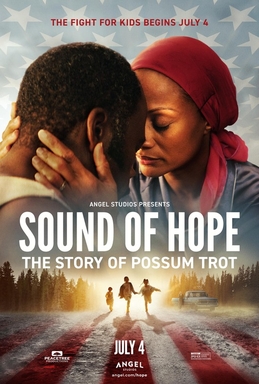
Possum Trot

I’m more than average familiar with Possums (the animal is common where I live in Missouri). A mom’s friend of mine once named her first born Possum – I was stunned. She passed away and both of her kids (the other one she named Lynx) changed their names according to their dad who I once met and stayed in contact with for awhile.

imdb says of this film – Sound of Hope: The Story of Possum Trot is the true story of Donna and Reverend Martin and their church in East Texas. 22 families adopted 77 children from the local foster system, igniting a movement for vulnerable children everywhere.

One reviewer described it this way – “not your typical feel good adoption story. This movie is raw, real, and gives you an honest glimpse into the harsh reality of the traumas that children in foster care have experienced and what it takes for families to love them to healing and wholeness. The power of love, community, and hope was a clear message throughout !”

However, in my all things adoption group (which got me to look at this upcoming theatrical release) wrote – “It looks like there yet another movie pushing the savior agenda within foster care and claiming that foster children are unwanted. I volunteer for an annual summer camp that provides teens in local foster care with 3 days of fun activities and the organization sent me an invite to go see this movie with volunteers as a group. The trailer gave me enough information to know it’s not something I can support. I’m assuming the goal of the movie is to tug on people’s hearts and make them want to “save” children by fostering/adopting.”

Here is that trailer –

One adoptee said – I want to crowd fund Jordan Peel to make a horror film of the exact same to opposite plot.

One former foster now adoptive parent noted – LINK>Angel Studios is also heavily involved in the Tim Ballard/OUR drama. I wouldn’t support anything they make anyway. blogger’s note – so I went looking, as I suspected they are known for making “Christian” movies. I also looked up LINK>Tim Ballard and he was associated with the Operation Underground Railroad. Unfortunately, I do believe that we once watched LINK>Sound of Freedom with Jim Caviezel on dvd. He portrays Ballard.

One adoptee added –  “I would be curious though to know what gets classified as neglect. I feel like that’s a catch all phase that isn’t applied equally. Obviously, no kid should be abused. How does this actually support kids ? I feel like this will just piss people off without providing real concrete action to change lives. Adding, I just wanna see a movie/read a book from an adoptee that centers them.”

Cabbage Patch Adoption

An adoptee has a request – Looking back on Cabbage Patch Kids as an out-of-the-fog adopted adult hits me different than it did when I was a kid. I’m interested to hear what your thoughts are on CPKs — then and now.

blogger’s response – I remember them but I don’t think I ever thought about the adoption part even though both of my parents were adoptees.

There were over 50 comments. I’ll only share a few –

I never really connected the dolls with adoption issues per se, even though I knew there were adoption certificates but as a child I just legit thought they were just babies grown on a little cabbage farm, so they didn’t have parents. another one replied –  I’m with you there! I still remember the day I found out they didn’t grow on a baby cabbage farm. While it’s an amusing memory now, 7/8 yr old me didn’t think so. But wait !! Actually, they do. There is a cabbage patch farm you can go visit, where they are born from the mother cabbage! It’s kinda cool.

From the website story about how LINK>“it began in a cabbage patch . . .” – The Bunnybee led the way and Xavier followed. Bunnybees were flying all around sprinkling magic dust from the crystals onto the cabbages. Rows and rows of cabbages were everywhere. But, there was something different about them. Xavier blinked his eyes and squinted at what he thought was movement among the cabbage leaves. Xavier moved closer and soon could see that there were lots of small kids and babies sleeping and playing among the cabbages.

blogger’s note – found this “Pack the ‘Kids™ up for a trip to the new BabyLand General® Hospital in Cleveland, Georgia, voted one of the Travel Channel’s Top Ten Toylands. Beautifully situated in the North Georgia Mountains, this Southern Style home filled with Cabbage Patch Kids will capture the imagination of your entire family.”

Maybe I won’t include any more adoptee perspectives because I also found this sad story related to the dolls.

The dolls were originally invented by a Kentucky artist named Martha Nelson Thomas. Martha first started making them in the early 70s, and would “adopt” them out to family and friends. The dolls eventually caught the eye of Xavier Roberts, a Georgia man who ran a gift shop. After Martha denied him permission to sell her dolls, he stole the design and began making his own versions.

Xavier’s dolls, which each had his signature printed on the ass, became wildly successful over the next few years. Their popularity reached its peak in 1983, when shortages of the dolls over the Christmas period led to mini-riots in toy stores across the country. Through all this, Martha didn’t make a single penny from her creation.

In this video, we travel to Kentucky to meet with friends and family of Martha, and hear how the Cabbage Patch craze affected her life. We also traveled to Maryland, to meet Pat and Joe Prosey, who believe they have the largest private collection of Cabbage Patch Kids on the planet.

Maybe just say NO to a Cabbage Patch Doll for your own living adoptee.

It’s Hard To Feel Different

In looking for an image, I discovered this child’s book about feeling different by Doris Sanford published in 1986. The summary says – “A young boy is portrayed as he sorts out the hurt of ‘being different’ . . . at school. The boy knows he is not like other children . . . He finds true friendship with a little lamb, Fluffy. Fluffy ‘speaks’ truths to the boy about his specialness and how he is loved in spite of his differences. Ages 5 and up.”

From an adoptive parent today – We have an open adoption, more so with our son’s father and less so with his mother. Our son is 8 and has says every few months that he wishes he wasn’t adopted. He has known his birth story since birth. We visit his father’s family twice a year and he loves seeing his half sister. I’ve been struggling with the right supportive language to help him with those hard moments. I tell him that it must be hard to feel different. He says things like I’m the only adopted kid at my school.

One adoptee notes – if a person said almost every month that they were sad their mother died, would that be something to pathologize? If a person said they wished their mother never died, would you try to stop them from saying it? Losing one’s entire family, ancestors and all IS sad. As the perpetrator of the separation from his family, your comfort will ring hollow.

Someone asks – When he says he wishes he wasn’t adopted, is he saying he wants to be with his natural parents?

A mature adoptee notes – Wish I had an answer for you but sadly do not. Being the only adoptee etc. A feeling that has stayed with me my entire life and I am 72 yrs old. Not to say all times were bad but this being on the outside looking in, is always in the background.

Another adoptee asks – If his father can raise his half sister, why is he not raising him? Why is he separated from his family? I ask, because I was in the same boat. There’s nothing my adoptive family could have said and there’s not enough therapy that could have made things easier for me. He is well within his right to be angry.

One shares some personal experience – I’m an adoptee and I have fostered a child.. anyway… I always think … if kids see their parent … raising another child, it would really make them feel bad – like “why don’t they love me ?” … the child I fostered has a 1/2 brother who mostly lives his dad. The mother fought her ass off to get her daughter back from me, which is great. But has not put in the effort to get him back and he follows her on social media and is allowed to come when his dad feels like it … I just always wonder how he must feel.

An adoptee asks – Have you asked him – what part of being adopted exactly is making him sad ? Are you giving him the freedom to truly express himself or are you saying placating words like “I know, it’s hard to be different”, which actually closes down open discussion ? Is he seeing a therapist ? If not get him in to one!

From a late discovery adoptee – “it must be hard to be different” rings so hollow! I couldn’t stand it when adults said fake crap like that to me. I’d always see right through it, even as a small child!

Which caused another adoptee to write –  For me, it rings hollow because it reinforces that I AM different, and at least for me, carries the implication that “different” is less than and not as good. It doesn’t just validate my feelings, it tells me that my feelings are facts.

Another late discovery adoptee acknowledges – The past cannot be undone, but perhaps acknowledging to him that you accept that the way things happened and the way you and his natural family did things were not the best they could have been, will be a good start. Is working towards shared custody or reunification something he wants or even a possibility ?

One adoptee can relate – That’s a tough age to deal with being adopted. I had huge feelings that I couldn’t put into words and I was also the only adopted kid with my peers, as my adopted sister refused to talk about it. The kids would tease me and ask the craziest questions that make you feel so alone (ie: do your AP’s make you clean all the time? Do you call them mom and dad? Why didn’t your real mom like you enough to keep you? Was there something wrong with you when you were born?). Having another adoptee as a friend or therapist helps us to feel normal and understood. You’re seeking the right words but there are none. You are already helping him in all the ways you can – by keeping the adoption open, being supportive and his safe place. Please keep trying to find another adoptee therapist, support group, or friend. You benefited from the adoption, while he lost everything, so you aren’t able to fully understand and comfort him.

One adoptee who was adopted as an infant says – I’m 41 and HATE BEING ADOPTED. Does that ever go away?? I don’t think it does. I’m not sure there’s much you can do about his very valid feelings in the matter.

One adoptive parent made a point that was on my own mind – Can you increase the amount of visits with his sister and dad ? Twice a year isn’t a lot of time to really form that bond. Even with distance, there might be other ways to improve the contact.

One kinship adoptee suggested –  always validate his feelings, don’t internalize them & make it about you because it’s not. It’s his life that was uprooted.

One mature adoptee tells the truth – I’m 57 and still wish I wasn’t adopted. There were/are no words anyone (especially my adoptive parents) can say that will change that, ever. It also has nothing to do with feeling “different”. One of the worst things my adoptive mother did was pretend she knew how I felt, which was impossible since not only was she not adopted, but she gained from my adoption. It’s very hard for someone to come off as a sincere support when they gained from my loss.

Yet another mature adoptee – It *is* hard to feel different and to not understand why you can’t be with your biological family. I hated being adopted, I’m 40 now and *finally* coming to terms with the damage it caused me. My adoptive family doesn’t speak to me. Haven’t heard from them in over 4 years. They didn’t adopt me for life, just for when it was convenient for them. Those feelings of hurt never completely go away. Then, OMG, comes this – There’s more horror to my story, the abandonment came after I attempted suicide and they used the system to steal my oldest child from me. I feel like I was exploited to fill their void yet again and my daughter is suffering because of it. That spiraled me hard into addiction and homelessness but by the grace of God, I am still alive and coming back to living for the first time in my life. It’s a lot to unpack! My adopter was looking for the excuse to abandon me for a long time, since she flat out told me I was the worst mistake she ever made and she wished she never adopted me. We are disposable to them. It’s painful to say the least.