The Child Of Separation

Family separation has taken on a new meaning in the current government administration.  Many of my friends and myself included are horrified at the barbaric and cruel images of what is being done as we witness these.

Rainer Maria Rilke wrote – “Every happiness is the child of a separation, it did not think it could survive.”  I think in the context I am considering, one could not equate happiness with separation.

Family separation means something different in my life.  It means my parents being taken away from their mothers.  It means families so broken they cannot be put back together again.  There is so much damage done when any baby is taken away from the mother who’s womb that child developed within.

Activists and reformers within the adoption world are hoping to see the common place separations end.  We seek stronger safety nets for mothers with children with no judgement applied.  It is not about how hard the mother works or how well she does trying to provide for her children but about the children themselves.  Seeing that children grow up in safe spaces with loving relatives with enough to eat and enough usable clothing to wear.  With a roof over their heads to protect them from the environment.

This is really not so much to ask of society and especially the wealthier members of our society – that we each accept a responsibility to the future generations of human beings on this planet.

Recent advances in the science of brain development offer us an unprecedented opportunity to solve some of society’s most challenging problems, from widening disparities in school achievement and economic productivity to costly health problems across the lifespan. Understanding how the experiences children have starting at birth, even prenatally, affect lifelong outcomes—combined with new knowledge about the core capabilities adults need to thrive as parents and in the workplace—provides a strong foundation upon which reforms can be created.

Not all stress is bad, but the unremitting, severe stress that is a defining feature of life for millions of children and families experiencing deep poverty, community violence, substance abuse, and/or mental illness can cause long-lasting problems for children and the adults who care for them. Reducing the pile-up of potential sources of stress will protect children directly (i.e., their stress response is triggered less frequently and powerfully) and indirectly (i.e., the adults they depend upon are better able to protect and support them, thereby preventing lasting harm). When parents can meet their families’ essential needs stress can be reduced rather than amplified.  Families are better able to support a healthy development in their children.

Why Did You Adopt ?

My husband and I made a conscious decision not to adopt when we had been trying unsuccessfully to conceive.  I believe our main concern was that uncertainty factor.  We decided that we preferred to start “fresh” using an alternative form of medicine (obviously the main response to the question in the survey above).

Many adoptive parents are driven by altruistic reasons – it is not because of infertility – but they truly would like to be there in a positive way for a child who they believe needs them.  It is a form of rescuer or savior motivation.

DIA is not through an agency but is a disclosed identified party adoption aka an open adoption.  The inconvenient truth is that regardless of the type of adoption –  agencies are manipulative, hopeful adoptive parents are clueless and often blinded by their own wants, expectant mothers are coerced into giving up their babies because they are led to the false belief it will be better for their infant, and infants experience tremendous trauma when they are separated from their original mother. The whole system of adoption is sadly a mess.

Hopeful adoptive parents usually have good intentions, even if they are blinded to more selfish and personally oriented reasons for adopting.   Wanting to be a parent and acting on that is a selfish decision via adoption, regardless of how you get there.  These adoptive parents may have more than they need for just their own selves.  They want to share from their abundance because for some people sharing feels good.

Many original mothers were  forced. One example that I read about – she was told either she place her son for adoption or they were going to report her to Child Protective Services – she was in extreme poverty, she did not have a job, she was depressed, unmarried and her my son was originally conceived through a man no longer in the picture. She was told she wasn’t good enough to raise her own son and that he deserved better.

It is important to change the narrative about adoption – it is not a beautiful circumstance. It is damaging and painful and should only happen in the very rarest of circumstances, and then it should be within the family, if possible (and honestly, it usually is possible).  I am pro-reunification.  It is important that the pain of separation is not permanent if at all possible.  My perspectives on adoption, I will admit, have gone 180 and mostly against.  There are exceptions, of course, and good ones.

Needing Attention

Though my children are not adopted, when the youngest son was born, at about 2 years old for him and 6 for the older boy, there developed a lot of problems.  I would wake up every morning thinking I am not going to fight with him and within 20 minutes he would act up and I would react.  My dad had quite a temper that terrified us when we were growing up even though he never laid a hand on us – just seeing his face turning red was enough to suppress us for fear of going too far.

Also, my mom and youngest sister had a terrible relationship and so I knew how important it was to turn the situation around as quickly as possible.  My husband started taking the younger one and I started taking the older one when each parent needed to have direct responsibility for one kid.  That took care of it in only a matter of months.  Thankfully.  All that was needed was the direct attention that had been in short supply as I cared for an infant.

Today, I was reading about a foster parent having trouble with older foster children (ages 9 and 12) who also has 4 younger biological girls (ages 2, 3, 4 & 6).  It doesn’t take a rocket scientist to see that the acting out and behavior problems of the older foster children are cries for attention.  It is tough enough to have been removed from one’s original parents . . . just that explains much.  I do know how this situation came to pass as a kind of natural trajectory but it doesn’t appear to have a good prognosis though the foster parents are trying and do care.  It may be that they simply cannot give enough with the other demands in their immediate family.

An Atlantic article in 2015 details some of the behavioral problems that adoptees exhibit.  This is the happy story a lot of people believe –

There is something temptingly tidy about the idea of adoption: A family with extra love and resources meets a child in desperate need of both. The happy ending almost writes itself.

Only that is often not the story that actually exists.  At the start of kindergarten, one study showed, about one in four adopted children has a diagnosed disability, twice the rate of children being raised by both biological parents. Adopted children were significantly likelier than birth children to have behavior and learning problems; teachers reported they were worse at paying attention in class, and less able to persevere on difficult tasks.

A follow-up study suggests the problems for adopted children not only fail to fade with time—they multiply.  A growing chorus of voices are challenging the popular Pollyannaism around adoption including adoptees who are now speaking out.  Add me to that chorus.

Adoptive parents tend to be especially sensitive about their children’s well-being, and aggressive in obtaining diagnoses and related treatment for them. In other words, the very qualities that make adoptive parents stand out—their resources, their proactivity—also prompt them to seek out expert care at the earliest sign of trouble.

With parents this dedicated, why do adopted children seem to struggle so much?   One theory might be based in knowledge about attachment – a strong bond with at least one nurturing adult—usually the mother—is essential to a child thriving.  Mother/child separations cannot help but be part of the problem.


Angry At Mom

It is such a taboo but it is surprisingly common that in attempting a reunion, an adoptee will find themselves angry at their first mother.

Having experienced the wounds of abandonment, rejection and being given up for adoption, seeing stories of women handing their kids over to strangers is understandably triggering. Many of these moms are so blinded by the narrative that they don’t see the long term repercussions of the decision they are making.  Adoptees are shouting as loudly as possible and that is a good thing.  More expectant mothers are not allowing themselves to be pressured into making a permanent decision about a temporary condition (lack of financial resources or familial support).

There are groups for expectant mothers contemplating surrendering their baby and the reality is 99% of the women in those groups will pounce and fill her head with nonsense about how wonderful adoption is.  That is not a balanced perspective to make a decision from.  One should always seek out the most diverse perspectives about the really important decisions in life.

The truth is – nobody gets a say in being born or choosing biological parents (unless you believe as I do in eternal life and that such choices are actually made before birth with full awareness of the likely, though not certain, outcome) nor do they have a voice in being given up for adoption.  Voices filled with strong emotions always speak the loudest – be it the original parents, the adoptive parents or adoptees.

I have a very complicated story related to adoption.  I recognize that my story is not everyone’s. And I welcome anyone else’s opinion on adoption that needs to express themselves in their own way and in their own time.  We may agree to disagree about whatever but I will always seek to be respectful and considerate of each and every unique person and situation that comes my way.

Adoptees should not feel that they have to be grateful to anyone that is part of their adoption story.  My sons are both donor conceived.  We have never hidden that reality from them.  They would not exist otherwise.  I remember the oldest once said to us “Am I supposed to be grateful to her?”  We answered honestly, No but we are.

Life is never perfect.  Families are complicated.  Issues vary and hopefully, love prevails.  Sometimes love looks like removing one’s self from a relationship for one’s own well-being.  That is a valid choice as well.


It’s Complicated

I find myself in conversation with a diversity of people about a diversity of issues related to adoption and mother/child separations.  I am always amazed at how many people have some such issue in their family and friend’s lives.

Even though I have had a radical change of heart about adoption due to learning about the wounds that causes, I also acknowledge that the issue is not simple but very complicated.  There are times when children definitely need a safe and loving space to exist in.  There are times, when knowing the circumstances, we can admit that adoption was better than the alternative.

But there always are alternatives and some are less damaging than others.  Harder to arrive at is why people become wounded and messed up.  Why they don’t do better.  Why the children are often the ones to suffer the most.

Learning about all of the circumstances at play in my own family’s lives has given me an appreciation for the big picture and how things progress over time.  I am in the midst of editing a new manuscript that I actually wrote the rough draft for six years ago and then events delayed my return to it.

At this point in the story, I am in heaven.  And the topic of predestination and free will comes up between me and a trusted friend of the heart there.  I think this perspective may be close to the truth of the matter and so, I share –

“Are you telling me that everything is preordained and that I had no choice in how my life unfolded?”

“Absolutely not.  The nature of reality in this realm is that everything is adjusting instantaneously to every choice and circumstance that happens.”

What happens if different choices are made ?

“It would have all morphed and changed to suit new circumstances.  In fact, there are layers upon layers of redundancies. There are trajectories and unfoldings that are the natural outcomes of current events and like your own micro circumstances it is all morphing and adjusting continuously.  There are situations that, if they don’t occur,  could delay your next lifetime.  Other situations could speed up your return to Earth in another incarnation.  We really don’t know the hour of our birth, just as we really don’t know the hour of our death; and yet, it is all completely natural.”

Though Life is so very complicated that any action we may take could be beneficial or detrimental regardless of the best of intentions, even knowing all that could possibly happen that we never considered, we act anyway – for not to act might bring some irreversible harm that could have been prevented.

It Is Always Rigged

Money drives adoption and the poor are unsupported.  I believe society should fully support mothers until the children reach maturity so that they have the means to raise them.  Too often mothers lose custody of their children for no other reason than poverty.

The adoption laws are skewed to support adoptive parents – because they have the money.  The laws are skewed to support the industry – agencies, social workers and lawyers – because they are profiting from it.  No one seems to truly care about the child or the child’s original mother.  This is just so very wrong and contributes to damaged individuals that become a burden, though not intending to, upon society.

American domestic infant and international adoption has become privatized and entrepreneurial. Only adoption from foster care remains in the hands of the state and unfortunately represents its own set of failures, abuses and funding driven corruption.

The difference between for- and not-for-profit adoption agencies is merely a tax status, though the later gives an illusion of a charitable organization. Coupled with warm, fuzzy, cutesy names that tug at the heartstrings, clients are deluded into a false sense of propriety, oversight and security. The fact is that both types of agencies are commercial businesses that rely on the fees of a completed transaction to pay their overhead and salaries which is less glamorous and far less altruistic than the public perception of adoption. All vetting and home studies are paid for by the clients seeking a child. Basically, anyone who can afford the fees, which average about $40,000, can adopt, including pedophiles and abusers of all kinds. Pay the fee and get the goods. It’s a supply and demand business in a mega-billion dollar a year industry.

In addition to businesses that fill a demand for children to adopt, there is also the Do-It-Yourself type of adoption that is legally permitted in the U.S. Those seeking to find an infant to adopt, as well as anyone seeking to place a child for adoption, can find one another through newspaper advertisements, and online via Craig’s List or social media such as Facebook, and have their attorney handle necessary filings to make the adoption legal. Just like a “For Sale by Owner” house listing, middlemen “finder” fees are avoided by the DIY method. But, so too are any protections and any professional advice said fees may offer.

In either case – on your own or with the assistance of an adoption agency – the process winds up resulting in prospective couples matched with expectant mothers which, opens the door to unhealthy, unequal relationships.

Slightly Off Topic

This may seem off topic but please bear with me.  This morning I realized that my tolerance for injustice has diminished.  I believe that learning about how my maternal grandmother was trapped and exploited has done that to me.

My grandmother’s only deficiency was poverty.  She went to Porter-Leath orphanage for temporary care of my mother while she attempted to get on her feet financially and they accepted my mom under a temporary condition.  My grandmother tried to reach her husband, my grandfather, who didn’t respond to the Juvenile Court’s notification – I believe – because he was out with the WPA trying to help Arkansas deal with a Super Flood of the Mississippi River that began the month my mom was born.

Georgia Tann had a repeat, paying customer in my adoptive grandmother.  She had previously adopted a son from the Tennessee Children’s Home and returned to them seeking a little sister for the family before my mom had even been born.  Miss Tann had a network of enablers, movers and shakers in the Memphis elite that helped her acquire product to sell.  Forgive my harsh judgment.

So my poor grandmother was pressured with a surrender or I’ll have you declared unfit by my good friend, the Juvenile Court Judge Camille Kelley.  Even so, 4 days later my grandmother tried but failed to recover my mom.  She never had any other children.

I have always paid my medical bills – even those I thought unfair – even if I made the creditor wait and sent them only the smallest amounts for the longest time.  Having been uninsured for 30 years, I was grateful to finally qualify for Medicare.  I thought might as well catch up the basics and so went to my local nurse practitioner for a pap smear.

Unknown to me, the coding recommended by the laboratory to the doctor’s office for women between the ages of 30 and 65 was to also do a hpv test on the same specimen.  This was never discussed with me.  Medicare paid $29.44 against a bill of $128.20 for the pap smear but refused to pay the $169.80 for the hpv test.

I have been fighting this bill for 8 months and find myself trapped and exploited by a greedy laboratory.  I offered them $60 for the hpv test if they would write off the rest as they did for Medicare.  I thought I was being more than reasonable.

They have refused my offer and so I will now refuse to give them even a penny.  I no longer tolerate such exploitation.  The doctor’s office should have advised me to wait a year for the pap smear and this would not have even occurred.  I refuse to be a victim.  I never gave my permission and I won’t give in now.

Thank you for reading if you made it this far.  Do NOT allow LabCorp to do any tests for you.  I won’t ever again allow them to do any tests for me and I will not use my local doctor’s office for my next Medicare approved pap smear in 3 years.  They both lose.  I am not worried about a small black mark on an otherwise excellent credit rating.  I don’t intend to use credit anyway but I do have an Amazon Visa as long as I can pay in full with the first bill if I need that or just want to burnish my credit rating.

What Makes It Matter ?

My husband said to me yesterday that even though he did years of research and knows a lot about his lineage, his ancestors don’t really matter all that much to him.  I would hasten to add he only ever cared about the paternal line that carries the surname.  I find it interesting that I focus on my maternal line.  Maybe it is a gender difference.  I don’t really know.

However, this is how I answered him.  You always knew you could know if you wanted to.  Nothing was kept un-accessible to you.  With adoption, we know that we don’t know.  There is a void we can’t get beyond.  I think it is the knowledge that we should be able to know that hurts us.  I told him that most people have the right to know their origins but adoptees are treated like 2nd class citizens with rights removed from them.  I continue to believe this is very wrong.

A friend recently made a starting discovery that her assumed father was not her real father and yesterday she had an interesting discussion on her page.  She shared – “When I was two weeks old I came out of the body and saw the man I was told was my father – and I didn’t like him! I saw the back of his head and I asked, ‘who is this man?’ That was right after I asked, ‘how am I thinking with an adult consciousness at two weeks old?’ ….and for all my life I kept bringing up the fact that it is strange you have to ‘learn’ who your father is.”

The discussion entered a decidedly metaphysical perspective that I do not disagree with.  She went on to admit – “This long-term frustration sometimes eats at you. You HAVE to find the right place for all that has taken place. By working with the truth you put yourself at least back in line with truth. And even though you missed out on what YOU might have chosen, you feel back in line with it.”

A commentor on that thread said, “We sell babies (our most valuable and precious treasures) away to complete strangers! And people cheer for this and view it as a proper solution. Imagine the trauma of that infant (yes, with an “adult consciousness”) trying to work out the confusion of the lost mother? The lost voice and heartbeat and body rhythm and smell that he or she knew as THEIR OWN?  And of course we know our fathers as intimately too! What a missing to be deprived of that!”

This is the inconvenient truth – adoption is SELLING babies.

She added, “Our family bonds are strong, eternal and unbreakable. We are linked in a timeless and beautiful way. I desire a society that KNOWS this. Honors this. Teaches this. Pregnancy and birth is not to be feared or hated. At the moment we live in an opposite world that is deeply out of alignment. It breaks my heart.”

There was more in that discussion, such thoughts as –

I come back to bloodline. It goes further back than your “father” or your “mother,” there are ancestors probably checking on you. You belong to a line of people – so I believe.  There are things in the blood. You do have a different intelligence and inclinations according to what family you are born from.  It is plain to me that your heritage is what you are and a deep and significant part of who you are.  Knowing what is natural to you, what is making you you, what you can draw on, what is TRUE to your origins does matter.

Serious irreparable psychological damage could be done to a child / adult if they don’t know for certain who their biological father or mother is. What’s the first thing adopted kids do when they discover they’ve been adopted. They try to hunt down their biological parentage. It’s like a instinctual drive.  People seek out their biological parents to iron out and get the real story, make a picture that is TRUE, creating images where there is a blank. and I think there can be hopes to heal.

What most stands out to me is how little EVERYONE cares about the child itself. The child’s reality and truth. People seem to think they can draw whatever they want on the child and do what they wish and that child will simply accept it.  Babies and young children are NOT a blank slate.

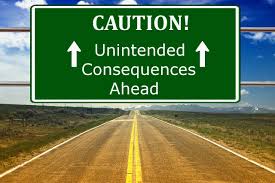
Unintended Consequences

We do not always see down the road of our life’s journey far enough to know where our decisions will leave us.  When I left my daughter temporarily with her paternal grandmother, I did not intend for her to be raised by her father and step-mother and to never live with me permanently again.  When my maternal grandmother sought temporary care for my mom at Porter-Leath Orphanage she did not intend to fall into Georgia Tann’s trap and lose my mom.

At first, it was a joy to discover who my original grandparents were.  Both of my parents were adoptees and they each died knowing next to nothing (just a few names) about their origins.  Because of the Georgia Tann scandal, Tennessee turned my mom’s adoption file over to me in October 2017.  Suddenly, doors opened for me all the way down both lines and within a year, I knew who all 4 of my original grandparents were and for the first time in over 60 years of living, not only felt whole but had real genetic relations.

What I was not prepared for was how that would ultimately make me feel.  How do I feel now ?  Like a total outsider.  The people I grew up with are not related to me.  Oh I am glad my parents were treated well.  It may be that their lives were easier for having been adopted.  I loved my grandparents through adoption very much and deeply appreciated aunts, uncle and cousins.  Yet, learning the truth of my origins has unexpectedly diminished all of them for me.

I am full of joy for the genetic relations I have uncovered and they have helped me know my original grandparents’ lives better than I would have otherwise.  I do feel an honest connection to each of them.  However, I have no life experience with these people.  That leaves me feeling again like an outsider.  They are all very kind and welcoming but knowing me is not really a priority in their own lives.  I understand.  I go slowly and attempt to build relationships over time through the sharing of some experiences.  It is so late in life for me that it won’t be huge but it is something.

This is what adoption does to us.  It shatters our families and I had no idea when I embarked on this new journey that I would feel today the way I do.


Reunion Disappointments

Search on “adoptee reunion disappointments” and you will come up with a lot of links.  Many adoptees, while they are children, fantasize about what their original parents were like and how they would have treated them differently than the adoptive parents raising them.  The reality cannot live up to the fantasy.

First there is the joy in discovery and finally, finally, knowing the truth of where one came from and perhaps how they came to be conceived (which may or may not actually be a very happy story).  Then there is the old “nature vs nurture” story.  How much of who we become is due to genetics and how much is due to the culture we are raised within.

Finally, there is the issue of gratitude.  Adoptees often feel like they need to be grateful to the parents that raised them for saving them from ?  That is the problem.  There is no way of knowing what would have been better.  Reality is whatever it was.  There are always issues of abandonment and rejection and fears of causing more of those wounds if the adoptee betrays the affections of those who raised them.

Here is one adoptee’s story –

Paul had spent his whole life dreaming about his mother. He imagined what it would be like to meet someone who looked like him, who offered unconditional love and who took away the empty feeling he had always carried in the pit of his stomach.

“I thought meeting her would make me whole. I had had a happy childhood but somewhere deep in my gut, I have always been hollow,” said Paul, now 42 years old and living in Kent.

But Paul’s meeting with his mother was a disaster. “I now believe you can never recreate that mother-child relationship,” he said. “Away from the dreams, the initial rejection an adopted child has suffered makes unconditional love impossible to recreate in the cold light of reality.”

“I understand why my mother gave me up but I still find it impossible to forgive,” he said. “Now I have to come to terms with the fact that I have spent my life looking for something that was never there.”

One study revealed that, eight years after first making contact, almost 60 per cent of adopted children have ceased contact with, been rejected by or rejected further contact with their birth parent.  It is rare that a birth relative rejects the adoptee.  Even so, the birth parent may have higher expectations of a renewed relationship than the adopted child, who may only want to answer questions about their own identity.

According to one survey, over 70 per cent of searchers and 89 per cent of non-searchers fail to feel an instant bond with their birth parent.  One in six new relationships break down within one year after initial contact and almost 43 per cent of relationships are abandoned within eight years.

From my own experience of discovering my genetic relations (I am not an adoptee but both of my parents were), one cannot recover lost time nor opportunities to forge closer relations.  One can only begin where they find themselves to slowly, over time, develop whatever relationship is possible.