Separating The Two

I received a nice message from an adoptive mother who found this blog. I do try to be realistic about adoption. But for adoption, I simply would not exist. Both of my parents were adoptees. Also, both of my sisters gave up babies for adoption – both of these now grown individuals – a niece and a nephew – have met the family who’s genetic inheritance is part of their own. I am glad for these reunions.

An adoptee I respect wrote – I have recently been reminded of the importance to distinguish adoption from the industry and criminal practices that have confused and conflated the two. To regain clarity, it does start with recognizing this distinction between adoption and the industry.

He continues – The challenge comes when we start dismantling the way modern adoption works. The very definition states “the fact or act of legally taking someone else’s child and raising it as your own.” This definition does not identify orphaned child, falsifying birth records, coercive tactics of separating the child from their origins, baby farming, child harvesting, colonization, cultural eradication, and war crimes, leaving it conveniently vague as “legally taking” which all the above has been identified as adoption.

Domestically, foster care is used as a means to adopt, where states have been incentivized to remove children and terminate parental rights which makes them eligible for adoption. Again, this is due to the industry and practices of recruitment, supply and demand, and sustainability of a waning human market.

The majority of laws and policies are focused on making these practices more streamlined and ethical. Curious why this is an issue when it comes to child protection and child welfare, especially since it has been well documented for generations. Books like The Child Catchers, The Girls Who Went Away, American Baby, Relinquished among others have brought up adoption as an industry in great detail.

The problem that remains is how the US continues to be a stronghold for the industry. Those in leadership positions have used pro-industry propaganda: “adoption is an option” and “best interest of the child because it gives them a better life” – continuing to conflate adoption with the industry and its criminal practices.

I have been saying that we need to call it for what it really is… only then can we begin to offer solutions. The first step to problem solving is identifying the problem. To your point, adoption is not the problem, it’s how adoptions are being conducted. Removing children from living parents and relatives through force, threat of force, abduction, kidnapping, coercion, deception, falsifying documents, transporting and “rehoming” and exploitation for profit are all elements of another term: trafficking. Sadly, the vast majority simply refuse to acknowledge this despite the overwhelming evidence. Even with admitting the truth, people argue “but not all adoptions are trafficking” – but we’re no longer talking about adoptions at this point are we?

I want also to share this from a kinship adoptive parent – I feel like a lot of this comes from our consumer mentality (as a nation). Because we’re such capitalists, we think that money is what makes one home better than another. Instead of supporting mothers who are struggling, we often perpetuate the lie that their child will be better with someone who can afford to give them more. So little of the industry centers around children and what’s best for them. Over and over, studies show that mom/family is best whenever possible, but our foster and adoption system don’t follow science.

The adoptee above responded to this with – children (born and unborn) are the focus of the industry as the products/commodities it’s selling. The propaganda diverts attention from this crime by focusing on the buyers and making it into a human rights issue of reproductive rights.

Looking For Context

Today’s complicated situation –

12 years ago my brother got married and had a baby very young. About two years into the marriage his wife wanted to separate, so they were co-parenting. She then decided she wanted full custody and made a laundry list of allegations against my brother in order to obtain that, but ultimately was not successful. When that failed, she told him he was not the father— which turned out to be true. At this point my brother had raised this child for 3 years and loved being a father and was absolutely devastated. A series of events led to him making the decision to step aside and sign away his parental rights so that the mother, real father, and baby could be a family. It shattered him and he processed it like a death of a child.

9 years have past since he stepped away. Since then the biological father has completely disappeared and she has been remarried 4 separate times. She has been placed in an involuntary psych hold on 2 separate occasions and has some serious mental health struggles.

Fast forward to this month. Everyone in my family, including myself and my husband, have received letters from Texas Child Protective Services (where the mother lives— all of us are in New York) looking for family of this child and saying there is an open case. We responded saying that we know of the child in question and are awaiting more information.

My questions are: Does this letter mean the child is in CPS (Child Protective Services) custody/the system ? What happens here, since we are not actually blood related to this child ? Does this mean the mother has been deemed unfit in some way ? Or that other family has been unresponsive to this search for connections to this child ?

The grandparents on the mother’s side are incredibly abusive, and her sibling is in jail for shooting a gun at someone in a park. It seems the biological father’s family wants no part of this child’s life. I have no idea what any of us in my family would do from here— my brother is married and now has a 4 month old— and no one in my family is in a great place to take in a child, nor am I sure that would be the right thing to do ? But we are all very concerned— we loved this child deeply and were heartbroken when all of this took place. I know at this point she is a traumatized pre-teen who has probably been through hell and back. I guess I’m just wondering what the right thing to do in this situation is, and looking for context for what this CPS letter means in terms of the child’s welfare.

One knowledge response was – They are clearly looking for Fictive Kin. Please try to discover more and if / how your family (especially your brother) can get involved for the youth’s sake.

Similarly – They are looking for fictive kin. This can be anyone who has had any connection with the child (neighbors, parent’s co-workers, religious community, teachers, etc.). It’s heartening to know that CPS has actually contacted you all. The best way to get a better picture of what’s going on to with the child is to respond to the CPS letter. You’ll most likely be placed in contact with a social worker who’s been working on the case. I have a list of questions you can ask (see below). Hoping for the best for the child, her natural mother, and your brother.

Here is a list of questions for a situation such as this –

Reason for Placement:

Can you tell me a bit about what led to the child being placed in foster care ? Just trying to understand their backstory a bit.

How’s the child handling the transition into foster care ? Any particular challenges they’re facing ?

Legal Proceedings/Termination of Parental Rights:

Has there been any progress or updates regarding legal proceedings or the possibility of terminating parental rights ?

How’s the child navigating through any legal stuff ? Are they aware of what’s happening, and how are they coping with it ?

Child’s Development:

What’s the current living situation like for the child ? How are they adjusting to it ?

Can you tell me a bit about the child’s personality and interests ? Just trying to understand what makes them tick.

How’s the child doing in school ? Are there any particular subjects or activities they excel in ?

Do they have any hobbies or talents that they’re passionate about ? Just curious about what brings them joy.

Family Dynamics/Relationships:

How often does the child get to see or communicate with their biological family ? And how are those interactions going ?

How do they get along with their foster family and peers ? Any budding friendships or challenges they’re facing ?

Support and Services:

What kind of support services are available to the child and their foster family ?

Are there any particular cultural or religious considerations we should keep in mind while caring for the child ?

Future Plans/Goals:

What are the long-term goals or plans for the child’s placement ? Any steps you’re taking to work towards those goals ?

How can we, as their foster family, best support them in their growth and development ?

Health and Well-being:

Are there any health concerns or medical needs we should be aware of ? How are you addressing those ?

How does the child express their feelings or emotions ? And how can we help them develop healthy coping skills ?

Only Because They Are Poor

So much could be said – here is just a sampling.

From a 2021 story in The Seattle Times LINK>Taking Too Many Children From Their Parents. They share this story . . . Esther Taylor remembers everyone tensing up. She was 8, and didn’t understand everything going on. But she knew a social worker had confronted her mom about the way Taylor and her siblings were living, in a house with faulty wiring and a rat problem, ostensibly home-schooled but not taught frequently of late. And she could see her mom getting upset.

Then, confusion as what she thought would be a routine errand at a state office turned into an all-day affair. Why are we still here? Eventually, Taylor, a sister and a brother were led to a supply of clothes, where she picked out a Lilo & Stitch jacket and other items. They would not be going home, not even to grab pajamas.

Now 22 and a college student in Walla Walla, Taylor said she wishes state workers had asked how to help instead of sending her and her sister to one foster home, her brother to another. She is still haunted by the two-and-a-half-year separation from her mom, whom she remembers as kind and funny, and who died of cancer seven years ago. Taylor said she struggles with abandonment issues and sometimes wonders: “Am I not worthy to have a mother?”

Even agencies overseeing foster care are recognizing that separating children from their parents may be unnecessary in many cases to resolve problems often linked to poverty, while causing lasting trauma and disproportionately affecting people of color.

From a law office, of course (blogger’s note – this doesn’t address the issue of poverty !!) LINK>5 Things You Need To Do If Your Children Are Taken By Div of Children and Families (DCF) –

  1. Contact an Attorney
    Before you contact anyone else or even give yourself the chance to cry, reach out to a family lawyer. The family court system is extremely complex and does not favor parents who have lost temporary custody of their children.
  2. Review Your Safety Plan
  3. Jot Down Everything You Remember
    It’s particularly important to note any threats or warnings made by DCF.
  4. Request That Children Be Placed With Family Members
    If you have family in the area who can care for your children, request that they care for your children until they are returned to you. Being separated from parents is a traumatic event for children, and it can cause even more lasting damage if they are placed with people they don’t know. Limit the damage by ensuring that children are with someone you and they trust.
  5. Begin the Appeals Process
    To get your children back from DCF, you may need to appeal their original decision to take custody. This often involves proving that you provide a safe, stable, and healthy home life.

Finally this from The Center for Public Integrity – In some states you can go golfing but LINK>you can’t visit your child in foster care. A Public Integrity survey found 20 states restricted visitation for parents of children in foster care.

Foster Care Reform

Discussion topic from my all things adoption (and foster care because they are very much intertwined) – Being a foster caregiver means you are contributing to a flawed and broken system. It makes you part of the problem.

Foster carers don’t like to hear that, they prefer to feel they are saviors. They will use terms like they are a “soft place for these kids to land while their parents work on the issues that got them there” or they just want to be a “place these kids feel safe and loved”. They want to “make a difference” in these kids lives because that feels all warm and cozy and is the perfect look at me social media moment.

Lovely sentiments..I’ll say good intentions as well, but they are only that..lovely sentiments that mean nothing when you have a corrupt, controlling, biased system watching over you. Your hands are tied.

How can you better help kids other than being a foster caregiver and taking your instructions from a corrupt system? What specific changes need to be made in child welfare for it to even be remotely something someone should consider aligning themselves with?

Some of the thoughts on this –

Becoming a CASA advocate. It’s free, and the classes are typically offered 2-3 times a year. Connecting with kids through programs like Boys and Girls Club, Big Brother Big Sister. Reaching out to vulnerable families and offering help directly to them.

The biggest change is that the resources given to fosterers need to be redirected to families in need and family preservation as a whole. Poverty should never be a cause for removal.

One notes – the system needs to look for more kin. This idea that only the next of kin can take children supports the system not putting any effort into keeping kids with family. Half the time they don’t even look for family. They say they do, but they don’t.

It should go without saying but still it must be emphasized that nobody wants kids in an unsafe situation (even though Child Protective Services regularly leaves children in awful situations). And I’m sure there are instances where a trained non-relative’s residence is the best place to support the child. But those services must be disconnected from the foster system as we know it.

From a social worker in the field of family preservation – the continued participation of foster parents is propping up the system. I work in a system with many examples of how easy it is to eliminate the need for fostering. Kinship care is one – here, kinship is defined according to Indigenous cultures, which is any person involved in the child’s life, culture, or community. Family preservation programming is another, either through social supports coming into the home or the family moving into a residential facility with all needed supports in place. Another option is supported living placements for youth; they live independently in their own apartment with support workers and services integrated as needed.

Stop viewing being poor as a moral fault or think it automatically makes you a bad parent.

A former foster parent writes – I stopped being a foster parent when I realized how little support and care the parents received. I think it was actually a social worker than made me realize it when she said you and every other foster parent are no different than the parents. You could easily be in their same situation. I think more foster parents need to realize they are no different and start thinking about what they would want if they were in the same situation.

Personally if my kids were removed I would want full access to them, their healthcare, their school records and sports. I would want for them to be returned as quickly possible. That being said I am clueless and ignorant on how to help and how to support these families. I feel like the biggest problem in our area is drugs. Other than carrying Narcan, I don’t know how else to support help these families staying together. To which, someone else suggested – You can get involved with your local women’s shelter, Domestic Violence Shelters, etc – that is a start.

Yet another notes – there are some areas that are beginning amazing programs that foster whole families, either in home or out of home. LINK>Saving Our Sisters is a great place to start, volunteering as a sister on the ground. I love that you understand and empathize with parents. That’s rare and appreciated.

Another option is helping with food pantries and clothing pantries. Personally, I refuse to have anything to do with goodwill or salvation army because they are beyond problematic. LINK>The Trevor Project is another wonderful organization to get involved with to help at risk LGBTQ youth. Churches are also a great place to reach out to. Many of them have programs that help the community, but always need help.

There are courses you can take through Red Cross that offer Infant CPR and Child Care Certifications. Go into online community pages and explain that you are a former fosterer and you have infant CPR training (basically put out your credentials) and offer to help with child care.

I could go on and on but there is always another way to address social problems beyond tearing genetically related, biological families apart.

Non-Biological Parents

Marjorie Taylor Greene (AP Photo/John Bazemore, Pool)

MTG is not someone I have a lot in common with. My husband pointed this article in LINK>The Huffington Post out to me. The article is about a comment linked to step-parents but it could certainly apply to adoptive and foster parents. Rep Robert Garcia of California said “When Marjorie Taylor Greene says that adopted or parents through marriage aren’t real parents, you’ll be damn sure I’ll object.”

Of course, there was a lot of criticism over her remark. Suggesting non-biological parents are not “real” parents is such an evil, heinous thing to say that the natural conclusion of reasonable people might be to wonder if Greene was misquoted or guilty of a misstatement. MTG said this during a segment of her Facebook show (MTG Live) – “The idea that mom and dad together ― not fake mom and fake dad ― but the biological mom and biological dad, can raise their children together and do what’s right for their children, raising them to be confident in who they are, their identity, their identity is, you know, they’re a child made by God…”

A non-biological parent is not related to the child by blood or genes. Despite not being biologically related to the child, a non-biological parent can still obtain legal parental status by formally adopting the child. Real is defined as actually existing as a thing or occurring in fact; not imagined or supposed. A non-biological, non-adoptive parent is one who has acted in a parental role and therefore, may be considered a de facto parent because they have participated in the child’s life as a member of the child’s family. The de facto parent resides with the child, and with the consent and encouragement of the legal parent, and performs a share of caretaking functions that are at least as great as the legal parent. However, raising a child not genetically connected to his/her parents may lead to critical questions and difficulties regarding family identity and representations, attachment or even disclosure to the child of his/her origins.

Who a child’s parents are is a question that might be answered differently by a biologist, by a jurist, by a psychologist or by the child him/herself. There are situations in which parenthood is legally recognized, even in absence of genetic bonds between adults and children. This is the case when conception has occurred through assisted procreation, but also when a child who was born in a biologically-related family is later adopted by a different one. Both Assisted Reproduction (AR) and adoption rely on the intention to be a parent as well as developing a social, relational and affective bond with the child. They require the intervention of a third party to establish and legitimize the parental relationship – the medical field in the case of AR and legal authorities in the case of adoption.

Adoption means caring for a child when the biological parents are unavailable, unable or unwilling to care for him/her. An adoptive parent permanently assumes parenting the child. Adoption creates a permanent change for both the child and the adoptive parent(s). I found it interesting to realize that adoption is an ancient phenomenon, deep-rooted in our historical and mythological past. It can be found in every culture, even in non-human primates. After WWII, adoption started to be considered a child welfare practice and it is now governed by comprehensive legal statutes and governmental regulations. The original aim was to give a family to an orphan child. Most adoptees in modern times are not orphans, though it still does occur.

The article on MTG refers to a congressional hearing and the woman to whom she was addressing her questions is in a same sex relationship. Given that MTG is a Republican, it is likely that her comment was also a veiled attack related to LGBTQ+ rights.

Making A Career Of It

Dougherty Children

So I do wonder about couples who start adopting and keep adopting until their family size is large. We live in an era of self-promotion and the Dougherty family seems to be an example of that. Sometimes it becomes a kind of calling – as it seems to have become with this family. They believe they have developed a good method of dealing with an issue that does cause some children to end up in foster care and/or adopted – Fetal Alcohol Syndrome Disorders. Likewise, it is also true that managing a large family requires a great deal of organizing every aspect of family life to even make it possible to cope. And their are joys and benefits to belonging in such situations.

Though they call themselves the Dougherty Dozen, I could only count 10 children in any photo – maybe the parents, Josh and Alicia, are including themselves, which I could justify. “We figured, if we’re already doing this for one kid, what difference will another one make?” Josh says as an explanation. Fetal Alcohol Spectrum Disorders (FASD), a group of conditions that can occur in a person whose mother consumed alcohol during pregnancy. FASD can cause a lineup of physical and learning disabilities as well as behavior problems.

The couple claims that one of the reasons they have so many children is that caseworkers, impressed with their dedication and success, have continued sending complicated children their way. “We became known as the parents who could handle the difficult behaviors,” Alicia says. The couple also has four biological children between the ages of 4 and 10 as well as the 6 children than have been placed with them.

It’s hard to judge but I do cringe at their admission that they cameras in every room except the bathrooms and that they lock the kitchen food cabinets and the refrigerator at night. As to self-promotion the couple has TikTok and YouTube videos about their family life. I can appreciate their stated perspective that “a person is not their diagnosis” and belief that they’re doing their best to help the children move forward with their lives.

Assimilation Is The Intention

For many indigenous women, political action regarding children was not about campaigns for
subsidized day cares or cultural arguments about gender, work, and parenting. Child welfare was a literal fight to keep Native children in their homes and in their nations.

During the 1970s, Native American women activists understood the crisis of child adoption
(which had grown rampant in the postwar era) as more than a personal issue affecting individual
families. The removal of Native children from their homes and communities compromised not only parental rights but also tribal sovereignty. Technically, indigenous nations had a legal advantage in the battle for control over Indian child welfare because the right to oversee issues related to children living on reservations existed as an implicit aspect of sovereignty. In practice, however, state courts and welfare agencies largely misunderstood or ignored tribal authority and the interests of indigenous communities and removed Native children from their homes at arresting rates—an average of one quarter of Native American children lived away from their parents during the early 1970s

In response, Native women activists created a child welfare political agenda that not only kept
children in their communities but also addressed the problems that sometimes led to foster and adoptive placements. Although they acknowledged that there were legitimate issues, such as alcoholism, that required some parents to surrender their children, activists did not interpret the current crisis as the result of inadequate parenting. Nor did they place blame exclusively on culturally insensitive child welfare systems. Rather, activists condemned poverty and the vestiges of colonialism for the problems that precipitated child removals. One activist asserted that ‘‘the process of colonization has brought more destruction to these family ties than any internal changes … could have ever created.’’ According to this woman and others, while colonization created the problems indigenous families faced—solutions to them rested with Native nations. Both the programs’ indigenous women activists established and their petitions to the federal government to uphold the right of the tribes to control child welfare focused on increasing tribal agency in addressing the fundamental difficulties that Native families confronted. These activists gained strength from their citizenship in Native nations and framed their work against child removals in the context of tribal sovereignty.

The history of non-Native people intervening in the lives of indigenous families is a long one; arguably as old as the history of colonization itself. The Indian Child Welfare Act (ICWA) of 1978 is Federal law that governs the removal and out-of-home placement of American Indian children. … ICWA established standards for the placement of Indian children in foster and adoptive homes and enabled Tribes and families to be involved in child welfare cases.

“They closed the boarding schools and opened up CPS (Child Protective Services), but it’s the same thing – they’re still coming in and taking our children,” Cetan Sa Winyan said. The Cherokee Nation of Oklahoma, the Oneida Nation of Wisconsin, the Morongo Band of Mission Indians of California and the Quinault Indian Nation of Washington are petitioning the Supreme Court to request that the Indian Child Welfare Act remain intact.

The state of Texas is challenging the constitutionality of ICWA, claiming it’s a race-based system that makes it more difficult for Native kids to be adopted or fostered into non-Native homes. Another argument is that the law commandeers states too much, giving federal law imbalanced influence in state affairs.

A Supreme Court response to the tribes’ petition and the petition filed by the plaintiffs is due on October 8th.

Tribes and advocates argue that ICWA is culturally- and politically-based, not race-based, because tribal nations have political status as sovereign governments under federal law. Cherokee Nation Deputy Attorney General Chrissi Nimmo said the tribe will put all the resources it has into making sure ICWA is protected. “ICWA attempts to keep children connected to their tribe … and an attack on that is absolutely an attack on tribal sovereignty,” Nimmo said.

In the case of Brackeen v. Haaland, the Brackeens — the white, adoptive parents of a Diné child in Texas — seek to overturn ICWA by claiming reverse racism. Joined by co-defendants including the states of Texas, Ohio, Louisiana, and Indiana, they’re being represented pro bono by Gibson Dunn, a high-powered law firm which also counts oil companies Energy Transfer and Enbridge, responsible for the Dakota Access and Line 3 pipelines, among its clients.

You can sign a petition here – https://action.lakotalaw.org/action/protect-icwa.

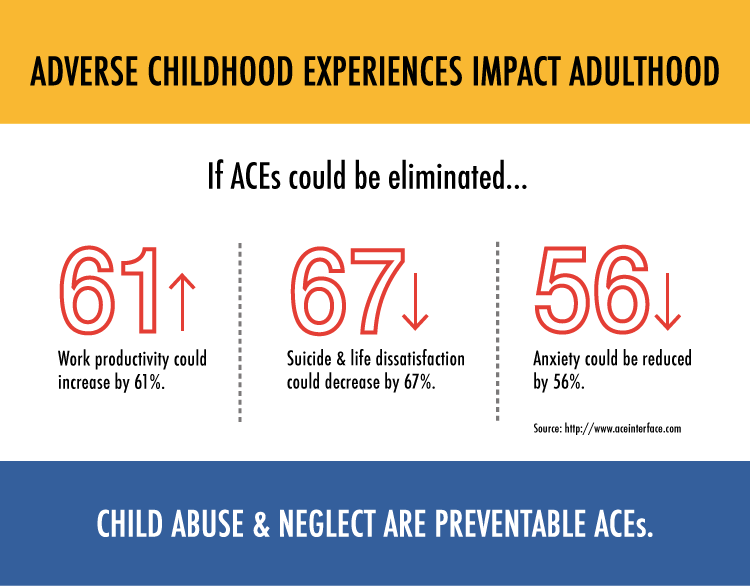
Adverse Childhood Experiences

For several months now our entire country and most of the world has been living with toxic stress.  It’s the kind of stress that puts you on edge and keeps you there, day after day after day.  If you have felt stressed, imagine what it would be like to experience adversity and/or abuse — not having enough to eat or being exposed to violence – then think, what if the one experiencing this is still a child.

Factors such as divorce, domestic violence or having an incarcerated parent are called adverse childhood experiences (ACEs). Four or more ACEs can result in chronic health conditions such as heart disease or diabetes. In the long term, living with ACEs or other negative factors, such as poverty, can literally change your brain chemistry.

What does it look like for a young person to live with several ACEs and no supports ?  What does a foster parent experience when bringing a middle school or teenage foster youth into their home ?

It might be not being able to sleep without a light on. Or it could be eating even when one is full or not hungry. Some children become “runners” — they leave school whenever they become upset.

And the symptoms can become even worse.  The child may become a cutter; may be suicidal. Such children can have trouble forming appropriate friendships. Maybe they trash their room; in one fight-or-flight moment, climb out of their window and tumble to the ground. Even jump out of a moving car.

A foster parent could find themselves restraining the child physically by wrapping their arms around the child’s shoulders or waist, using all their strength to keep the child from leaving or hurting their self. Maybe you raised your hand only to motion toward something and the child flinched or even ducked.

And your heart breaks for this young person.  You had hoped they knew you would never hit them.  You are a foster parent.  You signed up for this because you thought you had something to give — time and care and love — to kids who desperately need that.

You might become the person the county calls when a child is removed from a home and has nowhere else to go, or when a foster family needs a break. This is known as emergency respite.

Most foster kids want to be happy.  After a lifetime of abuse and neglect, they may not know how.  A foster parent is also there to be a support for reunification with the biological family.

The best foster parents build a fortress of protective factors around their foster children. Protective factors are those things that most of us take for granted — a friend to call when we need advice; someone to help whenever we aren’t enough on our own.

Some of us are born privileged to have built-in protective factors (a supportive family, enough money).  Most foster kids will need to collect them from somewhere else (perhaps a chosen family made up of friends). At school, they require trauma-informed teachers and staff who understand how ACEs can be reflected in behavior.

National data shows that more than 20 percent of children up to age 17 have experienced two or more ACEs.  Beyond abuse (physical, emotional, sexual) and general neglect these include the loss of a parent to death, divorce and abandonment.  A family member addicted to drugs or alcohol.  A family member that is incarcerated. Being exposed to domestic violence and mental health issues among the family’s members.

Brain toxicity exists. A child can have post-traumatic stress disorder. ACEs are not limited to low-income neighborhoods, domestic violence and substance abuse take place in higher income homes and are every bit as toxic. Learn to look at all people through a trauma-informed lens. Ask, if you suspect this, “What happened to you?” and then listen without adding your own opinions.

Every domestic-violence shelter worker or child-care provider, anyone who works for child-protective services, anyone associated with family court, law enforcement personnel and physicians – ALL need to be trained appropriately to deal with trauma related behavior

Trauma is not the fault of any child.  Understanding ACE impacts allows adults to see the reason behind the behaviors.  Baby steps in a positive direction are progress.


Please Don’t Take Another One of My Babies

Reading these words – “Not another one. Please don’t take another one of my babies”.

This was in a tale of adoptions but not adoptions by strangers.  The story was one about how a woman took two children from two different relatives.  It is sad that “family” can be so cruel.

The first one – the mother was unable to have more children so she stole babies from family members.  This child’s original mother was told that she was incapable of caring for her child and that she would be in much better hands in the woman’s household. That was all a lie. The adoptive mother would say things like “she is lucky to have us. I treat her like my daughter”. But this girl was not treated equally. Sadly, according to this woman’s one biological daughter, they were all abused but this adopted girl had the worst of the emotional and mental abuse.

Eventually, the original mother had an apartment and car and job and never did she stop loving her daughter.  When this girl turned 15, the adoptive mother decided the original mother was actually “good enough”.  In truth, the adoptive mother didn’t want to deal with the teenage years and so kicked the girl out.

Then, the second one elicited the quote and title of this blog.

A distant cousin had a new baby boy and the adoptive mother decided the original parents couldn’t care for him properly. The adoptive mother drove over to visit.  Then, right after leaving, she called the Department of Child Welfare and reported her cousin. The very next morning, the adoptive mother had the baby boy in her arms. He was only 1 month old. He has 9 other siblings. The woman telling this sad tale said, “I’ll never forget his mother’s sobs as we drove off.”

The adoptive mother made herself out to be the hero of the story and of course, the biological parents were the awful people. This adoptive mother played the loving mother until the date for his adoption, at around 8 months of age.

Then the adoptive mother pushed all the “mother” responsibilities onto the woman conveying this story. She was 15 years old at the time.  She did love the little boy with all her heart.  She wanted to give him the best possible chance.

It may not surprise the reader to know that eventually the adoptive mother ended up having a mental breakdown and went into a treatment facility.

When A Parent Dies

When a parent dies, children can end up with strangers – either in foster care or through adoption.  At one time as my husband and I were rewriting our trust documents, having learned about the realities of a foster care system that sends a young person out the door with no resources at the age of 18, we made provisions to lower the age at which our children could access the financial accounts we had created for them.  Originally, we were more concerned about immature mismanagement of the funds.  From this new awareness, we realized those funds might be critical to our children’s survival, if they lost us.

Losing a parent at any age can be life changing but losing a parent while still in childhood robs the child of important supports going forward.  Death is absolute, so no well-meaning person can change that reality.  If there is no other person – another parent, grandparent or extended family willing to step in – then child welfare and the courts step in.

Even for a young child, closure is necessary, even if understanding is lacking.   Death is an important and natural part of life. Whenever possible, there should be an opportunity to be with someone in death, who has meant something to you in life. It is true, it can be a traumatic shock the first time one sees a dead person but it is also instructive. The intimacy of “saying goodbye” before a burial can help heal a young person’s loss, all the way into adulthood.

Even adult adopted children can be very wounded by being deprived of experiencing the death of their loved one.  When my mom tried to get her adoption file from the state of Tennessee in the 1990s, she was rejected (she was a Georgia Tann adoptee).  More devastating than the rejection was learning that her mother had already died and that door to connect with her forever closed.

Never deny a child this opportunity.  Think about it – who wouldn’t go to their parent’s funeral, regardless of age?  The reality is that it will hurt.  That is death.  Every child (adopted, in foster care or otherwise) deserves a chance to say goodbye.