Reproductive Discrimination

Struck v Sec of Defense

This case straddles both the issues of abortion and adoption. Story courtesy of LINK>Teri Kanefield. You can read the entire essay at that link.

Susan Struck joined the Air Force at the age of 23 in 1967. The recruiter warned her that she would be discharged if she got pregnant. She was sent to Vietnam. When Struck learned she was pregnant, her commanding officer gave her a choice: Get an abortion or leave the Air Force. At that time, abortion was legal in the armed services. Struck refused an abortion on the grounds that she was Catholic — although a lapsed Catholic. She wanted to give her child up for adoption and remain in the Air Force.

According to Air Force regulations, when an officer became pregnant, a board of officers was convened to hear the case. On October 6, 1970, Struck appeared before the board and asked if she could use her accumulated leave to have the baby, arrange for the adoption, and then return. The board refused her request. A few weeks later, on October 26, the secretary of the Air Force reviewed the findings of the board and ordered Struck to be discharged effective October 28, 1970.

With the help of the ACLU in Washington state, Struck took her case to court. Colonel Max B. Bralliar, commanding officer of the Minot Air Force Base, testified that Struck “demonstrated excellent ability in the performance of the managerial aspects of the work units and an excellent knowledge and application of nursing care principles,” and that she was highly dedicated with a “professionally correct and mature attitude.”

Meanwhile, Struck returned home to have her baby and arrange for the adoption. She gave birth to a girl, who she called L.B., which stood for “Little Baby-san” or, if she was in a different sort of mood, “Little Bastard.” She selected the adoptive parents, Julie and Art, who agreed to Struck’s terms: the baby would be raised Catholic, and Struck would be allowed to visit. On December 10, 1970, the adoption was finalized. Julie and Art named the baby Tanya Marie.

On June 4, 1971, the district court ruled against her, so she appealed to the U.S. Court of Appeals for the Ninth Circuit. Five months later, the Ninth Circuit affirmed the district court’s order. She filed a petition for rehearing, but was again denied. One of the judges dissented for two reasons: first, men with temporary periods of disability were not discharged, and second, he found it irrational that only the natural mother, not the natural father, was declared unfit for service after the birth of a child. With the dissent, the ruling was 2-1 against Struck.

Susan Struck wanted to take her case to the Supreme Court. Because Ginsburg was then the director of the ACLU’s newly-formed Women’s Rights Project, Struck’s case found its way to Ginsburg’s desk. Ginsburg thought Struck’s case was the perfect case to challenge abortion laws as unequal under the Fourteenth Amendment. The gender distinction in the Air Force policy made absolutely no sense. Once the baby was adopted and Struck was legally no longer a mother, there was no reason to deem her unfit for service.

Moreover, Struck’s case made two vital points: A woman should decide whether or not she would have an abortion, and abortion laws naturally discriminate on the basis of sex or gender. As Ginsburg said, nobody is for abortion. What people are for or against is a woman’s right to choose. For Ginsburg, the issue wasn’t about privacy. It was about autonomy. It was about a woman’s right to control her own life and her own body. Moreover, the facts would make the case unlikely to trigger a backlash.

Ginsburg planned to ask for a narrow ruling that would make the public aware of the issue without turning the abortion question into a hot political mess. To Ginsburg’s regret, as she was working on Struck’s case, another case–the case of Jane Roe–made it to the Supreme Court first. The 1973 Supreme Court decision in Roe v. Wade extended the right to privacy to the right to have access to an abortion.

Ginsburg believed the Court’s ruling was too broad. The sweeping decision caused the abortion laws of forty-six states that restricted abortions to be instantly rendered unconstitutional, even the most liberal of them. Ginsburg feared the decision would turn the issue into a political one, mobilizing the pro-life movement.

Narcissism

Started reading a piece by Shane Bouel on Medium titled LINK>Objectification of Adoption via Narcissism, subtitled – A Deplorable Default Truth of Adoption. I thought about the many times I have read adoptees describe their adoptive parent (usually the adoptive mother) as a narcissist. I reflected that I wasn’t sure I had ever written about that in this blog. You will need to be a “member” to read the entire Medium piece, so I will excerpt a few thoughts from his writing, until I hit the paywall myself.

He writes – The world of adoption is often portrayed as a realm of selflessness and love, where individuals make the profound choice to provide a home and family for a child in need. While this perspective is undoubtedly valid, there is an uncomfortable truth that deserves consideration: Adoption inherently invites narcissism.

[1] The Desire for Validation – One aspect that links adoption and narcissism is the inherent desire for validation. Individuals who choose to adopt may find validation in being perceived as saviors or heroes who rescue a child from a less fortunate situation. This need for external validation can be a manifestation of narcissistic tendencies, where one’s self-worth is closely tied to the approval and admiration of others.

[2] Control and Ownership – Another element to consider is the sense of control and ownership that adoption can bring. The act of adopting a child can be perceived as an assertion of power and control over another person’s life. This desire for control aligns with narcissistic traits, as narcissists often seek to dominate and exert influence over those around them.

[3] Idealized Self-Image – Narcissists tend to have an idealized self-image, and adoption can serve as a means to further enhance this image. Adoptive parents may view themselves as exceptionally kind, generous, and selfless, reinforcing their own positive self-perception. The adoption narrative can be a platform for bolstering the idealized self-image of those involved.

[4] Manipulation of Empathy – Narcissists are known for their ability to manipulate and elicit empathy from others. In the context of adoption, this manipulation can take the form of presenting themselves as selfless and virtuous individuals who are solely focused on the well-being of the child. This calculated display of empathy can be a…

(and I hit the paywall – I’m not really ready to go back to paying at this time).

I found a LINK>to Shane on FB, where he says this about his piece on Medium – This article delves into the complex dynamics at play, highlighting how the desire to adopt can intertwine with narcissistic tendencies and exploring the potential consequences of this intersection.

The truth of adoption is an uncomfortable reality that cannot be ignored. While adoption is often depicted as a selfless act driven by love and compassion, the underlying complexities reveal a darker side. Behind the heartwarming narratives lie stories of loss, identity struggles, and the commodification of vulnerable lives. The default truth of adoption encompasses the harsh realities of a system that can perpetuate secrecy, discrimination, and emotional trauma.

Why? Because the foundation of adoption is rooted in trauma, as long as the baby scoop era and forced adoption existed, adoption will be tarred with the same brush. Supporting saviorism over family preservation! Is this true adoption advocacy? In truth, adoption should be abolished! It’s time to call out toxic advocacy.

The Legacy Of Family Separation

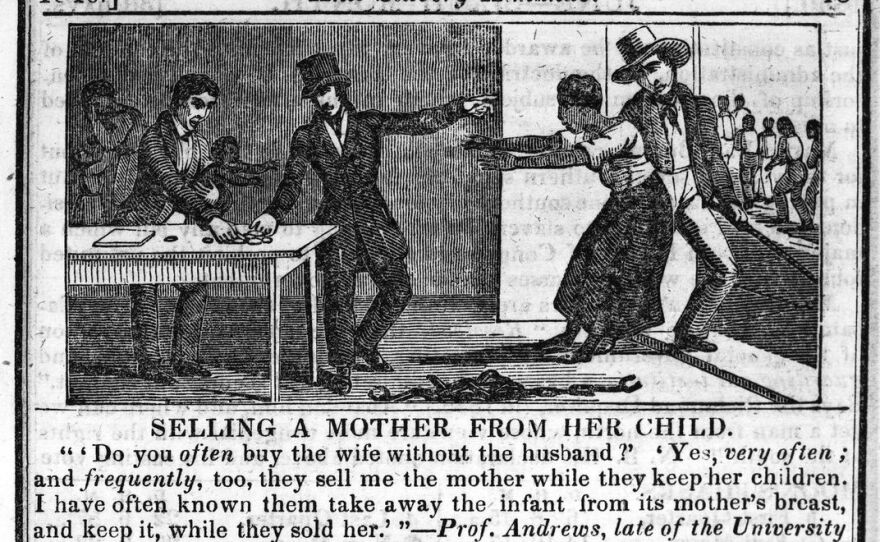
Since today is Juneteenth, a federal holiday that recognizes the date when the last enslaved persons were finally informed of their freedom, I thought about all of the children that were taken away from their parents, primarily from their mothers, during the period when slavery of Black people was common in these United States.

Black Perspectives is the award-winning blog of the African American Intellectual History Society (AAIHS). They are deeply committed to producing and disseminating cutting-edge research that is accessible to the public and is oriented towards advancing the lives of people of African descent and humanity. From the Black Perspectives website, LINK>Slavery and America’s Legacy of Family Separation by Vanessa M. Holden. Forced family separation was always a fixture of the lives of enslaved people. Enslaved children were a lucrative business. The expansion, maintenance, and future of slavery as an economic system depended on these children, particularly after the close of the American trans-Atlantic trade in 1808. 

One such story comes from Harriet Mason, who remembered her mistress forcing her to leave her home and family in Bryantsville, Kentucky, to work in Lexington as a servant at the age of seven. She remembered, “when we got to Lexington I tried to run off and go back to Bryantsville to see my [mother].” The grief of a childhood spent away from her family at the whim of her owner led her to suicidal thoughts, “I used to say I wish I’d died when I was little.” Even in her old age she was firm that, “I never liked to go to Lexington since.”

Slaveholders borrowed against their human property. They gifted enslaved children to their white sons and daughters as children, upon their marriages, or as they struck out to begin their slaveholding legacy. And of course, slave children could be sold down the road and down the river. Children knew that at any moment this could happen to them.

Blogger’s Note – Last night, my oldest son wanted to know if anyone in our family had benefitted from the labor of slaves. Eventually, it was suggested that every American has. I know that among my mother’s own genetic, biological family there were slave owners (I saw one will that was stipulating slaves by first name and who they were to be given to). I also know that side of my family also fought on the side of Confederates in the US Civil War. I’m not proud of being the descendent of these realities.

From the linked article – To profit from slavery and participate in slaveholding, Lexington’s white residents did not even need to own, buy, or sell a single slave. Someone made the shackles. Someone ran slave jails. Someone generated the official documents needed to transfer property. Someone hired enslaved children to work in their homes and businesses. Adults running with children from officials who would separate them was a feature of fugitivity during American slavery. To produce the “fugitive” category, a range of institutions sprang up. Local money paid sheriffs, courts, and officials to uphold the law that protected slaveholders’ rights to their human property. Someone printed runaway ads. Someone made money on enslaved peoples’ bodies at every juncture.

Along with physical labor, children deemed by the state to have unfit parents and placed into adoptive homes, perform emotional labor. Adoptees not only lose their birth families in the process, but they also lose ties to culture, language, country, history, and identity, and must contend with societal expectations that they be grateful for a “better life” in the face of it all. Children of color adopted by white parents also face racism in their new homes and communities. There is emotional labor too in being the physical body that allows white families to appear more liberal or multicultural, even if the opposite is true. In the United States, adoption is an industry and, as adoptee advocates continue to warn, it is poised to profit from family separation. There is already precedent for keeping children in the United States after a parent has been deported and awarding custody to American adoptive parents over immigrant parents caught up in immigration proceedings or because they were detained or incarcerated.

Black families are separated by the bond and bail system, incarceration, the child welfare system, and the criminalization of poverty. All can lead to family separation and the loss of one’s children. Child welfare advocates also recognize the link between the disproportionate number of Black children in the foster care system and the pipeline from foster care to prison.  All of these contemporary systems of power are echoes of legal and social structures that devalued enslaved parents and profited from enslaved children during American slavery.

We need to acknowledge these links to the history of American slavery and the ways that African Americans continue to endure discrimination. Following the money exposes the truth.

A Win for the ICWA

It came as a huge surprise yesterday when the Supreme Court ruled in favor of the Indian Child Welfare Act. I was not surprised that Justices Clarence Thomas and Samuel Alito dissented. They have become thorns causing the perception that the Supreme Court has a few problems. I was surprised that Justice Amy Coney Barrett wrote the opinion as she has adopted two children from Haiti. Maybe that was intended to soothe adoptive parents who could be upset at the court’s ruling.

I have written about this case several times since it first appeared on my own radar. Just search on ICWA and you will find blogs posted on November 10, 2019, twice in 2021 on August 24, 2021 and September 24, 2021 as well as twice in November 2022 on the 7th and 15th and again this 2023 year on March 10th.

The leaders of tribes involved in the case issued a joint statement calling the outcome a major victory for tribes and Native children. “We hope this decision will lay to rest the political attacks aimed at diminishing tribal sovereignty and creating instability throughout Indian law that have persisted for too long.”

Congress had passed the law in response to the alarming rate at which Native American and Alaska Native children were taken from their homes by public and private agencies. The law requires states to notify tribes and seek placement with the child’s extended family, members of the child’s tribe or other Native American families.

Three white families, the state of Texas and a small number of other states claimed the law is based on race and is unconstitutional under the equal protection clause. They also contended it puts the interests of tribes ahead of children and improperly allows the federal government too much power over adoptions and foster placements, areas that typically are under state control.

The lead plaintiffs in the Supreme Court case — Chad and Jennifer Brackeen of Fort Worth, Texas — adopted a Native American child after a prolonged legal fight with the Navajo Nation, one of the two largest Native American tribes, based in the Southwest. The Brackeens are trying to adopt the boy’s 5-year-old half-sister, known in court papers as Y.R.J., who has lived with them since infancy. The Navajo Nation has opposed that adoption.

It is important to note that Justice Brett Kavanaugh, who was in the majority on Thursday, wrote – “In my view, the equal protection issue is serious.” Kavanaugh also commented that the race of prospective parents and children could be used to reject a foster placement or adoption, “even if the placement is otherwise determined to be in the child’s best interests.” The Supreme Court dealt with that issue by determining that neither Texas nor the parents had legal standing to make that argument in this case. The Brackeens and others can make those arguments in state court proceedings and so the case is not over.

Matthew McGill, who represented the Brackeens at the Supreme Court, said he would press a racial discrimination claim in state court. “Our main concern is what today’s decision means for the little girl, Y.R.J . — now five years old — who has been a part of the Brackeen family for nearly her whole life. The Court did not address our core claim that ICWA impermissibly discriminates against Native American children and families that wish to adopt them, saying it must be brought in state court.”

All the children who have been involved in the current case at one point are enrolled or could be enrolled as Navajo, Cherokee, White Earth Band of Ojibwe and Ysleta del Sur Pueblo. Some of the adoptions have been finalized while some are still being challenged. More than three-quarters of the 574 federally recognized tribes in the country and nearly two dozen state attorneys general across the political spectrum had called on the high court to uphold the law.

Before the Indian Child Welfare Act was enacted, between 25% and 35% of Native American children were being taken from their homes and placed with adoptive families, in foster care or in institutions. Most were placed with white families or in boarding schools in attempts to assimilate them.

~ most of the details in today’s blog came by way of LINK>The PBS News Hour.

Swear Vent and Color

I could be therapeutic. I have enjoyed coloring at various times in my life – don’t really have time now. I’m not an “angry” adoptee (just the child of two adoptees that found each other). However, this looks like a really fun way to release some emotions.

From LINK>Amazon where this book is available – The creators hope that being able to vent your feelings and thoughts in this Coloring & Journal book helps you along your healing journey.

Why an angry sweary coloring & journal book? Because punching people in the face is frowned upon, and anger isn’t great for your overall mental and physical health, if you hold on to it – so just let it all out !

As an adult adoptee that struggles with the 7 core issues of being adopted (loss, rejection, guilt and shame, grief, identity, intimacy, and mastery/control), I have created this therapeutic coloring book with angry quotes, original sweary coloring illustrations & patterns, journaling prompts and blank doodling pages (extra journal & doodle pages are included at the back).

A beneficial companion to therapy – the coloring pages will help reduce stress and anxiety, promoting mindfulness and reflection as you release your inner most angriest feelings about being adopted, adoption trauma, adoption laws, discrimination, and the adoption industry as a whole.

You don’t have to follow the journaling prompts, you can just write all your thoughts and feelings anywhere you please – this is YOUR healing journey and there are no rules.!

Helpful Tip – Don’t use felt tip markers – it might seep through to the next page. You can use colored pencils or even crayons, if you have them.

PS – I don’t know if the creators or Amazon put those “censored” stickers on the book cover but this was the only illustration I found.

Forbidden Love

Art by Aaron Aldrich

Shane Bouel wrote a piece for Medium with different artwork – you can go to the LINK>Forbidden Love to read the whole thing and see his art. I know the point he is making is true. It not only applies to the original genetic parents and the obstacles adoptive parents might place in the way of adoptees making contact but in my own family’s experience, can also apply to an adoptee who falls in love and wants to marry someone who the adoptive mother disapproves of.

Shane writes that he asked Chat GPT to name the love that others who love you won’t allow you to have. Forbidden love is a term used to describe the love that is craved by your heart but disallowed by those who claim to love you. It encompasses the affection that is deemed unacceptable or disapproved of by society, family, or even by the very people who are supposed to support you. It could be hindered by various factors such as age, social status, religion, or cultural dissimilarities, making it a complex and nuanced experience. The unrelenting yearning to pursue this love can be excruciatingly painful and often difficult to overcome, as the heart’s desire stubbornly persists. When faced with this conundrum, it is imperative to weigh the possible benefits of pursuing the love against the potential repercussions that could befall.

I agree with him when he (or was it ChatGPT ?) writes – “No parent, adoptive or otherwise, has the right to dictate who their child loves. Love is a personal emotion that should not be regulated by external forces.” He goes on to note – “If an adoptee finds themselves smitten with someone, it is critical for their adoptive parents to display open-mindedness and support. Should the adoptee be an adult, they have the autonomy to make their own choices regarding their relationships.” In the case of the relative I am aware of, they did just that. It was sad to see the wedding marred by the dissension.

If adoptive parents are disregarding their adoptee’s feelings and experiences in favour of their own beliefs and desires, this could potentially be a sign of narcissistic behavior. (Nevertheless, it is important to keep in mind that making a diagnosis of narcissism necessitates a professional evaluation by a qualified mental health expert.) Regardless of whether the behavior is labelled as narcissistic or not, dictating and dominating who someone can love is not a healthy or appropriate way to conduct a relationship and can have detrimental effects on the adoptee’s emotional well-being. It is imperative for adoptive parents to not only listen to but also respect their adoptee’s feelings and experiences and support them in making their own decisions regarding relationships.

From an esoteric perspective based on karma, the idea of in the “best interest” of the child, it is generally accepted concept that adoption aims to offer a safe and stable home environment to a child who may not have access to one otherwise. I will admit that in the case of my relative, it is likely true that my sister could not offer him a “safe” home environment but we’ll never know, will we ? It was her decision from the beginning to surrender her child for adoption. I was closely involved with her during the months of her pregnancy. Now, that I also know the rest of the story, I understand why she made that decision (it was a combination of both of our parents having been adopted as babies as well as the inconvenient truth – for her – of who his father actually was).

Shane notes – “If the adoptee’s life path towards finding true love and transcendence doesn’t align with the adoptive parent’s expectations, it doesn’t necessarily mean that the adoption was unsuccessful or of little value.” I would have to agree in the case of my relative’s adoption. It is still sad that it all broke down at the time of his wedding. I agree with Shane on this point – adoptees deserve to be supported and nurtured in their pursuit of true love and fulfilment,

He says that adoptees may be lied to or misled about their biological family. This was certainly the case for my relative. I will give his adoptive mother credit for this much – she went above and beyond – to discover for him who his actual father was. I will always be grateful to that woman for that much.

He ends with this disclaimer about using ChatGPT for this piece – “The psychosocial damage caused by AI responses from a socially systemic viewpoint can be quite significant. When we interact with AI systems, we expect them to behave in a way that is human-like, or at least, rational and objective. However, AI systems are not human and do not have the same level of emotional intelligence or cultural context that humans possess.” Furthermore, “When AI systems are designed using biased or incomplete data, just like society, there is likely to be continued perpetuating biases and inequalities in their responses. This can further marginalize and discriminate against already vulnerable groups, including adoptees.” He adds – “I believe that an AI system that is trained by adoptees could provide valuable insights and support for adoptees and their families and society.”

He indicates – “I am seeking funding or support for the development and implementation of this system, including research, programming, and outreach efforts. I believe that this project has the potential to make a meaningful impact on the lives of adoptees and their families. If this sounds like you, or you can help please get in touch.”

Immigrant Adoptee Woes

Today’s story is about a woman who’s birth name is similar but different. *As Alina is my granddaughter’s name, I decided to use her name to disguise the original story (otherwise it is as told). I don’t think we have to make things so hard on immigrants who’s adoption has saddled them with issues like this.

I was adopted at 8 months old through Kids First. My adoptive parents (both Americans) falsified documents and changed my given birth name of *Alina, when they brought me to the US. The only thing they had applied for at the time was a Social Security Card, which was given out in the name my adoptive parents wanted to call me. The US government officials accepted this name, regardless of all of my Russian documentation showing my name as *Alina. My adoptive parents chose to change my name, so I “fit in better” and so people wouldn’t know I was a foreigner.

My adoptive parents were also very open and honest with me about my adoption and my name change, they never hid any details from me or dodged my questions. My whole upbringing though I never liked the name they gave me. It felt fake, misleading, like a false identity, just full-on imposter syndrome. I had asked my adoptive parents on multiple occasions to change my name back to my birth name and they refused every time.

When I turned 15, my world got flipped upside down when I found out I wasn’t actually a citizen of the US. It wasn’t until I was trying to obtain a drivers permit that we found out my adoptive parents had messed up big time (this is unfortunately not uncommon for an immigrant adoptee to experience). Through the very lengthy and expensive process, that I mostly financed on my own, I had an opportunity to change my name back to *Alina for good. Yet my adoptive parents still refused. I tried to explain to them all of my feelings about the situation but they didn’t care. They said I could deal with it when I was 18.

The naturalization process took me almost 4 years, and after a certain point, I was no longer able to change my name. And so, unfortunately at 19 years old I had to swear in as a citizen with this false identity. By this point, I had been going by *Alina at school, work, and in my personal life, but I had to constantly explain my situation to people about the issues with my name and essentially trauma dump on everyone. I am so sick of explaining myself. I am trying now that I am 22 years old to finally get my name back. It is the only thing I have from my culture, my mother, and my home. I have hit quite a road block in the process and due to living in a small town no one seems to have the expertise to help me. They have no idea what to do with an immigrant.

I currently do have full citizenship here in the US. My documents include my naturalization certificate, expired Russian Passport, Russian Birth Certificate, Official Translations, Delayed American Birth Certificate, Social Security Card, and a Drivers License. I have also since gotten married but because of my citizenship documents and status I couldn’t even change my name then.

From my own research on my state’s website the process, it should be possible although lengthy and expensive. I have to have an attorney with me to plead my case to a judge as to why I am requesting the name change. Though I have spoken to quite a few attorneys in my area – every single one of them said they have no idea how to help me or else they want an excessive retainer fee to even look into it.

My current game plan is to create all of the required documentation needed and the requested forms, find an attorney willing to just to stand with me to plead my case, and go through the rest of the process on my own efforts. I sadly don’t understand law very well and I’m getting overwhelmed by the whole process. I have spoken with several clergy members in my state and none of them know how to help me either, since I am wanting to change both my first and last name, plus they don’t know how to get me new citizenship documents in my preferred name.

One recommendation that others may be able to us is – Gregory Luce, an attorney and the founder of LINK> Adoptee Rights Law Center.

Colorblindness and Transracial Adoption

A Facebook video led me to Melissa Guida-Richards who is an author, adoptee and mom. I think I had encountered her before in one of the many articles she has written. Then I found one in People that starts off with her story. Though I understand enough about how problematic transracial adoptions are, I also accept that they have happened and will continue to happen in our current society.

On November 18 2021, hers was the lead story in a People magazine article on – Why ‘Colorblindness’ Doesn’t Work for Transracial Adoptions — and How to Get It Right. Melissa is what is referred to as a late-discovery adoptee. Someone who didn’t know they were adopted until well into maturity.

Melissa Guida-Richards grew up in an extended family that cherished their culture and heritage as Italian and Portuguese immigrants. So as a child, she was confused when outsiders would ask her if she was Latina or “something else.” In first grade a girl told her “you’re Black. You can’t play with me.” “I’d tell them I was Italian,” Guida-Richards, 28, says. “But I would be confused. I’d come home and ask my parents and they’re like ‘You’re Italian. You’re one of us. Just ignore people.” 

She believed her parents, who also had dark hair and eyes, that her dark skin came from some past Italian origins. Then, at 19, she found documents proving not only was she adopted, but so was her brother. They were both born in Colombia – and not biological siblings. 

For years, parents who adopted children of other races might have thought the “right” thing to do was to pretend like they “didn’t see color,” and not acknowledge their children’s differences. But disregarding their children’s race could have far-reaching impact, and is the subject of her recently released book “What White Parents Should Know About Transracial Adoption.”   Guida-Richards and others, like author and international speaker on transracial adoption Rhonda Roorda, assert a colorblind attitude does not serve transracial adoptees in a world where color often defines you. 

“Many adopted children of color struggle with their identities and white parents who cling to this narrative [of “colorblindness”] are doing their children a disservice,” Guida-Richards says. “What is important for adoptive parents to realize is that their privilege will not protect their children of color as they face discrimination and racism. They need to prepare their children for a world that does see color.” 

About one-third of all adoptions between 2017 and 2019 were transracial, according to the U.S. Department of Health and Human Services.  White megastars from Madonna to Angelina Jolie have adopted children of color, their photos gracing the covers of magazines. And the hit NBC series “This is Us” has put the adoption of a Black child into a white family – and his subsequent struggles impacting him into adulthood — front and center in an honest portrayal of the very real issues facing people of color in America compared to their white counterparts. 

“I think that because love was married to a colorblind policy saying we don’t see color. It has devastated many adoptees … we want to be seen,” Rhonda Roorda says. “I remember wanting to be white and dying to fit in, dying to please my parents, dying to understand the rules and the policies and the culture. It didn’t work. … We’re not seeing all of our children, we are not seeing the richness that they bring to the table.”

Guida-Richards was raised in a solidly white middle class New York suburb with limited diversity. Her father, who came to the United States from Italy at 13, told her the first Black person he ever saw was a student at his high school. “At first, they refused to even acknowledge I was Colombian, that I was a woman of color. They didn’t see me as the daughter they adopted from Colombia. They saw me as their daughter,” Guida-Richards says. “I understood that, but it left a big piece of my identity out.” Her family often emphasized that family and heritage matters, but they discouraged her from looking further into her own cultural background.

“I sat down with them and said, we need to talk about race. We need to talk about how I’m treated and how this has affected me,” Guida-Richards says. “It’s been 9 years and thankfully we are in a very good place.” While her late father came around fairly quickly, it took longer for her mom. Guida-Richards married a man whose mother was Colombian. When she became pregnant in 2016 with the first of their two children, her mom started opening up about her struggle with infertility and the decision to adopt. And she told her daughter that she was afraid that people, and even members of their family, would treat her differently if they knew she was Latina. 

“We did have prejudices that I experienced growing up in a white family who made fun of Latinos,” Guida-Richards says. “So when I found out I was Latina, I was like, how could you love me and say those things? They just wanted me to ignore that I was a woman of color and unfortunately, it’s not as easy they make it out to be.” Guida-Richards was honest with her mom about how she felt like “this big ugly secret” that her mom could only love as long as she fit into the mold. And she reminded her mother that she would soon be the grandmother to Latinos. “It took a lot of hard conversations until she understood,” Guida-Richards says. 

To help her understand her own feeling about being denied her heritage, Guida-Richards started reaching out to other adoptees, finding Facebook groups just for transracial adoption and adoptees from Colombia. “I realized that I wasn’t alone,” Guida-Richards says. “Race wasn’t addressed [growing up], so we struggled with our identity. We struggled with how to deal with racism because we weren’t prepared.” Guida-Richards eventually connected with her birth mother and her Colombian culture through both her birth mom’s family and her in-laws. “I knew a lot of Italian, I knew how to act Italian, but I had no idea what it is like to walk in the shoes of a Latina,” she says. “I just started to integrate a little bit at a time. Since my father was a chef who owned restaurants, food played a large part in my upbringing so I started with that.” 

As she started integrating the Colombian with the Italian traditions, she discovered that both her cultures tended to have a lot in common. “I’ve gotten to a place where I’m happy to be part of my adoptive family, but I’m also very happy that I have my birth family back in my life,” she says.

Believing in Colorblindness is a Privilege

Colin Kaepernick with his parents, Teresa Kaepernick, Rick Kaepernick and girlfriend, Nessa Diab

Read the link to Colin’s story at the end of this blog to understand more completely why his photo is here.

Articles that mention adoption always catch my attention. Today, I saw one in the Huffington Post – Like Colin Kaepernick, I Wish My Adoptive Family Had Talked About Race by Melissa Guida-Richards. She was adopted from Colombia in 1993 and her adoptive parents were one of many that believed in the colorblind ideology. Her adoptive parents believed that giving a child a loving home was all that was necessary. 

For most of her life, the family didn’t talk about her race and ethnicity. Actually, she was not aware of her true racial identity until she was 19 and found her adoption paperwork. Her parents had believed that if they raised her as Latina, she would be treated differently than the rest of the family. However, people often questioned her about where she was from ― particularly when her adoptive family wasn’t around. When she was out in public with her white parents, she found that she was included under their umbrella of privilege. But the moment she was out on her own, people treated her differently.

Many BIPOC adoptees eventually learn that the world is divided into how they are perceived with their adoptive families versus when they are alone. And this is especially true in today’s climate where an Asian adoptee shopping for groceries can be attacked, a Black adoptee pulled over by police is potentially in danger, or a Latina adoptee walking in their town is told to go back to their own country. Adoptive families can think that it will never happen to their child, but for most transracial adoptees, it does. It’s just part of the reality of being a person of color.

Transracial adoptees do not have the privilege of believing in colorblindness. It can be fatal for a Black adoptee to “forget” that they are Black. If that adoptee approaches a police officer the same way their white parents do, they could find themselves in danger. When adoptive parents do not properly prepare their transracial adoptee for a racialized world, they are left playing a game of catch-up that they hopefully can win before it costs them their very life.

Current policies disallow considering race when placing children in adoptive homes. This is due to laws like the Multiethnic Placement Act (MEPA), which prevents child welfare agencies that receive federal funding from denying or delaying a child’s placement based on race. MEPA was amended in 1996 to establish that states could be fined for using race in placement decisions. While MEPA also requires agencies to “diligently recruit families that reflect the racial diversity of the children in need of homes,” it does not fine states that fail to do so.

Currently over 70% of adoptive parents are white and over half of adopted children are of a different race than their adoptive parents. One key issue with MEPA was that, while it made it significantly easier for white middle-class adoptive parents to adopt children of other races, it neglected to require anti-racism and transracial adoption education before or after placement.

The adoption industry perpetuates the idea that adoption ends in a beautiful happily ever after. When we think of adoption as an ending, we forget that it has a lasting, constant impact throughout the adopted person’s life, not just their childhood. Race should not be an afterthought in adoption. Adoptees are often pressured to be grateful and simply be happy that they have a family, to forget all of the challenges and trauma they experience.

When you are a person of color, you know how the world sees and treats you, and when your family refuses to be open to simple conversations about ethnicity and race, you start to wonder what’s so negative about acknowledging your identity. It impacts how you see yourself and how you believe your family sees you.

The author found that her adoptive family avoiding conversations of racial differences led to her having feelings of rejection and shame. She struggled to understand how her parents and relatives could love all of her, when they refused to acknowledge a big piece of her identity. Adoptive parents need to get comfortable having uncomfortable conversations about race. Race may be a construct but its ramifications are very real.

At the beginning of her essay, the author also mentions Kaepernick’s interview in Ebony magazine. Worth the quick read.

The Truth About Louis Armstrong’s Adoption Story

I saw this story –

A Jewish family named Karnofsky, who immigrated from Lithuania to the United States, took pity on a 7-year-old boy and brought him to their home. There he stayed and spent the night in this Jewish family home, where for the first time in his life he was treated with kindness and tenderness. When he went to bed, Mrs. Karnovski sang him Russian lullabies, which he sang with her. Later he learned to sing and play several Russian and Jewish songs. Over time, this boy became the adopted son of this family. Mr. Karnofsky gave him money to buy his first musical instrument, as was the custom in Jewish families. Later, when he became a professional musician and composer, he used these Jewish melodies in compositions such as St. James’s Hospital and Go Down Moses. The little boy grew up and wrote a book about this Jewish family, who adopted him in 1907. And proudly spoke Yiddish fluently. In memory of this family and until the end of his life, he wore the Star of David and said that in this family he learned “to live a real life and determination. “This little boy’s name was Louis Armstrong.

It’s a very sweet story and has some factual basis but I have NOT been able to prove the adoption story. In fact, Louis Armstrong’s life – while filled with poverty and hardship – was more complicated than this simple story. The “adopted” allegation isn’t of the legal sort, though definitely the family was special to him and helpful at a critical point in Armstrong’s young life. Louis Armstrong’s actual family was always in his life to some degree, though at one time he was sent as a punishment to the Colored Waif’s Home for borrowing – without permission and recklessly firing – his stepfather’s gun.

Armstrong worked for Mr Karnofsky and the money “given” was actually an advance against what he earned. In fact, it was Louis playing a little tin horn that was intended to attract attention to Mr Karnofsky’s trade. Louis Armstrong did indeed write a memoir titled Louis Armstrong + the Jewish Family in New Orleans, La., the Year of 1907. It has long been true that the Black and Jewish communities have recognized the discrimination that both races have suffered and have experienced some common ground due to their treatment by other members of society.

Louis Armstrong did adopt – he adopted the 3 yr old son of his cousin Flora. She had died shortly after giving birth. Clarence Armstrong was mentally disabled, the result of a head injury at an early age (forgive me, but this does give me pause without knowing how it happened). Louis Armstrong spent the rest of his life taking care of his son. He also accepted the paternity claim of Lucille “Sweets” Preston, a dancer at the Cotton Club. He had his manager pay a monthly allowance of $400 (US$4,830 in 2020 dollars) to the mother and child.

When asked about his religion, Armstrong answered that he was raised a Baptist, always wore a Star of David, and was friends with the pope. He wore the Star of David in honor of the Karnoffsky family, who took him in as a child and lent him money to buy his first cornet. He was baptized a Catholic in the Sacred Heart of Jesus Church in New Orleans, and met both Pope Pius XII and Pope Paul VI.

I love this song but watching Armstrong sing it brings up conflicted feelings. Some parts appear as deep reflection and other parts almost feel strained. No doubt, he had much to be grateful for but considering the times during which he was performing, I would not be surprised at honest and genuine feelings that were indeed conflicted.