Often Not The Fairy Tale

Today’s story is sad but all too often true for some adoptees in reunion.

The definition of a Fairy Tale is a story in which truth prevails over lies, generosity comes to be rewarded, obstacles are overcome by hard work and love, good triumphs over evil and mercy and kindness are the greatest powers. And sometimes this simply doesn’t match the reality. Here’s the story –

My adoptive parents are dead and were amazing to me. A few years ago, I met the birth parents. I have a hard time using the word parents for them because they’ve done nothing but hurt me. I was raised to be kind forgiving and loving but these people are everything but. Several times per week, I am insulted and tore down and it makes me cry. They are married to each other and apparently a perfect fit. Both exhibit 9 out of 10 traits of narcissism. They’ve tried to get me fired at work, tried to end my marriage, tried make my friends hate me, and essentially try to cut me off from everyone because they think I should be the person they think I should be. Every time he makes me cry he laughs. They’ve held grudges and gotten mad at me for having a sick child or being sick themselves. I had a very long hard struggle with cancer (genetic I might add) that I have deficits from and they tell me to stop having excuses. When my mom died, they told me they were glad she was dead. And the list goes on and on. I’m stupid, I’m a liar (but they refuse to let me know what I supposedly lied about), and my entire life is worthless according to them. I’m struggling because society says I have to want to be with them but I don’t. They hurt me so deeply and so often I feel sick. I don’t want to be an a**hole but I had no idea how mentally abusive they are. The rest of their family minus the bio grandma is crazy. What should I do? I want to cut contact but I know I’ll get push back. Has anyone navigated anything similar? I’ve tried to make this relationship work for 3 years and it isn’t working. And all I get is people guilting me into thinking I need to maintain this toxic relationship.

One comment noted – your experience shows another side of the adoptee reunion story. Many times adoptive or foster parents get criticized for “having stolen” from the child in their care, the right to be with their birth families. Some adoptees fantasize what their birth families are / were… but sometimes, in reunion, they find those birth parents are not the fairy tale they imagined.

The Adoptee’s Burden

So a hopeful adoptive mother asked about gender preferences when adopting. An adoptive mother responded honestly – Your perfect little girl is not going to come from adoption. Adopted children are traumatized and are not there to fulfill our dreams. If you heart wouldn’t be in it with a boy, I would think very carefully about what you’re going into. We are not shopping for children here. I am sorry if this sounds harsh but hard truths are something hopeful adoptive parents need to hear.

One foster parent noted – It seems that they want a specific gender based on their fantasy for what life will be– they are essentially bringing a child into their home with a job/responsibility (i.e., to fulfill that fantasy). The question becomes: what happens if that child doesn’t fulfill that fantasy? I honestly feel the same way when parents have strong reactions at gender reveals.

blogger’s note – I grew up in a family with female siblings. My first child was a daughter. Then, in my second marriage, with a husband who grew up with male siblings, we ended up with 2 boys. I will admit to some gender shock and understand the origin of the word boisterous. Raising them is the greatest privilege and responsibility of our lives, whatever they end up being – non-binary, intersex (a person born with a combination of male and female biological traits), etc LOL See below for what caused my comment.

A person commented – I find that most people with a strong gender preference are more focused on expecting their kid to fit a certain gendered idea. A really narrow reason that feels somewhat legit to me is a single parent or same sex couple who feel better equipped to help a child of the same sex navigate things like puberty and some of the different challenges the world throws at boys vs girls. I can certainly say I find the idea of teaching my daughters about periods and the importance of being aware of the dangers of diet culture much less intimidating than I would find the idea of teaching sons how to navigate male puberty and various kinds of toxic masculinity. (But I’m married to a cis man, so if we’d had a boy, he could talk to his dad about some of this stuff. And otherwise I would just be spending a lot more time doing research to figure it out.)

Our Missing Stories

My friend, Ande Scott, does a podcast called LINK>The Adoption Files. The Adoption Files seeks to provide a place for adoptees and allies to discuss the laws preventing adoptees from accessing their identities, and the emotional and physical challenges adoptees face in the process of dealing with the obstacles we face. I was once a guest on her podcast. Ande is also a late discovery adoptee – which means she grew up never being told that she was adopted and only found out much later as an adult. Today, she shared something so poignant, I needed to bring it here to reach others who might not be her friend on Facebook. Here is what she wrote –

As adopted people, we are severed from our stories. Along with photos, the greatest treasures I have received from family members are the few stories I have been told. My grandfather who testified against the mob, my other grandfather who walked back to allied lines after his bomber was shot down. The great-uncle who ran away to Australia.

My youngest expressed to me the loss he feels when he sees the photos, hears the stories, sees the traditions that thread together the strands of his friends lives.

I wish I had those things to give to him, that the false narrative had been the true story. Not the fantasy that was torn away from not just me, but my children as well.

I probably make my grandkids a little crazy, bombarding them with the stories of trips to the museum and days spent in Lego architecture and how I used to take their dad and uncle for “walks”; me on my quad skates, their dad in rollerblades, their uncle on a skateboard. How we would take turns carrying the eight pound dog when she was worn out from keeping up.

I want them to have stories to fill in at least a little of the void that stretches out behind them just two generations back.

Because being lost to family isn’t just about the adopted person.

It’s about everyone who comes after, as well.

blogger’s note – I was recently in contact with Barbara Raymond (author of The Baby Thief) which is about Georgia Tann, who looms large in my own mother’s adoption story. She said – you have more adoption in your family than anyone else I have heard of. It’s true. Not only were BOTH of my parents adoptees but each of my 2 sisters gave up a baby to adoption. That makes 4 adoptees in my immediate genetic, biological family. Long ago, as I was uncovering my actual genetic, biological grandparents, my youngest son said – you have a very complicated family. That is true and I’ve been doing my best to come to terms with that and integrate it into my own understanding of what family is. All 4 of my adoptive grandparents were “good” people who treated us well as genuine grandchildren. Learning the truth of my original genetic, biological grandparents did shatter that a bit for me personally. I’ve been doing my best to put ALL of the pieces back together again.

Usually No Support

Today’s story from a Natural mom, in reunion –

I saw my therapist this morning and he keeps saying I need to forgive myself. I just don’t know how. I placed my son when he was 5 months old and I was 17. I now know that I had extreme post-partum depression and a shitty support system. He (26 now) says that his adoptive parents were great, but he was so angry and rebellious as a kid. I just have so many regrets. His adoptive parents gave him my contact info when he turned 18. We saw each other and talked a lot for several years, but now he is married and his wife thinks I’m a horrible person, so I rarely talk to him now and haven’t seen him in 4 years. I also have 4 daughters that I raised. I’m looking for advice and practical ways to truly learn how to forgive myself. The pain is still so overwhelming sometimes.

blogger’s note – I actually replied on this one – It can be hard. While my situation is not the same, I continue to struggle with feelings that I did not do “right” by my daughter. Though never my intention (I left her with her paternal grandmother for temporary care while I tried to earn some financial support for us by driving an 18-wheel truck cross-country with a partner), her dad ended up with her and he remarried a woman with a daughter and they had a daughter together. I thought this was giving her the kind of home I could not. I only learned recently (she just turn 50 yesterday) that life in that family was not as good as I had thought – mostly because of her dad (like, yeah, I guess I should have known having been married to the man). Anyway, though we do have a good relationship, I continue to struggle with the feelings I have about it all. Yes, I did the best I could at the time and it had unintended consequences. Keep working on your “reasons” and “feelings”. Understanding changes over time but we can never regain all that we lost.

One adoptee writes – I’m so sorry for all you’ve been through. Coming from the opposite perspective, I WISH my natural mother was like you and wanted contact with me and cared enough to try. You can’t change the past, only the present and the future, so you must focus on those. Keep working on your relationship with him, I guarantee it matters to him. As much as I begrudge my natural mother for rejecting me twice, I would never wish her to feel guilt all her life. You are worthy and deserving of peace.

Another commenter wrote – When looking back at our decisions, we come to judge ourselves very harshly based on what we know after the fact. But this isn’t fair. All you had at the time was your depressed brain and other influences telling you that you couldn’t care for him. You had deep love and care for him all along with no way to properly give it. I am so sorry for that. But you should forgive yourself in order to move forward. It might feel like it’s too late but it’s not. His wife doesn’t want him to feel pain, but if you keep up a healthy and consistent relationship, I think she will come around. Wishing you the best. 

From another natural mother – I completely get this. When I feel especially shitty about what happened, I try to remind myself I was a young teenager and I didn’t know what I know now. But it honestly doesn’t help much. I try to forgive myself. I know intellectually that I had no outside support and didn’t feel I had a choice. I still feel shitty. I read what adoptees say here, and I’m so sorry that my son has to live this life that he had no choice in. I feel extremely guilty and regretful.

From a father who is also an adoptee – Write a forgiveness letter to your younger self. Get it out on paper that you did the best you could under the circumstances. Take the letter and burn it as a symbol of letting go. Carrying the guilt, grief and possibly shame isn’t helping you or anyone. I am also a reunited absentee father from my son. We have a connection but it takes work.

I loved this perspective – I’m also working on loving myself and forgiving myself with my therapist. It sounds weird, but the biggest mindshift that’s actually worked for me is viewing my past actions as if they were of a close friend instead of my own. And in a way, you’ve grown and changed so much, you truly are a different person from past you. So anyway, if you’re anything like me (or most people, from what my therapist says), then you say things to yourself that you would NEVER say to a friend. It takes work to think that way, and I have to stop myself mid-thought sometimes, but I really think it’s starting to help. Sometimes I’ll even imagine what I would say to my best friend if she were coming to me with the same concerns I have about my own past.

Another shares her own mantra – “We are all doing the best we can with what we have.” This does not excuse us from committing to the hard work of doing better in the present and future, but it allows us to accept our past selves (and others!) as we were.

One person notes this truth – Adoption was promoted as a fantasy for the child. There was no public criticism if it. At 17, you were totally at the mercy of the adults around you. Don’t hold yourself responsible, when the industry was designed to prey on you. One adoptee notes – adoption is a societal failure, not the parents’ failure.
Birth Identity Nullification

My adoptee dad used to like to tease my adoptee mom by calling her by her birth name of Frances Irene. It wasn’t until his own adoptive parents died that he knew his original surname – Hempstead – only he didn’t know if that was his mother’s or his father’s surname. It was his mother’s as she was unwed at the time she gave birth to him.

I was reminded of this by a Substack email notification from Tony Corsentino titled LINK>Falsification. I recommend reading his blog. He notes “There is a hanging file folder in my desk drawer that holds both my birth certificates.” Of all the potential “universal” issues that adoptees face, it is that they are denied the name they were born with and that was recorded on their original birth certificates.

My mom’s adoptive mother wanted to realize her fantasy of having her very own Jack and Jill, so she renamed my adoptive uncle “John” and my adoptee mother “Julie” – a touch of higher sophistication, as was her usual expression of personal taste. Adoptees, in effect, live a false or assumed identity, unlike most other human beings.

In considering this and looking for an image, I came across two things that I will share with you here today. The first is from Psychology Today titled LINK>A Guide to the Fantasy Bond. To my quirky intellect, it fit the circumstances. Lisa Firestone PhD is a clinical psychologist, an author, and the Director of Research and Education for the Glendon Association. She is also the daughter of Dr Robert Firestone, who’s theory became the book – The Fantasy Bond.

She writes – The fantasy bond acts as a defense, helping relieve anxiety and emotional pain at times of distress. It is a way of maintaining an illusion of safety and security at those times when we experienced overwhelming frustration, hurt, or even terror. Infants have a natural ability to comfort themselves by using images and memories of past feeding experiences to ward off the anxiety of being temporarily separated from their mothers. Fantasy helps reduce feelings of hunger and frustration. The child’s illusion of connection compensates or substitutes for inadequacies in the early environment. In an attempt to cope with the emotional pain and restore a feeling of comfort, infants merge with their primary caretaker (often the mother) in their imagination, magically believing they are one with that person—feeling like the all-powerful parent and the helpless infant, all in one. This fantasy of being connected to another can give a child an illusion of safety, even immortality, which later helps him or her cope with existential realizations and fears.

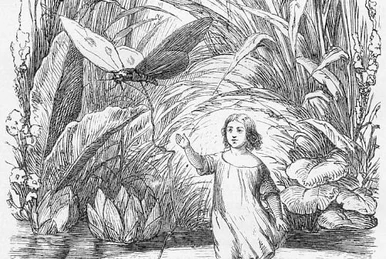
Then, I stumbled on the one that my image came from – LINK>Sometimes we need fantasy to survive the reality by someone named “Heather”. She writes – As Albus Dumbledore said, “It does not do to dwell on dreams and forget to live.” However, there are moments in life you must tap into your fantasies to make it through tough times.

Unfortunately, our society often stigmatizes daydreaming and fantasizing as a lack of motivation or seriousness. However, that’s not always true. Fantasizing is a natural part of being human and it plays a significant role in building interpersonal relationships and manifesting future goals and dreams.

While Dumbledore’s words are wise, the truth is, sometimes we need fantasy to survive reality. If you find yourself going through a rough patch, some fantasy might be just the thing that gets you back on track. I have read that adoptees frequently fantasize about their first mother.

The Life You Never Lived

Though not an adoptee myself, but as the child of two adoptees who never knew anything about their biological, genetic families, this applies to me as well. Even with my genetic relatives that I have met or gotten to know virtually, there are still those family lives I’ve never been a part of. There is no making up or compensating for that. There is only going forward from here.

And even though, I do know who my genetic relatives are now, I’ve banged my head against the sealed adoption records issue both in Virginia (where my mom was born) and California (where my dad was born). So even lacking both of those, thanks to inexpensive DNA testing and matching companies and then some fortuitous connections from there, I know as much as I can ever hope to now.

Googling on the life you never lived, I found this – Our Ghost Lives: Why We Obsess Over Lives We Could Have Lived at LINK>unpublishedzine.com. Even before I read this, I think – this could apply to many forks in our life’s path. What might it have been if we had done this or that. So, really lives we could have lived can apply to many people, not just adoptees. It’s only that adoptees have good reason to wonder “what might my life have been like if I had remained with my first parents?” All of the “what ifs…” that we daydream about. Woulda, shoulda, couldas are never reality. There is only what we have lived.

Excerpts from the linked article – Ghost lives earn their namesake because they haunt, they linger, and are the phantoms of what could have been. Wishing for our ghost lives to be a reality is common when our current lives are hard. Ghost lives should never detract from our regular lives because it becomes unhealthy.

Instead evaluate the choices you have made and how they have brought you happiness. This is a lot like what I heard the Rev Michael Bernard Beckwith suggest in his Sunday message at Agape – Do a testimonial trek through your awareness. Notice all of the places in your life where your own might and power did not get you out of trouble. Your back was against the wall. Through some kind of grace or expanded awareness, everything turned out okay. Curate the feeling of that grace or miracle.

It is a trust that goes beyond your personality construct, your human skills, beyond what you think you can do. You walk with a radical trust in life Itself by looking back over your life and seeing all of the places where you did not make something happen but something dawned upon your awareness, something pulled you to another level of experience – let that become a baseline of confidence and trust. You have confidence in yourself and you walk with that dynamic. Life has a tendency to support its continuance.

Back to the article – choosing real life over what could have been radiates a lot more positive energy, mindfulness, and an ability to be in the present. Being in the moment requires conscious effort. Appreciating the choices that we did make, shows us the good that is there, that we may sometimes fail to see. Be grateful that this big, messy, joyous real life isn’t a ghost life (which can only ever be an illusion) but your true lived experience.

Abandoned Child Syndrome

Stitch, Nani and Lilo

I’ll admit that I knew nothing about this movie and only that there was an odd looking creature (Stitch) and a little girl. A comment in my all things adoption group had me go looking. “My kids just watched Lilo and Stitch for the first time. I had totally forgot the Children’s Aid Society and parental loss triggers. It was hard for me to see how they are telling her that her sister may be better off without her and she may need to accept that. F**** that narrative. Never better off without some of our family especially after profound loss already. Bah. My vent for the day.”

What I found was this WordPress blog by MadameAce – LINK>In Brightest DayLilo & Stitch and Childhood Abandonment Issues. It was there I encountered the concept of LINK>Abandoned Child Syndrome. I named my blog Missing Mom because it is on the mom side that my emotions naturally gravitate.

When we first meet Lilo, we learn that she has an active imagination, and that she has clung to the fantasies in her head as being reality, which is probably just her way of dealing with the trauma in her life. People suffering from abandonment will also have an “extreme sensitivity to perceived rejections, exclusions or criticisms. We see Lilo’s issues with abandonment constantly throughout the whole movie, and we even get a sense that she blames herself for what happened or that she cannot form strong connections with other people. 

As Stitch’ behavior progressively gets worse, he opts to run away. We see Lilo blame herself. She watches Stitch go and she doesn’t try to stop him. Instead, she says that she understands why he wants to leave and that everybody eventually leaves her anyway. It is a movie that addresses sometimes uncomfortable issues directly.

Hard To Believe But True

To keep the knowledge of this from an adoptee is so unconscionable. Even in the 1930s, when my parents were adopted, they always knew they were. Since I now know more about my original grandparents, my grandmothers would have always made great mothers to my parents. It was simply two factors – the times for my dad’s unwed mother and Georgia Tann’s machinations for my maternal married grandmother (though her husband appeared to have deserted her and there is no one left alive who could answer what my heart wants to know about why).

From an adoptee – How could you not tell your kid but then tell other people??? Like wtf. There’s something incredibly wrong with that picture.

From another adoptee – (BTW the child is already 8 years old) – that would be where I would have to ask for a conference with the adoptive parents. I could not knowingly and wrongfully withhold such information from a child and still be able to look them in the face daily. Idk if said child could remain in my class, although I’d want to be a support for the child. What a horrible situation for a teacher, especially if also an adoptee, but what a horrible bunch of bullshit for that child. School aged is beyond old enough to have already had those conversations. I’m not happy with these adoptive parents AT ALL.

Just a personal note – when my dad was 8 years old, he was adopted a second time when his adoptive mother remarried and his first name was changed from Thomas to Gale. Thomas was his first adoptive father’s first name. Gale was his new adoptive father’s first name. A completely understandable decision. Fortunately for my dad, he was always known by his middle name Patrick.

An adoptee who is also an adoptive mother writes – I am also a behavioral interventionist. This would be a “HUGE” trigger for me mentally. I couldn’t imagine looking into that poor innocent face knowing she is probably struggling internally (even without her knowing it) and then, knowing what she will face later on when she learns the truth. It would be very hard for me to navigate without yelling from the rooftops at the parents – what you are doing to this child is so wrong and mentally abusive. Even more so, that they are sharing this information with everyone else (savior complex, most likely or just narcissistic) but the child. Does your employer know you are an adoptee? I do a lot of advocating for adoptees and foster care youth in my district.

Someone else commented –  Imagine everybody knowing your story but you. I hope they are setting aside a sizable amount of money for this child’s therapy because OMFG.

Another writes – And at what age does this go on until ? Where is that child’s human rights. They have no right to deprive that child of their roots. It’s seldom done to protect the child, it’s to protect the adopters from the reality that this child has another family and help them play out their fantasy. It’s disgusting and should be illegal.

From one adoptee’s experience – I was in a similar situation. I didn’t find out until I was 9. It shattered my view on pretty much everything. I feel badly for those children; finding out your life is a lie part way through childhood is just…heavy. The worst part about having a family that is secretive about adoption is that once I did know, I was told I still needed to lie about it because not everyone in the family knew. I shared it with my cousins of a similar age once and got laughed at by them because they didn’t believe me. It got me in terrible trouble with my adoptive parents for telling them. Those kids have a rough road ahead. An entire early childhood predicated on lies is no way to live.

Such Misplaced Priorities

I was reading today where a hopeful adoptive mother actually was promoting to the son of an expectant mother all of the things they could financially provide to her soon to be delivered baby. This is unbelievably clueless. The boy would have loved to send the woman the message below (but his mother did not allow it, saying, “I’d love it, if he could respond that way, but it’s best if he doesn’t respond at all because I don’t think she was supposed to do that.”) –

Dear Hopeful Kidnapper,

My Aunt lives 10 minutes away in a 5,000 square foot house with a pool in her backyard. We can drive to the beach in my parents fifth wheel and she can build sand castles with us. We don’t need a beach house, we drag our house with us. Her cousin loves horses and can provide that experience for our baby as well. How arrogant that you think you can give her a “better life.” Has anyone ever mentioned money doesn’t buy happiness?

And this hopeful adoptive mother is also a social worker ? Hopefully these are being given to the attorney as this is straight up harassment! The fact that she is a social worker makes this even worse, she should know better! This lady has certainly earned a top spot on the Hopeful Adoptive Parent Stranger Danger List. Being a social worker, you’d think she would have first hand knowledge that even under the most dire circumstances, most adoptees would not chose to trade up their own mother, father and family for strangers that perceive themselves as having more or better. So, neither would this newborn. It’s just nature’s way.

When adoptees say they hate hopeful adoptive parents – this is why. This arrogance and the saviorism that centers on them but not the child. The willingness…no, the eagerness to cross every boundary a decent human understands, just to get what they want. All while casting dispersions on people who are in crisis.

This perspective – I don’t understand why people make help conditional on buying a baby. It’s never “Hey, we know you’re struggling and since we care about the baby so much, we’d like to be super involved as aunt and uncle, so we can make a difference in this child’s life.” This is why hopeful adoptive parents make me so angry. They have the resources to help but will only do so by destroying a family to benefit themselves. It’s gross.

And really, this is true – The only reason she’s harassing y’all is because of how soon baby will be here. I guarantee, if someone offered them a baby tomorrow, she’d vanish from your life. So gross.

More truth – No lavish house, top school, showy beach house will fill the void that separation from a parent will create. Children don’t care about social status. This is SO elitist!!! Like what a wild fantasy life she has dreamed up! What if this daughter doesn’t like dogs or horses and sand?! All children have the ability and their moments of it — what if this child is destructive and wild??! What happens when this fantasy bubble and perfect home and plan aren’t going exactly as she pictured?? Kids are hard and messy and unpredictable. Parenting is more than these clouds in the sky fakeness.

Finally, this from direct experience – I am an adoptee. I grew up in a huge, beautiful brick home. I had a swimming pool, along with a swim & racquet club less than 500 feet from my driveway. I had the “best of the best” as far as society saw. Upper middle class. Not rich, but never struggled for anything we “needed”. Even with that, I would have given all of it up to be with my biological family!

The Stories Adoptees Tell

This is kinda silly and heartbreaking and I don’t share it with people so for some reason I’ve been compelled to share here to see if anyone can relate. I have recently been watching a show called Homeland, I’m sure some here have seen it. The main character Carrie works for CIA so she has to leave her daughter behind many times. I am 41 now so bare with me on the reference- my mom left me initially when I was 3 but she’d come in and out of my life till age 11. Then she was just totally gone. I have not seen or heard from her since 1991. When I was little I’d tell people that my mom was Cyndi Lauper and she was away on tour (wild imagination I guess). I’m sure no one believed that but I told that story anyway. Now watching Homeland I realize maybe a CIA spy would have been more interesting?

Another acknowledges – You probably just wanted a good reason for her absence. I told my teachers and what not that my mom died in child birth. I guess it was easier that she died rather than admit that she had left me. Always protecting ourselves from people leaving for good.

And sadly – I was actually told (the lie) in my younger years that my 1st mom died in childbirth. I remember laying in bed at times and in my mind I used to pretend my mom was a beautiful movie star, such as Elizabeth Taylor. The lie was revealed in my teens and broke my trust with my adoptive mother and destroyed the comfort of that fantasy forever.

Someone else admits – When I was a kid I told people Chester Bennington from Linkin Park was my real dad and my mom wouldn’t let me see him. I didn’t actually know the truth about my biological dad until almost adulthood, so my kid brain tried to fill it in.

From yet another – I had elaborate fantasies where my mother was an alien and my father was maybe a famous actor I’d had a crush on. (All my celebrity crushes up until the past few years have been significantly older than me.) Like, sure, Harrison Ford might be my dad!

I find this one interesting because I have suspected my mom named my sister Lou Anne because at some deep level she had heard her birth mother called Lou. “I used to name every single Doll or toy Jennifer. My adoptive parents told me my mom’s name was Jennifer when I was 7. Sure freaked them out for a long time.”

Which reminded another one – I used to tell myself that Jennifer Lopez was my mom and gave me up for adoption lol. I’m not even Hispanic.

And lastly, this one – I used to watch this travel show, the ladies name was Samantha, same as my birth mother, it was a closed adoption, so I didn’t know much. I always thought it may be her and often wished it was, that I was adopted because she was single and busy with her show. Gave me a face and wonderful person to dream about.