What It Is and Is Not

Every November it comes back around – National Adoption AWARENESS Month. While all adoption-related issues are important, the particular focus of this month is the adoption of children CURRENTLY in FOSTER CARE.

The first major effort to promote awareness of a need for children in the foster care system to be adopted into a permanent family began in 1976, when Massachusetts governor Mike Dukakis initiated Adoption Week. The idea grew in popularity beyond that state and spread throughout the nation.

President Gerald Ford later released the first National Adoption Week proclamation. In 1990, the week was expanded to a month because of the number of events and states participating. For many, the foster care imperative has been lost along the way and it has become a celebration of adoption in general. Proof of this is National Adoption Day (traditionally a Saturday) observed occurring in courthouses across the nation, when thousands of adoptions are finalized simultaneously.

During the month of November – many states, communities, public and private organizations, businesses, families, and individuals celebrate adoption in general as a positive way to build families. Activities and observances include recognition dinners, public awareness and recruitment campaigns, and special events shed light on children who are in need of permanent families (ah, back round to the kids in foster care – finally).

Even in non-election years, elected officials at all levels are supportive of efforts to build adoption awareness. Both current officials, and candidates especially, are often receptive to invitations for their participation in events with family appeal.

So now you know a bit more about what National Adoption Awareness Month was actually meant to achieve and how it has been hijacked by adoption advocates more generally.

Messed Up Perspectives

“My door is open for your baby (even at 3 a.m. I’ll take your baby so this doesn’t have to be a choice)(and I won’t say your name) I will even go to a different state to save your baby. Just message me if you don’t want your baby…

I look at the news. I recently saw the negligence suffered by a 4-Month-old boy. The baby passed away from lack of nutrition and dehydration. They also found worms in his diaper… another baby was rescued from a plastic Walmart bag… many babies dying… one child’s death due to negligence is too much!

For anyone who has a baby or is pregnant with one who doesn’t want the baby because you are too far along to get an abortion… my door is always open! Before you decide that the only option is to throw your baby in the trash, don’t do it! Bring that baby to my door. I promise, no questions will be asked or judgments passed. I’ll give you my address and my family will welcome your baby with open arms.

Note: leave the birth notice sheet so I can register your baby as my baby

Also hospitals, police stations and firefighters are other options. Leave the baby in the right hands and get away. No charges will be filed. Strength is to ask for help. The strength is to put another one before yourself. There’s help.

This is a safe place for your baby.

Okay, so let’s break down what isn’t right about the thinking here.

First, this isn’t a way to promote yourself to adopt a baby.

Second, if you found a baby or a woman left her baby on your door step you have to call the police. You will get in trouble with the law if you don’t. Especially going to a different state with the baby that’s kidnapping.

Third, you will not adopt the baby. The baby will go into foster care and the police will investigate the situation. Not every baby was abandoned by their mom or mom doesn’t want her baby. Sometimes babies are kidnapped or mom is in danger. Sometimes they find dad to take the baby because he might not know he has a child.

Fourth, infanticide is very different. Women who kill their babies often have mental health issues and disassociate from their pregnancy. These women wouldn’t necessarily leave their babies at a fire station or your home.

Fifth, I see a lot of these posts focus on the person writing it, not the baby or mom. Safe haven laws don’t exist for people to adopt. Safe haven doesn’t mean no questions asked or adoption. It doesn’t mean no charges filed or the parents will not be found. Safe haven isn’t a way for a hopeful adoptive parent to adopt. Asking a woman to list your husband as the father or register her baby to you is fraud.

Romanian Orphanages

An estimated 100,000 Romanian children were in orphanages at the end of 1989, when communism ended. The high number is linked to the pro-family policies pursued by former dictator Nicolae Ceausescu. In 1966, the regime banned abortions and contraceptives to keep the population from shrinking after World War II.

I remember hearing about these children long ago. Today, I was reminded of them by a link to an article in The Atlantic. Maybe what I heard about was the public execution by firing squad of Romania’s last Communist dictator, Nicolae Ceaușescu, who’d ruled for 24 years. This past Christmas day was the 30th anniversary of that execution and the discovery of his network of “child gulags,” in which an estimated 170,000 abandoned infants, children, and teens were being raised. Believing that a larger population would beef up Romania’s economy, Ceaușescu had curtailed contraception and abortion, imposed tax penalties on people who were childless, and celebrated as “heroine mothers” women who gave birth to 10 or more. Parents who couldn’t possibly handle another baby might call their new arrival “Ceauşescu’s child,” as in “Let him raise it.”

To house a generation of unwanted or unaffordable children, Ceauşescu ordered the construction or conversion of hundreds of structures around the country. Signs displayed the slogan: the state can take better care of your child than you can.

At age 3, abandoned children were sorted. Future workers would get clothes, shoes, food, and some schooling in Case de copii—“children’s homes”—while “deficient” children wouldn’t get much of anything in their Cămin Spital Pentru Copii Deficienţi, a Home Hospital for Irrecoverable Children. The Soviet “science of defectology” viewed disabilities in infants as intrinsic and uncurable. Even children with treatable issues—perhaps they were cross-eyed or anemic, or had a cleft lip—were classified as “unsalvageable.”

In an era devoted to fighting malnutrition, injury, and infection, the idea that adequately fed and medically stable children could waste away because they missed their parents was hard to believe. Their research led to the then-bold notion, advanced especially by John Bowlby, that simply lacking an “attachment figure,” a parent or caregiver, could wreak a lifetime of havoc on mental and physical health.

In the decade after the fall of Ceaușescu, the new Romanian government welcomed Western child-development experts to simultaneously help and study the tens of thousands of children still warehoused in state care. Researchers hoped to answer some long-standing questions: Are there sensitive periods in neural development, after which the brain of a deprived child cannot make full use of the mental, emotional, and physical stimulation later offered? Can the effects of “maternal deprivation” or “caregiver absence” be documented with modern neuroimaging techniques? Finally, if an institutionalized child is transferred into a family setting, can he or she recoup undeveloped capacities? Implicitly, poignantly: Can a person unloved in childhood learn to love?

In the fall of 2000, the Bucharest Early Intervention Project was launched. The BEIP study would become the first-ever randomized controlled trial to measure the impact of early institutionalization on brain and behavioral development and to examine high-quality foster care as an alternative.

The researchers employed Mary Ainsworth’s classic “strange situation” procedure to assess the quality of the attachment relationships between the children and their caregivers or parents. In a typical setup, a baby between nine and 18 months old enters an unfamiliar playroom with her “attachment figure” and experiences some increasingly unsettling events, including the arrival of a stranger and the departure of her grown-up, as researchers code the baby’s behavior from behind a one-way mirror.

100 percent of the local community kids living with their parents were found to have fully developed attachment relationships with their mothers. That was true of only 3 percent of the institutionalized kids. Nearly two-thirds displayed contradictory, jerky behaviors, perhaps freezing in place or suddenly reversing direction after starting to approach the adult. 13 percent were deemed “unclassified,” meaning they displayed no attachment behaviors at all.

As early as 2003, it was evident to the BEIP scientists and their Romanian research partners that the foster-care children were making progress. Children taken out of orphanages before their second birthday were benefiting from being with families far more than those who stayed longer. The next year, the Romanian government banned the institutionalization of children under the age of 2. Since then, it has raised the minimum age to 7, and government-sponsored foster care has expanded dramatically.

Meanwhile, the study continued. When the children were reassessed in a “strange situation” playroom at age 3.5, the portion who displayed secure attachments climbed from the baseline of 3 percent to nearly 50 percent among the foster-care kids, but to only 18 percent among those who remained institutionalized—and, again, the children moved before their second birthday did best. The benefits for children who’d achieved secure attachments accrued as time went on. At age 4.5, they had significantly lower rates of depression and anxiety and fewer “callous unemotional traits” (limited empathy, lack of guilt, shallow affect) than their peers still in institutions.

Sadly, about 40 percent of teenagers in the study who’d ever been in orphanages, in fact, were eventually diagnosed with a major psychiatric condition. Their growth was stunted, and their motor skills and language development stalled.

My source for today’s blog has much more content. Can an Unloved Child Learn to Love ? by Melissa Fay Greene in The Atlantic.

The Gift Of My Parents’ Adoptions

If they were still living, today my parents would have celebrated their 67th wedding anniversary. Their anniversary was always special to me because I was already there the day they married. My high school junior mom was pregnant with me. I believe I have my dad’s adoptive parents to thank that my mom’s adoptive parents didn’t send her away to have and give me up. Just the fact that they got married in a church that my dad’s parents attended – the Church of Christ – and not in the church my mom’s parents attended – Episcopalian – speaks volumes to me.

I don’t think I would realize just how fortunate I am, if I had not learned the stories of my parents’ adoptions. When I was in junior high, I realized that there was only 7 months between my parents wedding and my birth. I was angry with my mom about that for a very long time and wouldn’t let her touch me. Strange I wasn’t as angry at my dad. I was a child and as a girl I had gotten all those good girl lectures and though I don’t remember it clearly now, it was probably my mom delivering them and why I blamed her and not him. I was probably only troubled by the perceived hypocrisy.

But they did love each other very much. They stayed married for just over 60 years. My mom died 20 days before their 61st wedding anniversary. At first, I didn’t think my dad would be able to carry on but somehow he mustered a bit of will to try. However, he died only 4 months after she did. That is how much not having her in his life anymore just made life no longer worth living. Not that he committed suicide but on New Year’s Eve he had a stroke. He came out of the hospital not believing it until he read the discharge papers. Then on the morning of February 3rd, he simply stopped breathing and let it all go with a slight smile on his face after a good night’s sleep.

Realizing the conventional norms in the early 1950s when my mom became pregnant with me (often referred to as the Baby Scoop era due to the high rate of babies surrendered to adoption) while researching all things related to adoption as I began to learn what my parents died still not knowing – who their original parents were as well as reuniting with cousins and one aunt – made me appreciate that I did not become another victim.

If my parents had not been adopted, I simply would not exist, nor would my two sisters. Our children, my parents’ grandchildren, would not exist. Though the circumstances that led to my parents’ adoptions were far from perfect, I can now say they were imperfectly perfect for my own self. My sense of wholeness has been restored. My sense of identity has been returned to me. And so much wisdom about all things adoption and foster care have made themselves known to me and that would never have occurred but for the gift (to me) of my parents having been adopted.

A Sad Fact of Life

~ Childhood Sexual Abuse ~

So here is the story (not my own personal story, just making that clear) –

So my brother and I got taken away from my mom at a young age (I was 6 or 7) my brother was an infant and we were put into foster care. I went with my aunt and my brother went to a stranger foster family. My mom was able to get me back before she got my brother back. (From what I remember my brother had been hurt and they thought he was being abused, so we both were removed from the home.) Around the time my mom had us both back in her custody, my brother’s father started sexually abusing me. I told my mom and she ended her relationship with him and told him to leave. I always wondered why she never told the police but I now realize that maybe she didn’t tell law enforcement because she didn’t want us taken away again. As a mature person now, that seems like a reasonable explanation.

One adoptive mother replied –

I think your explanation of your Mom’s failure to report is plausible. She got you back and wasn’t going to let you go… also she managed to take you out of immediate future harm by making him leave. It sounds as if this is maybe an older story, and I don’t know the timeline, or your relationship with your Mom right now, but: do you think you could ask her why? She might not have an answer or know why she didn’t report. But asking her and talking openly about it can deepen your connection.

I have a very good adult relationship with my Mom, but we went through a really rough patch due to me having difficulty coming to terms with why she didn’t have the capacity to take me out of harm’s way when I was abused as a young child (not by a family member), by a person I knew she strongly (and justifiably) suspected. I have compassion and empathy for why she didn’t report and that eases the pain of the fact that she didn’t… and also, discussing it with her was zero fun but it ended up deepening our relationship and connection.

Another part to this is, and I can’t tell from your post how you feel, but do you want him reported? That is something to consider asking yourself. For my part..: By the time I came to terms with the abuse, I was well into adulthood and my abuser was dead. If I could have gone back in time and reported him myself, I would have done it. But I ironically wasn’t ready until my late 30’s… I’m not saying you want to do this, that’s only for you to know, but if you find yourself wanting to report him, there are resources that don’t have to include your Mom, if that’s not going to help your connection with her.

You could talk it through with a counselor who will know the laws in your state and know whether you are jeopardizing your and your brother’s ability to stay in your Mom’s home. IF you want to report. Which many people don’t. I just regret that I wasn’t able to come to the decision to report before the f**ker was dead. You have no responsibility to anyone but yourself in this. I am so sorry you’re carrying this burden. If you have access to a trauma therapist, I encourage you to consider engaging one. While I won’t tell you to report, I will tell you that getting support to work through childhood sexual abuse is better than white knuckling it for decades.

And another person with some thoughts about Child Protective Services (CPS) –

If your mom had knowledge or experience of how reporting abuse works, that could explain her silence about it. My son was abused by a 14 year old boy when he was 11. Last year CPS did a mandatory assessment to see why or how my child wound up in the position of being abused! Luckily for u,s it was a boy from school and it happened at school. No blame could be laid at my feet. I was abused as a child. My mother believed me but didn’t report it as she “didn’t want the family to get a bad name!” I know how that felt, so I never thought twice about reporting my son’s abuse. However, doing so did throw us into the bureaucratic ringer! Both with CPS and in actually having to go to court! The boy was found guilty of 5 charges but wasn’t jailed. We were made to feel at fault and under the microscope. Had it been a family member, I’m damn sure I would have lost all my kids. I would not go through reporting again. A lot of victimizing comes with taking action, especially blaming of the accuser by CPS.

Mother/Child Separations

Black babies separated from slave mothers. Native American children separated from their families to indoctrinate them into white standards of living. White babies separated from their mothers in the 1930’s through the 1960’s because they were a profitable and valuable commodity in the adoption market (if you were a black unwed mother you could keep your baby as it was no longer a financially lucrative commodity after the Emancipation Proclamation). And most recently, Hispanic babies separated from their mothers at the southern border of the United States.

These may seem wildly different situations but actually they are the same. Society does not value natural families nor do we support keeping children in the families they were born into. We do this at great harm to the children and equally emotional and psychological harm for their mothers.

In regard to Africans enslaved in America, though they most definitely experienced an assault on their personhood, but never yielded. Because misogyny has been dominate until recently, it is no surprise that women’s voices, both in their own time and in later scholarship, remained largely silent. They reproduced, labored, and died in near anonymity. Slave women did not have ready access to birth control and experienced great pressure to bear children. After the abolition of the international slave trade in 1808, the South’s dependence upon natural reproduction increased. Slave women experienced pressure to bear children from a culture that gloried motherhood and from masters who personally benefited from slave offspring due to their financial value.

In 1879, the Carlisle Indian Industrial School in Pennsylvania was a government-backed institution that forcibly separated Native American children from their parents in order to kill the Indian in him, and save the man. For decades, this effort continued. Native American boarding schools were a method of forced assimilation. The end goal of these measures was to make Native people more like the white Anglo-Americans who had taken over their land. By removing them from their homes, the schools disrupted students’ relationships with their families and other members of their tribe. Once they returned home, children struggled to relate to their families after being taught that it was wrong to speak their language or practice their religion.

The Baby Scoop Era was a period in the history of the United States, starting after the end of World War II and ending in the early 1970s, My parents adoptions were just a little bit ahead of their time but Georgia Tann, through whom my mom was adopted was certainly already profiting when my mom turned up, 5 mos old with blond hair and blue eyes, Tann’s most desired commodity. This time period was characterized by an increased rate of pre-marital pregnancies over the preceding period, along with a higher rate of newborn adoption. It is estimated that up to 4 million parents in the United States had children placed for adoption, with 2 million during the 1960s alone. Annual numbers for non-relative adoptions increased from an estimated 33,800 in 1951 to a peak of 89,200 in 1970, then quickly declined to an estimated 47,700 in 1975. By 2003, only 14,000 infants were placed for adoption. The number of hopeful adoptive parents remains far beyond the number of babies available which set off the international adoption boom and the abuses and exploitations in that field.

Most recently has been the horrendous treatment of Hispanic families at our southern border.

Long before the Trump administration implemented its “zero tolerance” immigration enforcement policy in 2018, it was already separating children from their parents as part of a “pilot program” conducted in the El Paso, Texas, area (where I spent my childhood, I am familiar with border issues and politics). Under the El Paso program, begun in mid-2017, adults who crossed the border without permission – a misdemeanor for a first-time offender – were detained and criminally charged. No exceptions were made for parents arriving with young children. The children were taken from them, and parents were unable to track or reunite with their children because the government failed to create a system to facilitate reunification. By late 2017, the government was separating families along the length of the US-Mexico border, including families arriving through official ports of entry. It is suspected that many of these children were placed in foster homes and may have even been placed into adoption as it has proven almost impossible for some parents to relocate their children.

Sometimes, humanity makes my heart hurt.

Women Behind Bars

Women’s incarceration has increased 800 percent over the past thirty years. The incarceration rate for black woman is double that of white women. Woman are more likely than men to be imprisoned for drug-related offenses. 62% of women in state prisons have minor children, many of whom are forced into foster care or left with relatives who scarcely have the financial resources to care for them.

The separation of families is now widely understood as a human rights crisis also at the Mexican border, yet comparatively little attention has been paid to the destruction of black families in the era of mass incarceration. One in four women in the United States has a loved one behind bars, and the figure is nearly one in two for black women. When men are locked up, the women who love them are sentenced too. They suffer from social isolation, depression, grief, shame, costly legal fees, far-away prison visits (often with children in tow) and the staggering challenges of helping children overcome the trauma of parental incarceration. When loved ones are released from their cages, it is often women who are faced with the daunting task of supporting them as they struggle and often fail in a system rigged against them.

~ from The New Jim Crow by Michelle Alexander

According to The Sentencing Project, my state of Missouri had the 3rd highest rate of female imprisonment in the United States in 2017. Thirty-eight percent of youth incarcerated for status offenses (such as truancy and curfew violations) are girls. More than half of youth incarcerated for running away are girls.

Case in Point

Dorothy Gaines’s life changed when Alabama state police raided her home for drugs. Police found no evidence of Gaines having possessed or sold drugs, yet federal prosecutors charged Gaines with drug conspiracy.  Gaines was a former nurse and devoted mother living in Mobile, Alabama. A self-described “PTA mom,” she always brought snacks to the football field where her son played on the team and her daughter was a cheerleader.

She did not know that her then-boyfriend was dealing drugs. Though the state dropped all charges, federal prosecutors charged Gaines with drug conspiracy eight months later – charges that she disputes to this day. She refused to plead guilty or provide testimony against other defendants, and so, was convicted and sentenced to serve 19 years and 7 months.

She says, “My son jumped in the judge’s lap at sentencing and asked not to take away his mother.” Leaving her children, Natasha, 19, Chara, 11, and Philip, 9, parentless, Gaines was accompanied by marshals to federal prison – her first time on an airplane.

Dorothy explains, “I was always a mother that never, ever went anywhere without my children. I missed taking my children to the park, going to their school, while I was in prison. They wrote me and told me those were the days that they missed, too. Phillip and Chara’s father died when they were two and three. That’s why my children were so distraught: because all that was taken away.”

Thankfully, in December 2000, Gaines received a commutation from President Bill Clinton. Gaines’s advocacy work includes using her own resources to help youth see their incarcerated parents. “My going to prison has not been in vain,” said Gaines. “I will fight until everything has been changed.”

What Is Wrong With Being A Single Parent ?


I believe in a two parent home but it doesn’t always work out that way.  In my mom’s group, we have several mom’s who are single parenting their children and every one of them is awesome.  Some became mothers without a partner because they wanted to parent and gave up hope on marriage.  Many two parent homes become single parent homes when one of the parents dies, as happened to two of the families in my mom’s group.

So, the reality is that many kids grow up in single parent households. Every parent starts out with zero parenting experience and babies do not come with a how to manual. Today, I read about a 6 month old baby with a loving relative.

In the situation I am reading about, there is no empathy being expressed for either the deceased mom or her brother. The brother has lost his sister. The child has lost his mother. His nephew is probably one of the few things this young man has left of his sister.

Actually, this is a very sad story but unfortunately not a totally rare problem.  Thus warned, here goes, sigh –

The baby’s original, biological, genetic mom was heavily on drugs during pregnancy.  She told the social worker she had no family. Therefore, the baby was taken into foster care at birth. Then, the baby’s mom committed suicide and left a list of relatives. Hence the complication now.

The foster parents have grown attached to the 6 month old boy. He does have some challenges (both mentally and physically). The foster parents really really do love this boy. To their own perspectives, he is their son. He honestly knows no other parents and he’s apparently very happy with them.

Both foster parents have an adequate education. The foster dad works and makes a great income. The foster mom stays home with the baby and devotedly transports him to physical therapy 2 times a week, etc etc.

Now the baby’s uncle wants to raise this baby. He’s 29, single and has a steady occupation and therefore has the financial means to raise baby. However, he has no previous experience with children. It really isn’t his fault that he didn’t know about this baby until recently. He never knew his sister was pregnant because she was estranged from her family at the time. To date, he has not made an effort to see or have contact with the baby.

The foster parents really want to adopt this baby. It will crush them, if this baby is uprooted and turned over to someone who is effectively a stranger the baby doesn’t know. The baby is in a loving two parent home that meets his needs. Is it the right thing to send him into a single parent home ?  It could be a struggle for this young man to meet the boy’s physical and mental need for expert therapies.

As a young man, the uncle doesn’t have the life experience to understand the trauma he will cause, if he takes the baby away from his foster parents. He doesn’t understand what he doesn’t know about parenting.

What do you think is the right outcome in this very complicated situation ?  Generally, I’m in favor of genetically related family – always.  I’m in favor of reform that prevents people from fostering simply in order to adopt a baby.  This is a complicated case with no easy answers.  I am glad I don’t have to be the one to judge.

Misplaced Priorities

I could sound like a broken record stuck on repeat but here goes anyway.

Society’s first priority should be the support of and encouragement for natural families.  I was reading today about how many churches have programs to assist those persons who provide foster care or are adopting a child with all kinds of useful items.  Why don’t we do this for struggling families ?  Particularly now with the economic impacts of the COVID pandemic, when people are being evicted, worried about feeding their families due to a loss of income or expecting the electricity, gas and/or water to be cut off anytime.  It is bad enough that looking for one’s weekly grocery items feels like living in a third world country instead of what we had thought of the United States as – a first world country – but it seems we have lost that standing to greed and corruption at the top of the government and among the wealthiest citizens.

Okay, enough of my political rant but really ?  Check out this wish list recently posted by a church for new foster parents to help them “get by” –

Lots of food of all kinds.  For example, gift cards to restaurants, fast dinners like Bertoli pasta bags, frozen pizzas, PF Chang’s frozen dinners or even ready to eat, hot meals delivered throughout the first two weeks. Lots of requests for babysitting options such as volunteers that can come and watch the kids while you run errands, provide the freedom for a date night out, or a day of rest or time to enjoy adult activities, maybe even just take a nap or be quiet for an hour.  A full house deep clean from a local cleaning company or maid service.  Car detailing, “movie night” (dvd or Redbox code, popcorn, candies/snacks), board games, amazon gift cards and gas cards (for all the appointments).  A deal with a furniture store for a percentage off of bunk beds, dressers, lamps, etc.  Gift cards for lessons to whatever… swim, music, baseball, haircuts, lawncare, homecare/maintenance, bug man, carcare/maintenance, pretty much anything a regular family would need/use.

Notice something ?  A pattern is emerging.  It all about the adults, the parents, and not about the traumatized children placed with them.  And wouldn’t a struggling family be content with less frivolous luxuries ?  The priorities of charitable people need to be reconsidered and revised to help families stay intact, instead of tearing them apart.

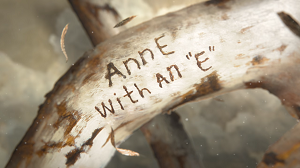
Anne with an E

I’m only vaguely familiar with Anne of Green Gables.  Anne has been a bona fide cultural icon for over a century, ever since Canadian author L M Montgomery first debuted her in 1908.  Anne was orphaned as a baby and in care until age 12 when she is adopted. She experienced a lot of abuse during her time in care.

We don’t have commercial TV or streaming in our home – while we do have internet the limited allowance and expense when adding onto that prohibit our streaming anything beyond a few youtubes and that costs us a lot as it is.

However, I was reading about this version in the all things adoption group I belong to and I became intrigued.  The woman who brought this to my attention describes it as – “a very dark portrayal, with depiction of trauma, flashbacks, so many feelings of abandonment, as well as the difficulties her adoptive parents have in relating to her.”  That was enough to get me looking into it.

Another woman said –  “The first season is the darkest with the flashbacks. As it goes on, it’s not as dark but continues to deal with a lot of other feelings that people not raised by biological family go through.  I honestly loved this series. I felt it was a more honest portrayal of children who were in foster care and adopted than I have seen in a long time.  This show helped my children discuss the hardships that adopted people or abused/traumatized people deal with.”

Another woman said – “The other depictions we saw didn’t seem to focus so much on the trauma. We listened to the book as we drove up to Prince Edward Island and there’s definite evidence of her struggles in there, but this series took it to another level and made it real and made the connections very visible of past trauma, fear of abandonment, and the inner world she creates to get away from it all.”

Vanity Fair had a review of this series.  They note that in the first episode Anne with an E graphically depicts, via chilly flashbacks, the years of abuse Anne sustained before she came to live with the Cuthberts.  While Anne likely did suffer some torment during her tenure with the Hammond family, Anne with an E ramps up the trauma by having Mr Hammond die of a heart attack brought about by beating the tar out of poor Anne.

This version retains some of Anne’s eccentricities—a fierce imagination and intricate fantasy life, as well as a fondness for high-flown language.  This is an Anne with PTSD.  Anne of Green Gables endures as a cozy story that reveals the resiliency of the human spirit through small-scale, domestic victories and setbacks, as well as the mundane, everyday tragedies of human life.

In episode 4, the town’s minister takes misogyny to its historic depiction because Anne doesn’t want to go back to the school where she has continued to suffer abuse.  He tells her adoptive mother – “This problem is easily solved.  If the girl doesn’t want to go to school, she shouldn’t go. She should stay home and learn proper housekeeping until she marries. And then the Lord God said, ‘It is not good for man to be alone I shall make a helper for him.’ There’s no need for her to bother with an education. Every young woman should learn how to be a good wife.”

The Vanity Fair review complains that “Anne with an E seems to think Anne’s triumphs are only noteworthy if she’s continually told she can’t succeed, when in fact her unfettered brilliance needs no such clumsy opposition.”  Judge for yourself.  Don’t know if I’ll ever watch this but maybe if it comes out on dvd.  Clearly, it spoke to the wounded hearts of the people in the adoption group I belong to.