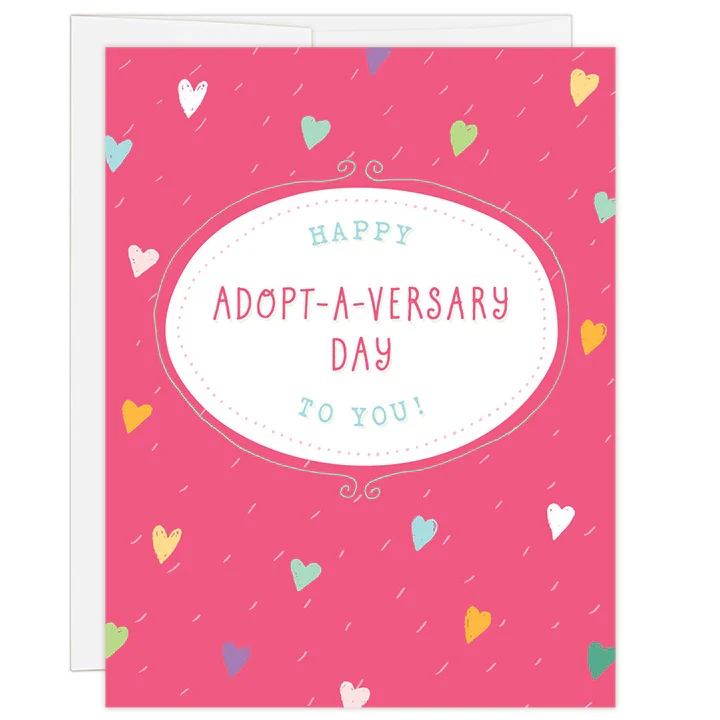
Not Memories To Keep

Most adoptees don’t want to be reminded of their greatest loss and trauma. It is similar to celebrating the “gotcha day” anniversary. One described it this way – “Your whole original family was just erased. Let’s PARTY!”

One commenter said – I don’t like when they share how many days a kid has been in foster care!!! It makes me want to barf, I was kicked out of a group for congratulating a adoptive parent on celebrating their success in destroying a family!! Apparently I was rude and didn’t respect their feelings. Someone else agreed – omg I hate the days in foster care signs– who in their right mind would think it’s a good idea to have photos in their house advertising that info ? And I thought this response sought a positive perspective –  I always see it as an indication of how long the parents fought, even though the game was fixed. To which another shares – my one cousin and his ex-wife fought to get their kids back for 3 years and then, one day everything was just done and my little cousins were gone.

Threats To Send Back

I don’t know why foster and adoptive parents make these cruel threats to a child who has already lost so much but sadly, it is NOT unusual. The miracle I realized when I learned about my adoptee parents (both were) was that when my teenage unwed mother became pregnant with me at 16, my dad was 18, that I was not given up for adoption. Thus, today’s story.

I was taken from my natural mother at 18 months. She was a teenage mom in the 80s. My natural mother was 16 when I was born. My natural father was 17. I was taken due to allegations of neglect. I don’t remember my natural mother. I can’t even picture her face. The only memory I have of her is sitting on the floor of the agency, and coloring with her in a coloring book. I remember putting a orange crayon up to my mouth and thinking about what color I wanted to use next and I remember her saying “No, No hunny. We don’t eat the crayons, we color with them”.

Anyways, I was in the foster care system for years, as they tried reunification, but my foster parents (later on adoptive parents) always fought it. I was always with the same foster parents, but other kids were always in and out of the house. Some for weeks and some for months. I would go to bed at night and the next morning, my foster sibling would be gone, usually reunited with their parents (I found this out later). I always cried, cause I would never see them again.

Eventually, I was adopted at the age of 6 by my foster, then adoptive parents. I never knew what it meant. I remember every February, they would throw a party, they would say it was the day they knew they’d get to keep me (I later found out February is when my natural father died in a horrible car crash at the age of 19). I eventually got 2 more adopted siblings (sisters) and thought my life was normal. But it wasn’t.

Everyday after the case workers stopped coming around (about 6 months after the adoption) my adoptive parents would threaten to send me back, if I didn’t act the way they wanted me to. If I got a bad grade in school, they would threaten me with the same. They would say I was no better than my natural mother and natural father. That I would never amount to anything in life. At 17, I ran away from them and never returned. I cut contact and have never spoken to them again. They were physically, mentally, and emotionally abusive.

At 18, I petitioned the courts for my adoption records, and my request was granted. And I found out so much. My adoptive mother was infertile, and adoption was the only way for her to have kids. They were also Christian and considered any unwed mom unfit and therefore, fought with my natural mother to keep me, because in their eyes, she couldn’t possibly raise me. They made allegations of abuse against her, said her family tried to sell me for $10,000, and that my natural mother’s younger brother tried to drown me in a pool. None of it was confirmed, but was put into the report by the social worker and used against my natural mother in court.

As for my natural father, he was gonna get custody of me until he tragically died, and my adoptive parents had fought against him every step of the way. There is much more as well, but that’s the summary.

I have never felt like I was good enough growing up and even now I still don’t. I have 2 kids now and everything I do is for them. I just want any hopeful adoptive parents and potential adoptive parents out there to know, don’t do this to any child. Even though you may get a child at a young age, they will still have memories of their natural family. And your words and actions will hurt them.

Licensed

First it was the Gotcha Day announcements and parties related to adoptions.  Now the promotions have moved into the field of foster care.

Starry eyed.  When someone thinks getting a foster care license is such a difficult accomplishment that it needs to be celebrated publicly as this huge deal, that’s a red flag. Truth is, it’s easy to become a foster parent.

The stork with the baby and the baby bottle images hint at a broader agenda and that is – to participate in what is known as foster to adopt – which is often an easier path to adopting an infant or young toddler than traditional adoption.  And the “no cravings” remark must be alluding to pregnancy and the well-known strange cravings for certain foods a pregnant woman experiences.

And it seems to be a thing also to have a “foster shower” and an Amazon wish list when announcing that one intends to foster children.

As a reality check, when becoming licensed to foster children, as the graphic indicates in its unique manner, you have to define age groups and number of kids. You have to have beds and maybe change some rooms around for the age requirements.  You can’t get licensed for specific ages without having space and furniture (beds) for that age group. If you wanted to be open to all ages, you have to have a crib (and basic baby supplies), toddler bed and twin bed minimum.

One foster parent did say however, “when older siblings of little ones we were fostering came into care we were able to take them with minimal fuss, no additional training required.”  Which is a good thing.

People approaching foster care like the announcement suggests often claim they have worked through the loss of being infertile completely. Once they are finally “called” to foster with the expectation they will adopt a newborn, they need baby announcements with storks, do gender reveals and big baby showers, seek attention and have professional photo shoots in hospital beds and wheelchairs.  Doing it all – so it appears to be the same circumstance as someone who has given birth. It’s delusional and not the same.

And finally, I can’t help but ask – didn’t their “training” mention to them that the objective of fostering is family reunification ?  This expression is actually celebrating the worst tragedy and trauma this family of origin is likely to see. Comparing it in any fashion to birth, pregnancy, a stork dropping a baby at your door is tone deaf and gross. Given that these kids needs are provided for through a government stipend, I also cannot imagine asking anyone for gifts.

Un-Adopted

The Stauffer Family minus Huxley

The video began like so many others. YouTubers Myka and James Stauffer, in the glow of camera-friendly lighting, staring into the lens. But this time, instead of energetically updating their roughly 1 million subscribers (over 700,000 on Myka’s YouTube channel and over 300,000 on the family’s vlog, The Stauffer Life) on their “kiddos” or Myka’s “mommy morning routine” or vegan-meal ideas, the couple had somber expressions.

“This is by far the hardest video James and I have ever publicly had to make,” said Myka. Wearing white shirts that matched the linens on the bed where they sat, the Stauffers revealed that they had placed Huxley, their then almost 5-year-old autistic son from China — whose adoption process and life they had documented for more than three years — with “his now new forever family.” Myka and James tearfully explained that the extent of Huxley’s needs had not been clear when they’d adopted him, that it was never supposed to happen this way, and that they loved him.

In the kindest light, Myka, now 33, and James, 35, were painted as well-meaning but naïve parents who had gotten in over their heads; in the harshest, they were fame-hungry narcissists who’d exploited a child for clicks and profit only to discard him when caring for him proved too difficult.

According to the US Department of Health and Human Services, anywhere from one percent to 5 percent of the more than 100,000 adoptions in the U.S. each year are legally terminated in what’s called a “dissolution”. The Stauffers’ decision to relinquish custody of Huxley could be called rare but it is not uncommon in adoptionland.

Myka said she’d long wanted to adopt; at one point, she and James talked about having six or seven children, with multiple adoptions, and were specifically interested in a child from Africa. James was more reluctant, she said, and after several conversations, she finally pleaded, “Can you please, please in your heart just consider adoption? Just really genuinely think about it, because it’s really important to me.” He ultimately agreed, and, later in 2016, the couple posted a video announcing their plans to adopt and their intent to take viewers along with them on their “journey.”

Sharing information about a child’s adoption before he or she is in the home is frowned upon by adoption experts.  Not only can publicizing an adoption jeopardize it, but it’s often seen as playing into the stereotype of white families swooping in to “save” foreign children.

International adoptions to the U.S. have dropped to a fraction of what they were a decade and a half ago, as many countries, including China, have revised their protocols. (For the 2019 fiscal year, the U.S. Department of State reported just 2,971 adoptions to the US from other countries, down from almost 23,000 adoptions in 2004.) China still accounts for more adoptions to the US than any other country, but now almost all adoptees from China to the US are toddler age or older, and many have existing health conditions. If the Stauffers adopted from China, they would almost certainly be choosing a child with special needs.

Myka and James asked viewers to invest not only time in Huxley’s adoption story but money.  In October 2017, Myka and James, along with their three biological children, traveled to China to pick up Huxley. The accompanying video, which they called Huxley’s “Gotcha Day” — a term popular on YouTube but criticized by the adoption community — racked up more than 5.5 million views. Myka and James dedicated it “to all the orphans around the world” and set the video to “You Set My World on Fire,” by Sweden’s Loving Caliber, an acoustic track with the lyrics “Just tell me you’ll stay or take me away / I want you for myself every single day.”

Since adopting Huxley, Myka and James’s online success had grown substantially. Total earnings are difficult to estimate, but the Stauffers earned from $4,100 to $66,700 from their three channels in April and May 2020, according to analytics site Social Blade, a number that does not include revenue from sponsorships. Myka had hired a manager to handle all the direct marketing from companies that wanted to work with her.

The Stauffers began to consider a way out that was never part of the “journey” they had expected to experience, much less share. When they finally broke their silence in late May, they said they had initially kept quiet because they didn’t want to jeopardize Huxley’s transition to his new family. In their video, Myka said that Huxley was thriving in his new home, that he was happy, and that “his new mommy has medical-professional training and is a very good fit.” But the optics of their situation were fraught. In the middle of a pandemic and a national reckoning over racial injustice, when the president and multiple other right-wing leaders repeatedly referred to the coronavirus as the “kung flu” or “Wuhan flu,” Myka and James were a privileged white couple who’d given away their Chinese son.

Other adoptive parents have described situations that seem to echo the Stauffers’ sense of hopelessness. In her memoir The Best of Us, author Joyce Maynard describes adopting two girls from Ethiopia and then, just over a year later, placing them with another family whose mother she met during the adoption process. “With an ignorance that staggers me now — ignorance, and some arrogance, no doubt — I had believed my love would be there like an eternal flame, and that this love of mine could fix whatever had been broken in my daughters’ lives.” When this proved not to be the case, that the road to attachment would be a long one, she describes it as “the most profound sense of despair I had ever known.”

One of the biggest misconceptions is that dissolutions happen because the child is bad. Nine times out of ten, it is NOT the child’s behavior. It seems like it’s the child’s behavior, but it’s the child’s behavior triggering something in the family.  The most common reason for dissolution is that the parents feel incompetent to manage the child’s behaviors.

These are just excerpts.  You can read the entire story here – Why Did These YouTubers Give Away Their Son?  I had encountered the story previously but I didn’t know it in depth.  It is a cautionary tale about international adoptions as well as chasing after lucrative clicks and sponsorships.  It is a double edged sword waiting to cut the next victim.

Is Gotcha Day Offensive ?

Personally, I have always found this disturbing.  I really can’t believe an adoptive parent thinks like this but it does seem to be a common thing.  I wonder how the child might feel growing up knowing their own birthday wasn’t important.

“We celebrate our children’s Gotcha Day not birthday. The birthdate is the day they were born not when their life began. Gotcha day is what we celebrate and acknowledge as their new birthday. It’s when we became a family, their family. That’s when they were born into our family. Gotcha day is their birth into our family and as their parents. The moment all of our struggle was worth it and forgotten, similar to when a woman gives birth. All the pain washes away, when you finally meet your child”.

One adoptive parent said, “I understand that most people who have not adopted a child simply do not know that their questions may be rude or offensive or not the politically correct adoptive term.”

Families celebrate this day in many different ways and it can vary from a large party type celebration to a minor recognition to nothing at all.  Adoption comes from a place of loss and brokenness.  It also carries with it heavy emotions for everyone involved.

The term “gotcha” is too casual for the arrival of a child into the family. It can be insensitive to all parties involved in the adoption process.

One adoptive parent prefers to use the term Finalization Day but would be equally comfortable with Adoption Day.  Still, she prefers finalization as it’s more specific to what the day actually is.  She also admits that over time this may evolve and change.

As she explains her reasoning, she shares that she and her husband talked about it and put a lot of thought into it.  They arrived at the decision to mark “Finalization Day” on their calendar and to consider it a celebration of the day that their family became whole and complete.

As a somewhat enlightened adoptive parent (I would not say completely enlightened but adoption is going through a definite reform in perspective that is painfully slow for some of us but progress never-the-less) she acknowledges that it is very, very important to always honor her son’s birth family and his story.  However, it’s also not something she wishes to focus on all the time. It’s a PART of who he is and she sincerely hopes it does NOT define him.  Only time and maturity will prove whether that is true or not.

While he’s the original mother’s son and always will be, he’s also their son and their other children’s brother.  It is understandable that she would want him to never feel singled out or like he’s any less loved or less part of their family.

She goes on to admit that it is a very delicate balance. And every adoptive child and adult will feel differently about their adoption journey and story. Each adoptees’ story is special and unique and it’s not a “one size fits all” situation.  Adult adoptees go many directions in how they feel regarding their adoption. That’s honest.

It seems that her hope is that he’ll never, ever want to think or talk about adoption. Maybe he’ll just want to BE and not think deeper about how he came to be who he is. Not consider himself an “adoptee.”  That is probably wishful thinking but oh well.

She goes on to also explain that all of their children have adoption as part of their personal story. They have all been touched by it and are walking this path together.  She acknowledges that as they grow up, they all may have their own thoughts, feelings and questions.  To her credit, she always wants to be an open book with them and readily share anything – at ANY time of the year – that they might want to know.