Not Okay

My emotionally abusive adoptive mother never wanted me to have a relationship with my birth mother.

I wrote her a letter in 4th grade that my mother never mailed. She swore up and down she sent it. Then my birth mom never wrote back…

I finally asked her if she had it and she admitted she just never sent it.

I asked for it back and she said didn’t have it and couldn’t find it…that she “lost” it.

Until today when she called me and said “oh…I found this from 2006 in a box under my desk while I was cleaning it out.”

This sparked a conversation with me and my birth mom, where I discovered that she had been sending letters for years and my adoptive mom just kept them from me…my adoptive mom admitted to my birth mom that she kept them in a box, so I would never find them.

Why tell me I’m adopted, if you didn’t want me to have questions? Why adopt in the first place if you were just going to hate me and abuse me emotionally? Why?

I’ll never know, but a childhood wound, I worked so hard on healing, was reopened today and I’m so not okay.

Expectations

From Jeff Brown – for anyone who needs to get answers from a birth parent or adoptive parent.

It’s easy to understand why you might seek a heart-to-heart dialogue with a parent who disappointed you. You long to make sense of, to heal from, to resolve. You intuitively know that they have information that can put what you experienced in context.

At the same time, you have to be careful not to expect something that they cannot provide. For many of those who came before, it is absolutely essential that they stay away from the hotbed of emotional material that you seek to excavate. It’s too loaded, too guilt-ridden, too overwhelming, and they intuitively know they will not survive the process. They know that the dialogue will force them to awaken a whole web of unresolved emotional issues they are not able to confront. There is little worse than ending up between two worlds- one unconscious and repressed, the other conscious and awakened. Sometimes its necessary to remain asleep, because awakening is just too darn difficult.

The important thing – when you seek dialogue with those who have hurt you – is that you understand in advance that any refusal to participate is not a reflection of your inherent value. It’s a reflection of their inherent limitations. It doesn’t mean they don’t love you. It doesn’t mean that they don’t privately wish that they could have done better. It often just means that they have chosen, or must choose, to never look back…

The Trauma Response

The inability to receive support from others is a trauma response.

Your “I don’t need anyone, I’ll just do it all myself” conditioning is a survival tactic. You needed it to shield your tender heart from abuse, neglect, betrayal, and disappointment from those who could not or would not be there for you.

From the parent who was absent by choice or by the circumstance of working three jobs to feed and house you.

From the lovers who offered sexual intimacy but no offered no safe haven that honored your heart.

From the friendships that always took more than they gave.

From all the situations when someone told you “we’re in this together” then abandoned you, leaving you to pick up the pieces when shit got real, leaving you to handle your part and their part, too.

From the lies. The betrayals.

You learned along the way that you just couldn’t really trust people. Or that you could trust people, but only up to a certain point.

Ultra-independence is a trust issue.

You learned: if I don’t put myself in a situation where I rely on someone, I won’t have to be disappointed when they don’t show up for me, or when they drop the ball… because they will always drop the ball sooner or later, right?

You may even have been intentionally taught this protection strategy by generations of hurt ancestors who came before you.

Ultra-independence is a preemptive strike against heartbreak.
So, you don’t trust anyone.

And you don’t trust yourself, either, to choose people.

To trust is to hope, to trust is vulnerability.

“Never again,” you vowed.

But no matter how you dress it up and display it proudly to make it seem like this level of independence is what you always wanted to be, in truth it’s your wounded, scarred, broken heart behind a protective brick wall.

Impenetrable. Nothing gets in. No hurt gets in. But no love gets in either.

Fortresses and armor are for those in battle, or who believe the battle is coming.

It’s trauma response.

The good news is trauma that is acknowledged is trauma that can be healed.

You are worthy of having support.
You are worthy of having true partnership.
You are worthy of love.
You are worthy of having your heart held.
You are worthy to be adored.
You are worthy to be cherished.

You are worthy to have someone say, “You rest. I got this.” And actually deliver on that promise.

You are worthy to receive.
You are worthy.

You don’t have to earn it.
You don’t have to prove it.
You don’t have to bargain for it.
You don’t have to beg for it.

You are worthy.
Worthy.

Simply because you exist.

~ Jamila White

Moving Forward

A woman writes – For as long as I can remember, my adoption has been a defining part of my life, shaping my identity and experiences. Over the last six months, I’ve been on an intense journey to uncover the truths hidden within my past.

It has been a time filled with pain, confusion, and a desperate need for answers. I’ve come face-to-face with the trauma that has been quietly influencing my life for years, and I’ve realized that some of the people closest to me—those who claim to have no trauma—are unwilling or unable to face the truth alongside me.

For the first time in my life, I’ve had the courage to stand up for myself, to ask the difficult questions that have been weighing on my heart. I’ve come to understand that if the people who say they love me can’t acknowledge or address this part of my life, I can’t let that hold me back.

My journey of healing and self-discovery isn’t dependent on anyone else. I’m moving forward, with or without them, and for the first time, I feel empowered in my decision.

And receives encouragement – It’s a hard journey, but learning our truths is so important. When I went through something similar, I started to feel like an adult and not a little girl. Here’s to the next chapter of your life. Including this from another one – It’s such an eye opener to see how much that experience defines one’s life, we start to identify with it. Sounds like you’ve reached a point of much needed clarity. You deserve truth, kindness and understanding. We wish you the best in this next journey of your life! And this from another – Getting to this point is not for the fainthearted. It takes so much strength and pain and reflection and honesty huge amount of bravery.

I really liked this analogy – life is like you are on an elevator. And there are a group of people on that elevator car with you. Sometimes you stop and a few people get off and others get on. Along the way those who get off may get back on again… or they may not depending on so many factors. It’s ok if people who were on that elevator car get off. Sometimes they need to for you to continue on your way. Sending strength.

A Warning About Delay – Some wait for so long to look for some information and/or answers, that they are no longer obtainable. These wish they had done it sooner.

Possum Trot

I’m more than average familiar with Possums (the animal is common where I live in Missouri). A mom’s friend of mine once named her first born Possum – I was stunned. She passed away and both of her kids (the other one she named Lynx) changed their names according to their dad who I once met and stayed in contact with for awhile.

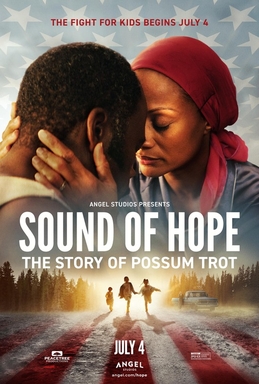
imdb says of this film – Sound of Hope: The Story of Possum Trot is the true story of Donna and Reverend Martin and their church in East Texas. 22 families adopted 77 children from the local foster system, igniting a movement for vulnerable children everywhere.

One reviewer described it this way – “not your typical feel good adoption story. This movie is raw, real, and gives you an honest glimpse into the harsh reality of the traumas that children in foster care have experienced and what it takes for families to love them to healing and wholeness. The power of love, community, and hope was a clear message throughout !”

However, in my all things adoption group (which got me to look at this upcoming theatrical release) wrote – “It looks like there yet another movie pushing the savior agenda within foster care and claiming that foster children are unwanted. I volunteer for an annual summer camp that provides teens in local foster care with 3 days of fun activities and the organization sent me an invite to go see this movie with volunteers as a group. The trailer gave me enough information to know it’s not something I can support. I’m assuming the goal of the movie is to tug on people’s hearts and make them want to “save” children by fostering/adopting.”

Here is that trailer –

One adoptee said – I want to crowd fund Jordan Peel to make a horror film of the exact same to opposite plot.

One former foster now adoptive parent noted – LINK>Angel Studios is also heavily involved in the Tim Ballard/OUR drama. I wouldn’t support anything they make anyway. blogger’s note – so I went looking, as I suspected they are known for making “Christian” movies. I also looked up LINK>Tim Ballard and he was associated with the Operation Underground Railroad. Unfortunately, I do believe that we once watched LINK>Sound of Freedom with Jim Caviezel on dvd. He portrays Ballard.

One adoptee added –  “I would be curious though to know what gets classified as neglect. I feel like that’s a catch all phase that isn’t applied equally. Obviously, no kid should be abused. How does this actually support kids ? I feel like this will just piss people off without providing real concrete action to change lives. Adding, I just wanna see a movie/read a book from an adoptee that centers them.”

Counseling On Adoption Trauma

Today’s question – Do you feel like you were informed or educated on adoption trauma prior to adoption/guardianship ?

A mom who gave her child up for adoption answers – I was never offered counseling nor thought to seek it. When I did google information on adoption back then, nothing about trauma came up. If I had known then what I know now, I never would have done it. I have regretted it every single day of my life and will until the day I die. In response, someone noted – Those sentiments in a conversation with an adult child. Feelings of having been coerced (universally common in agency adoptions). Regret. Loss. Honestly expressing these may go a long way to help her and the child heal as they come out of the fog. An adoptee who also surrendered a child to adoption adds –  It was incredibly healing to hear similar from my mom, and having that conversation with my son brought us even closer. What would have been unbelievably hurtful would have been to hear that my mom was happy she gave me away. 

The experience is different when adopting through foster care – an adoptive parent answers –  Yes and no. The agency we adopted through, the program we did, was mostly older (in the adoption world) placements through foster care. So yes, there was a lot of information about trauma. I felt very well educated and very well informed. We read a lot of books, had a lot of mental health resources already in place, attended trainings, etc. I am also a psychiatric nurse, so I had exposure to it already. That being said, there was still a lot of focus on the trauma being prior to adoption or early in adoption process. Since we were educated on how important birth family was, to honor that loss and grief, keep connections, and knew not to punish behaviors that were from trauma, utilize/provide resources for the children and ourselves etc, then everything would be rainbows and unicorns eventually. (Reality check – it is NOT that false narrative.)

Another adoptive parent shares –  No. The Dept of Social Services (DSS) didn’t give any information, but I had studied adoption trauma in grad school. DSS was actually “shocked” when I said that my foster daughter needed therapy. Thankfully, we were referred to an OUTSTANDING doctor who dealt almost exclusively with adoption trauma, including Reactive Attachment Disorder (RAD).

One who has guardianship notes – there was nothing. The judge signed the order and I had to figure it out from there. Child Protective Services stopped in one time to make sure we were minimally sufficient and we had one call from the court investigator. There was no support or information given. I actually find it really frustrating because when we finally did get a little support it was like a quarter of the amount foster parents get. And I was trying to keep a family member out of the system. To become a foster parent there were multiple classes. I’m not sure if they were actually as unhelpful as I remember but the whole process was overwhelming (I was 20, my cousin was going into foster care, long term guardianship was denied and we had to get approved, so he didn’t go to strangers). I’ll be honest. I was not trauma informed at all. I didn’t have a great understanding of addiction, mental health and trauma. As we get closer to adopting (a separate kin placement 6 years later) there has been a lot more information but we haven’t been offered counseling specifically. There was a two day adoption class through the state that was actually really informative and had people from all parts of the triad there to speak. We have cared for older children but it was a fight to get services for them and one child that needed medication wasn’t able to get it until reunification.

SAY SoMeThInG!

Artwork by late discovery adoptee, Ande Scott.

Ande says, Like poetry, I think images like these are impossible to understand without the backstory: the painting looks pretty! Look at the pretty colors! Now look more closely! Notice the pointy shards of colored glass!

Notice the bullshit excuses! The teeny words say, it’s not my place to say anything; the mantra of everyone who knew I was adopted and conspired to keep the secret.

Someone there commented – I see the jumbled shards of glass and see the pain from adoption and an abusive childhood that there is never an escape from – ever. A non-adoptee sees the pretty colorful pattern of glass not knowing the pain it took to display this – let alone what it would take to make those shards into something that could help heal.

I know a few moms in my mom’s group (related to my youngest son’s age) who took a “don’t tell” strategy regarding the conception of their children. Generally speaking, most secrets don’t succeed over the long run. With the advent of inexpensive DNA testing and matching (Ancestry.com and 23 and Me), I am forever grateful my family didn’t choose to hide important truths from our sons. I don’t know how things will turn out over the long run for the others.

Painful Reminder

From my all things adoption group today – I was SA in March which resulted in the baby that I am currently pregnant with. I have had a really hard time deciding what I should do as I already have a 4 year old and I’m scared that the emotions that I’m feeling could negatively effect how I raise this child. Some days I feel like I’m the best thing for her because we have bonded these last 28 weeks. But what if I can’t get past the trauma that I endured when I finally take her home? Would it be best for me to give her to a family that I hope would love her in all the ways that I wish I could? Or will I see her face and decide that she is mine regardless of how she came to be? I’m so scared at this point because I’ve seen a lot of adoptees say that they resent their NM for abandoning them and I don’t want this baby to feel like I don’t love her because even if she isn’t here yet, I definitely do! I just don’t know if the trauma will surpass my love and I don’t know what I should do… I’m posting this because I want the raw and blunt opinions of y’all. I want to know if you think that I’d cause more trauma keeping her or giving her up? As a mom already, I can’t imagine life without my 4 year old but I made those choices for her existence, whereas I feel I didn’t get any choices when it comes to this baby.

As I was looking for an image, I came across this piece in Salon. LINK>I got pregnant from rape by Renee Devesty from 2012 (so not in response to all the crazy stuff related to abortion being forced on women by extremist Republicans today). Actually, I remember the crazy ideas of Todd Akin back when.

Back to some of the thoughts in my group (adoptee voices are privileged). One adoptee said bluntly – “no one will love her like you. No one. Get into therapy now and start preparing to bring her home.” Another said – “If you love her already, that’s a very good sign. Letting someone else raise her is gambling with her life. I’ve always known I’m adopted, and the Complex PTSD didn’t show itself until I was 51. It’s been four years of hell. I’d rather not exist than be adopted.” That last sentiment I see frequently, including “I would rather have been aborted.”

A survivor notes – I worried much the same, that I’d struggle because they remind me of him. But they are and have been from day one, their own people. Even the traits that are recognizable as their other genetic half, are endearing in them. Your new baby didn’t have any more choice at their conception than you did, you are in this together. You already feel bonded, which is a huge sign that you can work through whatever trauma baby may bring. It may not be easy, some days may truly suck, but I think that is a part of parenthood even if the baby was planned to their first breath. I’m pretty sure giving up baby would be more traumatic to you than keeping baby, and it would be unquestionably traumatic to baby to be separated from you.

Empathy from this adoptee – “That something so beautiful can come from something dark & hurtful is amazing. Of course you can & do Love Her! She is a part of you right now. You are her home and her safe place. Please choose her, choose love, let her help you heal from your trauma. Don’t inflict the trauma of adoption on her. You both deserve each other & your other child deserves their sister too.”

Claiming Ignorance

Is your adopted child 20 years old? Because if they are not, then you have no damn excuse for not “knowing”. You screwed up, not anyone else that didn’t “tell you” about adoption trauma.

It’s disheartening and disgraceful to hear that so many adoptive parents still claim ignorance about the potential trauma and negative aspects of adoption for the child when they adopted. We need to acknowledge that this information has been available for well over a decade.

In fact, twenty years ago, the book “The Primal Wound” shed light on the emotional challenges faced by adoptees. It highlighted the deep-rooted impact of separation from birth parents and the lifelong journey of healing and identity formation. Since then, numerous studies, research papers, and personal narratives have further contributed to our understanding.

So what is your excuse?

You didn’t dig deep enough?

No one told you?

You assumed?

None of that matters, because when you are seeking to bring another human into your home and you are strangers and that human is losing their entire family, you should have KNOWN! I don’t care what year it was. It’s logical. That should have been an automatic red flag that “hey, this could be hard for this child, maybe I better research more”.

That’s what a selfish desire does, it suppresses the reality.

The ones that don’t own that need to rethink that stance. You screwed up. Before you take that personally and share how you are the exception, really think about it. Did you do the work before you adopted? Or did you just take the word of others because you wanted what you wanted.

The above are thoughts posted in my all things adoption group. Thinking about ignorance – I went looking and found this – LINK>What It Means to Claim Your Ignorance (there is much more at the link). A couple of excerpts . . .

Ignorance without a desire to do something about it is avoidance. We simply do not know everything, nor can we expect to. Maybe we never learned, or we were exposed to only one part of a larger ecosystem.

I am willing to claim my ignorance because it opens me to learning what I don’t know. I am willing to claim my ignorance because it helps me open my ears and my heart for deeper listening. It opens the door for those (adult adoptees) who have experience and expertise to share what they have to contribute.

Born Twice

At his website, LINK>David Bohl writes – I am often asked about the title of my memoir, Parallel Universes, and how I came up with it. There are many different reasons it fits for me, but the simplest explanation is that I needed to describe what it was like to be born twice during one lifetime—as someone who had been relinquished at birth and as someone who recovered from addiction and healed from trauma. And I also needed a title not just to my book, but to my life, something that would be stamped into the fabric of my world and signal both to me and to others as to what sort of story I’d been living.

Being able to share stories is what makes us feel less alone; it’s what connects us more than anything. Sharing stories is also how we honor and acknowledge both our pain and our joy, how we situate ourselves among others, and how we relate. Being able to share and being known is one of the first steps to healing. blogger’s note – I believe this. That is why I am often sharing other people’s stories – because we are able to learn from their experiences.

It’s a human pursuit to look for the meaning of life, to try to make sense of the world and of our past. Stories also inform how we might act in the future. He notes – I didn’t arrive at my Parallel Universe place out of the blue nor easily. I had to face my Reality, however painful, and I had to look back into my past for some answers. I got enough context that I was able to develop that narrative. 

Every abandoned person has to acknowledge that there was a family of origin, but how they deal with that is unique to each person. blogger’s note – even for the child of two adoptees, it was somewhat startling to come to grips that there were these other people, to whom I am genetically related, out there living lives I was totally unaware of, as they were also totally unaware of me.

My own dad was one of these – There are people who prefer not to know anything about their origins, who don’t consider the alternative reality that never was – where they grow up with different parents and in different circumstances. And there are people for whom this knowledge is essential and who find solace in putting as many puzzle pieces together as possible. blogger’s note – And that one was me.

He end with this thought – There is no wrong or right way to do this. I’ve talked with people who shared that their apprehension comes from not being able to find closure and not wanting to add to their problems. There are people who have tried to find closure and ended up further traumatized. There are people like me for whom those findings were a bitter-sweet discovery, one that I’m still processing and probably will process for the rest of my life. What unites all of us is that we all need some kind of a narrative to our life to simply make sense of it.