At Best, Unconditional is BS

From a Late Discovery Adoptee (didn’t know they were adopted until late in life) –

Was cleaning out my garage and have made a pile of adoptive family stuff to heave out of my life. Found a letter my adoptive parents’ daughter that she included when sending me the stuff that I told her I do not want. She has never taken any responsibility for her part in deceiving me. She has never attempted to learn anything about the trauma of either adoption or betrayal. Instead she insists she has always loved me unconditionally.

Please.

I see this word used so frequently by adopters and their family members when talking to or about adopted people in the home.

I see how so many of us absolutely hate this language. Hate. It. It’s triggering and often lazy and often used, perhaps unconsciously, to dismiss the feelings and experiences the adopted person is trying to share. The adopter people are feeling uncomfortable, so they whip out unconditional.

I feel like it needs to be added to the list of things to never say to an adopted person. Instead, maybe if the adopters are uncomfortable or feel they need to reassure the adopted person, they could really listen and validate the persons feelings and ask them What can I do to help? What would me reassuring you sound and feel like? How can I help support you? What could I change about our interactions?

I know it’s not just me who thinks unconditional is, at best, bs. Thoughts? Ideas?

An adoptive parent asks – What language would you prefer ?  It’s a never win situation for some of us who loved so much, we chose to be there for a stranger’s child as well as our own. Clearly some just choose to be angry at us in lieu of the one that abandoned them. It was a simple question in response to words she didn’t want to hear. I was curious. But clearly some truly don’t want a resolution but choose instead to stew in unnecessary hate. 

She replied – it’s not just an issue of language. It’s the intent and the impact as well. Think about this – if I was chosen, that implies that I met some expectation or that they had hopes that I would meet some expectation. Choosing me meant others were not chosen, right ? So then, I fail to live up to any or all of those expectations by say, expressing myself in a way that makes them uneasy. They then “reassure” me that they love me unconditionally. They don’t acknowledge or validate my feelings or apologize or seek to understand. They just try to wave it all away with the Unconditional wand. It’s like shorthand for we don’t care. Or at least, we don’t care enough to actually hold space for you in an authentic way. Just be mollified and move on. I’d much rather be told, yeah, we are disappointed that you don’t feel loved. Or yes, we hoped you would be happy but since you are not, what can we do to be here for you ? Or even, yep, we don’t particularly like you. At least that’s honest.

Another person who was fostered from birth then into a forced adopt at age 10 shares – I was abused by my foster “carer” to adoptress who never really loved me, but I was a good tool to help them have their “miracle bio-children”, once I was in their home. Unconditional Love is a misnomer – it’s easy & lazy to use the phrase, especially when that love is absolutely A1 Conditional. I’m sure as an adopter you now get to own a child that has another history outside of you and your family’s. It is not the same way that my mother was simply and will always be my mother – she was the only one who ever showed me unconditional love – not selfless love, but love without any strings… until she was not permitted to ever see me again or speak with me again. Those were the conditions that a Closed Adoption and a selfish, self-centered adopter and adoption agency made sure would stick for the rest of my life.

Another adoptee noted – Acknowledging their role in my trauma would have been nice.

Lastly from another adoptee – Unconditional love doesn’t exist. Everyone must meet certain conditions for it. But in your case, I think “unconditional” is being directed at you. Because their love for you was conditioned on you not knowing about being adopted. And now that you do know, you’re supposed to act like it never happened ? Definitely appalling disrespect toward you and a betrayal. In general, I find it to be a silencing and manipulation tactic and the opposite of them doing the work of connecting to us, where we are. I never wanted reassurance I was loved. I wanted it shown and it never was.
No Wonder

I’m 30 and I just found out I was adopted.

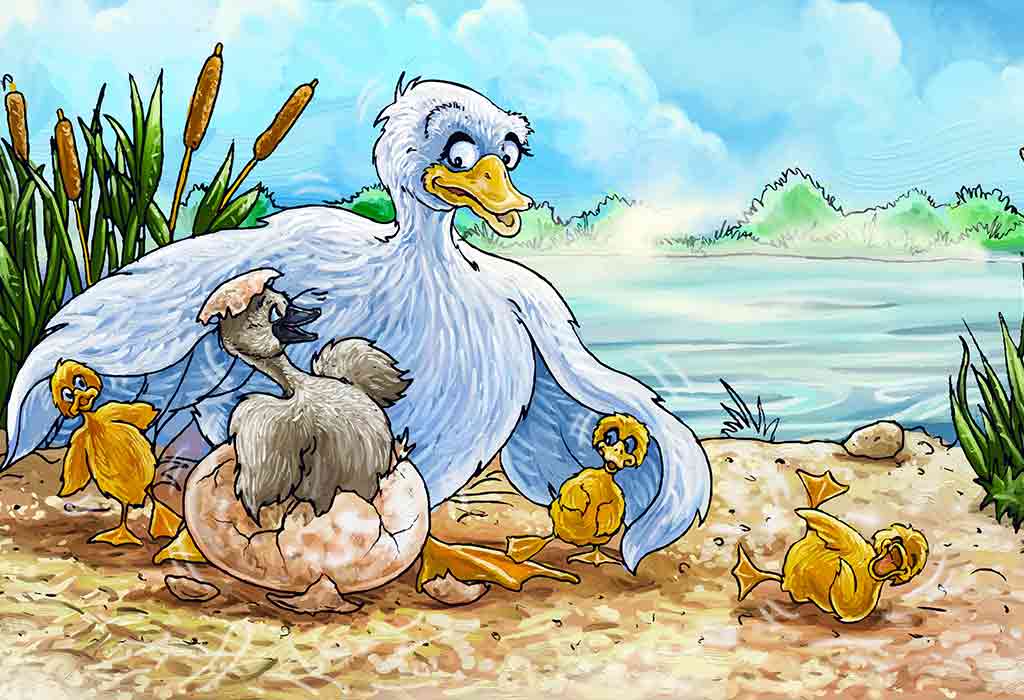
I was raised in a family always making comparisons… everyone’s like “ah you’re just like your *insert relative*” in looks, behaviors, etc… However, since everyone tried to hide the fact that I was adopted, no one EVER compared me to anyone. Unfortunately, my mom always said I looked like a spitting image of my dad… I always have felt like the ugly duck. Always really sad as a child that I didn’t have anyone to look up to, who I shared silly facial expressions, mannerisms, or physical features with, etc. My baby cousins were always called beautiful with their eye color matching the coveted eyes of my mother.. my other cousins were all petite, while I stood out like a sore thumb, SUPER tall… growing up my cousin (like a sis) was never been able to share clothing with me or beauty hacks because I’m so different from the rest. I feel like I’ve always been an outcast and so, I’ve been unable to bond in any of the ways, I should’ve…

Awful, that it’s always meant so much to me, looking at photographs of family and their history/culture was so big to me, and now, learning all my background has nothing to do with me at all!? My adoptive mom died 15 years ago and my adoptive dad disappeared when I was 1.

Birthdays Trigger Grief

This is not uncommon among adoptees. This one discovered later in life that she had been adopted – that often causes feelings of betrayal and distrust.

I am COMPLETELY miserable on my birthday, and with each passing year, the sadness becomes more and more pronounced until it’s debilitating. It is nothing I can control; my mind and body practically go into shock all on their own without any conscious thought on my part. I’m down the entire day and can barely function. I try to put on a happy face, especially for our son because I know he doesn’t understand how one could not see a birthday as a celebratory occasion; however, I am strongly contemplating telling everyone next year to please stop recognizing my birthday, that the well wishes only bring me grief as opposed to gladness. (It’s exhausting thinking of how to deal with the confusion and—for lack of a better word—blowback.) Yes, I’ve seen therapists, and they have been no help. I stopped seeing two of them in 2024 alone, and quite frankly, at this point, I’ve lost count as to how many I’ve seen over the years.

Rejection And Grief

Today’s story (not my own) –

I was adopted at birth, and I was told at 18. I am now about to turn 28, and really only just beginning to grapple with the emotions that accompany this information. I attribute that to getting married 3 years ago and finally being in a stable enough environment to begin processing, which college was not.

And to be frank, it’s been absolutely fucking awful. I always have and always will love my adoptive family so very much, and that makes the depth of the lie even harder to comprehend. I feel like I am burdening my husband and my friends with just, my own confusion at this stage. I am caught in a cycle of trying to justify my existence with harder and harder work and it’s not working at all lol. I know nearly everyone feels aimless around this stage in life, but woof. I am so tired. I am tired of feeling like the universe didn’t want me here. And like my entire life has been a lie. Which… it kind of was.

If you’ve made it this far, thank you, and I’d like to pose a question. For others who learned about their adoption later in life than childhood, and then began processing even later than that, what helped? Is it like grieving where you just have to let it hurt? Am I doomed to being a mopey bitch forever or will time give me grace with these feelings?

Some responses – Being late discovery adoptee (LDA) has layers to it that other adopted people don’t have to navigate. The lies and losses involved specific to life before and after discovery have massive impacts that can sometimes only be understood by those of us who have lived it. While community with other adopted people is valuable and helpful, I recommend joining specific communities for LDAs and NPEs (Not Parent Expected).

One asks – Are you in reunion at all? It can bring its own challenges but overall I feel like the truth is the only thing that can TRULY fully help us process, even if it hurts more at first. Lean into THE truth and gather as much information as feels right, so that YOU can put it together to come to terms with YOUR truth. For me, that’s the most empowering way to process the trauma.

One adoptee noted – The work you’re doing right now is some of the hardest work some of us ever have to do. Realize and accept that the people who purport/ed to love us, lied to us, or gave us away/sold us. While I can grasp all of it intellectually, I will always struggle with being invisible to them.

Another writes about the impact of the Dobbs decision – Not late discovery, but I didn’t start processing until 2 years ago when I was 40 years old. The Dobbs decision and supply of domestic infants was what triggered it. I didn’t allow myself to feel anything or care before that because while I knew as a child, it was supposed to be a secret from everyone else. There is grief. It does hurt. I don’t have any answers for the pain. I’m still feeling all the feelings two years later. Made contact in December 23 and reunion adds more feelings. It does help that my older half sister wants a relationship and we are working on building on.

From a late discovery adoptee – My experience was quite similar to yours. I discovered that I was adopted when I was 31. Now I’m 57. I think you asked a great question – asking if it’s like grieving. For me, that’s exactly what it was, and it took me a long time to forgive them. They were good parents in a lots of ways. I know they loved me very much (at least my mom) so it was hard to reconcile the fact that people who loved me and who I loved would lie to me about something as fundamental as who I was and where I came from. Like it’s hard to even comprehend. The grief, the loss. What could have been if I’d known and they got me the help I needed. Anyway, a few years after I found out, I decided to try to forgive them. I wanted my kids to have grandparents. And I just couldn’t stand the thought of losing them. Of being an orphan once again. I still go back and forth over it. Most days I don’t even think about it anymore. I’m at peace with it. But sometimes it still pisses me off. I still grieve for what could have been. It takes time. As others have said, being in a group specific to LDAs is a good idea. I think that while we have very much in common with adoptees who have always known, there’s a whole other dimension that only LDAs can understand.

Of course, this can and did go on and on but I think this is enough for today’s blog. If you are on Facebook and are a late discovery adoptee – this is the group mentioned more than once to search on for additional support – LINK>Forum for Late Discovery Adoptees. It is private and I don’t qualify.

The Reality Of Not Knowing

Blogger’s note – Though I grew up believing my parents must have been orphans because they were adopted, I never thought their origin stories were fairytales. The image came from the International Association of Adopted People (IAAP) who noted that – Every time you asked about your biological family and received dismissive remarks, it was a trauma. Every time someone corrects you on who your “real parents are” It is another micro trauma.

One adoptee agrees – adoption is one of the most devastating things that can happen to someone. It’s unnatural and from the adoptee’s perspective, it can be extremely scary. I was terrified. And my fears were always realized. It truly is more like a horror story than a fairy tale.

One woman noted the effects on her life – Answering security questions for data access: Where was your father born? What’s your father’s middle name? What’s the middle name of your oldest sibling? Where were your parents married? As soon as I see these are the first options for security question my anxiety ratchets up and my hands shake. I’d say this is a trauma response. I found out at the age of 52 that my entire existence has been a lie. My colleagues suggested I just lie or make up an answer as who’s gonna know ? Me. I’ll know. I won’t lie.

For me, it’s always been the medical history. Sorry that you were lied to, I always knew I was adopted. That’s supposed to be less traumatic to know, even if you don’t know who, when, where or why. (Blogger’s note – it was a mysterious health problem that got my adoptee mom wanting to connect with her birth mother.)

Someone else noted – we are all aware that adoption entities encouraged and fabricated falsehoods in order to make their product for sale maximally appealing. (Blogger’s note – In fact, Georgia Tann absolutely did this regarding my mom – changing her birth parents ages and educational status to match what my mom’s adoptive mother had specified.)

Another noted – The worst thing about adoption is closed adoptions. The second worst thing is you cannot get your original birth certificate in some states. Secrecy, shame and religious politics rule. (Blogger’s note – both of my adoptee parents adoptions were “closed” because it was the 1930s. I also found it impossible to acquire original birth certificates from Virginia or California.) Though someone noted – for many adoptees there are things FAR WORSE than not having access to their original birth certificate ! (Blogger’s note – sadly I do know there are, I’ve read far too many accounts of such in an all things adoption group.)

Then someone else notes – A lot of these adoptive parent marriages are not fairytales either. (Blogger’s note – my dad’s first adoptive father was an abusive, raging alcoholic. His adoptive mother eventually threw the man out. I learned via Ancestry.com that he died young of cirrhosis of the liver.) I don’t know why they call an even possibly good marriage a fairytale anyway? I think that whole “you were chosen thing” is a joke too. Yeah, you actually have to pick who you have a relationship with but if you’re adopted as a baby, you’re not really chosen except for maybe basic things you don’t have any control over anyway.

And from my own experience of learning my actual biological, genetic roots I can appreciate what this woman shares – I recently identified my family and met my father months before he died. Knowing my origins has had an enormously positive impact on my mental health. I don’t have the constant questions going around my mind. I have brain space. This is what the kept must experience from day 1. The trauma continues because I can never be fully integrated into either family. However, now that all 4 “parents” are dead, the only word to express what I feel now is I am “free”. No more obligations to other people’s agendas.

SAY SoMeThInG!

Artwork by late discovery adoptee, Ande Scott.

Ande says, Like poetry, I think images like these are impossible to understand without the backstory: the painting looks pretty! Look at the pretty colors! Now look more closely! Notice the pointy shards of colored glass!

Notice the bullshit excuses! The teeny words say, it’s not my place to say anything; the mantra of everyone who knew I was adopted and conspired to keep the secret.

Someone there commented – I see the jumbled shards of glass and see the pain from adoption and an abusive childhood that there is never an escape from – ever. A non-adoptee sees the pretty colorful pattern of glass not knowing the pain it took to display this – let alone what it would take to make those shards into something that could help heal.

I know a few moms in my mom’s group (related to my youngest son’s age) who took a “don’t tell” strategy regarding the conception of their children. Generally speaking, most secrets don’t succeed over the long run. With the advent of inexpensive DNA testing and matching (Ancestry.com and 23 and Me), I am forever grateful my family didn’t choose to hide important truths from our sons. I don’t know how things will turn out over the long run for the others.

Our Missing Stories

My friend, Ande Scott, does a podcast called LINK>The Adoption Files. The Adoption Files seeks to provide a place for adoptees and allies to discuss the laws preventing adoptees from accessing their identities, and the emotional and physical challenges adoptees face in the process of dealing with the obstacles we face. I was once a guest on her podcast. Ande is also a late discovery adoptee – which means she grew up never being told that she was adopted and only found out much later as an adult. Today, she shared something so poignant, I needed to bring it here to reach others who might not be her friend on Facebook. Here is what she wrote –

As adopted people, we are severed from our stories. Along with photos, the greatest treasures I have received from family members are the few stories I have been told. My grandfather who testified against the mob, my other grandfather who walked back to allied lines after his bomber was shot down. The great-uncle who ran away to Australia.

My youngest expressed to me the loss he feels when he sees the photos, hears the stories, sees the traditions that thread together the strands of his friends lives.

I wish I had those things to give to him, that the false narrative had been the true story. Not the fantasy that was torn away from not just me, but my children as well.

I probably make my grandkids a little crazy, bombarding them with the stories of trips to the museum and days spent in Lego architecture and how I used to take their dad and uncle for “walks”; me on my quad skates, their dad in rollerblades, their uncle on a skateboard. How we would take turns carrying the eight pound dog when she was worn out from keeping up.

I want them to have stories to fill in at least a little of the void that stretches out behind them just two generations back.

Because being lost to family isn’t just about the adopted person.

It’s about everyone who comes after, as well.

blogger’s note – I was recently in contact with Barbara Raymond (author of The Baby Thief) which is about Georgia Tann, who looms large in my own mother’s adoption story. She said – you have more adoption in your family than anyone else I have heard of. It’s true. Not only were BOTH of my parents adoptees but each of my 2 sisters gave up a baby to adoption. That makes 4 adoptees in my immediate genetic, biological family. Long ago, as I was uncovering my actual genetic, biological grandparents, my youngest son said – you have a very complicated family. That is true and I’ve been doing my best to come to terms with that and integrate it into my own understanding of what family is. All 4 of my adoptive grandparents were “good” people who treated us well as genuine grandchildren. Learning the truth of my original genetic, biological grandparents did shatter that a bit for me personally. I’ve been doing my best to put ALL of the pieces back together again.

A Sad Reality

Though the date has past, it is still worth making a point about this because with inexpensive DNA testing and matching, it is happening more often now. An NPE, not parent expected, also sometimes MPE, misattributed parental experience, are terms applied to people who have learned that they are adopted after entering adulthood. It can also apply to people who learned that they are the product of donor conception, affairs, and/or rape.

One woman notes – Found my biological family. Unwanted by all…. I’m a product of date rape. The dirty secret…

From that comment, I learned today about LINK>RAINN (Rape, Abuse & Incest National Network) a national nonprofit support organization that can give people with these kinds of experience the resources they might need as a child conceived as a result of sexual assault. RAINN also carries out programs to prevent sexual violence, help survivors, and ensure that perpetrators are brought to justice.

Without Secrecy or Shame

The mom’s group related to my youngest son once divided ourselves into tell/don’t tell. After that, we could no longer discuss, within the whole group, the medical technology that had brought all of us together. Our children were all born within a 4 month window of time. We’ve only gotten together once (and not all of us made it to the event) when our children were 2 years old. One woman who gave birth to twins developed a rapid breast cancer and is no longer with us. As to the others, I often wonder how the ones who were “don’t tell” will manage the reality of inexpensive DNA testing and matching services that are ubiquitous today. Though I never ask . . .

My family was always open about the truth but also did not make a big issue of it. Locally, I really didn’t think it was anyone else’s business. After our egg donor did 23 and Me, I got my husband a kit. Then we got both of our sons kits. That gave us an opportunity to talk over one Sunday night dinner about the whole circumstance of how we came to have them. They seem to understand that they would not exist any other way. As their biological mother (though they don’t have my genes – at least not from the egg that became them – who knows what all goes on in the womb ?), I don’t detect any difference in our relationships with one another – thankfully.

So, yesterday, I read this story that, of course, spoke to me in very personal ways. I suppose part of my own reasons for honest transparency had to do with the fact that I am a child of 2 adoptees and until after they had both died, I knew next to nothing about our origins. My only regret is that I didn’t uncover those details while they were still alive.

The story was part of LINK>Huffpost Personal and was submitted by Julee Newberger titled – My Parents Hid The Truth Of My Birth From Me. I Almost Did The Same To My Own Daughter. It is subtitled – “The longer we waited, the more anxious I became. If we didn’t tell her soon, I feared it could do lasting damage to our family.”

She explains – “When I was my daughter’s age, I believed I was the biological daughter of my doting mom and dad, who said they tried to have children for more than 10 years until, at last, I arrived. But I always sensed that something was amiss. There were no pictures of my mother pregnant or stories about my birth. Nobody in the family had my crooked smile or blue-green eyes. I’d overheard some whispered conversations about adoption, but whenever I asked my parents, they shut it down.”

“By the time an older cousin confirmed that I was adopted, I was in my early 40s and both my parents had passed away. This midlife discovery left me with tangled emotions and no way to work through it with the two people I’d loved and trusted most. It’s possible that my parents thought they were saving me from stigma or that they feared I’d abandon them in lieu of my biological family.”

Regarding the conception of her daughter, she notes – “I also experienced something I hadn’t anticipated ― a sense of shame, as if I had cheated nature. At 44, maybe I wasn’t supposed to be a new mother, and by extension, this beautiful baby wasn’t truly mine. . . . feeling like an imposter, somehow less ‘legit’ than the other moms.” Up until her daughter’s questions about ethnicity, she had told herself that it was too soon to explain donor conception to a child who was too young to understand how a baby was made.

So, this is how it proceeded – “As soon as she started asking about her ancestry, I bought a book called ‘You Began as a Wish’ by Kim Bergman, which talks about all the different ways kids are conceived. My husband and I planned for all of us to read it together, but my daughter preempted that by pulling the book out of a box of Amazon purchases after school.” The author continues, “My whole body tensed as she began reading aloud and asking questions: ‘So all kids are made up of sperm, an egg, a womb’ … ” So, Julee came out with it – “Remember we told you that Mommy had trouble getting pregnant at first?” I said matter-of-factly. “Well, an anonymous donor gave us an egg so that we could have you.”

“After a while, I could see recognition in her warm brown eyes, different in color and shape than my own. “So, I’m related to somebody else,” she said. The author notes – “A recent study on third-party reproduction. Results showed families have better outcomes when parents tell kids about their conception early on, ideally by the time they’re 7 years old. The longer we waited, the more anxious I became. If we didn’t do it soon, I feared it could do lasting damage to our family.”

blogger’s note – I don’t regret any of our choices. The situation is simply my family’s reality and we are far from alone in our circumstances. It is a whole new world thanks to medical progress.

Field Notes from an Adoptee

This guy, Brad Ewell, now has a monthly column at lavenderluz LINK>Field Notes from an Adoptee. He also has that “mini-series” at this LINK>Empowered To Connect Podcast. There is read, “A Texas Police Officer minding his own business, Brad got a Facebook message at age 48 that completely changed his life. As he pulled the threads of his own life story, even he couldn’t have predicted the twists and turns that emerged.”

From Lori Holden’s website – Lavender Luz – Introducing Field Notes with Brad Ewell. He is a Late Discovery Adoptee. He didn’t learn he was adopted until 2019 at the age of 48. He writes – “In the four years since my discovery, I’ve reunited with much of my birth family, lost my adoptive father, hugged my biological father as he walked out of prison, lost members of my birth family, and met a lot of adoptees. I’ve also taken a hard look at adoption and how growing up adopted, and with my true story unacknowledged, may have impacted the man I grew up to be.”

It is his desire, to expand the connections he has made since then, to reach further out of the adoptee echo chamber because he doesn’t believe growth and change occur when we only talk to people who are similarly situated to us. His aim is to speak openly and honestly about adoption’s good parts as well as it’s challenging parts. He hopes to improve adoption for those we love and everyone else involved.

He invites you to email him at mpebrad@gmail.com or connect with him on Instagram: @a_late_discovery.