Like An Avalanche

“The point was, I didn’t deserve my son to be taken.”

When my two sons were young, I had a constant fear of losing them to the state without cause. Thankfully, they are 19 and 22 and have never spent a day without at least one of their parents. Others are not so lucky. Today, I read a story in The Guardian about a mother who could not believe how fast the tables turned on her. LINK>’No matter what I do, I’m not in control’: what happens when the state takes your child.

All she wanted was change for bus fare but the store clerk copped an attitude, so she left (that’s her side of the story and I’m not here to question it). I do find what happened next tragic. The clerk made a “keep the peace” call to the police. When the police confronted her, she was on her way to work, pushing her young son’s stroller across the street. They arrested her for disorderly conduct, resisting arrest, and obstruction. Basically, they didn’t appreciate her challenging their authority. In their report, they indicated that they would have let her go, if she had not protested. 

It could have been worse, since Child Protective Services (CPS) initially placed her son with her brother. However, not informally as a temporary caregiver while she was locked up but formally, with the intention of allowing the state to take legal custody. This was even though, the doctor who examined the little boy wrote that he showed no concerns for neglect or injury. Nevertheless, the doctor authorized CPS to hold him for 72 hours, while the agency prepared to petition the court for custody. That’s how fast it happened. CPS hadn’t been in her life that morning but the situation didn’t just snowball; it came down on her like an avalanche.

From jail, her phoned her brother only to discover it was worse than at first believed. He told her that CPS had taken her son. “They said I couldn’t see him,” she later recalled. “I don’t have custody. I don’t have rights. Nothing.” So even though her criminal case was closed when the charges were dropped, the involvement of CPS wasn’t so easy to leave behind.

Forcible family separation – among the most extreme and intrusive of government actions – occurs much more often than many realize, particularly among Black and Native American families. One in eleven Black children and one in nine Native American children will be placed in foster care by the age of 18. Families come to CPS’s attention due to issues such as substance misuse, domestic violence, mental health needs, and homelessness. Most lack sufficient resources to address their challenges. Family separation essentially punishes parents and children for their poverty and adversity.

Foster care traumatizes children; forcible family separation generates immense pain and trauma for their parents. People’s everyday experiences as they interact with the state – whether public benefits programs, police, and schools, etc – fundamentally shapes what they know and think about government, inequality, and justice. Taking children has always been a political act that targets marginalized racial/ethnic groups to maintain power over them. Family separation teaches affected mothers that the state is an adversary, working against them, given their marginal social positions. CPS gives parents, especially mothers, first-hand experience with an antagonistic, controlling government. Caseworkers, attorneys, and judges claim to help, but in most of these mothers’ experiences, those officials are working against their interests. Mothers don’t see anyone on their side.

For the woman in this story, the path for get her son home became long and arduous, with CPS repeatedly adding obstacles.  CPS wanted her to demonstrate “progress” – as they defined it – in her ability to parent. The clock was ticking: per federal law, once children have spent 15 of the last 22 months in foster care, states are supposed to start the process of terminating parental rights permanently. Parents with limited resources face substantial, often essentially insurmountable, burdens to meet CPS’s requirements. It felt like as soon as mothers met one request, CPS added another. Their cases kept getting continued in court. Meanwhile, their kids were growing up.

Finally, a judge ordered that her son could go home – even though as far as she could tell, her situation hadn’t changed. What had changed was she had simply been assigned to a different judge, one who saw no reason her son couldn’t go home. And she figured her caseworker had grown tired of dealing with her. “I can’t even believe they took two years of my life,” she sighed. “They took two years of my son’s life that I can’t get back.”

In the US, CPS puts hundreds of thousands of parents each year through this devastating experience. Certainly, these parents are often experiencing substantial adversity; they cannot always meet children’s needs in their current circumstances. Nevertheless, all deserve to be treated with dignity; all ought to have a say.

Enforcement Inequality

Back when we were expecting my oldest son, I really wanted a homebirth. I had been knocked out for my daughter’s birth and I really wanted to experience my next birth fully. Sadly, it was not to be. I was eventually convinced that the risk of passing on the hepC virus was greater with vaginal birth, than with a cesarean. Though deeply disappointed, it mattered to me not to pass on the virus (which I only recently was cured of). During the pregnancy, I became a member of the Friends of Missouri Midwives because midwifery was illegal in Missouri and they were working hard to get midwives accredited in my state.

This is why a recent story about a Black couple caught my attention. You can read the latest in The Guardian at this LINK>‘Family policing system’: how the US criminalizes Black parenting. Temecia Jackson told the story of the moment when police officers and child protection services agents had “stolen” her baby from her Dallas home. Her story was about how her newborn baby was taken from her because she opted to follow a midwife’s recommendation over a physician’s. Dr Anand Bhatt was concerned the family had the wrong idea about the treatment he recommended. Therefore, Bhatt wrote in a letter to child protective services (CPS) indicating that he had trouble getting in touch with the family.

The story has sparked outrage across the country. The family policing system is a structurally racist apparatus that disproportionately separates Black and Indigenous children from their families, one that traces its origins to chattel slavery, according to Dorothy Roberts, a University of Pennsylvania law professor. She is also the author of Torn Apart: How the Child Welfare System Destroys Black Families – and How Abolition Can Build a Safer World.

Temecia chose to give birth at home with a licensed midwife. Her daughter Mila Jackson was born on March 21st. Mila had developed a severe case of jaundice. The family chose to pursue the treatment recommended by Dr Bhatt at home with their midwife. Mila remains in a foster home. The family’s next hearing has been delayed until April 20th.

I believe I have previously written about another case in this blog. That would be the one related to Bianca Clayborne and Deonte Williams’s five children. Tennessee authorities “kidnapped” their children in February after a highway police officer stopped the family as they drove to Chicago for a funeral and found a small amount of marijuana in their car. The couple has since regained custody of their children but the kids spent more than a month and a half traumatized in foster care.

Roberts believes that the inequality in enforcement actions is due to the racial stereotyping of Black families, who are seen as unfit to take care of their own children. Black families are disproportionately impoverished and therefore encounter a child welfare system that, Roberts added, was designed “to handle the problems and struggles of impoverished families and to handle them in a very punitive and a cruel way by accusation, investigations and separation – and in many cases, termination of parental rights.” Temecia Jackson and her family’s conflict with their doctor in Texas about their newborn’s medical treatment raised a similar question about whether the Black parents’ decision-making – to choose at-home care instead of hospital care – had been devalued, Roberts added.

I would note here also that my grandson had jaundice after birth and was successfully treated AT HOME using phototherapy. This is treatment with a special type of light (not sunlight) which is used to treat newborn jaundice. The light makes it easier for the baby’s liver to break down and remove the bilirubin from the baby’s blood. Phototherapy aims to expose the baby’s skin to as much light as possible.

Figuring Out Our Story

Shannon Gibney

Today’s blog is courtesy of LINK>an essay at Today.com. Shannon Gibney is the author of The Girl I Am, Was, and Never Will Be. Her book is described as A Speculative Memoir of Transracial Adoption. It was published by Dutton just last month, January 2023. Her book details her search and reunion with her birth families, as well as the ongoing ripple effects of adoption intergenerationally. She notes – “For adoptees, figuring out our story requires work — scouring fragments of documents, stories and phone conversations. And sometimes, we still come up short.” As the child of two adoptees that basically had to do the same thing – I can relate and so, I share.

Shannon is a mixed-Black woman who was adopted by a white family. This is commonly referred to as trans-racial adoption. She writes, “In a culture that deeply values personal and family histories that appear to be seamless — at least on the surface — those of us who have little or nothing to go on can feel alienated and alone. Which is why so many adoptees search.” Certainly, for my mom and for my own self, we quickly became aware of the priority of genetic relationship in working with the DNA matching sites – 23 and Me and with Ancestry.

Shannon compares her own search to the more difficult efforts of international adoptees from countries outside of the US. Therefore, she says – As a domestic, mixed-Black transracial adoptee, my search for my birth family and my beginnings was far easier to navigate, although I didn’t know it at the time I began searching. I could say as much myself. My own search turned out to be surprisingly easy and relatively quick (within a year I knew who all 4 of my original grandparents were, something of their stories and had connected with living genetic relatives that I had not known about before).

Her birth mother had given the adoption agency permission to share her identity with Shannon, if she should ever reach out and ask for it. She goes on to describe what happened next – Thus began a long, complicated, on-again and off-again relationship with my birth mother, which ended with her death from a rare cancer in 2014. While initially getting to know her, she told me that she had had a very brief relationship with my birth father and couldn’t give me any real information about him beyond his name. She also warned me that he was “dangerous,” that she didn’t trust him, and that they “were both lost souls” at the time they got together. And, as it turned out, I did not have any biological siblings.

A therapist who specializes in adoption issues helped her to track down information about her birth father, though sad – In 1981, he had died from injuries he had sustained from a high speed police chase in Palo Alto, California. She was 6 years old at the time. She notes his family – “held the blackness that set me a country apart from both my white adoptive and biological families. This was a kind of racial and cultural damage I hadn’t anticipated.”

Yet, also a happy outcome – I eventually tracked down my paternal grandfather, and was even able to talk to him some years before his death. Likewise, conversations and meetings with my biological aunt and uncle on my father’s side have filled in many gaps in my story, and have given me the great gift of a fuller picture of my father. I may have never met him, but I can surmise so many things about him from the little information I do have.

Similarly to Shannon, I have had to accept – Adoptees will never have fully fleshed out stories of our origins, but we do have the conviction that we deserve far more truths than we ever receive, and we have a dogged determination to seek them out. All of this can make us feel frustrated. And yet, I too have discovered “talking to other adoptees we realize that we are actually not alone in our struggles, and that there are strategies and communities we can build to help mitigate the difficulty and disappointment. We also have imaginations that we can use to explore the people and possibilities that brought us into existence and with whom we co-create our identities.”

Poor Outcomes – A Sad Fact

Continuing building awareness regarding Foster Care as May is Awareness month.

Trigger warning

The following story mentions murder, substance use/addiction/overdose, suicide, homelessness, Child Protective Services cases that are open, trauma, illegal activity/selling drugs, sex work, mention of a higher power and spiritual crisis, the effects of poverty, and mention police.

Having been warned, here is today’s awareness builder.

It’s Foster Care Awareness month and I’m sitting here at 3:30 am, not able to sleep.

My friend, a girl I’ve known since 6th grade, was murdered in 2019. She was in group homes with me as well, two different placements. She dated my sister. I grew up with this girl. Today, the news covered the sentencing. I learned new details of what happened. It was disgusting, made me hate the world we live in, and made me so hopeless but furious. I’ll spare the details but it was inhumane, needless, and these two men are pathetic excuses for human beings. My friend was 22 when she passed, and she left behind a young daughter.

She did extra jobs for her employer and turned him into the department of labor after he refused to compensate her. That was his motive. It describes his crack-cocaine purchase right after the event. It was all about money. Money for drugs. But my friend was so desperate and had to work at this place and got caught up in this cycle trying to once again, rely on systems and was killed. I know the world is crazy and this could’ve happened to anyone but this specific case with the details.. I think not. I think this was a direct effect of how the systems chews youth up and spits them out. They have to rely and try to network with unsafe, sketchy people because they don’t know how else to make a living. It’s not like the department would help. Or care. Nobody who wants to do anything can and those who can’t won’t do anything.

I’m angry. I’m triggered.

I have three other friends from placement that were murdered. I have two friends that overdosed. I have two that committed suicide. I have one that died outside while homeless.

I’ve experienced so much grief and loss in my life, but I also know that these are the statistics for foster youth. Why do we have to be reduced to these statistics? When does it end? When does the world and our government figure that we’ve had enough?

This breaking code silence movement has done a lot for my mental health, targeted support groups help. Former foster youth are the only ones advocating and looking out for each other. I’m just so distraught tonight.

My friends all were amazing people, kind people. People who have seen the worst side of others but still worked hard to show up to life and make this world a better place for others, every last one of them.

I spent 11 years in the NYS Foster Care system. These youth from placement are all I know, I don’t even know anyone else aside from the internet that I haven’t met in care. I’m watching my friends die, I’m watching life kick them when they’re down, homeless, doing sex work out of necessity and desperation, stealing out of desperation, selling illegal items out of desperation, going to jail and prison, having open CPS cases with their own children when they’re just trying to move on with life and their own personal experiences, working for shady people because THEY HAVE TO. Everyone I was in care with, including myself live in poverty. I know I’ve had to network with shady people and take risks myself, you’re never growing up and are like “oh yeah I’m going to clean this mans house under the table that I don’t know and I could get attacked and all but nobody would care because I have nobody to call anyways and the police only made it worse the last time”

Because the resources aren’t there, the empathy isn’t there. The community isn’t there. Youth can so easily go back to what they know pre-system and actually pick up more behaviors in the system because THE SYSTEM DOESNT WORK. It’s failed so many of us.

Thank you for letting me vent, I’m mourning so much. I’m so scared to lose anyone else and I’m also fearful for my own future. They raised us to be stupid, to be nothing, to be institutionalized. They already reduced us to these statistics.

I feel so spiritually bankrupt at this point, I feel like I’ve been abandoned by my higher power, and I’m always stuck thinking about how the world should be rather than how it is. It’s so much weight to carry, but I can’t be complacent about the trials we face as youth. I feel powerless and here it is, foster care awareness month and I feel like this is the only platform I can come to and express my sorrows without being silenced. Thank you for reading. I just needed to get it out to people who /do/ care.

Adverse Childhood Experiences

For several months now our entire country and most of the world has been living with toxic stress.  It’s the kind of stress that puts you on edge and keeps you there, day after day after day.  If you have felt stressed, imagine what it would be like to experience adversity and/or abuse — not having enough to eat or being exposed to violence – then think, what if the one experiencing this is still a child.

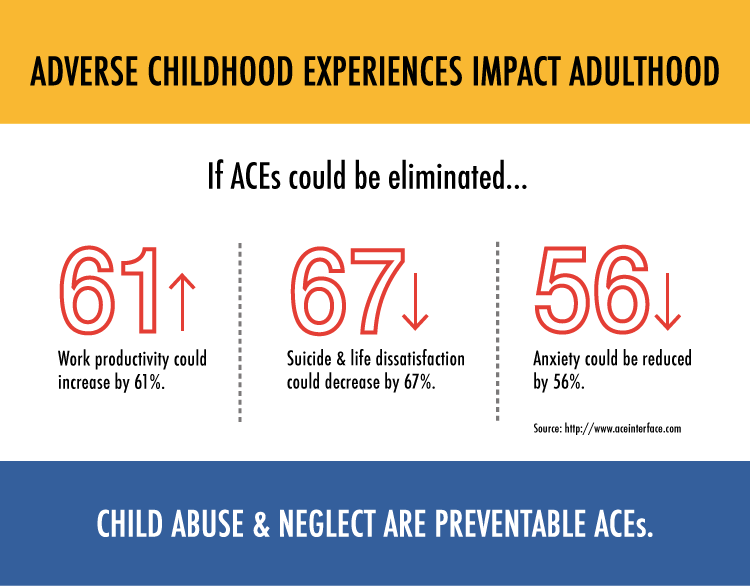
Factors such as divorce, domestic violence or having an incarcerated parent are called adverse childhood experiences (ACEs). Four or more ACEs can result in chronic health conditions such as heart disease or diabetes. In the long term, living with ACEs or other negative factors, such as poverty, can literally change your brain chemistry.

What does it look like for a young person to live with several ACEs and no supports ?  What does a foster parent experience when bringing a middle school or teenage foster youth into their home ?

It might be not being able to sleep without a light on. Or it could be eating even when one is full or not hungry. Some children become “runners” — they leave school whenever they become upset.

And the symptoms can become even worse.  The child may become a cutter; may be suicidal. Such children can have trouble forming appropriate friendships. Maybe they trash their room; in one fight-or-flight moment, climb out of their window and tumble to the ground. Even jump out of a moving car.

A foster parent could find themselves restraining the child physically by wrapping their arms around the child’s shoulders or waist, using all their strength to keep the child from leaving or hurting their self. Maybe you raised your hand only to motion toward something and the child flinched or even ducked.

And your heart breaks for this young person.  You had hoped they knew you would never hit them.  You are a foster parent.  You signed up for this because you thought you had something to give — time and care and love — to kids who desperately need that.

You might become the person the county calls when a child is removed from a home and has nowhere else to go, or when a foster family needs a break. This is known as emergency respite.

Most foster kids want to be happy.  After a lifetime of abuse and neglect, they may not know how.  A foster parent is also there to be a support for reunification with the biological family.

The best foster parents build a fortress of protective factors around their foster children. Protective factors are those things that most of us take for granted — a friend to call when we need advice; someone to help whenever we aren’t enough on our own.

Some of us are born privileged to have built-in protective factors (a supportive family, enough money).  Most foster kids will need to collect them from somewhere else (perhaps a chosen family made up of friends). At school, they require trauma-informed teachers and staff who understand how ACEs can be reflected in behavior.

National data shows that more than 20 percent of children up to age 17 have experienced two or more ACEs.  Beyond abuse (physical, emotional, sexual) and general neglect these include the loss of a parent to death, divorce and abandonment.  A family member addicted to drugs or alcohol.  A family member that is incarcerated. Being exposed to domestic violence and mental health issues among the family’s members.

Brain toxicity exists. A child can have post-traumatic stress disorder. ACEs are not limited to low-income neighborhoods, domestic violence and substance abuse take place in higher income homes and are every bit as toxic. Learn to look at all people through a trauma-informed lens. Ask, if you suspect this, “What happened to you?” and then listen without adding your own opinions.

Every domestic-violence shelter worker or child-care provider, anyone who works for child-protective services, anyone associated with family court, law enforcement personnel and physicians – ALL need to be trained appropriately to deal with trauma related behavior

Trauma is not the fault of any child.  Understanding ACE impacts allows adults to see the reason behind the behaviors.  Baby steps in a positive direction are progress.