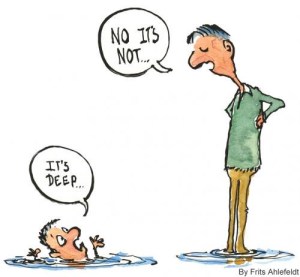
Always An Adoptee

Advice from an adoptee – If/when your adopted child says anything that you deem “negative” about their adoption, instead of just throwing around frequently used adoption phrases – please please please consider the long term affect of hearing some of these phrases

1. “Would you have rather stayed in the orphanage/on the streets, been aborted, would you rather have died?”

Yes, sometimes. Adoption is complex and complicated. Sometimes I wish I wasn’t here instead of enduring nights of sadness, depression, suicidal ideation, intrusive questions, all the unknowns, the mental health problems .. I will never stop being an adoptee. It affects EVERYTHING in my life

2. “God/We saved you from your biological family.”

Let us decide that. What was I saved from? I do not know. There are many things adoption has NOT protected me from. So please let me decide in what ways I was saved. It may shift and change. Also, please don’t say negative things about our biological families. Give us the FACTS that you know and allow us to decide where to place them in our hearts and lives. Y’all don’t get to decide if our biological families are good or bad. Many things I was told about my biological family ended up being racist, unkind, untrue, and problematic.

3. “You were chosen”

Maybe. Kinda. But often, not exactly. My adoptive parents chose me between 2 babies. I was laying beside another baby and they chose me. But if they had decided “no, she’s not for us” they would have found another baby – easily. Adoptees often feel like replacements. We know a lot of our parents wanted A BABY – not necessarily “us” specifically. We have to process that – please allow us the space and time to do so

4. “They loved you so much they decided to give you up.”

No. What about desperation? Survival? Poverty? Lack of resources? Addiction? Death? Would you give up your child because you loved them? I was not given up out of love but I was raised to believe so. It made me feel awful about myself and my biological sister (she was not “given up”). Does loving someone mean sending them away forever? Would my adoptive parents do the same because they loved me?

5. “Be grateful for what you have. Be grateful you are not dead/alone/orphaned/poor/etc. You are so lucky to have a loving, stable family.”

STOP telling us how to feel and what aspects of our lives to feel good about. Especially in response to something we have said, please don’t.

Please Imagine losing your mom at a young age and when you tell someone, they say “Wow but you should be so grateful that you still have…” or “You are so lucky that you have a family that loves you!”

How about “I am sorry for your losses and pain. How can I help without overstepping?”

There are days I would rather be dead than adopted. Days when I miss my biological family. Days that I want to return to a place I barely remember. Those are not the times to dismiss an adoptee’s feelings. Imagine how you’d feel hearing these responses.

Adoption Ad During the Super Bowl

Toyota featured the story of Jessica Long, 13 time Paralympic Gold Medalist. Born in Siberia and due to a rare condition, had to have her legs amputated, Jessica Long has inspired people with her story.

Toyota tells through a reenactment how her adoptive mother found out that she would need to have her legs amputated.

“Mrs. Long. We found a baby girl for your adoption,” says a woman on the phone with Long’s onscreen mother. “But there are some things you need to know. She’s in Siberia and she was born with a rare condition.”

“Her legs will need to be amputated,” the woman adds as the scenes play out floating in water while Long swims. “Her legs will need to be amputated. I know this is difficult to hear. Her life, it won’t be easy.”

The commercial then shifts to Long winning a race as her mother watches from the kitchen table.

“It might not be easy, but it’ll be amazing,” Long’s mom says. “I can’t wait to meet her.”

The commercial voiceover then adds, “We believe there is hope and strength in all of us.”

During an interview with People magazine back in 2016, the swimmer said – “Winning gold medals is incredible and obviously it’s what I want to do, but there’s something so special about having a little girl who has just lost her leg from cancer come up and tell me I’m her hero.”

Clearly, it is her physical disability that informs Jessica’s identity much more than the fact of her adoption.

“It took me years to realize that if I act ashamed and I try to hide them people kind of react the same way,” she added. “But if I wear my shorts or a cute summer dress and I show off my legs and I’m willing to talk about it, people are engaged and they want to know about my story.”

The renowned athlete was adopted by Americans from a Russian orphanage at 13 months old. At 18 months old, her legs were amputated below the knees. In total, she’s won 29 gold medals, 8 silver medals and 4 bronze ones.

As a blogger, the only question that I had was whether any pro-adoption group helped fund the commercial or suggested the idea to Toyota. Just a hint of cynicism but otherwise, I love the story of overcoming life’s realities with determination. However, there may be no connection with that kind of organization.

In 2013, Jessica Long traveled with her younger sister to meet her birth parents, who were teenagers when Long was born Tatiana Olegovna Kirillova. It was a three-day journey to her Russian adoption center and then an 18-hour train ride to what would have been her Siberian hometown. “Long Way Home” (the story of her journey) premiered on primetime during the 2014 Sochi Winter Olympics in Russia.

Jessica says this about her adoption – “When I first see my Russian family, I want them to know that I’m not angry with them, that I’m not upset that they gave me up for adoption,” Long said in the film, before a tearful, hug-filled reunion. “I think that was really brave, and I don’t know what I would have done if I was in her situation, at 16 and having this disabled baby that they knew that they couldn’t take care of. I want to tell her that when I see her that, if anything, I have so much love for her, my mom, because she gave me life.”

And I’ve learned a bit more of Jessica’s adoption back story – her teenaged parents were persuaded to give her up, with doctors telling the mother that she was “still young” and would be able “to give birth to a normal child.” This is disgusting. This is why so many kids end up in ‘orphanages’, not because they don’t have parents, but because of lack of support, ablism and/or poverty. And even sadder is this, her mother said, “Of course I was against leaving her in the hospital but because of the circumstances we had to do so. In my heart I did want to take her home, and thought I would take her back later.” This belief that their child will return to them someday is a common occurrence in international adoptions.

There is of course, some questionable motivation when a car company wanting to sell more cars uses these kinds of themes. For those closest to the situations, it is absolutely a triggering commercial – hit notes on adoption, orphans, and a special needs person. At the same time, it is a perfect little story wrapped in a bow, delectable, and very palatable for the masses who gobble it up. General society and adoptive parents as well as the hopeful adoptive parents always love a “poor little orphan finds a home” story.

There is also a hashtag, #ToyotaWeDisApprove, trending on Twitter.


Not Good Enough

Today’s story –

I am a adoptee. Here is the issue, My daughter just had my first granddaughter on Sunday and she is absolutely perfect. But the problem is this, I now am living in daily fear. Fear of the unknown, fear of something happening, fear my daughter won’t need me anymore, fear I won’t bond or connect with the baby. I feel like I’m going crazy . Like today she told me to come over and then a little while later she said I could go home.. not in a mean way.. just wanted time with the dad… well, I didn’t let it show in front of her but I literally got in the car and balled my eyes out and then had a panic attack, feeling like I wasn’t good enough, that I wouldn’t see her again, that she didn’t need me or want me around… I know all of that is completely crazy but my mind won’t let me accept that. Is this normal for adoptees?, is this even normal for non adoptees? What can I do to get through this??

The first comment was – I am donor-conceived and my mother is not, but her own parents were absent/abusive. My mother is like this but she doesn’t have the courage or self-awareness to say it out loud. You did great by not putting this on your daughter’s shoulders.

The next one was – I’m sorry for what you’re going through. I’m not an adoptee but I do have an adult daughter and sometimes it’s hard when it seems like they don’t need you. But they do and they reach out when they do. We raise them to be independent but it hurts when we did it too well. She’s definitely going to need you.

Here is the next one – I’m not an adoptee and I’m answering because you asked if it’s normal for non-adoptees. I have TOTALLY had these exact feelings with my oldest; however I’m from a trauma background and have zero relationship with my bio mother – I think it may be normal for anyone coming from a trauma background. What I did was just be honest with my daughter and told her that I’m sure it was from my background and that I didn’t want her to feel responsible for my feelings but I wanted to be sure it was me and not true – we talk a lot and have a fabulous relationship. I have these feelings SO MUCH LESS NOW because she reassured me I had nothing to worry about – she accepts my worries and I accept that she is a private person and just has me around less than I originally thought would happen – I hope that helps you. And congratulations grandma!

Then there was this – That’s a totally a trauma reaction. The level of emotional response is way out of balance with the request.. and you know it… which only makes you feel even crazier, right?

So I’m gonna say something major in you baby adoptee brain has been triggered by the birth (sooo normal! ) and you now have a wonderful opportunity to find that wound and heal it. And it sounds like very expected abandonment stuff.. not being worthy of what you now see in the mother-child bond. The baby in you is crying for that experience and mourning you didn’t have it. Let your baby self cry it out and at the same time, mother yourself and know that you are worthy and deserved what your grandchild has. An adoption competent trauma informed therapist can help!

Then she adds – I used to believe that I had done enough work that I was always going to be in control.. and then, I lost my mind one day in the middle of the SPCA over a kitten. Like I became this crying, hysterical, screaming Karen .. and that is not me! That’s the day I learned that no matter how much you think you have healed.. sometimes the weirdest thing worms it’s way in! And boom.. you’re a sniveling mess lying on the kitchen floor.

Yet another shares this – My mother spent several years in an orphanage as a child and she is like this—if I reschedule a coffee date or something like that she feels abandoned and devastated. It breaks my heart. I love her so much and never want to cause her pain. I know therapy has helped her some.

A second woman confirmed – It is a trauma based response. I experienced the same sort of thing when my daughter got pregnant with my grandson. I was terrified and an emotional wreck thinking I wouldn’t have a relationship with the baby when it was born. Everything triggered me and despite my daughter reassuring me she wanted me involved – internally I felt it would all dissolve because of course, as an adoptee how do we trust we will be loved, included, not rejected ? I now have a wonderful relationship with my grandson and he is the joy in my life. I still feel that fear sometimes but I have gotten more confident that we can get past the bumps and not every bump means the end a relationship and bond.

Another woman shared – I am not a adoptee, my biological dad left and my biological mom got me and my sisters out of foster care. (Just for back ground) I just had a baby 6 months ago and my mom felt the same way. She was raised by her grandparents because her parents didn’t want her and couldn’t provide for her or my uncle. I think it’s definitely a trauma based thing, but I can tell you from the other side, I would cry for my mom at night when things got hard. I never once thought I could do it without her but also telling her was hard. Your child needs you always, a baby doesn’t change that.

A woman who gave her baby up for adoption writes – I feel like that about my daughter and she’s 31. (Found her when she was 18.) I am in therapy and am working on it. I think the important thing to realize is that these are thought distortions. They are your mind’s way of protecting itself, but this time it went out of control…. Like emotional keloids.

An adoptee writes – This is trauma talking! Trauma lies. It’s the brain telling you your trauma will repeat itself. My therapist has me do several things to combat this. One is I talk back to myself, out loud, as if I’m defending young Andrea or sometimes a friend. It feels really silly but we’re so hard on ourselves, so defending a child or a friend is so much easier! Another activity is to write down all those worst case scenarios and plan them out. What would you actually do if it happened? Then it might not feel so realistic and you’ll feel some measure of being in-control again. Also, my brain demands proof that it’s lying or it won’t shut up.

Black Market Baby

Scene from movie Thief – Tuesday Weld with a black market baby

Last night we watched the movie Thief on dvd. It was the subplot that got my own attention. Readers of this blog won’t be surprised by that.

In the movie, Frank (played by James Caan) is wooing Jessie (played by Tuesday Weld) to accept him as he is – an ex-con who is currently a diamond thief. These are highly technical, difficult and dangerous scores. Jessie tells him she can’t have children and he says, no problem, we’ll adopt.

The couple goes to an adoption agency where Frank reveals he grew up in institutional care. The agency rejects the couple because of Frank’s criminal record. Frank is being groomed by a Chicago Outfit mob boss though he intends always to be an independent operator. The boss knows of the couple’s effort to adopt and tells Frank that he can procure for them whatever kind of baby they want, whatever gender and whatever color. Frank says he wants a boy.

There is a scene where Jessie walks up to a house and is greeted by a woman who hands her the baby boy. They decide to name him David after Frank’s close friend (played by Willie Nelson) who has just died after being released from prison for compassionate reasons related to his failing heart. Frank paid for the attorney who got the court order to release David.

Frank only wants to do one more score and then retire but the mob boss has no intention of letting him go. I won’t spoil the end of the movie for you. It is highly rated at Rotten Tomatoes though my teenage sons criticized it as being “too 80s”.

The notable damning statement by the mob boss is that the baby is only rented or on lease and that he still owns that baby. This is black market baby selling and there are no legal documents to confirm the child as being legally with these parents.

Thinking about this subplot of the movie today, I found an old Huffington Post op-ed by a woman titled “I Was Offered A Black Market Baby (and I’m Thankful For It)“.

The Story of Haitian Adoptions

God’s Littlest Angels, an orphanage in Pétionville, Haiti

Since the subject has come up, I thought I would look into this.  The January 12 2010 earthquake that devastated Haiti’s capitol set off an international adoption bonanza in which some safeguards meant to protect children were ignored.

The current Supreme Court nominee Amy Coney Barrett adopted John Peter, now age 13, was adopted by her in 2010 when he was 3 years old, after the devastating earthquake in Haiti.  Ibram X. Kendi tweeted, “Some White colonizers ‘adopted’ Black children. They ‘civilized’ these ‘savage’ children in the ‘superior’ ways of White people, while using them as props in their lifelong pictures of denial, while cutting the biological parents of these children out of the picture of humanity. And whether this is Barrett or not is not the point. It is a belief too many White people have: if they have or adopt a child of color, then they can’t be racist.”

John Lee Brougher from the NextGen America PAC tweeted, “As an adoptee, I need to know more about the circumstances of how Amy Coney Barrett came to adopt her children, and the treatment of them since. Transracial adoption is fraught with trauma and potential for harm.”  And I really hoped that Trump would have picked the judge from Florida that was on the short list for diversity reasons but I knew he didn’t care one whit about diversity.  He does care about the Evangelicals (many of whom promote international adoptions) and their desire for ultra-conservative judges.  From that perspective, of course Coney Barrett was a given and that has proven out.  A group of Evangelicals were reported in the Oval office the morning before the official announcement.

The Obama administration responded to BOTH the crisis and to the pleas of prospective adoptive parents and the lawmakers assisting them, by lifting visa requirements for children in the process of being adopted by Americans.

Although initially planned as a short-term, small-scale evacuation, the rescue effort quickly evolved into a baby lift unlike anything since the Vietnam War. It went on for months; fell briefly under the cloud of scandal involving 10 Baptist missionaries who improperly took custody of 33 children; ignited tensions between the United States and child protection organizations; and swept up about 1,150 Haitian children, more than were adopted by American families in the previous three years, according to interviews with government officials, adoption agencies and child advocacy groups.

Under humanitarian parole, adoptions were expedited regardless of whether children were in peril, and without the screening required to make sure they had not been improperly separated from their relatives or placed in homes that could not adequately care for them.

Some Haitian orphanages were nearly emptied, even though they had not been affected by the quake or licensed to handle adoptions. Children were released without legal documents showing they were orphans and without regard for evidence suggesting fraud. In at least one case, two siblings were evacuated even though American authorities had determined through DNA tests that the man who had given them to an orphanage was not a relative.

I’m sure there will be more about these circumstances in the coming days.  To inform yourself about the matter, you can read about the free for all Haitian adoptions after the 2010 earthquake in the New York Times – “After Haiti Quake, the Chaos of U.S. Adoptions“.

A Difference In Perspective

Within adoption reform communities, there is a deep commitment and ongoing effort to do adoptive relationships in a manner that is focused on the well-being of the adopted child, who through no choice of their own is not with the parents who conceived nor the mother who gave birth to them.

So, here’s the story of two conflicting perspectives on “doing it right”.

My husband and I live in West Africa with our 5 children. We recently adopted twin 4 year old girls in December. These children were being raised by their single Aunt who could not take care of them any longer since she was also raising 6 additional children (her own and also from other siblings), so she surrendered them to an orphanage because their mother had nothing to do with them since they were 1 year old. Unfortunately, this is a pretty common scenario here in West Africa.

We talk often about their “first mom,” allow the twins to miss her and express sadness, assure them they are loved and wanted. We keep in contact with their Aunt and have recently developed an online relationship with their mother. I send pictures and video to their family several times a week so they are able to know how the twins are doing. The twins have been able to talk with their aunt, cousins, and mother on two occasions. My husband and I had hoped to keep this relationship alive so the girls always had a connection to their African family.

Recently I received very harsh criticism from an adult Native American adoptee who was adopted into a privileged white family at birth. She has no connection with her biological family and claims she has never had any questions about them because “her parents did it right.” She insisted that the way we are referring to their mother as “first mom” and the ongoing connection we are attempting to foster will create an identity crisis and undermine my parental authority as their adoptive mother. We are a Christian missionary family (as is she) and she also told me that she believes our behavior and language will cause them to question God and fall away from their faith because of the uncertainty we’ll cause. In her opinion, we need to “squash” the connection with their mother and start referring to her as “the woman who gave birth to you” and to me as your “only mom.” She was also concerned that the girls have “romanticized” their memories of their mom, making her seem better than she was to them.

There is so much attention now being paid to issues of racial inequality and identity that I am not surprised that the first comment was somewhat harsh but here goes –

You are the definition of white saviorism. The very fact that you are missionaries in another country trying to recruit locals to your culture and belief system is white colonization. I find it disgusting and harmful. As to your adoption, it’s sad for all those involved, especially for the twins.

And the original woman’s response –

I teach at an American Christian school for North American children who have parents living abroad either as missionaries, humanitarian workers, or for business. We actually do not interact with locals in the manner you are assuming. But, let me educate you on what happens here in West Africa to children whose parents cannot take care of them…. the lucky ones are given to “schools” that use these children as slaves, abuse them, and force them to beg on the streets for money usually shoeless and hungry. Others are taken out to remote villages and left to starve or sold as human sacrifices or into human trafficking. The fact that you make such a bold statement without knowing anything about what happens here just shows your own ignorance and first world privilege.

The criticism was gently affirmed by another woman –

What was brought up is a valid point. I think your heart is in the right place, but you should always be mindful of how your actions have potentially negatively affected your adopted daughters’ natural family.

In adoption reform circles, financial and other resource support for natural families and keeping children within their birth culture (which means ending transracial adoption, which is not the same is a mixed race family birthing mixed race children, to be clear on this point) is the direction that reformers are seeking in an effort to end the need for removing children from the biological and genetic families.

And finally, an adoptee shares –

As an adoptee ALL I wanted my entire childhood was to know who and where I came from. Since I had no answers I would make up stories about how my first mom was a famous actress etc etc. I found out later in life that many adoptees made up elaborate stories about their bio families. It was literally torturous to not know. I feel now that SO much was straight out stolen from me as a child. And for what purpose???

Since I had no answers about my own parents’ origins, I “made up” stories.  My mom was half African-American – she was not.  My dad was half Mexican – he was not.  I would have preferred the reality and an opportunity to know those persons who I was genetically related to.  My parent died without ever having that opportunity.  Since I have recovered the knowledge of my genetic origins, I am thankful also to now know people I am actually related to by blood.  It has healed to wholeness something that was previously broken within me – without denying the grandparents, aunts, uncles and cousins I knew as a child due solely to the adoptions of my parents.

St Anne’s in Maryland

Some charitable organizations endure. When I saw this article, I thought of Porter-Leath in Memphis but the outcome for my grandmother (losing her infant, for which she was only seeking temporary care until she could get on her feet) was not so good.

St. Anne’s Center for Children, Youth and Families in Hyattsville Maryland has existed for 160 years. They were originally an orphanage and a maternity hospital.  The organization founded during a crisis has reinvented itself time and again since.  The same could be said for Porter Leath as well.

The organization was created in 1860 to serve women and children during the Civil War and it continued to do so through the 1918 flu pandemic, both World Wars, the Great Depression and now, a new pandemic.

Over the years, it has changed its name and purpose. It went from “asylum” to an “orphanage” to a “center” that now houses mothers and children, sometimes for years, if that’s what they need to successfully escape homelessness.

In recent times, they have seen incredible successes like they had not seen before in terms of families leaving them and going into permanent housing. It’s nothing short of incredible how these families are doing that.

When a single mother with a young child comes to St. Anne’s, she and her daughter are given a furnished apartment complete with a bookshelf filled with children’s books. They share a kitchen, laundry room and playground with other families, but otherwise have their own space.

One such mother said –

“I used to say, ‘I don’t want her to remember any of this stuff,’ ” she says of her daughter. “Now, I want her to see where we were, and how we are in a much more amazing place. I want her to see, ‘My mommy did it, my mommy figured it out, she took care of what we had to take care of.’ ”

When they move into their new house, she says, she wants her daughter to know that from these hard times, her mom created something better for them.

Marginalizing Adoptee Voices

This meme by a PRO-adoption group is meant to diminish the reality of adoptees by suggesting their lives could have been worse.  Maybe their lives could have been worse but that does not mean they have to be grateful for what they lost.

This is an apples to oranges comparison –  like saying the kid with the broken legs at the hospital can’t complain because the kid next door has cancer.  We can be grateful things aren’t worse for us but that does not mean we are grateful for the wounds we suffer either.

Its not a competition. They are two separate, traumatic situations. Comparing unlike situations does not serve either of them.

The person who originally posted this meme is an adoptive parent who is attempting to co-opt the adoptee experience by starting a propaganda campaign in support of adoption.  You would NOT believe how MANY adoption related groups are listed at Facebook.  This group Adoption & Samfund Ungdom is Danish (I am 25%).

Here is a blurb in English from their page –

“Finally a Facebook page on adoptees who are glad they are adopted. I am thankful to God for all the good things I have in my life, including simple things like food, clothes, shelter and good health and I teach my adoptive children to be thankful to God (NOT thankful to me) for these too. I am happy there are many adoptees who are quite normal unlike the crazy businessman Arun Dohle who makes huge money out of adoptees.”

I would wish to note here that Arun Dohle was adopted by a German couple from an Indian orphanage.  Like many adoptees, he started to search for his roots in his late teens. The Indian orphanage did not want to provide access to his file. Arun addressed his issue through the Indian Courts.  It took him 17 years to finally obtain access to the desired information.  It should NOT have to be so hard.

My own mom tried to get her adoption file from the state of Tennessee and was rejected in the early 1990s.  I finally received her full file in 2017 after her death (not that she had to die to get this – she was never informed that the law in Tennessee was changed in the late 1990s that would have allowed her to receive it – more the tragedy really).

I simply want to make this clear.  An adoptee can be grateful for their blessings and still have deep traumatic wounds from the realities of their adoption.  I seriously have a problem with making adoption about God, even though I have a deep spirituality that connects me to my own creator.


Follow The Money

How did the effort to find homes for orphans who no family would claim or street urchins who did a bit of mischief turn into an industry motivated by profits ?  Just follow the money.

In 1916, adoption was so uncommon, children were placed in “foster” homes where they were expected to “work” in return for their keep.

Before that, throughout history, babies were routinely murdered at birth by their parents. Infanticide was practiced and condoned even in ancient Greece, endorsed by Aristotle and Plato.

It is grim. Sickly, disabled or female infants were suffocated, drowned or dashed against rocks. More often unwanted children were “exposed”, abandoned in marketplaces or on hillsides. Most died of starvation, others were forced into slavery or maimed for exhibition.

When my oldest son was an infant, I became aware of this song as performed by Peter, Paul and Mary – it is grim.

Hush-a-bye, don’t you cry
Go to sleepy, little baby
When you wake you shall have
All the pretty little horses
Way down yonder in the meadow
Lies a poor little lambie
Bees and butterflies, picking out its eyes
Poor little thing’s crying, “Mami”
Hush-a-bye, don’t you cry
Go to sleepy, little baby

Poverty was so pervasive and contraceptive methods so ineffective that the killing of children continued. Infanticide was the most common crime in Western Europe between the Middle Ages and the 18th century.

The first orphanage in the US was established by Ursuline nuns in 1727 but such institutions were rare. People were reluctant to support homeless children financially.

When adoption became a profitable business, there was an improvement for many of the most unfortunate children.  Then, exploitation of women who would have rather raised their children became a profitable enterprise.  After that, corruption set in.

PTSD

Earl & Louise Little Family

My family recently watched Spike Lee’s Malcolm X.  Malcolm Little was born on May 19, 1925 in Omaha, Nebraska.  His mother, Louise Norton Little, was a homemaker occupied with the family’s eight children.

Malcolm’s father was murdered in 1929 in Lansing Michigan.  Her children were split up and sent to various foster homes and orphanages.  Louise suffered an emotional breakdown several years after the death of her husband and was committed to a mental institution.

In Spike Lee’s movie, it appears as though the children were taken away soon after the father’s death because as a homemaker, Louise had no ability to provide for them and that loss subsequently caused her breakdown.  The movie shows a social worker telling her she can’t properly care for her children after an insurance company rejects financial compensation for his death.

Such an outcome would not be surprising because it happens many times that separating a child from their mother leaves a trauma that is very similar to post traumatic stress syndrome. It is a disorder linked to a traumatic event – characterized by being hyper vigilant, having flashbacks, emotional numbness, avoidance of stimuli associated with the trauma, difficulty sleeping, concentrating, persistent anxiety, etc.

It certainly was a moment in that long movie that got my own attention.