Losing Mom to Domestic Femicide

Not my usual adoption related story but adoption does come in at the end. Definitely a “Missing Mom” story. It isn’t a blog I really feel good about writing and yet, I believe this cautionary tale is important. Andy Borowitz, who generally writes satire, brought my attention to this story his wife has been investigating – The Murderer’s Little Boy by Olivia Gentile. <– You can read the sad details at this link. As a woman (as I am sure is not unusual for many women), I have been afraid at times due to some response by my romantic partner or spouse (I’ve been married more than once). It is a dangerous world and very dangerous for women, who have been described as the “weaker” sex and not without reason. I grew up in Texas and I apologize for feeling at this point like I have to say – “because Texas”. The state seems to me today to hate women in general – to be very misogynistic.

Losing a mother to domestic femicide is “the most horrific trauma that children can experience,” said Peter Jaffe, the child psychologist. Afterward, they are vulnerable to post-traumatic stress disorder, depression, dissociation, attachment difficulties, behavioral problems, and many other issues. To heal, Jaffe said, they need a caregiver who engages with them appropriately and truthfully about the murder, helps them mourn and honor their mother, and enrolls them in long-term trauma therapy. 

This is very much like the trauma and behavioral impacts that a lot of adoptees suffer from.

Far more children whose fathers kill their mothers are placed with maternal than with paternal kin, research suggests, though exact numbers aren’t known. No laws specify which side of the family is preferable, but in all custody cases, judges are supposed to address the child’s “best interest.” Paternal relatives must be carefully screened, Jaffe said. Since abuse is often intergenerational, the family’s entire history should be reviewed. Furthermore, anyone who enabled the killer’s abuse, remains aligned with him, intends to keep him in the child’s life, or “tries to wipe out the maternal family in the same way the perpetrator wiped out the mother” is presumptively unfit.

His maternal grandmother was forced to file a lawsuit to get visitation rights from the paternal side. Filed on March 15, 2017, she argued that as R.’s grandmother, she had standing to seek custody because the child’s present circumstances could “significantly impair” his emotional development. Her suit failed but she appealed.

Finally, in April 2018, 15 months after she last saw R., a panel from the First Court of Appeals convened a hearing on the maternal grandmother’s pleas. In their questions, the three judges seemed to convey concern for the boy’s welfare. Wasn’t it potentially harmful for R. to be raised by a man whose son had confessed to killing his mother? Wasn’t it worrisome that his father could see R. whenever the grandfather allowed him to? 

The judges ordered the parties into mediation, specifying that the mediator be from Houston, not Galveston County where the paternal kin were prominent. The resulting agreement, signed in July 2018, affirmed the maternal grandmother’s standing to pursue custody and gave her two mornings a month with R. as the case continued. Yet the deal stipulated that the visits be supervised by the paternal grandfather or by someone he chose, and it barred the grandmother from discussing R.’s mother or half-brother with him or showing him their pictures. 

Fearing an acquittal due to complicating circumstances, prosecutors made a deal with the murderer. At trial, he would have faced up to 99 years in prison for murder. Under his plea agreement, signed on November 25, 2019, he received 30 years for murder and 20 for tampering, with the sentences running concurrently. He’ll be eligible for parole in 2033.

The custody trial was scheduled for April 2020. But in a new twist to this story, in March, the paternal grandfather obtained another delay: he wanted to adopt R. and had obtained his murderer son’s willingness to cede his own parental rights. The maternal grandmother asked the court to stop the adoption. Her luck now was that there is a new Judge Kerri Foley. She appointed an attorney, Genevieve McGarvey, as a neutral assistant in the adoption case. Later, Foley added McGarvey to the custody case, too. For the first time in four years, an official was tasked with helping the court advance R.’s best interest. 

At a hearing in September 2020, McGarvey testified that R. wasn’t in trauma therapy and needed it “desperately.” She added, “[H]e’s got to talk about his mother more.” And he appeared to miss his half-brother profoundly. “The first thing he ever says when I see him is, ‘How’s J.?’ ‘Do you know J.?’”

Foley halted the adoption case until after the custody trial. But the trial has been repeatedly delayed and won’t happen until this summer at the earliest. Tired of waiting, his maternal grandmother filed a motion on February 2 demanding temporary joint custody in the meantime. A hearing is scheduled for March 21.

Judge Foley recently granted the grandmother longer visits with R., and she’s now allowed to bring his half-brother. But she wants the standard access granted to Texans who don’t reside with their kids: two to three weekends per month, alternating holidays and school breaks, and 30 days in summer.

Understandably the grandmother wants to protect R. She wants to get him into trauma therapy, and she wants to participate in decisions about his medical care and education. Recently, he has bounced from school to school and struggled. She wants to talk freely with him about his mother, whom he remembers and misses. And she wants to terminate his father’s rights and bar him from contacting R.—either from prison or upon his release. 

Even if the grandmother prevails at trial, her struggle won’t be over, since joint custody could be meaningless if the paternal grandfather’s adoption goes through. The grandmother is determined to continue to fight for her grandson.  “R. has never wavered in his desire to see us or just surrendered to the horror of circumstances,” she said. If he won’t give up, how could she? 

Some organizations with links also mentioned in the article –

National Safe Parents Coalition who advocates for evidence-based policies which put child safety and risks at the forefront of child custody decisions.

Kayden’s Law – requires an evidentiary hearing during child custody proceedings to vet allegations—new or old—of abuse. Though ACLU opposed it but it has now been included in the Federal Violence Against Women Act Reauthorization Act which President Joe Biden signed on Wednesday, March 16, 2022.

Respond Against Violence providing “The Strangulation Supplement,” a tool for first responders and investigators to better guide them in investigations and to help capture cases involving strangulation that may have otherwise gone unnoticed. These tools are available upon request to law enforcement, forensic nurses, and EMS, as well as tools for pediatric cases and bathtub fatality cases.

Valentine’s Day for Adoptees

Searching for a topic for a day like this related to adoptees, I found this Huffington Post blog – Roses Are Red, Violets Are Blue, Adoptees’ Worst Fear Will Likely Come True – by Ben Acheson. The image I chose seemed to fit the sentiments of some adoptees that I have encountered. The subtitle of Ben’s essay notes – What if Valentine’s Day, or relationships in general, were a stark reminder of the most painful and distressing events that you ever experienced? What if they triggered a trauma so terrifically challenging that it forever altered your approach to life? Welcome to Valentine’s Day, and relationships, for adoptees.

Ultimately, Valentine’s Day is about relationships, or the lack thereof. It may evoke unpleasant memories of lost loves, but the nostalgia is normally forgotten by the time the flowers wither and the chocolates disappear. Or does it ?

Take a moment to balk at such a provocative, nonsensical claim; that saving a child through adoption could lead to a life of relationship problems. It is ungrateful and even accusatory to altruistic adopters. It is insulting to those battling depression, Post-Traumatic Stress Disorder and other psychological issues associated with adoption.

The development of intimate relationships can be a major challenge for adoptees. Their first and most important relationship was irreparably destroyed. The person supposed to love them most disappeared inexplicably. Then they were passed to strangers and expected to pretend that nothing happened.

The impact of that severed relationship is colossal. It permanently alters everything they were destined for. It alters how they attach to people. It causes bonding problems. It leaves them angry, sad and helpless. It interferes with emotional development and instils a persistent fear of abandonment within them.

This fear impacts future relationships. Many adoptees fear that what happened once might happen again. They fear that each new relationship, like the very first one, will not last. If their own mother abandoned them, then why won’t others?

It affects their ability to trust. Their trust in adults was shattered when they were most vulnerable. The idea that their mother loved them so deeply that she gave them away is a confusing paradox. Connection, intimacy and love are forever intertwined with rejection, loneliness and abandonment. Being unable to remember the traumatic events only compounds the problem.

Adoptees are sensitive to criticism and have difficulty expressing long-suppressed emotions. They have hair-triggers and lack impulse control, frequently overreacting to minor stresses. They can be manipulative, intimidating, combative and argumentative. Total absence of control over childhood decisions gives them an unrelenting need for control in adulthood. A counterphobic reaction of ‘reject before being rejected’ is a classic sign of stunted emotional development and unresolved trauma. That is not to say that adoptees do not want intimacy. They often want to ‘give everything’. They yearn for a close, trusting connection. They want to let someone ‘in’, but the openness and vulnerability is petrifying. Letting someone ‘in’ also opens the door to rejection.

Even if partners recognize that deep, sensitive wounds exist, they tire of walking on eggshells. The emotional rollercoaster is exhausting. They become sick of the ‘parent-role’ they often assume. Even if the adoptee matures and gains insight into their behavior, the damage may have been done. Partners may reach the breaking point and leave. But who is to say that failed relationships cannot be a blessing in disguise? For adoptees, the important lesson might be that you sometimes need to fail in order to truly succeed.

A Huge Disappointment

The author of this book has completed Day 1 of a 2 Day conference on trauma. His book had previously been recommended in my all things adoption (which includes foster care) group. It is impossible to accurately convey how disappointed those who view the first day’s live event are with this man’s perspectives. I just signed up for free as there is still Day 2 to go this day and then, there are supposed to be recordings, if one misses the live event. Here is the link – The Body Keeps Score.

From the registration site –

Dr Bessel van der Kolk presents his signature presentation on treating the imprints of trauma on the body, mind, and soul.

He claims – “I’m presenting this training to serve as both a guide and an invitation—an invitation to dedicate ourselves to facing the reality of trauma, to explore how best to treat it, and to commit ourselves, as a society, to using every means we have to prevent it.”

Dr van der Kolk shows you how to apply proven methods and approaches like neurofeedback, EMDR, meditation, yoga, mindfulness, and sensory integration in your clinical practice — so you can experience the satisfaction of helping even your toughest client heal from deep-rooted trauma.

Some comments from my all things adoption group after watching Day 1 –

There were some horrific comments about foster children being dangerous and difficult and burning houses down. Not as specific cases. Foster children in general.

Of the 8 or so hours, I can probably boil the helpful info down to about 3 sentences and none of them are new.

Assumptions that all adopters are very nice and that any problems with adoption trauma must be due to the first mom drinking during pregnancy. I’m exaggerating. But not by much.

He also said that combat veterans with PTSD don’t benefit from Prozac because they’re too invested in blaming PTSD for all their problems. He also claimed that Prozac always works for everyone who isn’t a combat veteran.

Therapists are victims and powerless, that DSM is “a piece of sh*t”.

He also thinks everyone should take tango lessons and that it would solve their trauma better than therapy.

I hope people only ever access his works thru pirating and only to laugh at him and that his empire crumbles under his feet.

Let me guess he said adoption trauma isn’t real lol Most people think that children when adopted are clean slates, and our minds and bodies can just start over but that’s not even true, even for babies.

He spent AGES showing a video and talking about how traumatic it was for a non adopted child to be away from his mom for a day or two while younger sibling was being born. But oh gosh if it’s adoption, then adopters are very nice people and are absolute saints for putting up with difficult adopted children.

A lot of people are just uneducated and adoption trauma doesn’t exist to a lot of the world.

He also made a comment that assumed all foster children are correctly and justly taken from their families because they’ve all been abused by their first families.

A questioner asked should I skip reading the book ? The answer was – the book itself is great. Just not the adoption aspect, but overall.. worth a read!

His bigotry made me unwilling to financially support his business.

As an adoptee my response to him is: how f***ing dare you assume all adoptees are difficult and dangerous and all adopters are saintly and amazing for putting up with us ? How dare you, you overprivileged white man, one who feels entitled to say that colonizing wasn’t that bad and China is a miserable place to be ?

He is drunk on his own power and has no capacity for critically thinking through his bigoted views.

I have read the book. The book is not all about adoption, in fact, if I was describing the book I wouldn’t even discuss that part. It is about the bodies physiological, neurological and biological response is trauma. It is a very important way of understanding regarding why people respond they way they do. It’s been a while since I read it but I’m sure there are some generalized and probably offensive statements for adoptees but overall it’s extremely helpful in understanding how trauma effects all the multiple systems of the body.

I was told flat out by a Guardian ad Litem that my children needing glasses was due to my drug use during pregnancy. Never mind the fact that I’ve never had a drug problem, never failed a drug test and was drug tested during, before and after my pregnancy… Couldn’t be that every member of mine and my husband’s family needs glasses and sometimes children just have vision problems. It must be drug use (meant sarcastically).

Keep in mind that over 50% of psychological research cannot be replicated. (Over 50% actually according to a top scientific journal – Nature magazine.) While therapists can be beneficial, there are a lot of quacks who present as authorities in the field. Some of the most well-known people in the field can be the most problematic such that their work cannot be replicated, but they ride the coat tails of their notoriety and most people don’t know how to keep them accountable.

Just a note, that 50% number is not quite accurate and most of the psychology quacks aren’t the ones actually doing research. There have been a lot of critiques of that article since, including the kinds of studies they chose to try to replicate and the conditions under which they claimed replication failed. I’m not saying it isn’t a problem, but that article almost certainly overstated it.

I’m a PhD in psychology. We have a giant problem with public communication of our science.

Someone suggested the book – The Deepest Well: Healing the Long-Term Effects of Childhood Adversity by Nadine Burke Harris MD. From a review at NIH website – Hans Selye, a Hungarian-born physician, developed the concept of the General Adaptation Syndrome as the first neurohormonal model of physiologic stress implicating pituitary and adrenal function in the etiology of many chronic diseases, and the associated sickly appearance of those suffering. claimed the physiologic life is fundamentally a process of adaptation to the totality of one’s experience, with real health and happiness being the successful adjustment or adaptation to those ever-changing conditions. Failure to adapt to the stress burden resulted in disease and unhappiness. In 1985, Vincent Felitti, MD, Chief of Preventive Medicine at Southern California Permanente Medical Group, San Diego, added mightily to Selye’s work with his findings of the profound, destructive, multi-organ system consequences of adverse childhood experiences. Nadine Burke Harris, MD, discovered Felitti’s pioneering work later, yet immediately understood the potential power of its lessons if implemented in her pediatric practice. She describes well her newfound understanding of the pathogenesis of ACEs (adverse childhood experiences) and the excitement of potential, effective therapeutic interventions. The Deepest Well is the story of how Burke Harris transformed herself into a champion persuader of truths difficult for others to hear, and a better clinician.

Bessel van der Kolk was booted by The Trauma Center (which he helped establish) because of his issues. The Boston Globe from March 7 2018 – Allegations of employee mistreatment roil renowned Brookline trauma center.

This doesn’t surprise me in the slightest (I’ve met Bessel before and my old boss worked under him at the Boston Trauma Center when he was in charge… he went down with Me Too NOT because he’s a sexual predator, but because he’s such an a**hole that he got more or less ousted from the PTSD community). It’s really a shame because his work is SO important and good and foundational in the complex PTSD world but he’s such a horrible person it overshadows it a lot of the time. I didn’t realize his what views were re: adoption etc, but I did know his insane levels of narcissism and his general tendency to bully.

Another one says, I met him at an International Society for Traumatic Stress Studies conference as well, in 2012 or 2013, I remember him being rude, though I had no idea he had any specific views about adoption in particular.

I’m so very disappointed to hear this. I read his book and it was so very eye opening for me. His work seems so foundational to the study of the affect of trauma on people. It is so very disappointing and even more frustrating.

Developmental Trauma Disorder In An Adoptee

“All diagnoses are wrong, but some are useful.” George Box

The kinds of complex issues that adoptees face can be difficult to treat. A 2013 study found that fewer than 25% of adoptive parents who sought mental health services felt that their mental health professional was adoption-competent. The symptoms and issues that adopted children experience are typically not taught in most graduate school mental health programs. Adding to the challenges faced by adoptive families, insurance companies will not cover what is really going on with these children and their families because it is not correctly conceptualized, coded, and diagnosed.

Some common diagnoses used with adopted children include Pervasive Developmental Disorders, Oppositional Defiant Disorder, Conduct Disorder, Reactive Attachment Disorder, Affective Disorders, Anxiety Disorders, Attention-Deficit Hyperactivity Disorder, Post-Traumatic Stress Disorder, and Borderline Personality Disorder. Each of these may characterize certain symptoms that these children demonstrate, but none of them systemically addresses the developmental aspect of trauma that most (if not all) adopted children experience. None take into account the sad possibility of being traumatized by birth or foster-parents. “There is no diagnosis for children that more than partially addresses the symptoms associated with these impairments in self-regulation” according to Julian Ford, PhD, who is a psychologist with the University of Connecticut.

“Developmental Trauma Disorder” or DTD includes symptoms that differentiate it from Post-Traumatic Stress Disorder PTSD more commonly associated with the “Battle-Fatigue” symptoms of WWI. Children are often traumatized in the context of relationships. Because children’s brains are still developing, this trauma has a much more pervasive and long-range influence on their self-concept, on their sense of the world, and on their ability to regulate themselves.

There are four diagnostic areas involved in DTD – [1] Exposure [2] Triggered pattern of repeated dysregulation in response to trauma cues [3] Persistently Altered Attributions and Expectancies and [4] Functional Impairment. Those who’s work has been focused on adopted children who have suffered various forms of Complex Trauma will recognize the manifestation of these. The American Psychiatric Association failed to include this in the Diagnostic and Statistical Manual of Mental Disorders – Fifth Edition (also known as the DSM-V).

The problem with this oversight is that after experiencing chronic trauma, the current standard of clinical practice often reveals no diagnosis, inaccurate diagnosis or inadequate diagnosis…all of which leads to misguided or complete lack of treatment plans. Further, because there is almost always considerable dysregulation of body (sensory and motor), affect (explosive/irritable or frozen/restricted), cognition (altered perceptions of beliefs, auditory and sensory-perceptual flashbacks and dissociation) and behavior (multiple forms of regression), the diagnoses of bipolar, oppositional defiant disorder/conduct disorder, attention deficit hyperactivity disorder (ADHD) or other anxiety disorders are made. Many of these disorders are co-morbid with developmental trauma disorder, as they tend to cluster in these complex families. But the importance is that the developmental trauma disorder would be primary and thus guide the treatment plan…and further, refine the inclusion (or not) of other co-morbid disorders.

Today’s blog was informed by an article Could My Adopted Teen Have Developmental Trauma Disorder? by Dr Norm Thibault, LMFT

Becoming Whole

This is what it is like to relinquish a child and then one day find them again and realize you are coming full circle and putting your pieces back together to become whole again. One birth mother’s story for today.

Summer 2018:

While working with my husband (repo agent) doing research on debtors, I stumble across a Facebook profile pic that makes my heart stop. After years of searching with very limited info, I finally saw a picture of the man my son grew to become. (He happened to be FB friends with a debtor we were looking for). My own eyes were staring back at me.

I chew nervously for days on what to do. Do I reach out? What if he doesn’t want to meet me? My heart is racing almost non-stop, and I’m functioning barely in a constant state of fight or flight.

I bite the bullet and send a message. Crickets for a few days, and then a very guarded/nervous response. I back off because I can’t even imagine what he’s thinking/feeling. And then, I receive a friend request.

I can see his life in posts, pics, and a piece of who he is. It’s such a gift…one I had long ago conceded I’d never receive. We tread carefully back and forth on social media for some time. I immediately put myself into intensive therapy to deal with the unresolved trauma and PTSD issues I had ignored forever. I search for and join multiple groups both for support and adoptee perspective. I, for the first time in my life, focus on self-improvement instead of self-destruction.

February 2019:

We meet face to face for the first time in a neutral location. He hugs me, and I’m shaking externally from all the emotions I’m feeling. I’m trying to absorb everything because I’m so scared this is going to be it. I have gifts for him in the car (a hand written letter, framed pic of me holding him as a newborn, and a watch engraved with

Always loved… Never forgotten…

I wait until our lunch is over and ask if he’d be ok with a couple of gifts. He readily accepts them, and we part ways. I’m terrified that I’ve done too much, but only 30 mins later I receive a message thanking me for everything. He goes on to say that the picture and letter would have been more than enough, but absolutely loves the watch.

Today:

I honestly could write a book on our journey so far. There are so many things that have occurred that aren’t included in this small recap – but I’ll save that for another day.

This is what I want to share –

Less than 2 years after reuniting, he joined us on our annual family vacation. He left his car at my house and endured a 10 hour drive with myself, hubby, his half brother and our dog.

He loves hiking and the outdoors!!! I’ve spent many family vacations dragging my husband and other 2 kiddos hiking only to hear complaints. This year, I had an Ally!!! I listened for hours to my husband and him talk cars, my youngest son and him talk video games, and my daughter and him talk science and politics.

I don’t ever want to forget these moments.

My son asked me during our first meeting…”Does your husband know about me?”… My response was “Of course! I told him about you only 2 weeks after meeting him. I hoped I would find you one day, and I could only be with someone who could accept and support that.”

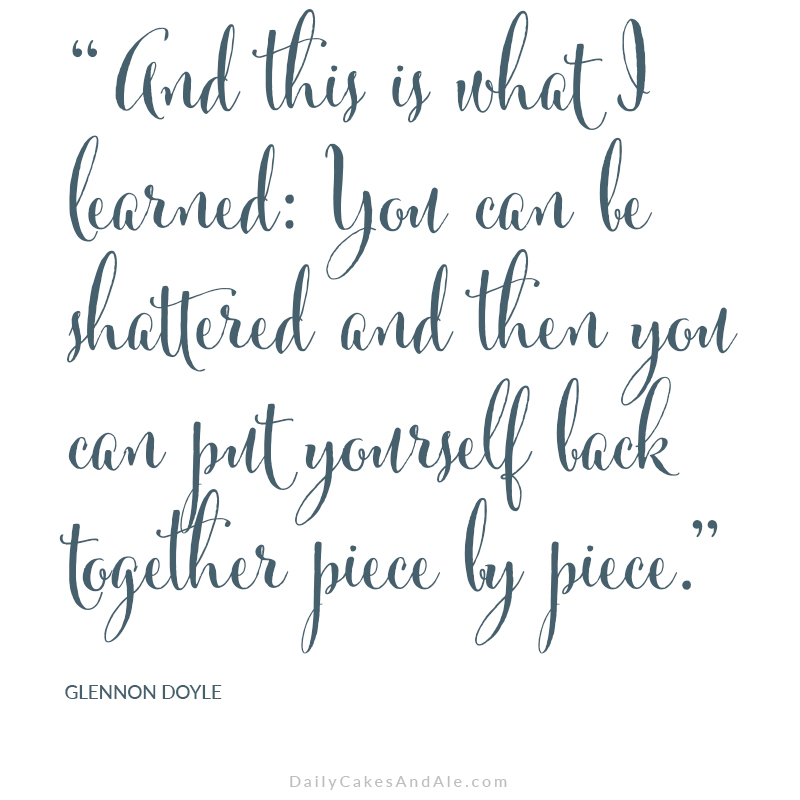
My husband has done more than just support me….he’s accepted my son, included him and embraced him. I’m still a broken woman, but my pieces are coming together. And my family is finally whole.

What is C-PTSD ?

Most of us have heard of PTSD but until this morning, I didn’t know there was a more severe version called Complex-PTSD.

Most people who have looked at adoption very closely already know that trauma is an aspect of having been surrendered to adoption for most adoptees.  I’ve become so steeped in it that I can recognize effects now in statements made by an adoptee that to them a vague issues they still don’t know the source of.  This lack of awareness occurs most often in teenagers and young adults.  Most mature adoptees have worked through many of these and may have had some counseling or therapy to help them uncover the underlying emotions and possible sources of these.

Complex PTSD, however, is specific to severe, repetitive trauma that typically happens in childhood – most often abuse.  On the surface, both PTSD and C-PTSD both come as the result of something deeply traumatic, they cause flashbacks, nightmares and insomnia, and they can make people live in fear even when they are safe.

The very heart of C-PTSD – what causes it, how it manifests internally, the lifelong effects (including medically), and its ability to reshape a person’s entire outlook on life – is what makes it considerably different.

PTSD typically results from “short-lived trauma”, or traumas of time-limited duration. Complex PTSD stems from chronic, long-term exposure to trauma in which a victim has limited belief it will ever end or cannot foresee a time that it might. This can include: child abuse, long-term domestic violence, being held in captivity, living in crisis conditions/a war zone, child exploitation, human trafficking, and more.

The causal factors are not all that separates PTSD from C-PTSD. How their symptoms manifest can tell you even more. PTSD is weighted heaviest in the post-traumatic symptoms: nightmares, flashbacks, hyperarousal/startle response, paranoia, bursts of emotion, etc.

C-PTSD includes all the symptoms of PTSD as well as a change in self-concept. How one sees themselves, their perpetrator, their morals and values, their faith in others or a god. This can overhaul a survivor’s entire world view as they try to make sense of their trauma and still maintain a belief that they, and the world around them, could still be good or safe.

When an adult experiences a traumatic event, they have more tools to understand what is happening to them, their place as a victim of that trauma, and know they should seek support even if they don’t want to. Children don’t possess most of these skills, or even the ability to separate themselves from another’s unconscionable actions. The psychological and developmental implications of that become complexly woven and spun into who that child believes themselves to be — creating a messy web of core beliefs much harder to untangle than the flashbacks, nightmares and other post-traumatic symptoms that come later.

The effects are usually deeply interpersonal within that child’s caregiving system. Separate from both the traumatic events and the perpetrator, there is often an added component of neglect, hot-and-cold affections from a primary caregiver, or outright invalidation of the trauma, if a child does try to speak up. These disorganized attachments and mixed messages from those who are supposed to provide love, comfort and safety – all in the periphery of extreme trauma – can create unique struggles.

Credit for this blog and for the beginning of my education in this new concept goes to Beauty After Bruises.

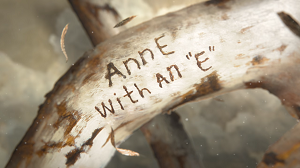
Anne with an E

I’m only vaguely familiar with Anne of Green Gables.  Anne has been a bona fide cultural icon for over a century, ever since Canadian author L M Montgomery first debuted her in 1908.  Anne was orphaned as a baby and in care until age 12 when she is adopted. She experienced a lot of abuse during her time in care.

We don’t have commercial TV or streaming in our home – while we do have internet the limited allowance and expense when adding onto that prohibit our streaming anything beyond a few youtubes and that costs us a lot as it is.

However, I was reading about this version in the all things adoption group I belong to and I became intrigued.  The woman who brought this to my attention describes it as – “a very dark portrayal, with depiction of trauma, flashbacks, so many feelings of abandonment, as well as the difficulties her adoptive parents have in relating to her.”  That was enough to get me looking into it.

Another woman said –  “The first season is the darkest with the flashbacks. As it goes on, it’s not as dark but continues to deal with a lot of other feelings that people not raised by biological family go through.  I honestly loved this series. I felt it was a more honest portrayal of children who were in foster care and adopted than I have seen in a long time.  This show helped my children discuss the hardships that adopted people or abused/traumatized people deal with.”

Another woman said – “The other depictions we saw didn’t seem to focus so much on the trauma. We listened to the book as we drove up to Prince Edward Island and there’s definite evidence of her struggles in there, but this series took it to another level and made it real and made the connections very visible of past trauma, fear of abandonment, and the inner world she creates to get away from it all.”

Vanity Fair had a review of this series.  They note that in the first episode Anne with an E graphically depicts, via chilly flashbacks, the years of abuse Anne sustained before she came to live with the Cuthberts.  While Anne likely did suffer some torment during her tenure with the Hammond family, Anne with an E ramps up the trauma by having Mr Hammond die of a heart attack brought about by beating the tar out of poor Anne.

This version retains some of Anne’s eccentricities—a fierce imagination and intricate fantasy life, as well as a fondness for high-flown language.  This is an Anne with PTSD.  Anne of Green Gables endures as a cozy story that reveals the resiliency of the human spirit through small-scale, domestic victories and setbacks, as well as the mundane, everyday tragedies of human life.

In episode 4, the town’s minister takes misogyny to its historic depiction because Anne doesn’t want to go back to the school where she has continued to suffer abuse.  He tells her adoptive mother – “This problem is easily solved.  If the girl doesn’t want to go to school, she shouldn’t go. She should stay home and learn proper housekeeping until she marries. And then the Lord God said, ‘It is not good for man to be alone I shall make a helper for him.’ There’s no need for her to bother with an education. Every young woman should learn how to be a good wife.”

The Vanity Fair review complains that “Anne with an E seems to think Anne’s triumphs are only noteworthy if she’s continually told she can’t succeed, when in fact her unfettered brilliance needs no such clumsy opposition.”  Judge for yourself.  Don’t know if I’ll ever watch this but maybe if it comes out on dvd.  Clearly, it spoke to the wounded hearts of the people in the adoption group I belong to.


Emotional Detachment in Surrenders

It is completely understandable to me that when a woman in the midst of pregnancy has already decided to surrender her baby to adoption, that she would also choose to wall off her heart from the child growing in her womb.  Here is one such story . . .

It took me almost 10 years to come out of the fog. The biggest reason is that I had emotionally detached from the situation even during pregnancy.

Last year I had a complete mental breakdown because I suddenly started having flashbacks from being raped at 6 years old and I didn’t even know it happened until I began reliving it. This sudden onset of PTSD was a catalyst for turning my emotions back on and finally feeling grief about the adoption. I’d forgotten most of the events of my life, and the things I remembered were pretty numb.

I’m insanely lucky to have chosen adoptive parents who have actually kept the adoption open. With all of these personal changes, I’ve been trying to open myself up to my first daughter and actually connect with her.

A lot of people suppress their trauma. The hurt from adoption cuts both ways – mother and child. Unless you have no emotions, and it is the emotional pain of separation that causes detachment, you could not let a child you brought into this world be raised by someone else without suffering from guilt, shame or self-blame.

Here is another story –

I gave birth 2 weeks ago. And I had made an adoption plan, with a good friend. Baby is currently with her and I have 2 more weeks to change my mind. But when I had the baby I felt no emotional attachment to her. I didn’t feel like she was mine. I haven’t had any regrets yet. She is with an amazing family that I know without a doubt I will have contact with for her entire life.

She asks other women who have experienced this if they later had regrets.

One replied –  I felt the same way when my daughter was born. Like when the doctor gave her to me, I thought, “why are you handing me her baby?”

Another response was this –  It’s emotional numbing/detachment. It’s a trauma response to try and protect yourself from the pain of losing her forever. It will catch up to you, HARD, and it can cause a lifetime of trauma for you if it’s not dealt with quickly. Your daughter only wants you, and being given up will traumatize her for life. I beg you to reconsider. And this suggestion – try parenting her, with no contact with the hopeful adoptive parents for the next two weeks.

And there is this very sad story – I had some severe anger issues and no support which would have made it dangerous for him to stay with me. I begged my mom to adopt him until I was older but she refused. In my case, the adoptive parents weren’t total strangers, they were long time friends of the family. It’s my truth though, and I hate that that whole part of my life ever happened. I hate that I was convinced not to get an abortion. I hate who I was and everyone that had abandoned me back then. And if my son hates me too, then I deserve it.

Bottom line – You don’t just give your child away and not regret it.  It may take years or decades. Emotional detachment often catches up to you with the painful truth.