Preventing Foster Care Placement

Jill Chaifetz (b 1964-d 2006) Children’s Rights Advocate

I stumbled on this today – Jill Chaifetz once remarked, “The American foster care system has developed a remarkable immunity to reform.” In 1992, Chaifetz founded the Legal Services Center at The Door, a New York youth development agency. Through the center, she provided legal advice to young people, including many who were in foster care or homeless.

I had hoped to find information on reforming the nation’s child welfare system into one that equitably supports children and families in their communities as a means to prevent foster care placements. Such perspectives are hard to come by. The pro-adoption narratives are strong and pervasive.

The scientific evidence is conclusive. Parent-child separations lead to a host of long-term psychological, social, and health problems that are not necessarily resolved upon reunification. In particular, the disruption of biological stress regulation mechanisms in the body are further taxed by the absence of parental support. The science is clear: policies that separate families have devastating and long-term developmental consequences for children and their families.

The Annie E Casey Foundation has a series of three 60 minute episodes at this LINK>The Unlearning of Child Welfare: Webinar Series Explores How to Rebuild the Child Welfare System. Creating a Child and Family Well-Being System. The third video explores – What Can An Equitable Foster Care Experience Look Like Going Forward ?

Changing A Child’s Name

I don’t belong to that group. Some in my all things adoption group which includes foster parents, adoptive parents and former foster care youths had some (actually a LOT) thoughts but I’ll just share a few.

One adoptive parent said simply – she is not a dog!!! (blogger’s note – we have a bunny that we got at the state fair many years ago – we were told his name is Walnut – and we had not desire to change it.) One woman noted – In fact, I never changed my cat’s name when I adopted her from an animal shelter. The one who shared the image wrote – A child is not an animal, you can’t change their name to suit YOUR wants. This is NOT design a child. It’s one thing if the child is older and it’s THEIR decision, but we’re talking about a toddler here.

Another person noted – “fostering to adopt” because it’s the cheaper way to buy a kid! FFS! To which another added – it shouldn’t be allowed as it’s a conflict of interest. Wonder how many reunifications have been derailed by the fosters that want to keep specific children?! Someone else noted financial reasons – it’s income from the state till the child reaches 18, in some cases, 21! Another added experience – I know of a couple reunifications that didn’t happen after the fosters decided they wanted to adopt. These were parents actively working towards reunification; and if they couldn’t be returned to the parents, there were other family members willing to take them. It is so messed up that in some cases the fosters have more rights than the parents or family. I know that one of the fosters turned out to have ties with the Guardian Ad Litem’s brother. Coincidence? Doubtful.

One mother of loss tells her sad story – My kids’ fosters actively stood in the way of reunification, and played on the fact that (when they moved for TPR – Termination of Parental Rights) I was in a state of upheaval, and had no place of my own, no job, and no family to rely on. It didn’t matter that I was clean, following all recommendations, willing to do therapy with the kids, and actively looking for work. They verbally promised visitation, if I would sign the papers. And then, the judge in our TPR hearing gave me 30 days to decide whether I would sign voluntarily or fight. I was told in open court that if I didn’t sign, he would terminate anyway and I would have no shot at visitation (I later found out that the judge was KNOWN for being biased against natural mothers in recovery). So I signed, thinking at least I’d have something, just for them to say they didn’t feel it was in the kids best interests to have me in their lives. I was never informed by my lawyer that I could appeal. Someone I knew told me, after the appeal time had expired. It’s absolutely insane what the state can get away with. I wasn’t even allowed to explain to my kids what happened and say goodbye. I haven’t spoken to or seen them since 2017. It shattered my heart and not a day goes by that I don’t see them in my mind.

Readjustment Time

Early this year my now 5 month old was removed from my home and put into the care of my mother by social services. We have since made major adjustments, done millions of assessments and classes and all things are looking positive for reunification come October time.

We are now looking into ways the ease the readjustment and reunification process, we have a photo of us hanging above her bed at my mum’s house that they say good morning and good night to every day, we have a photo book of photos with us with our daughter that my mum “reads” to her, we are rotating through plushies, blankets and toys that have our smell on them for her, we visit multiple days a week, we do skin to skin, we nap together, she visits us at our home often, we do snuggles after bath time, we never do any firsts (swimming, weaning, etc) without us present, we are looking into ways to keep consistency like staying with my parents regularly still when she’s back in our care and using the same childcare provider and professionals, and we spend days out together.

We are looking for more ways we can make the adjustment period easier and more natural for her, does anyone have any ideas?

No I will not go into any details about why she was taken from our care. It’s been stressful for all of us, and we have done everything we need to and more to make positive changes, so we can look after her in a more positive way. Social workers are very happy with us and everything is looking very positive for our family.

Now for readjustment.

What Is Stopping You ?

A natural mother who had two children placed for adoption, asks these questions of adoptive parents – have you actually done the work to work to reunify your child with their biological family and relinquish *your* rights to them ? Have you asked their birth family, if they are now in a place to have their children returned, if they wanted their child back ? For those of you who have open adoption, support visits, talk about how the biological families are doing well and raising other children since placing… What is stopping you from working to repair that family ? Adoption is trauma (even when the child is adopted from birth). So what is stopping you from releasing your hold on that child, and putting them back with their biological family members, if they are in a better place or more able now to raise their child ?

Response by an adoptee – The person who matters the most in this situation is now the child. Both adults have made the choice to adopt and “give up”. If the kids want to be with their REAL family, they should be allowed to do as they please. And each case is so very different. But if the child doesn’t want to be with the natural mother because they are used to the family they are living with, then I think the child gets to make that decision as well. This SHOULD be the child(ren)’s choice to make and no one’s else’s. They are the most affected by it. And this is what both the adopted parents and biological parents should consider – when adopting or giving up for adoption.

An adoptive parent shares – the youngest child in our house is 8; we are guardians. Recently, his mother’s situation has improved. She has said on more than one occasion “I could not handle him” (he has fetal alcohol spectrum disorders – and it creates stress responses and impulse control considerations that are really hard). We listened to that – and know there is more going on for her than just the behaviors – there is grief of her loss(es), there is guilt for the fetal alcohol exposure and other history. He is at a developmental stage where he is processing the loss in his history – and at this moment in time, doesn’t want contact with her. But that is just now, and he is just 8 and it could change. We hold all the needs of all involved loosely, and center him. It’s hard and complex. I appreciate very much your perspective to center him. That can get lost in “adult” conversation.

The one who asked the questions clarifies – have any adoptive parents ASKED the child if they would want to go back to their biological parents or families… Not just hand them over with no communication. I see adoptive parents all the time saying how they know adoption is wrong… But I wonder about those with infants and toddler- if they’ve even tried to see about positively reunifying the family… or older children who have contact, have they asked that question. I think it all looks good on “paper” to say adoption is wrong… but I’m more so curious if there are any wo have actually done the work or made an effort to reverse the situation.

Another adoptee shares her perspective – what is the child’s choice ? What do they want ? Being adopted from birth, if I was randomly given back to my birth family – it’d be adding trauma to trauma. I’d be losing my parents, my siblings, aunts, uncles, cousins etc AGAIN but this time, they are the only ones I’ve ever known and to once again go and live with strangers ? This shouldn’t be about what’s owed to the birth parents or the adoptive parents but the child’s choice. Being re-abandoned after abandonment doesn’t feel like the healthiest option, once adoption is already done. Maybe it’d be different if I weren’t adopted from birth. I can’t speak for those who were adopted at an older age. I’d say having a truly open adoption would be helpful in this situation and if the child ever decides to go no contact with either party or wants to live with the other, that should be allowed. The ball should be in the adoptee’s court.

Another adoptee admitted – This post rubbed me the wrong way because it centers the desires of the biological family and not the actual child. I would not have wanted to be “given back” and would have been murderously angry at any and all adults in my life, if they tried to facilitate this without my input (and my input would have been: absolutely not) once I was old enough to know what was going on. Adoption itself is trauma but the trauma can never be undone, even with reunification. (Of course if the child is actively asking to go back to their biological family, that’s a different story.)

One shares a personal story – My eldest sister escaped the system because her dad took her. Myself and our two other youngest sisters were adopted with me from foster care. I was 12 at that time. My sister got her eldest two half siblings back post adoption after their adopted mom passed away. Her husband was not able to parent alone. Two of the teens had trauma from loss already, then added loss. It was not something anyone prepared him for. My oldest niece suffers from borderline personality disorder (imo from the broken attachments and abandonment issues). No legal ties were changed. They are adults now, but the third who actually went to their school has no contact because her adopters won’t allow it. Unbelievable, the kids got in trouble at school for conversing ! That is Insane !

Sometimes Reunification Fails

Today, I read this from a foster parent – the foster children in our home are almost 3, 4.5, and 6.5. They’ve been with us almost 2 years, a decision to terminate parental rights was made yesterday. The Div of Children and Families (DCF) wants to tell the 6 year old alone, and the other two together at a different time. We’ve fought so hard for reunification and establishing other kin relationships, unfortunately with no success. There will still be contact with mom but DCF has refused an in-person goodbye visit.

In looking for an image to illustrate today’s blog, I found this WordPress LINK>Reunification is Meant to Fail by Yvonne Mason Sewell. She shares an article – A Critical Look at the Child Welfare System Reunification Plans by Kevin Norell, who is a foster care caseworker.

He explains what is required of parents who want their children returned home. They have to find a job and housing. Parents are ordered into therapy, parenting classes, perhaps drug rehabilitation, and they have to find time to visit with their children. “Even an organized parent might have trouble with all that. And many of these parents are anything but organized,” Norell says.

The intent behind court ordered reunification plans may be admirable, but the reality appears to be that many plans are designed for failure, according to the 1991-1992 San Diego Grand Jury: Testimony was received regarding the hours of time which must be spent in order to comply with these plans. Defense attorneys have testified that they have told clients that it is impossible for them to work and comply with reunification. Judges and referees were observed, seemingly without thought, ordering parents into programs which require more than 40 hours per week. Frequently, these parents have only public transportation. Obviously, there is no time to earn a living or otherwise live a life. A parent often becomes a slave to the reunification plan.

From what I have read, it is not uncommon for the Department of Health and Human Resources to change the plan goal. For example, one father, through sheer determination, managed to comply with the provisions of the performance agreement. But was HRS satisfied with the result? No, HRS filed a motion for change of goal, and requested that the father’s rights regarding the child be terminated because he had failed to benefit from services in a reasonable length of time. The lower court terminated the father’s parental rights. The determined father appealed to the District Court of Appeal who reversed the decision of the lower court, holding that HRS had not met its burden of proof. The case was remanded for further proceedings. By this time, the child had been in foster care for three years.

There is more at the link if you are sincerely interested but clearly parents are not being supported in what is arguably the most important issue in their lives.

Let Her Lead

Not the teenage girl in today’s story.

From an adoptee (not myself) – I’m currently the foster parent of a teen girl. Recently she brought up the prospect of my husband and I adopting her.

Right now her biological mother is wanting to retain custody, but my foster is adamantly opposed to this.

Foster has been in the system for several years, and we are the first family she has done really well with. My husband and I definitely want to adopt her, if reunification can’t happen, but I’m concerned about the longer term fallout if we proceed.

We will not interfere with reunification at all, we also will not lie and say she wants to go back to her mother if she is telling us (and therapists) otherwise. After years in the system she just now found her voice to speak her mind and not feel guilty.

I’ve been in contact with the mother and send her regular pictures and updates, and even if we adopt her, I’ll continue to do so.

I guess I’m looking for some guidance? My own background: I was adopted through kinship at 16 after I was sold to a random family in another state. Thankfully, my grandparents found out and intervened.

One adoptee wisely noted – She cannot give fully informed consent to adoption until she’s an adult. She’s in trauma brain/survival mode. She likely wants the security of what she *thinks* adoption will bring, not actual adoption.

Another shared –  I was in similar shoes as a foster kid. My biological mom was horribly abusive and addicted. I was placed back and forth for 11 years. By the time they started seriously considering a Termination of Parental Rights, I was so ready to just be done with it and adopted. She was NOT going to get it together – we tried multiple times and failed and each time was traumatic for ME – and I always felt the system was more concerned about HER feelings than my own. I was happy and healthy where I was. I don’t know what the age is, but I feel there should be an age where the child’s say is considered pretty significantly considered for their own permanency plan.

Damn-It Missouri

Today’s story (and as usual – not mine) –

I had court today and I was told by the judge that she can’t safely reunify me with my four children because I allegedly have a history of having multiple boyfriends/toxic relationships. I’ve been in a relationship with two men in 5 years. She said the case has been opened for 14 months and time is running out. My lawyer told me after court I can pick adoption or guardianship for two of my children (with a new foster family who are strangers with either choice). There is no guarantee they will be together. My oldest son will go to his dad’s house. My baby is 4 months old and I can still work towards reunification, since I’m not at my year mark yet.

I got granted weekend overnights on May 2nd and 3 hours later they showed up, after a guy I was briefly seeing reported it. They removed my newborn for allegedly allowing a man to live with me and my newborn for 2 months. I didn’t have anyone living with me, other then my newborn. I had 4 people verify that – my parents, my baby sitter, and my service provider. The court moved me back to supervised visits.

I’m desperately trying to get my kids out of foster care. I was adopted as a child and it was extremely hard. I can’t fathom it for my children. I don’t know what to do. I’m not on drugs, never have been. I’ve been a homeowner for 4 years. I’ve worked in healthcare for 4 years. I own my own car. My kids have everything they need. I just don’t understand what’s going on with this case.

When asked, she confirmed she is in Christain County, Missouri, 25 min south of Springfield. Her attorney is paid by the state and goes along with whatever the Juvenile Officer says. One former Missouri caseworker suggested she “contact the Office of Child Advocate about how your case is being managed, specifically mentioning the change in visitation.” However, she had already done that and her request for a review was denied. The Children’s Division made her wait 39 days before she could see her newborn and 44 days before she could see her other 3 kids, as well as the court moving her back to supervised visits.

The caseworker noted –  if they are giving you the option to consent to guardianship that typically means they don’t have a solid case for Termination of Parental Rights (TPR). So even though you are almost at the 15 month mark, they probably won’t formally change the plan quite yet. There aren’t any long-term consequences in not consenting to guardianship, like there are with TPR when it comes to their ability to remove any future children you might have. However, after 6 months of guardianship the placement providers can file for adoption, so keep that in mind. Guardianship is also reversible, meaning you can petition the court to have it dissolved at any point, after it is granted. I would hope that your caseworker would explain all of this to you, but just wanted you to know, in case they don’t.

LINK>Current Missouri Foster Care Statistics

From the LINK>Missouri Independent – More than half the frontline staff working in the Children’s Division at the start of the last fiscal year left by the end of the year. Children’s Division Director Darrell Missey said the system has long trended toward the “reactive” over “proactive,” and is “driven by our fear of what might happen later, [which] results in a lot of kids in foster care.” 

Other general (not specifically Missouri related) details – Child welfare professionals remove children from their parents more than 250,000 times per year. Across the country, removal decisions are based on inconsistent standards and practice — often applied disproportionately — and result in trauma for children and families. While separating children from their parents should be an intervention of last resort in child welfare practice, there is little guidance about how to prevent removal, mitigate trauma, and connect families to more appropriate supports when needed.

The current process for deciding when to remove a child is flawed and inconsistent, which causes harm and prevents families from getting the support they actually need. Revisiting the standards for removal is critical. Only public officials with training in both the legal standards for removal and how to mitigate trauma should remove children, and only when all other interventions have been exhausted.

When The Name Is Changed

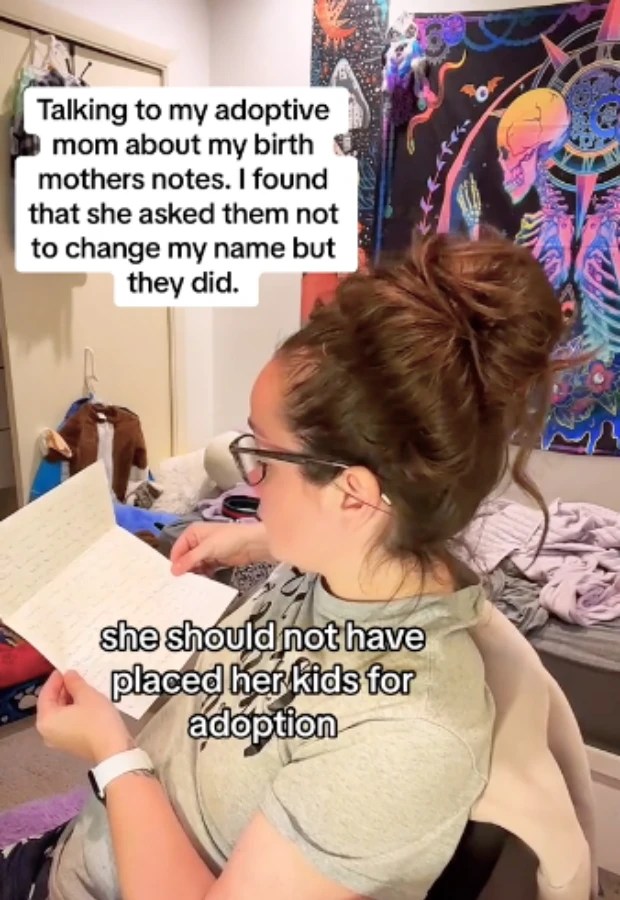
The image above comes from an essay at YourTango LINK>Woman Confronts Adoptive Mother. Thirty-six years after being adopted, the woman discovered that her birth mom had made a request to not change the name she was given at birth. The adoptive mother explained that in their religion, they name children after the people in their family they care about. The adoptive mother further stated that if her birth mom did not want her daughter’s name to be changed, she should not have placed her child up for adoption. 

An adoptee asked those who are mothers of loss (surrendered a child to adoption) in my all things adoption group – If you know about your children and what became of them, do you think of that child by the name you gave them, or the name the adoptive parents gave them ?

One of those mothers of loss shared her experiences – I am my son’s natural mother but we always had an open adoption relationship and his adoptive parents got together with me before he was born to plan his names (ie they wanted me to choose what I would name him and they were going to keep one of those names as a middle name with the name they had already planned).

I have always called him by the name they chose (except while he and I were in the hospital together and I didn’t really use a name. We just cried together a lot).

My 23 yr old niece who was adopted into my family found her mom and brother in recent years after no contact throughout her life (my brother and sister-in-law closed the adoption very early) and at that first meeting, her mother and brother struggled to call her by her current name. They asked her preference and I think hoped she would prefer her original name.

Of course, none of this can tell you how your first mother thinks but based on my and my niece’s experiences I might guess that moms who have been able to stay in regular contact probably adjust to the new name easier than moms who lose their baby and don’t see them again until adulthood. It makes sense to me that they might be more likely to think of their child by the name they originally chose.

An adoptive parent shared – I didn’t change her first name after adoption. She recently found her biological mom and extended family at age 15. They all still referred to her as that original birth name. It has made reunification and their current relationship so much better than if she had another name. I have no doubt they think and talk about you as your natural birth name. I also advocate now that no one change a kid’s name.

One adoptee shared – my mom called my brother Luke. The adoptive parents changed it to Luis (he was over a year old when they adopted him). I don’t agree with them regarding their changing it. My mom still calls him Luke – her own long time habit of thinking of him as that name.

It’s Hard To Feel Different

In looking for an image, I discovered this child’s book about feeling different by Doris Sanford published in 1986. The summary says – “A young boy is portrayed as he sorts out the hurt of ‘being different’ . . . at school. The boy knows he is not like other children . . . He finds true friendship with a little lamb, Fluffy. Fluffy ‘speaks’ truths to the boy about his specialness and how he is loved in spite of his differences. Ages 5 and up.”

From an adoptive parent today – We have an open adoption, more so with our son’s father and less so with his mother. Our son is 8 and has says every few months that he wishes he wasn’t adopted. He has known his birth story since birth. We visit his father’s family twice a year and he loves seeing his half sister. I’ve been struggling with the right supportive language to help him with those hard moments. I tell him that it must be hard to feel different. He says things like I’m the only adopted kid at my school.

One adoptee notes – if a person said almost every month that they were sad their mother died, would that be something to pathologize? If a person said they wished their mother never died, would you try to stop them from saying it? Losing one’s entire family, ancestors and all IS sad. As the perpetrator of the separation from his family, your comfort will ring hollow.

Someone asks – When he says he wishes he wasn’t adopted, is he saying he wants to be with his natural parents?

A mature adoptee notes – Wish I had an answer for you but sadly do not. Being the only adoptee etc. A feeling that has stayed with me my entire life and I am 72 yrs old. Not to say all times were bad but this being on the outside looking in, is always in the background.

Another adoptee asks – If his father can raise his half sister, why is he not raising him? Why is he separated from his family? I ask, because I was in the same boat. There’s nothing my adoptive family could have said and there’s not enough therapy that could have made things easier for me. He is well within his right to be angry.

One shares some personal experience – I’m an adoptee and I have fostered a child.. anyway… I always think … if kids see their parent … raising another child, it would really make them feel bad – like “why don’t they love me ?” … the child I fostered has a 1/2 brother who mostly lives his dad. The mother fought her ass off to get her daughter back from me, which is great. But has not put in the effort to get him back and he follows her on social media and is allowed to come when his dad feels like it … I just always wonder how he must feel.

An adoptee asks – Have you asked him – what part of being adopted exactly is making him sad ? Are you giving him the freedom to truly express himself or are you saying placating words like “I know, it’s hard to be different”, which actually closes down open discussion ? Is he seeing a therapist ? If not get him in to one!

From a late discovery adoptee – “it must be hard to be different” rings so hollow! I couldn’t stand it when adults said fake crap like that to me. I’d always see right through it, even as a small child!

Which caused another adoptee to write –  For me, it rings hollow because it reinforces that I AM different, and at least for me, carries the implication that “different” is less than and not as good. It doesn’t just validate my feelings, it tells me that my feelings are facts.

Another late discovery adoptee acknowledges – The past cannot be undone, but perhaps acknowledging to him that you accept that the way things happened and the way you and his natural family did things were not the best they could have been, will be a good start. Is working towards shared custody or reunification something he wants or even a possibility ?

One adoptee can relate – That’s a tough age to deal with being adopted. I had huge feelings that I couldn’t put into words and I was also the only adopted kid with my peers, as my adopted sister refused to talk about it. The kids would tease me and ask the craziest questions that make you feel so alone (ie: do your AP’s make you clean all the time? Do you call them mom and dad? Why didn’t your real mom like you enough to keep you? Was there something wrong with you when you were born?). Having another adoptee as a friend or therapist helps us to feel normal and understood. You’re seeking the right words but there are none. You are already helping him in all the ways you can – by keeping the adoption open, being supportive and his safe place. Please keep trying to find another adoptee therapist, support group, or friend. You benefited from the adoption, while he lost everything, so you aren’t able to fully understand and comfort him.

One adoptee who was adopted as an infant says – I’m 41 and HATE BEING ADOPTED. Does that ever go away?? I don’t think it does. I’m not sure there’s much you can do about his very valid feelings in the matter.

One adoptive parent made a point that was on my own mind – Can you increase the amount of visits with his sister and dad ? Twice a year isn’t a lot of time to really form that bond. Even with distance, there might be other ways to improve the contact.

One kinship adoptee suggested –  always validate his feelings, don’t internalize them & make it about you because it’s not. It’s his life that was uprooted.

One mature adoptee tells the truth – I’m 57 and still wish I wasn’t adopted. There were/are no words anyone (especially my adoptive parents) can say that will change that, ever. It also has nothing to do with feeling “different”. One of the worst things my adoptive mother did was pretend she knew how I felt, which was impossible since not only was she not adopted, but she gained from my adoption. It’s very hard for someone to come off as a sincere support when they gained from my loss.

Yet another mature adoptee – It *is* hard to feel different and to not understand why you can’t be with your biological family. I hated being adopted, I’m 40 now and *finally* coming to terms with the damage it caused me. My adoptive family doesn’t speak to me. Haven’t heard from them in over 4 years. They didn’t adopt me for life, just for when it was convenient for them. Those feelings of hurt never completely go away. Then, OMG, comes this – There’s more horror to my story, the abandonment came after I attempted suicide and they used the system to steal my oldest child from me. I feel like I was exploited to fill their void yet again and my daughter is suffering because of it. That spiraled me hard into addiction and homelessness but by the grace of God, I am still alive and coming back to living for the first time in my life. It’s a lot to unpack! My adopter was looking for the excuse to abandon me for a long time, since she flat out told me I was the worst mistake she ever made and she wished she never adopted me. We are disposable to them. It’s painful to say the least.

Trans and Adopted

I will admit that I don’t have a solution other than the “acceptance” in my image as I have not had to respond to an issue of this kind so far in my lifetime. I do know someone who did a great job of handling this with grace that I deeply admire. Today’s story from an adoptive mother (not my own story) –

What do you do when a kid’s mom is transphobic, and that kid wants a relationship with their mom more than anything? Mom refuses to talk on the phone but will usually respond to Facebook messages, which aren’t frequent at child’s choice. Child wants more contact but also knows mom doesn’t accept her and it’s a constant balancing act I think.

Mom’s Facebook got hacked and I had to locate her new one. She had unfriended me (but would still message) – so, I felt conflicted about finding her because I wasn’t sure she wanted to be found. Child wanted to send her a Mother’s Day message. It was the first time we had reached out since she got a new Facebook.

Mom responded (it’s been at least a year since the last contact) and says thank you and she loves and misses her but she will never accept her as a girl and she will always be her son.

I’m ashamed to admit I went off. I could not believe this was what she had to say after so long without contact and I know daughter is going to be gutted. She’s been asking all day, if her mom responded and I can’t face her right now. I apologized to her mom and said I don’t want to fight, that we envisioned a life of lots of visits and summers spent with her and daughter is so upset mom refuses to talk to her and is going to be completely devastated when I read her the message.

The bottom line is that mom should never have lost her daughter, and when I found mom and heard her story (post adoption, agency said they couldn’t locate mom and I read something about names being spelled wrong on birth certificates which allowed me to finally find mom) I was all for working towards reunification. But that’s never even be on the table because of the transphobia.

I find myself continually wanting to convince mom she’s being ridiculous (transphobia is so far from our reality in our progressive bubble that I literally cannot wrap my head around it, we didn’t even blink when daughter came out), but I also know she’s a victim of this situation.

Questions – How do I tell daughter her mom’s response? (She has an adoption competent therapist who is also LGTBQ+ competent). How do I help daughter balance this? I want to support her relationship with mom and I’m also so angry at mom for letting this come between her and the child that was taken from her.

An adoptee responds – I have to question whether information is missing here.

“I’m ashamed to admit I went off.” — what does this mean? It is a balancing act when you are dealing with prejudiced people but actions that cause tension between the child and its natural parent(s) do not happen in a vacuum. When the original poster doesn’t voluntarily own up to how they went off in the post, I also have to question other details. Why did the birth mother unfriend the adoptive mother on Facebook? What is this adopter saying about the child’s first mother ?

“[She] is going to be completely devastated when I read her the message.” The adoptee asks – Is the adoptive mother going to read the message(s) she sent berating the original mother ? Let’s be honest, I doubt it. Also, why even read the message in the first place ? The message is a response to a conflict with the adoptive mother, not a rejection letter addressed to the adopted person.

It is unfair to the child that their original is prejudiced against trans people. It is just as, if not more, unfair to the child that the adoptive mother seems to be self-victimizing, rather than self reflecting. “Poor me, I got unfriended on Facebook ! I don’t know how I’m going to tell this child how awful her birth mother is ! I envisioned a life of lots of visits !”

This kid’s transition seems to have came as a surprise to her first mother. The fact that she is upset about a gender transition taking place COULD be coming from a a place of prejudice. (It probably is, at least to some extent.) It also COULD be coming from a place of being blindsided. One day her kid is gone, the next day her kid is a different person. The adopters “don’t even blink” when this transition happens, probably because in some ways they see it coming. Now her kid is gone and on top of that appears to be a completely different person. Why should she be expected to adjust to such a massive change so quickly? In her eyes, she lost a little boy and will never get him back now — even if she comes to accept the child’s gender identity. Maybe this kid is the first trans person her first mother has ever known and it just takes time for her to accept the child’s identity.

I am not saying any of this to rationalize or justify transphobia. I am saying that the adoptive mother needs to look at this situation contextually. To understand the first mother is a human, living in different circumstances and engaging in different social circles. To get someone to see the “progressive” side of an issue, the answer is not to berate them for not understanding things the way you do. Maybe you have been exposed to different people and ideas that her first mother hasn’t been exposed to as quickly, if at all. Maybe her first mother would’ve been more accepting of her child’s transition had the child been with her all along. Maybe not. In either case, this adoptive mother should be probably be in therapy herself, if she are not already. There is much more to this issue, I believe, than they’re willing to admit to themselves. At the very least, this is not strictly a transphobia issue.

I think it is an awful idea for this adopted person and her original mother to continue communicating through an intermediary. This has clearly rubbed her mother the wrong way, fair or unfair. Her original mother probably would not be communicating the way she’s presently communicating (even if the transphobia remains) when communicating directly with the adopted person. A hostile message sent to an intermediary in the midst of conflict is not a letter of rejection addressed to the adopted person. This adopted person deserves the ability to speak directly with her original mother and get it straight from her. Even if she receives a direct, bigoted rejection, that would bring resolution in the long run, even if it caused more short-term pain. When you get a “rejection” through intermediaries (and I put this in quotes because again, the original mother’s message was sent to the adoptive mother, not the child), there are always questions of whether the rejector would say these things to your face. Whether details are embellished to villainize or paint people in a better light. Clarity is only achieved through direct communication.