At Best, Unconditional is BS

From a Late Discovery Adoptee (didn’t know they were adopted until late in life) –

Was cleaning out my garage and have made a pile of adoptive family stuff to heave out of my life. Found a letter my adoptive parents’ daughter that she included when sending me the stuff that I told her I do not want. She has never taken any responsibility for her part in deceiving me. She has never attempted to learn anything about the trauma of either adoption or betrayal. Instead she insists she has always loved me unconditionally.

Please.

I see this word used so frequently by adopters and their family members when talking to or about adopted people in the home.

I see how so many of us absolutely hate this language. Hate. It. It’s triggering and often lazy and often used, perhaps unconsciously, to dismiss the feelings and experiences the adopted person is trying to share. The adopter people are feeling uncomfortable, so they whip out unconditional.

I feel like it needs to be added to the list of things to never say to an adopted person. Instead, maybe if the adopters are uncomfortable or feel they need to reassure the adopted person, they could really listen and validate the persons feelings and ask them What can I do to help? What would me reassuring you sound and feel like? How can I help support you? What could I change about our interactions?

I know it’s not just me who thinks unconditional is, at best, bs. Thoughts? Ideas?

An adoptive parent asks – What language would you prefer ?  It’s a never win situation for some of us who loved so much, we chose to be there for a stranger’s child as well as our own. Clearly some just choose to be angry at us in lieu of the one that abandoned them. It was a simple question in response to words she didn’t want to hear. I was curious. But clearly some truly don’t want a resolution but choose instead to stew in unnecessary hate. 

She replied – it’s not just an issue of language. It’s the intent and the impact as well. Think about this – if I was chosen, that implies that I met some expectation or that they had hopes that I would meet some expectation. Choosing me meant others were not chosen, right ? So then, I fail to live up to any or all of those expectations by say, expressing myself in a way that makes them uneasy. They then “reassure” me that they love me unconditionally. They don’t acknowledge or validate my feelings or apologize or seek to understand. They just try to wave it all away with the Unconditional wand. It’s like shorthand for we don’t care. Or at least, we don’t care enough to actually hold space for you in an authentic way. Just be mollified and move on. I’d much rather be told, yeah, we are disappointed that you don’t feel loved. Or yes, we hoped you would be happy but since you are not, what can we do to be here for you ? Or even, yep, we don’t particularly like you. At least that’s honest.

Another person who was fostered from birth then into a forced adopt at age 10 shares – I was abused by my foster “carer” to adoptress who never really loved me, but I was a good tool to help them have their “miracle bio-children”, once I was in their home. Unconditional Love is a misnomer – it’s easy & lazy to use the phrase, especially when that love is absolutely A1 Conditional. I’m sure as an adopter you now get to own a child that has another history outside of you and your family’s. It is not the same way that my mother was simply and will always be my mother – she was the only one who ever showed me unconditional love – not selfless love, but love without any strings… until she was not permitted to ever see me again or speak with me again. Those were the conditions that a Closed Adoption and a selfish, self-centered adopter and adoption agency made sure would stick for the rest of my life.

Another adoptee noted – Acknowledging their role in my trauma would have been nice.

Lastly from another adoptee – Unconditional love doesn’t exist. Everyone must meet certain conditions for it. But in your case, I think “unconditional” is being directed at you. Because their love for you was conditioned on you not knowing about being adopted. And now that you do know, you’re supposed to act like it never happened ? Definitely appalling disrespect toward you and a betrayal. In general, I find it to be a silencing and manipulation tactic and the opposite of them doing the work of connecting to us, where we are. I never wanted reassurance I was loved. I wanted it shown and it never was.

Giving Your Child Away

An adoptee asks – I wonder if it would make a difference if instead of ‘giving up for adoption’, it was changed to ‘giving your child away’? One person noted – “A pig wearing lipstick is still a pig.”

A mother of loss writes – The language is controlled by those who have the power, ie the adoption industry… That’s why everything is a euphemism and double speak. Of course, if it was called “giving your child away to strangers and causing them trauma” – we would never be able to be convinced it was the best for them.

Another adoptee writes – I was not “given up for adoption”…. I was “abandoned.” Nobody would’ve cared to find out what happened to me. In response, someone else writes – “There’s active trauma and inactive trauma. At before the active trauma of adoptee occurs, there’s the inactive trauma of abandonment.. I was removed as a teen and it makes me wonder if I had told earlier then I might have a different label. I’m not a former foster care youth or an adoptee because the system never found me a new home. ‘Abandoned and at risk for homelessness’ [I was homeless]. I tell myself it’s a blessing in disguise, but I feel abandoned twice – by both my mother and again by the system.”

Another mother of loss due to coercion writes – I think depending on the way it is said is what allows people to understand circumstances… I could say “my child was stolen/taken” that relates to coercion/manipulation or kidnapping that CPS (Child Protective Services/Div of Child and Family Services) likes to partake in (which is what happened to me, I was coerced). I could say “I gave my child up for adoption” that relates to willingly having my child adopted for whatever reason. I could say “my child was adopted” that could mean anything. like neglect, CPS involvement, kinship adoption, regular private adoption, foster to adopt situation without CPS involvement, anything…

A former foster care youth shares – I don’t know for sure if it would. I always said I was thrown away because my parents willingly signed me over when I was 14. Whenever I approach them about what they put me through, they brush me off and avoid the subject. I think a lot of people knew exactly what they were doing, and just didn’t care. Even so, there are circumstances where it’s an understandable decision, don’t get me wrong.

One person notes – In most jurisdiction, “abandonment” of a child is a crime. Relinquishment procedures legalize this crime. It would change a lot if we do away with the relinquishment process.

One adoptee writes – I always tell people I was sold and then people get all hurt about it. It’s really not far off…. my aunt offered to take me in, my biological mom agreed but then, ran off. Next thing my aunt heard is I was adopted and my biological mom got a lot out of it.

Another mother of loss shares – I tell people “I was not allowed to parent my child and lost her to adoption”.

A birth mother admits – Every situation is so different. I think the phrases that are used aren’t accurately interchangeable. In my case, I feel the phrase “sacrificed motherhood” is most accurate. However I know other first/birth mothers that “giving up” is more accurate. I’m positive that some would fall under that category… “giving your child away” would be most appropriate. In my experience with connecting with mothers like myself, I find that the most predominant issues that lead to adoption is fear, low self esteem, religious intolerance (groomed from religious indoctrination that is adoptive agency predatory), outright manipulation, and early childhood abuse that leads to the adoption paradigm.

One adoptee shares – I was not given up for adoption. I was taken by my grandmother against my mother’s will and given away to punish her for getting pregnant at 14. Oh, and she made her birth me vaginally without medication for the same reason. And my brother (trans-racial South Korean adoptee) was straight up fucking kidnapped and sold across the world by his pos biological dad. He found his birth mother 3 years ago through a 30 year old missing child poster. Another person replied to that – “I wouldn’t even call myself an adoptee. I would say human trafficking survivor, because that is insane… reminds me of another person I know who had something illegal and similar happen to them.”

One adoptee suggested the sentence – “Letting your child be raised by strangers”. Yet another adoptee writes – I tell people I was sold to the highest bidder. Essentially how it feels. I spent years being told that I was rescued from a life of poverty, and I should have been grateful. As an adult, I realized I was raised by a person who had more money but didn’t love me. My birth parents had a modest living and lots of love for me.

A first mom notes –  I did not give my son away – he was taken from me without my consent!

To which another first mom (NM) really gets into it all – we don’t “give” our children away freely. Our child is also not a “gift”. “Give up” is another way of saying “surrender”. Surrender is the final, hopeless act of “the defeated enemy” who has been relentlessly attacked during warfare. “The defeated enemy” surrenders by raising a white flag to beg for mercy, to signal their hopeless defeat with dejected humiliation and a hung head. Make no mistake: birth mothers are treated as the enemy. They are told in no uncertain terms that they are “the enemy” to their own child and that strangers will be “better” for the child. Single moms, especially BIPOC moms are policed by foster care and society in a truly heartless and relentless way. Infant adoption agency “social workers” are paid handsomely to covertly wage war on a vulnerable mom. They present themselves as compassionate help, while secretly and tactically convincing her to “freely relinquish” her rights. Maybe change the language to “Adoptive Parents” (AP) pay people to “shake down” and “intimidate” vulnerable, young, poor women in crisis, and they “extort” a baby from her in exchange for its “protection”. Agencies have tactical manuals that have been developed over years of trial and error and are filled with marketing language that helps them wage this war. The primary objective of an agency is separation and destruction of the first family— for their own financial gain. They are mercenaries, paid by adoptive parents. Sometimes these agents believe their own lies— they see the birth mom as a dangerous enemy to her own child, and they imagine themselves as a savior to that child. Usually, APs never see how their dollars fuel this attack, this warfare, on the first family. They just thank the lord that somehow “fate” delivers them an “abandoned baby” who was “destined” to be theirs. And no one addresses the hallow, rubble of a mess left after the NM holds her baby in the air and says “Stop – Please for the sake of the baby – please make them safe.” Once a mother is stripped of her child, there is literally nothing left in her life. I left the hospital and felt like a bag full of crushed glass. Every step I took, I felt like people could surely hear the noise of broken shards shaking around inside of me. I was shattered, and hallow, and utterly alone in the rubble of my defeat. I did give up. I didn’t fight hard enough. I was alone in the aftermath; but many many many people walked alongside me to bully me into that outcome. I say it over and over and over again: it takes a village to raise a child… but it also takes an entire village to separate a mother from her child. Judges, lawyers, doctors, nurses, my own family, my friends all contributed to the final outcome: my surrender. Are there moms who literally abandon their children? Yes. But they are a rare exception. Most birth moms who “give” our baby to another family via domestic infant adoption (DIA) are victims of strategic warfare that extracts a “valuable resource” and coerces a vulnerable person to “freely surrender” that resource, so they can turn around and sell it for a very high price. The entire DIA Adoption industry is built around selling children to the highest bidder (APs). Maybe change the language to: NMs “lose their child” to heartless grifters and child traffickers disguised as “social servants”. And start calling APs what they are: purchasers who fuel a “blood diamonds” of baby trafficking. And start calling adoption agencies what they are: the morphia, grifters, child traffickers.

Biology and What’s Possible

A thought and a question in my all things adoption group today – Biology programs us to prefer the children we gave birth to. You can try to be “fair” but I firmly believe biology and the subconscious takes over. This is how it’s supposed to be. It’s natural instincts. What does it say about biological connection when one says they love a stranger’s natural child the same or just as much? How do biological children in the home feel about this? Is it really possible?

Some replies –

A woman who spent time in foster care, writes – As a biologist, and just someone who can read research, children’s risk factors for abuse increase with a step parent in the home. I can imagine the risk increases as an adopted child. Our biology literally hardwires us to support our family lineage over non. We’re one of several species who will take in non blood others however. As someone who’s mother preferred other children over her own, I couldn’t say. I think my mom wanted a doll baby, not kids.

Someone backs that up with a PubMed.NCBI.NLM.NIH.gov study abstract, an excerpt – Children residing in households with adults unrelated to them were 8 times more likely to die of maltreatment than children in households with 2 biological parents. The risk of maltreatment death was elevated for children residing with step, foster, or adoptive parents. Risk of maltreatment was not increased for children living with only 1 biological parent.

One adoptee shares – Having my own children really bought home the difference. My son had to go into NICU after he was born for a few days. I had an anxiety attack. I’ve never had an anxiety attack before or since. Another with a similar experience mentions the book LINK>Mother Hunger by Kelly McDaniel. (blogger’s note – that book’s page touches a deep sadness in me as my daughter ended up being raised by her dad and a step-mother. McDaniel notes – “a mother can’t give her daughter what she doesn’t have.” I didn’t have the financial resources to support us. An interesting coincidence – my daughter ended up spending many days breastfeeding my grand-daughter in NICU.)

Another woman notes – I started learning more about the issues with adoption, while I was pregnant, but once I gave birth it was permanently engraved in my mind – I will never take away another mom’s babies. An adoptee responds to that with – Having my baby was a painful wake up call once I realized how different my experience with my adoptive parents was to what’s natural. And what it meant to lose the natural connection with my first mom in infancy. Yet another adoptee shares – my second baby was a 27 week preemie. I was horrified at the thought of not being there for him and for him experiencing what I did (being left alone in a hospital for two months). He was only allowed out of the humicrib once a day, so I would express and then have him skin to skin for as long as I could. I would lie like that for hours, until I had to either pee or express again. The nurses told me they had never seen anyone stay for hours like this. I was just so terrified he would suffer long term effects like I do.

There is always possible yet another perspective –  I love my adopted kids the same as my biological ones. I also love my besties kids the same. My heart swells with love for the littles who call me Nanny that are not related to me at all. I love all my parents. I have natural, adopted and step parents. There is no shortage of love that a heart can give. That is just my personal opinion, of course. To which another responds – I’ll go ahead and say it. It’s true. Even if you don’t want to admit it’s true; it’s true. I love every kid I’ve ever taken care of, I love my friends kids, my nieces, and my nephews but the love I have for my biological son will always be different. Now, that doesn’t mean that I treat them different because I don’t but the love is just… different.

One raised by a step-mother writes – Growing up there was absolutely a difference in how my step mom felt towards me compared to my siblings (who were all hers). I was the only one from my father’s previous marriage. It was very tough. She will be the first to tell you that she did NOT love me the same. She struggled severely with depression and anxiety, a lot of which was spurred by how much she wanted to love me like her other kids, but couldn’t bring herself to.

To be fair to her, she was young when she married my dad and I was already 3. She also didn’t know she would become a primary parent in my life as my mom had legal custody (blogger’s note, very much like what happened with my daughter). She stood by my dad’s side as he fought for full custody (blogger’s note – which my ex never attempted to my knowledge) when it was needed because she knew it was right, but she did not think she was signing up to raise me when she married him.

Now, if you asked her now about our relationship, she would tell you that secretly she loves me more than her own kids (as both my parents like to tell me) and she relies more on me than any of them. It took a loooooot of building over many years, though, and it certainly wasn’t natural. It was hard, hard work. (blogger’s note – I know that my daughter has very strong, positive feelings towards her step-mother, who actually stepped into very similar circumstances when she married my daughter’s father. Her being there to give my daughter a family with siblings had a lot to do with me not fighting to regain physical custody of my daughter, which I had never expected to give up. It sort just came to pass over time.)

A note from a legal professional – The way biological vs. non-bio family are treated in estate plans tells me you are 100% correct. Adopters put on a good front in public and on their social media pages, but when it comes time to choose, they always choose blood.

Also, as an actual mother, the feeling I have for each of my children is deeply engrained in me. It’s a biological connection that was triggered during pregnancy and heightened during birth. If you’ve never given birth, you cannot understand this instant bond. It is not the same as anything you’ve experienced in your life so don’t even try to say “I felt an instant bond to my adopted child” because while there may be some truth to that, it does not compare. Period.

On another note, I do think men are capable of connecting to non-bio children easier than women. This is based off the stories I’ve heard from adoptees (not my own lived experience) so take it with a grain of salt.

One final one from the sibling of international adoptees – I always thought this was a weird thing my parents said about my adopted siblings. It didn’t make me feel “slighted” but the pendulum swung HARD as they continued to try and prove the adopted kids were “just as loved”, which resulted in us bio kids never really getting much care from our bio parents. And to be clear my parents had NO business taking in more children – since they had 5 biological children of their own and a kinship placement, when they decided to adopt 4 foreign teenagers with SEVERE trauma. My adopted siblings deserved more care and time than they got, while the biological kids still drowned on their own anyways, due to a lack of time/care.

I think we were in a weird case, where my parents didn’t actually like or want children and they adopted purely for the savior complex and social media accolades. Most of the bio kids have been cut off for various reasons but my parents have never stopped publicly loving their internet sensations. Many of the people around them have pointed out they could care less about the kids who don’t give them a good public image.

She adds this disclaimer- I do not blame or hold any resentment towards my adopted siblings at all in this regard.

Often They DO Have A Family

The Davis Family with Ugandan Adoptee

I was previously aware of this issue – adoptees from outside of the US actually having a family before the adoptive family. Saw a story today that was on CNN by Jessica Davis titled LINK>The ‘orphan’ I adopted from Uganda already had a family.

Jessica writes – I’ve always hoped to make a difference in this world. To bring goodness, peace or healing to a world that often seems inundated with loss, hardship and a vast array of obstacles that make life difficult for so many. When it came to the decision to adopt, it seemed like a no-brainer. I thought this was one way to make a difference, at least for one child. My husband, Adam, and I would open our home and our hearts to a child in need.

Adam and I thoroughly researched at each step of the process in the hopes of ensuring a proper and ethical adoption. You see, we were already parents to four biological children, so this was not about “having another child” or simply “growing our family.” For us, adopting was about sharing our abundance – our family, love and home with a child who lacked these basic necessities.

She writes – I remember reading that there are almost 3 million orphans in Uganda, and with that statistic in mind (and a bit more research), in October of 2013 we began the journey to adopt from there. We did piles of paperwork, got countless sets of fingerprints and spent tens of thousands of dollars. It took a little over a year to get through all the formalities, but I was driven to get to the best part of this process, meeting the needs of a child.

In 2015, we welcomed a beautiful, strong and brave 6-year-old girl named Namata into our home. It took a little over a year and a half to realize the things “our” child was telling us were not adding up to the stories told within the paperwork and provided to us by our adoption agency, European Adoption Consultants, Inc. In fact, later on, the US State Department debarred the agency for three years, meaning it could no longer place children in homes. The State Department said it found “evidence of a pattern of serious, willful or grossly negligent failure to comply with the standards and of aggravating circumstances indicating that continued accreditation of EAC would not be in the best interests of the children and families concerned.”

When she began listening with openness, instead of being clouded by her own privilege and experiences, she realized what her adopted daughter was so desperately trying to get her to understand. The child we had struggled for years to adopt was not an orphan at all, and almost everything that was written in her paperwork and told to us about her background was not an accurate description of her life in Uganda.

Jessica continues – we eventually uncovered that she had a very loving family from which she had been unlawfully taken, in order (we believe and are convinced) to provide an “orphan” to fulfill our application to adopt. Namata’s mother was told only that Adam and I were going to care for her child, while we provided her with an education, which is a central pathway to empowerment and opportunity in Uganda. She never knowingly relinquished her rights as Namata’s mother, but once there was a verbal confirmation that we would adopt Namata, those on the ground in Uganda forged paperwork and placed Mata in an orphanage.

The truth is that there are villages in Uganda and across the world where mothers, fathers, siblings and grandparents are desperate to be reunited with the children who were unlawfully separated from them through international adoption. It has been heartbreaking for me to realize that so beautiful and pure an act can be tainted with such evil. But as with so many beautiful things in this world, corruption and greed are a reality – one we can’t simply ignore.

Jessica notes – Throughout the journey to reunite Namata with her family, I have been met with so much resistance, saturated in entitlement and privilege. More than once I have been asked, why don’t you just “keep her”? These are words I use when describing something I purchased at the grocery store! I never owned Namata; she is a human being who deserves better than that type of narrow-minded and selfish thinking. I was told that it was my Christian duty to keep her and “raise her in the proper faith.”

Jessica affirms – My race, country of origin, wealth (though small, it’s greater than that of the vast majority of people in the world), my access to “things,” my religion – none of these privileges entitles me to the children of the poor, voiceless and underprivileged. If anything, I believe these privileges should come with a responsibility to do more, to stand up against such injustices. We can’t let other families be ripped apart to grow our own families!

She shares – I have seen the beauty of a family restored and there is nothing quite like it. Adam and Namata took the long journey to her remote village in Uganda together, while I remained at our home with the biological children. We could not afford for both of us to go, and my husband was concerned for my safety after the corruption I had exposed. He was also just as concerned for Namata’s safety and wanted to be at her side until the moment she was home in the protection of her mother’s arms. So I reluctantly said my goodbyes to her here in America. In September of 2016, Namata’s mother embraced her child with joy and laughter abounding and they have not spent a day apart since. Namata has flourished since being home and I am thankful for that.

Her perspective changed, she adds – What if we decided to do everything in our power to make sure those children could live their lives with the families God intended for them in the first place ? I’m not talking about children taken by necessity from abusive or neglectful homes, but those whose loving families were wrongly persuaded to give them up. Families who thought the decision was out of their control because of illness, poverty, lack of access to education, intimidation, coercion or a false idea about what the “American dream” means for their child.

I have also seen a new wave of opened eyes among parents who adopt children – parents who understand the losses their adopted children have suffered, who listen to them, who rise to the huge obligations and high standards that adoption requires. Only through listening and acknowledging hard truths can adoption lead to an ethical and positive outcome. It may mean a lifetime of making sure a child holds on to his or her cultural or racial identity, or keeping alive his or her ties to their birth family, no matter how hard that may be.

Nature vs Nurture

The debate comes up frequently in adoption related discussions. A comment made by an adoptee to an adoptive parent went something like this – It’s a nice concept to pretend they don’t have an entire family out there, one that helps avoid hard truths about nurture vs nature. It’s not as black and white as erasing an entire person’s identity and history. We do make exceptional feel-good clickbait, though.

(blogger’s note – with two adoptees as my parents, I grew up thinking they were orphans and didn’t have genetic biological families out there – I discovered how uninformed I had been, when I started uncovering the stories and sometimes descendants of my genetic biological grandparents.)

The adoptive parent pushed back – I’ve never pretended anything. Never hid from them that they were adopted. Gave them all the information they needed to contact their birth families when they were old enough.

The adoptee responded – you’re doing it here, sharing it as if it’s yours and perpetuating the concept of ownership. You’re apparently aware of at least some of the trauma in not having natural family connection, yet you sold it in your very public comment as though they have no other family but yours.

That’s a harmful and misleading Disney spin on what is actually a Grimm’s Fairytale. Kids can have the most wonderful parents and still suffer the trauma that automatically comes with adoption and you sell it like rainbows and fairytales on their behalf.

You may feel like they’re your kids, but I guarantee, at times, they feel “other”. And they will throughout life. That’s nothing you did – that’s adoption. This narrative is keeping the demand for resources at zero and the demand for buying babies at an all- time high.

Adoptive parent’s reply – I’m well aware of the trauma and complications involved in adoption. I’ve never pretended my life is a fairy tale. Our lives are hard. I’ve never hidden that from anyone. All my message was meant to convey was that me not having given birth still seems “less then” in our society. Judged for not having children. Saying that they’re all mine is not about ownership but about the Mother/Child relationship that is valid.

The adoptee notes – Adoption is supposed to be about the kids but it’s really about infertility and the adoptive mother.

The adoptive mother tries to clarify the situation from her point of view – I won’t hide the fact that I support adoption. Suffice it to say that if we didn’t adopt them, someone else would’ve or they would’ve spent their childhood in foster homes. It’s not about me. It is about people’s lack of respect for the non-traditional parent and people who don’t have children. Your story may be hard but you don’t represent all adoptees just as I don’t represent all adoptive parents.

The adoptee wasn’t finished by that – there it is, the entitlement underneath all of it. You would believe that every one of the relatives are an absolute failure and could not possibly have been helped to parent any of the children and thank God (and you of course) saved them. You support and encourage more ripping apart of families, kids placed in the system so long as people like you get to say they have at least one family, eventually. You do speak like most adoptive parents. I speak like most adoptees do in private, away from the fragile people we have to keep pretending with – the adoptive families who can’t handle the truth they made us handle as children and continue to make us handle.

Someone commented after the adoptee shared all that – This was a master class and I feel so sure she won’t learn.

The adoptee said that was true – She became condescending and went and got her 19 year old adopted son to tell her I was wrong and they’re all fine, which she then had to come back and tell me, just to underscore her belief that my perspective is a minority one.

Possum Trot

I’m more than average familiar with Possums (the animal is common where I live in Missouri). A mom’s friend of mine once named her first born Possum – I was stunned. She passed away and both of her kids (the other one she named Lynx) changed their names according to their dad who I once met and stayed in contact with for awhile.

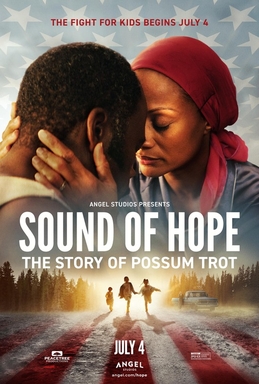
imdb says of this film – Sound of Hope: The Story of Possum Trot is the true story of Donna and Reverend Martin and their church in East Texas. 22 families adopted 77 children from the local foster system, igniting a movement for vulnerable children everywhere.

One reviewer described it this way – “not your typical feel good adoption story. This movie is raw, real, and gives you an honest glimpse into the harsh reality of the traumas that children in foster care have experienced and what it takes for families to love them to healing and wholeness. The power of love, community, and hope was a clear message throughout !”

However, in my all things adoption group (which got me to look at this upcoming theatrical release) wrote – “It looks like there yet another movie pushing the savior agenda within foster care and claiming that foster children are unwanted. I volunteer for an annual summer camp that provides teens in local foster care with 3 days of fun activities and the organization sent me an invite to go see this movie with volunteers as a group. The trailer gave me enough information to know it’s not something I can support. I’m assuming the goal of the movie is to tug on people’s hearts and make them want to “save” children by fostering/adopting.”

Here is that trailer –

One adoptee said – I want to crowd fund Jordan Peel to make a horror film of the exact same to opposite plot.

One former foster now adoptive parent noted – LINK>Angel Studios is also heavily involved in the Tim Ballard/OUR drama. I wouldn’t support anything they make anyway. blogger’s note – so I went looking, as I suspected they are known for making “Christian” movies. I also looked up LINK>Tim Ballard and he was associated with the Operation Underground Railroad. Unfortunately, I do believe that we once watched LINK>Sound of Freedom with Jim Caviezel on dvd. He portrays Ballard.

One adoptee added –  “I would be curious though to know what gets classified as neglect. I feel like that’s a catch all phase that isn’t applied equally. Obviously, no kid should be abused. How does this actually support kids ? I feel like this will just piss people off without providing real concrete action to change lives. Adding, I just wanna see a movie/read a book from an adoptee that centers them.”

Using Adoptees for Social Media Clout

This came up in my all things adoption group. Many were aware that this couple had adopted their daughter. Some of the comments included –

From an adoptee – They make themselves seem like these saviors – baby’s mom chose them. They have so much access to resources, they couldn’t help baby’s mother???

From a kinship adoptee – Using their adopted children for clout. Some even use their adopted child’s race for clout.

Another adoptee – these two make me absolutely sick to my stomach. They adopted her right around when I was learning lots about the primal wound. I ended up having to block/hide any content from them because the thought of that little baby being taken away from her mother was effecting me massively.

A mother of loss to adoption writes – it’s alarming to me how many people use adoptees for social media clout.

Fully Understanding the Trauma

From someone who experienced foster care in her youth – Does anyone else feel a level of rage hearing people say ‘I wanna adopt older kids out of the system,’ yet they don’t seem to be capable of fully understanding the trauma of it ? It’s feels almost like a way of saying – I’m such a great person, I mean look at what I do.

Like no matter how many times I explain what care is like and how serious something like that is – it’s like they shut down or ignore me in order to hold onto their ideals. I feel like I’ve never had someone say it well who also fully understands how deeply traumatized and vulnerable older kids in care are.

An adoptee notes – Saviors gotta save – it isn’t about you, but about themselves and their desires.

To which, someone who had been in foster care and aged out of the system responds – Yes, I truly think it’s a savior complex. I aged out of a youth shelter that I was so fortunate to have as a place to live. I lived there for about three years, collectively between two stays, and saw many teens get adopted and “returned”. I always was confused why everyone was so eager to be adopted. While I loved the shelter for what it provided for me, I would have been grateful for a place to lay my head outside of the confines of the shelter. I wasn’t allowed to check myself out, so I was never able to get myself financially established before aging out. If I had been in a home, I would have had more potential to take care of myself before being dropped on the street.

Another person without any of that background, admitted – I used to be one of those people (not saying that to people actually but it was originally my plan before I discovered the realities). Is there a good way to adopt or foster? I’d never ever want to come between a child of any age and parental reunification. I just genuinely desire to create a safe space for kids who don’t have anyone to look out for them, and to make them feel like they have a safe place they can always go, no matter what. But I don’t want to create more trauma and the more I learn, the more it seems like, no matter what, within our current system there is no such thing as doing it ethically/genuinely putting the kids first.

An adoptive parent who adopted from foster care notes – I would highly suggest extensive reading/training/therapy/etc. What the original commenter was saying is that people go in expecting to have an incredibly grateful child, that is just so happy to be in a home that they will fawn (fear response) into doing everything the adoptive parent (AP) wants. After all the AP “saved” them. Then, the adoptive parent realize that the children have major trauma and don’t connect the way biological children connect. The vast majority of parenting plans that work with biological children don’t work for children from trauma. Then they give up. In their minds, they often think I did everything I could but they are just so ungrateful.

So going in, eyes wide open, with a full toolbox of skills, and a therapist – you already have good relationship with, where you have already addressed any obvious traumas from your childhood and any problems you have with relationships.

One of the best foster situations I have ever heard of was a adult prep house (often referred to as a LINK>Transitional Living Program). They took in 3-4 teens ages 16-18 at a time. They knew all the local helps available and would work with the teens to prepare for adulthood. They were family in every aspect except financial. So when one of them gets excited about their promotion, that is who they would call to share the news. When one of them graduates from college, they try to attend the event. When one of them got engaged, that is who they would make the announcement to. Some even walked a few of them down the aisle. They had like 30 adult “children” that stayed in contact with them. True, many never reach out after they leave and the foster parent never tries to force a relationship after adulthood. The house was always there, without pressure, so teens could chose to come or stay, dependent upon whatever situation they were facing.

Black Family Separations

I was thinking about what I should write about today and knowing that February is Black History Month, I thought I would simply acknowledge that although slavery was outlawed long ago (if you don’t include our prison population), it is not true that this country has ceased taking Black children disproportionately from their families. The topic is so vast, I cannot even hope to do justice to the injustice in today’s blog.

Child Protective Services, the official name in many states, is the government agency that responds to reports of child neglect and abuse and is mandated to protect children, but their often reckless approach wreaks havoc on Black families daily. Black parents often reach out to hospitals, physicians, and other agencies for help with their children. Suddenly the tables are turned, the parents are accused of child mistreatment or endangerment and children are taken away.

It is not uncommon for white adoptive parents to adopt a Black child (and this is often the least expensive option available to them). Often these children are relocated to predominantly white neighborhoods. “It’s just completely false to think that White people are going to come in and save Black children that is part of that same ideology that we can go back to slavery as the origins of this idea that White people need to save Black children from their families. It’s been false, not only false but in a racist White supremacist ideology that paints Black parents and families and communities as if they’re defective and harmful,” said Dr. Dorothy Roberts, a University of Pennsylvania professor of law and sociology.

According to the National Center for Juvenile Justice, Black people comprise about 13 percent of the total United States population and 25 percent of youth in foster care. One example – in Philadelphia, Black people are 42 percent of the population and 65 percent of the youth in foster care. The Philadelphia Department of Human Services is legendary for its removal of Black children from their homes.

Black families are subject to more significant intrusion and strident judgment at every contact stage, including disproportionate reports to Child Protective Services, subsequent investigations, and child removal.

Possession is 9/10s of the Right

Perspective from a Kinship Adoptive mother – 12 years after relinquishment, our adoptees are OUR kids, not hers. Even though their biological mom has made a new and better life for herself and the adopted kids know their story and know her. When they reach 18, they can choose, but until then – I am their mom 100%.

An adoptee commented –  It is wonderful when family can step up, so it doesn’t become a stranger adoption, but when they cannot also treat the original parents as family (for the child they share, if for no other reason) – it is offensive and a bit horrid.

Another shared a similar story – there’s a woman who has provided kinship adoption for *three* of her niece’s children, and is already planning to take the fourth child this woman is currently pregnant with, who talks sooooo poorly of her niece and has the young children call her “mommy”. I only know this and more I shouldn’t even know because she openly shares it at daycare pick up.

The woman who shared the perspective above notes – it really is so sad. I think I hear some of the most hateful things about biological families from kinship groups. They seem to resent the fact they “have to clean up the mess” and talk so poorly about their family and then at the same time do everything in the book and more to take and keep their children.

One adoptee shares – I was a kinship adoptee at 4, and spent my whole life hearing about how awful my birth mother is & how I’m just like her & how they were such saints for taking me in.

One kinship adoptee who is also a kinship guardian writes – Selfish beyond belief. A lot of adoptive parents act like they “won” and own the kids and get off on keeping them in the dark about their biological family because they’re JEALOUS that the kids want to know them… because they “belong” to them after adoption. I will never understand people not encouraging their kids to know their family, even if it isn’t just the parents. Most kids have siblings, aunts & uncles, cousins, grandparents, etc that they deserve to know about and connect with.

Another who is a potential future kinship guardian notes – This always feels like they see these children as possessions instead of people. “100% MY child.” “Legal stranger.” Not allowing a relationship until the children are 18. Someday, this is an adoptive parent that will be making “woe is me” posts about how these children won’t speak to her anymore, and how she has NO IDEA WHY.

In the initial comment, it was mentioned that when the biological mother relinquished her rights, the judge declared her a “legal stranger”. Someone else noted – the reality is, she was probably told “if you don’t relinquish, we’ll take your rights forcibly and that means we’ll remove every child you have after this one.” She probably only relinquished because she was scared and felt like it was her only choice. One dad who was in foster care as a youth writes – That is a skewed interpretation of a “legal stranger.” The court doesn’t mean someone unacquainted or having no relationship with the party. It means someone not involved in the transaction of the child. ie. The judge did not allow the natural mother to have a say in proceedings because she relinquished her legal “interest” in the child. And did she really stand before the judge and do that? I wasn’t even allowed to know the finalization date. I know my daughter’s mother wasn’t there because she was with me that day. They hadn’t told her either. We found out from Facebook, when the adoption agency posted a picture of my daughter, her adoptive parents, and the judge.

One adoptee noticed that the adoptive mother’s comment screams saviorism and ownership. Then, someone adopted as an infant notes – When will you all realize how narcissistic and selfish adoptive parents who adopt for altruistic reasons are to their core?

One comment noted – The more people a child has that love them the better.