Babies ?

With the state of the world, it is understandable that many young people are NOT planning to have children. My oldest son has said that with conviction and he has proven over the years that he does know his own trajectory in life.

I do understand the enormous responsibility of bringing children into this world. I also do have 2 grandchildren. My thoughts today were triggered seeing an article in the current issue of Time by Jamie Ducharme titled “Baby Talk”. Reddit has a group titled “fence sitters” – people who aren’t sure whether they want to have children. It is a group of over 70,000 members.

In a footnote of a draft opinion on abortion access, Supreme Court Justice Samuel Alito quoted from a 2008 government report on the demand for adoption in the U.S., which used the phrase, “domestic supply of infants.” Posts on social media critical of the opinion have misleadingly suggested that Alito himself came up with the phrase. The 2008 Report from the Centers for Disease Control and Prevention said “… nearly 1 million women were seeking to adopt children in 2002 (i.e., they were in demand for a child), whereas the domestic supply of infants relinquished at birth or within the first month of life and available to be adopted had become virtually nonexistent.”

According to the Time article – “About a third of US adults under 35 who don’t already have kids say they don’t know whether they want them, and only 21% people in that age group say having kids is very important for living a fulfilling life, according to 2024 statistics from Pew Research Center. A stunning half of US adults under 50 who don’t already have kids think they’ll stay child-free forever. Most say they simply don’t want kids. But financial strain and concern about the state of the world and the environment are also common reasons, according to other Pew data. People are feeling so much angst about when, how and whether to procreate that new psychological concepts have emerged to help make sense of how people make these decisions.”

When one throws into the mix Republican panic about demographic changes, it explains a lot about their perspectives. From an article at the Case Western Reserve website by Girma Parris PhD titled LINK>The Republican Party and Demographic Change

Since before the turn of the millennium, many commentators have argued that long-term demographic change, especially the shrinking proportion of “white” voters, would create a Democratic majority in U.S. politics. This analysis explicitly referred back to Kevin Phillips’ 1969 The Emerging Republican Majority, which argued that the Democratic embrace of civil rights would move white southerners and some of the northern white working class, and so the balance of power, into the Republican column. The Republican choice to become (or allow themselves to be seen as) mainly a “white” party was in spite of arguments among some Republican campaign professionals, especially after the 2012 election, that the party needed to increase its appeal to growing demographic groups. In spite of such appeals, the nomination, election, and subsequent domination of the party by President Donald Trump appear to have doubled down on making the Republicans a party dominated by white voters – and the Democrats something different.

From a reforming adoption perspective, maybe it is all good news. Banning abortion may NOT be enough to reverse that trend nor will it result in an increase in the domestic supply of infants relinquished at birth or within the first month of life. Young people don’t want to have to make that choice. And adoptee voices are loud and clear about the damage that being given up can cause for the rest of that child’s life.

Seeking To Do Better

An adoptee with a challenging start in life but having done a lot of work to heal herself writes today – My mother was adopted at birth, and raised by a mom with substance abuse and alcohol use disorder. She suffered the same, and then I was adopted at age 8 and grew up in poverty before adoption and my adoptive parents used to tell me I should not have kids. Then because of all that I struggled with substance abuse disorder alcohol use etc, and human trafficking.

Now, I have been drug-free since 2015 and alcohol-free since 2019, went to college and graduated in behavioral science. I am in a very stable environment, have done a lot of healing, and am about to get married. We are family planning responsibly. We are both employed, college educated, etc, basically, everything I didn’t have growing up…. but my marriage also propelled me into a financial class I did not grow up in. Money does not buy parenting skills.

I just started therapy as well to get ahead of the game, but I am worried I will be a bad parent because of how I grew up. All those parenting classes and nurse family programs I see are only for low-income families. I think there is an assumption in the “parenting class” industry that only low-income people need to learn about how to be good parents. She asks – Is there some type of support group for parents with familial trauma, or anything like that ? just to have people to check in with ?

One adoptee shared encouragement – I think the fact that you’re concerned you’ll be a bad parent and have identified reasons why puts you ahead of the game. Awareness is huge. I’m a parent. I was emotionally mistreated by my mom. A lot of my parenting ability comes from treating my child in a way that I needed to be treated at that age, while also recognizing that my child isn’t me. Understanding that behavior is a form of communication is important too. Kids don’t need much. They need love and support. They need to be heard without judgement. They need structure and boundaries and clear expectations. They’re humans in small bodies and can understand much more than most people give credit for. It’s the easiest/hardest job. You got this!

As a resource, one suggests this – look into the LINK>Safe and Sound Protocol (SSP) – Parent Info Forum. Its a music protocol that helps with emotional regulation as well as CPTSD and Dissociation. Life changing for my parenting game and in general, I was adopted from foster care at 12 with a history of complex trauma. I have 5 kids now !

An adoptive parent notes – Advice columnist LINK>Carolyn Hax in the Washington Post often recommends parenting classes in her live chats, and her column is read by people at all income levels. There are definitely some very wealthy terrible parents out there. It sounds like you have worked really hard to get to a good place. That says a lot about you. If you want to have kids, then do the classes and workshops (some may be available online), read parenting books, maybe read about trauma (if you haven’t already). In fact, a lot of books about parenting children from tough places actually help the reader/parent too. If you decide at some point that you don’t want to be a parent, that is a perfectly valid decision. But you are doing the work to heal yourself and if you have kids, I’m sure you’ll be a great parent.

Here is a list of some of the books she has read that helped her as a parent and human being. [1] Raising Kids with Big, Baffling Behaviors-Robyn Gobbel, [2] What Happened to You-Oprah Winfrey and Bruce D. Perry, [3] The Connected Child – Karyn B. Purvis, David R Cross, [4] The Explosive Child – Dr. Ross W. Greene, [5] Help for Billy-Heather T. Forbes and [6] The Body Keeps the Score – Bessel A. van der Kolk (blogger’s note – in fact, he is featured in the most recent issue of Time Magazine – LINK>Why People Still Misunderstand Trauma.)

A kinship adoptive parent offered more encouragement – Bad parenting is not a class/wealth problem. Everything I’ve learned about discipline boils down to “do the opposite of what my parents did,” and lots of people looked to them for advice because everyone who didn’t live with them thought very highly of them. If you want to have kids, don’t limit yourself by your adoptive parents’ issues. You can get therapy, take parenting classes, etc. and be a super awesome parent.

Another noted – You are aware and will stop the generational trauma. You will do great.

An adoptee who became an adoptive parent writes – I did LINK>Circle of Security. It was great and it’s been very helpful to help me understand how my trauma (not from adoption) plays into and against my child’s.

One adoptee explains their reasoning regarding choosing not to become a parent – Many reasons, of course, but a big one was my lack of family support that others could count on. I was adopted shortly after birth but my adoptive family was garbage and my adoptive parents were both dead by the time I was 30, after which the extended family ghosted me. I would have had no trusted people to help me care for my child. So I definitely get it. I hope you’re able to find the kind of help you’re seeking and, yeah, parenting classes focusing on family trauma/loss would benefit a whole lot of of people.

An adoptive parent added a couple of additional resources…LINK>The Connected Parent by Karyn Purvis and Lisa Qualls. And on Instagram, Gottman institute has links to resources/classes they offer. And also on Instagram, Raising Yourself. (blogger’s note – I don’t “do” Instagram, so you are on your own there.)

One person added – I would strongly consider LINK>Mommy and Me or other similar parenting support groups. Classes are great and all, but you can learn a lot from being with other parents. When watching others, you can generally get a feeling for what’s right and what’s not (making excuses for your child when they hit someone is not ok, and neither is hitting the child) and what is better (listening to the child’s feelings and validating how big it is even if you don’t necessarily give in is pro parenting). Watching others can tell you a lot about what to do and a lot about what not to do, plus you’ll get other adult/parent interaction out of the deal…which is kind of hard to get as a new parent.

One person sums up “the ultimate goal” is to remember to be a basically genuine presence with your child (that exact person), switching to their perspective when necessary, and to have love, respect and protection always at the forefront, no matter what parenting style you choose or the specific parent/child relationship you have.

Mississippi Appendectomy

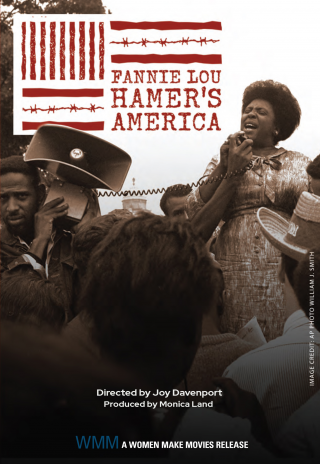
I am happy to acknowledge LINK>Fannie Lou Hamer this Juneteenth. She rose from humble beginnings in the Mississippi Delta to become one of the most important, passionate, and powerful voices of the civil and voting rights movements and a leader in the efforts for greater economic opportunities for African Americans. She was a community organizer and vice-chair of the Freedom Democratic Party, which she represented at the 1964 Democratic National Convention. She went into the hospital to have a uterine tumor removed and was instead given a hysterectomy. The title of today’s blog comes from her having that experience. She died at only 59 years old.

I learned about her in a Time Magazine article by Alana Semuels LINK>How Women Get Pressured Into Long-Term Birth Control. In late 2020, news broke about an ACLU lawsuit related to LINK>Immigration Detention and Coerced Sterilization of Mexican woman. It was NOT the first time in US history that this happened. In 2021, the state of California compensated such women. Starting in the year 1909, women of Mexican descent were used as targets for the eugenics movement to reinforce population control and purity.

The Mirena IUD is mentioned. I once had an IUD during my adult journey into birth control but had to have it removed after a few months due to the pain it caused. Mine did not have the long lifespan of the new ones which came out in the 2000s. You can read the Time Magazine article at the link above.

Systemic racism and classism have a long history in US medicine. Even now, some doctors are pushing LARCs (Long Acting Reversible Contraceptives) on Black and Latina, as well as other lower-income women (especially those on Medicaid) coercing them into receiving these, sometimes even immediately after birthing a baby. According to Mieke Eeckhaut, a sociologist, “These ideas of who should and shouldn’t have children are still very much influencing our policies.”

Possum Trot

I’m more than average familiar with Possums (the animal is common where I live in Missouri). A mom’s friend of mine once named her first born Possum – I was stunned. She passed away and both of her kids (the other one she named Lynx) changed their names according to their dad who I once met and stayed in contact with for awhile.

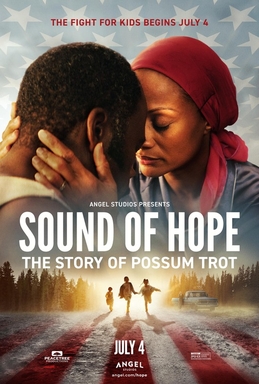
imdb says of this film – Sound of Hope: The Story of Possum Trot is the true story of Donna and Reverend Martin and their church in East Texas. 22 families adopted 77 children from the local foster system, igniting a movement for vulnerable children everywhere.

One reviewer described it this way – “not your typical feel good adoption story. This movie is raw, real, and gives you an honest glimpse into the harsh reality of the traumas that children in foster care have experienced and what it takes for families to love them to healing and wholeness. The power of love, community, and hope was a clear message throughout !”

However, in my all things adoption group (which got me to look at this upcoming theatrical release) wrote – “It looks like there yet another movie pushing the savior agenda within foster care and claiming that foster children are unwanted. I volunteer for an annual summer camp that provides teens in local foster care with 3 days of fun activities and the organization sent me an invite to go see this movie with volunteers as a group. The trailer gave me enough information to know it’s not something I can support. I’m assuming the goal of the movie is to tug on people’s hearts and make them want to “save” children by fostering/adopting.”

Here is that trailer –

One adoptee said – I want to crowd fund Jordan Peel to make a horror film of the exact same to opposite plot.

One former foster now adoptive parent noted – LINK>Angel Studios is also heavily involved in the Tim Ballard/OUR drama. I wouldn’t support anything they make anyway. blogger’s note – so I went looking, as I suspected they are known for making “Christian” movies. I also looked up LINK>Tim Ballard and he was associated with the Operation Underground Railroad. Unfortunately, I do believe that we once watched LINK>Sound of Freedom with Jim Caviezel on dvd. He portrays Ballard.

One adoptee added –  “I would be curious though to know what gets classified as neglect. I feel like that’s a catch all phase that isn’t applied equally. Obviously, no kid should be abused. How does this actually support kids ? I feel like this will just piss people off without providing real concrete action to change lives. Adding, I just wanna see a movie/read a book from an adoptee that centers them.”

The Now Way

LINK>Adoption Birth Vlog example
MaryJane Lance – once again in pursuit of a child

Blogger’s note – This post is from an adoptee and is about children who are adopted and exploited on social media. The adoptee’s post is below –

Documenting the adoption journey has been an integral part of the overall adoption story. At one time the creation of lifebooks was meant to be a way of helping the child understand what it meant to be adopted. It served an important purpose to ensure that the child’s sense of self was rooted in their adoption..

Once social media became the established way of capturing our lives, lifebooks became obsolete in favor of blogs and vlogs. We now live in the age in which people make a living as content creators, much to the thanks of YouTube. From traditional profile books and listings with adoption agencies, to creating their own websites, featured news coverage and social media hashtags, prospective adoptive parents sought out every possible way to let the world know their story in the hopes of being matched with a child for adoption.

Posting one’s life on social media is native in today’s culture. And because it has well-established ways to monetize online content, these prospective adoptive parents have learned the business. So what is the big deal? It’s normal to post content about your family, right? Many family-run Youtube channels get views in the hundreds of thousands and millions. Everyone loves feel-good reality content.

Right now, the media is shedding light on the failings of the adoption industry. The Netherlands, home to the Hague Adoption Convention, has officially closed its international adoption program (again). South Korea is undergoing a comprehensive investigation revealing hundreds of adoptions involving the falsification of records. Holt International is linked to many of these cases. Dillon International has shut down. The Russian president was accused of committing war crimes by kidnapping Ukrainian children and adopting them into Russian families.

The Asunta Case was in the top 10 Netflix series based on the true story of Asunta Fong Yang. In the U.S. the media is putting a spotlight on the Stauffer Family scandal (2020) involving the rehoming of the boy they had adopted from China. The Stauffers became a YouTube sensation story having monetized their adoption journey. So, what is the scandal exactly?

Tik Root wrote an eye-opening Time magazine article, “The Baby Brokers: Inside America’s Murky Private-Adoption Industry” published in 2021. Prior to that was the Reuters report, “The Child Exchange” exposing the Yahoo child rehoming groups published in 2015. Last year, the media descended on the issues and ethics of child influencers. The Stauffers are one of countless adoptive families who have taken to social media monetizing their adoption journeys effectively exploiting Huxley for profit.

Exploiting children is nothing new, neither is adoption. So, where does the Stauffer Family fit into this picture? Why is this a big deal?

Here’s the adoptee’s perspective:
The adoption industry has reached critical mass and has been developing new ways to sustain it’s multi-billion dollar operation. No longer a taboo subject conducted through back doors held in secrecy only priests could hear, adoption has saturated virtually every level of society. In the confusion and chaos of a divided media, social opinion, subplots found in the DC and Marvel universes, K-Dramas, and TV shows, sports, gold-winning olympiads, tech leaders, musicians saying they will adopt a child, and celebrated family reunions on Good Morning America, the adoption industry is free to carefully and gradually change its course with little attention or resistance.

Issues from the current adoption system become course correction for the industry’s next leap forward into the already multi-billion dollar surrogacy market. With all of this attention on the adoption side of the industry, the surrogacy market grows virtually unnoticed. Children like Asunta Basterra and Huxley Stauffer (formerly known as), are victims of a known corrupt, exploitative industry. They are commodified and dehumanized in the name of adoption. They are bought and sold in a child trafficking scheme to later be disposed of or “rehomed” once their use has run out.

Despite the ongoing efforts of investigative journalists to expose these truths, the adoption industry has proven its power of propaganda ensuring people remain ignorant, confused and brainwashed at the expense of children’s lives. We must continue making every effort to send a clear and unified message to stop this crime. Stop commodifying and exploiting women and their children for profit. There are now 9 million adopted people in the U.S today. Our numbers are going to grow exponentially in the coming years. We have taken a stand against violating our rights. We have taken a stand against being stolen, kidnapped, and trafficked. And now we are taking a stand against being made into disposable people.

Giving In The Spirit Of

Photo by LINK>Melissa McCraw-Hummer of Springfield Missouri (her daughter is in the photo).

Lately, I keep encountering positive inspirational stories about “ordinary” people who are doing good simply by doing what it is that they love to do. One is Bobby Brown who founded the Donuts With Dads support group for fathers. In the current Christmas themed New Mexico Magazine in an article about their 2023 True Heroes (10 people they selected to feature due to the good work they are doing). Sometimes, our world seems so dark I want to despair about the future of humanity and these features help me stay optimistic (Time Magazine often features similar groups of people doing good things in this world).

So it is that I’ve been primed to notice such stories and today in my all things adoption group I read this by Melissa the photographer for today’s image (which I think of as Christmas Magic). I share what she does with her talents and skills plus no small amount of creativity. I am also happy to know she lives in my own residential state – Missouri (though at the opposite end). I am glad to give her business a little bit of promotion.

She writes – In the past, I’ve done Foster Friday at Christmas for foster children to get free Christmas pajama photos. I’ve never allowed foster parents or their biological children to participate. I wanted it to be just for the kids in care so they have professional photos of themselves. I’m entertaining alternatives. Maybe Reunification Celebration for families who have reunited after foster care. I occasionally do income-based events but I always get way more interested families than I can serve, so specific sub-groups tend to do better. Single Parent Sunday was a good success this year. I just released registration in waves, so families in the lowest income bracket who didn’t have family support got first dibs.

Have You Noticed ?

Lately, it seems every few days or weeks there is a new story that reaches my awareness related to Korean adoptees. Today, I have 2 to share in this blog. The Korean War was fought between North Korea and South Korea from 1950 to 1953. A lot of Korean born children came to the US after the war and in the decades since.

I discovered Kristen Kish in the current issue of Time magazine’s feature – 100 Next – The World’s Rising Stars and then found an interview in Bon Appetit – LINK>How Being an Adopted Korean Influences the Way Kristen Kish Cooks by Alyse Whitney, who notes – I was also adopted from Seoul (by a white family in upstate New York). She talked to Kish about feeling disconnected from Korean culture—especially the food.

Even before this, my husband pointed out a story in The Huffington Post – I Was Told My Parents Were Dead. 38 Years Later, I Got An Email That Changed Everything by Cat Powell-Hoffmann. As a Gemini, stories about twins fascinate me. She observes – “Was this why I could never shake that lonely gnawing in my belly when I was growing up? Was she the reason?”

Something that seems clear to me in reading both stories is how this cultural “exchange” failed to truly provide these adoptees with any cultural foundations. Kish was born in Seoul, South Korea as Kwon Yung Ran. After living in a few orphanages as an infant, she was adopted when she was four months old. Cat’s adoption records noted that she had been “abandoned at birth with no living relatives.” Contacted by a woman who worked at the adoption agency 38 years later, she is told – “you have family in South Korea. Your mother is alive and well.” And “You have a twin sister.”

The woman from the adoption agency forwarded two letters to Cat. The one from her birth mother addressed her by her orphan name, Yi Soon. Her words were tender and fragile. Her twin’s letter felt like living distant but parallel lives. Her reunion occurred in Tulsa Oklahoma, at the adoption agency’s corporate headquarters. She notes the “two women raced toward me with their arms outstretched and tears in their eyes.” She said meeting her twin was “like looking at a stranger wearing my face and using my voice — but one of us spoke Korean and the other did not. It was disorienting and bizarre to think I’d shared a womb with another human being and now I was meeting her again 38 years later.” Then she says, “The very first words my birth mother said to me were ‘Mianhae,’ which means ‘I’m sorry’ in Korean. Then she said ‘Saranghae,’ which means ‘I love you’.” Turns out that when she was born in 1973, twins were considered bad luck in Korea. Her mother had to choose and chose the first born twin. The cultural differences meant they didn’t understand each other, and they were accustomed to living very different lives. She says, “because of our language barrier, we were mostly forced to play charades to communicate, and I could barely get across the most basic sentiments, much less hold the heart-to-heart conversation I so desperately wanted to have with them.”

Back to Kristen Kish’s story – she writes, “As I grew up, I realized just how incredible it was to go from unwanted and abandoned by my birth mother to being part of a new, welcoming family, who felt only joy at my arrival.” Kish writes that adopted children are like “real-life Cabbage Patch Dolls” because they have their own special dates and certificates for when they are adopted and become citizens of the United States. Kristen Kish was adopted into a family in Kentwood Michigan. She says, “I love to eat Korean food, but I don’t need to cook it. Other people can do it better.”

Kish writes – “I don’t know anything about Korean culture. I was raised by a white family in Michigan, and I didn’t look in the mirror and think about why we didn’t all look the same. They are my family, and that’s all I know.” Also that “There’s this fondness I’ve always had for older Korean women—I soften up, and I can legit feel it inside my heart. They’ll be like ‘I’m so proud of you’ and it just crushes me, in this really sweet way,” Kish explained. “My life is f—king fantastic and I don’t want a Korean family, but we both know that there was another life that could have potentially happened. It’s the ‘what ifs?’ that get you.”

She has a positive perspective on her adoption but still hopes to one day at least go to the clinic where she was born. She notes – “I feel oddly disconnected because my family is my family. Maybe I wouldn’t have become a chef if I grew up in Korea. I was put up for adoption for a reason, whether I was unwanted or they couldn’t care for me, and my life wouldn’t have been as great. Being in a family that wants you, that life is much better.” Kish has been named as the new host of Bravo’s popular and long-running series “Top Chef,” which she won in it’s tenth season.

A Very Mixed Bag

Angelina Jolie with all 6 of her children

I recently saw LINK>Angelina Jolie in the movie The Bone Collector. I was fascinated by what has been defined as her “bee-stung lips.” I remembered she had adopted children from several countries. So I thought, as I had never written in this blog with her circumstances in mind, I would give it a go. I wondered about her ethnicity and did a deep dive down the rabbit hole of her parentage. It is no wonder she is a humanitarian because her mother, LINK>Marcheline Bertrand was. Her mother was involved with the activist John Trudell at the end of her life. It is worth spending some time looking into the Wikipedias for both Jolie and Bertrand for more insight. I was never a huge fan, though I have seen more than one movie that she acted in.

Today, I will focus on her children and an intersection with her humanitarian work – Maddox Chivan Jolie-Pitt who was born in Cambodia, Pax Thien Jolie-Pitt who was born in Vietnam, and Zahara Marley Jolie-Pitt who was born in Ethiopia, are all adopted. Shiloh Nouvel Jolie-Pitt was born in Namibia. Her twins – Knox Léon Jolie-Pitt and Vivienne Marcheline Jolie-Pitt were born in France. Her twins were conceived via in-vitro fertilization and she gave birth to them via caesarean section at the age of 33.

In an article at LINK>Harper’s Bazaar, Angelina Jolie discusses her adopted children. There is more at the link but here are a few quotes attributed to her – “All adopted children come with a beautiful mystery of a world that is meeting yours. When they are from another race and foreign land, that mystery, that gift, is so full.” She has also been quoted as saying – “They are not entering your world, you are entering each other’s worlds.”

Regarding Maddox, she has said “Cambodia was the country that made me aware of refugees. It made me engage in foreign affairs in a way I never had, and join UNHCR. Above all, it made me a mom.” Jolie has said that “Each (adoption) is a beautiful way of becoming family. What is important is to speak with openness about all of it and to share. ‘Adoption’ and ‘orphanage’ are positive words in our home. With my adopted children, I can’t speak of pregnancy, but I speak with much detail and love about the journey to find them and what it was like to look in their eyes for the first time.”

She has been heavily involved in humanitarian work, something her mother was known for. She has created with her wealth various foundations – the Maddox Jolie-Pitt Foundation which created Millennium Villages in Cambodia and Kenya as well as funding schools, roads, and a soy milk factory in Kenya. Some of the employees in Kenya were former poachers who are now employed as rangers. She is also a patron of the Harnas Wildlife Foundation, a wildlife orphanage and medical center in the Kalahari desert. She established the Shiloh Jolie-Pitt Foundation to support conservation work by the Naankuse Wildlife Sanctuary, a nature reserve also located in the Kalahari. She has also funded large-animal conservation projects as well as a free health clinic, housing, and a school for the San Bushmen community at Naankuse.

I have read more than one op-ed by Jolie in Time magazine related to her United Nations work for refugees and the welfare of people living in conflict zones. I don’t intend to judge her for anything related to her very public life, including her marriage to and divorce from Brad Pitt. Whatever one thinks of her and her life, they also cannot deny she has made a difference in the world.

The Mandalorian

So, I’m not a Star Wars fan. I was once told I reminded a Salon participant at Jean Houston’s home of Yoda. I went looking. I have to admit there was some physical resemblance. LOL

Anyway, today I learned from a Time magazine article about The Last of Us that The Mandalorian had an adoption theme. That I did find interesting (though I am still not going to watch it). I did go looking and found quite an extensive article at Adoption.org LINK>What Does ‘Star Wars’ Have To Do With Adoption? In that article I found some answers.

From the article –

There is also a series in the Star Wars universe that is an amazing picture of foster care in the most untraditional sense. The Mandalorian explores the question of “who is family” when the main character is charged with capturing and eventually protecting a young creature who bears a strong resemblance to Yoda. He is strong in the force, but the Mandalorian is set in a time when being a Jedi is outlawed, and Jedis are killed without impunity. The Mandalorian becomes a makeshift foster father to the little guy who finds all kinds of ways to get into trouble and create drama. The war-hardened Mandalorian grows to love the little guy and does everything in his power to keep him safe and to get him back to “his people.”  At the end of the first season, we see Grogu go off with Luke to learn about the ways of the force, but it probably isn’t the last time we’ll see the little guy. 

Maybe it is just because adoption and foster care are such a huge part of my life that the themes of adoption, found family, and foster care stand out so starkly, but I don’t think so. The entire series falls apart without twins separated at birth. It doesn’t work without friends who didn’t know each other becoming the best allies for one another. The connection they feel is what ties all of the stories together. One of my favorite parts of the movies is that Jedi “become one with the force” when they die. When someone is “one with the force,” they turn invisible but can still interact with the living Jedi. They can still root their family on from beyond the grave. Even though our family is gone, they are still with us. Everything is connected by “the force.”  What a great allegory for the love believers are supposed to share. 

Even if you know nothing about Star Wars, you know about the swords. Almost everyone has swung a plastic, colorful sword and made the noises “swoosh, whoosh, bzzzz” as they “fought.” My adopted kids think it is the best ever. Star Wars and adoption are like popcorn and coke. You don’t need to make the association. However, if you have the popcorn anyway, the coke makes it so. Much. Better. Honestly, though, we couldn’t do this adoption thing without mentors and help from the people around us.  Luke and Rey had big feelings about their past. They felt betrayed by their parents until they knew the truth.

Rey stops to think about the people who loved her. The people who helped shape her into the person she was, the people who cared for her when she didn’t know what to do. And she found her name. She called herself Rey Skywalker. She had no “legal” claim to that name. She hadn’t officially been adopted by Luke or Leia, though Leia ended up being her greatest mentor. She chose to associate herself with the people who loved her when she was struggling and when she triumphed. 

There is much more at the link. The author, Christina Gochnauer, is a foster and adoptive mom of 5. She has a bachelor’s degree in Psychology from Letourneau University. She currently resides in Texas with her husband of 16 years, her children ages 3, 3.5, 4.5, 11, and 12, and her three dogs. She is passionate about using her voice to speak out for children from “hard places.”

Aaron Judge Adoptee

As a youth and today with mom, Patty

I don’t really follow sports but I do read Time Magazine. Aaron Judge has been named their 2022 Athlete of the Year. He made his 62nd home-run this year. He is biracial and was adopted by white parents. Being a good athlete allowed him to feel accepted, even though his hometown of Linden California, which is rural was very predominantly white – only 0.06% African American. His genetic father is Black and his birth mother is white. He was told that both himself and his older brother who is of Korean descent were adopted when he was 10 years old and began asking questions. Even though he knows some about his original parents, he says that he never had the need to go looking for them, he simply felt at home with his life. He says that he tries not to be like anyone else, “I just try to be who I am.”

At a Major League Baseball website, Aaron says he would not be a New York Yankee today without his mom’s encouragement. He credits her with influencing every decision that he has ever made and has described her as an incredibly caring individual. He says, “The guidance she gave me as a kid growing up, knowing the difference from right and wrong, how to treat people and how to go the extra mile and put in extra work, all that kind of stuff. She’s molded me into the person that I am today.”

Being “the best Aaron Judge” he can be started about 100 miles northeast of San Francisco. His adoptive parents, Patty and Wayne Judge, were recently retired schoolteachers. His older brother, John, also became a teacher. His adoptive parents emphasized education as a priority in their sons lives. Aaron says, “They wanted me to always make sure I put education first and make sure I prioritized everything. If I was going to make plans, stick to them. Make sure I’m on a tight schedule and make sure I don’t miss anything.”

Patty and Wayne adopted Aaron Judge the day after he was born in April 1992. When he was a child, he says he realized “I don’t look like you, Mom. I don’t look like you, Dad. Like, what’s going on here?” that is when they told him that he was adopted. His response was “OK, that’s fine with me. You’re still my mom, the only mom I know. You’re still my dad, the only dad I know.” His reaction to being adopted really reminds me of how my adoptee dad was. He never was curious about his origins and was a good son and very loyal to his adopted parents. Judge often tells his adoptive mother that if it wasn’t for her love and guidance, he wouldn’t be in the position he is now. He gave his 61st home-run baseball to his mom, Patty.

Aaron Judge hugging his mom, Patty.