SisterSong and Georgia

Fulton County Judge, Robert McBurney, ruled Georgia’s abortion ban unconstitutional under the state constitution. He suggested that the six-week abortion ban treated women like “collectively owned community property.”

This word “liberty” has been niggling at my values awareness at least all this day long. The judge wrote, “A review of our higher courts’ interpretations of ‘liberty’ demonstrates that liberty in Georgia includes in its meaning, in its protections, and in its bundle of rights the power of a woman to control her own body, to decide what happens to it and in it, and to reject state interference with her healthcare choices.” He added that society can only intervene in a person’s pregnancy when the fetus reaches viability, which is generally understood to be between 22 and 24 weeks.

McBurney wrote – “While the State’s interest in protecting ‘unborn’ life is compelling, until that life can be sustained by the State ― and not solely by the woman compelled by the Act to do the State’s work ― the balance of rights favors the woman.” Physicians in the state can now provide abortions until fetal viability, reverting to Georgia’s 2019 abortion law.

“Women are not some piece of collectively owned community property the disposition of which is decided by majority vote,” McBurney wrote. “Forcing a woman to carry an unwanted, not-yet-viable fetus to term violates her constitutional rights to liberty and privacy, even taking into consideration whatever bundle of rights the not-yet-viable fetus may have.”

The ruling is a monumental win for abortion rights advocates who have rallied against the extreme abortion ban. On Saturday, reproductive justice groups hosted a rally at the state capitol to demand a repeal of the law and commemorate the two women who died because of the state’s abortion ban. ProPublica recently reported that Amber Thurman and Candi Miller, two Black mothers from Georgia, died because they were denied proper medical treatment after using abortion pills.

“Today’s win was hard-fought and is a significant step in the right direction,” Monica Simpson, president of the women of color-focused reproductive justice organization LINK>SisterSong, said. “[But] every day the ban has been in place has been a day too long ― and we have felt the consequences, especially our Black and brown communities.”

This blog’s content depended upon the reporting of Alanna Vagianos in The Huffington Post at this LINK>Judge Strikes Down Georgia’s 6-Week Abortion Ban.

SAY HER NAME

Georgia, Georgia
The whole day through (the whole day through)
Just an old sweet song
Keeps Georgia on my mind (Georgia on my mind)

I said Georgia
Georgia
A song of you (a song of you)
Comes as sweet and clear
As moonlight through the pines

Linda Ronstadt Adoptive Mother

If not for her remarks recently, I would have never known that Linda Ronstadt is an adoptive mother. She wrote – “I raised two adopted children in Tucson as a single mom. They are both grown and living in their own houses. I live with a cat. Am I half a childless cat lady because I’m unmarried and didn’t give birth to my kids? Call me what you want, but this cat lady will be voting proudly in November for Kamala Harris and Tim Walz.”

Linda adopted two children, a son and a daughter, in the 1990s. She never married.

Mary Clementine Ronstadt is her daughter and was adopted as an infant. She can also sing harmonies according to her mother. Linda is quoted as saying “Children need art in their lives — real art, not the stuff you watch on television. Art is essential for processing your feelings and connecting to your origins and identity.”

Carlos Javier Andres Ronstadt was adopted in 1994. He grew up alongside his sister in San Francisco, California. Carlos has stayed away from the limelight for most of his life but is close to his mother. Carlos has worked for Apple and is also a musician. She has said about him – “My son is actually really talented. He picked up the guitar and just learned it like lightning, but that’s not his primary focus. He’s a techie and has a good job and a nice girlfriend. My children both use music for their own enjoyment, which is what music is really for.”

Details in today’s blog came from LINK>Legit.

Blogger’s note – I once owned Ronstadt’s CD – Canciones de mi Padre. Here’s one from that album performed live.

Don’t Let The B*&^($@ds . . .

Daffodils & Dirt Sam Morton’s Album

That is not the album cover but the concept captured me. It comes from another woman’s Scottish story that drew Morton and has arrived in The Guardian – by Kate Kellaway – LINK>‘The hardest thing is to forgive yourself’: actor Samantha Morton and writer Jenni Fagan on the trauma of growing up in care.

The Guardian notes – Both women have used their work to process childhoods ravaged by neglect and abuse. Meeting for the first time, they discuss survival and anger, Fagan’s new memoir, and the state of the UK’s care system today. Jenni Fagan’s extraordinary, harrowing and uplifting memoir, Ootlin, is about growing up in the Scottish care system. Ootlin translated from the Scottish vernacular means someone who “never belonged, an outsider who did not want to be in”. LINK>Review by Sara Crowley. Samantha Morton is an Oscar nominee twice over, who directed and co-wrote, with Tony Grisoni, the TV film LINK>The Unloved (2009), about a girl growing up in a care home, which drew an audience of 2 million.

About Fagan’s memoir, Sam says: “When I read Jenni’s book, I felt as if we were twins. I didn’t realize there was another human being who had had an almost identical childhood to mine, and not only survived but become formidable against the odds. The similarities between us are bizarre; it was like when you do a butterfly drawing at school, then fold it – there is Jenni in Scotland and there is Sam in Nottingham… and we’re the same age.” “I’m a bit older,” says Fagan. “I’m still 46,” says Morton. “I’m 47,” Fagan says.

Both women spent years in children’s homes and foster care. Morton had 12 foster placements and Fagan 27 by the time she was 16 (with two unsuccessful adoption placements). Each had mothers who suffered poor mental health. Fagan never knew hers, whereas Morton’s mother, who died in 2017, is a known presence in her story. Morton’s father was intermittently violent and spent spells in prison. Both Fagan and Morton suffered abuse, got into drugs for a while, and had periods of homelessness.

If these stories are of interest to you, I highly recommend reading the entire article at The Guardian link above. blogger’s note – having learned I have Scottish roots, anything to do with that country always interests me.

Doing It Right

Today’s story is how someone is doing an open adoption the right way.

My daughter is 5 she knows she was born from mama c’s tummy, and knows that is why she looks different from most of her family. We also have an open adoption that has become much more open over the past year, in the beginning mama c only wanted a few letters and photos no other contact. Once mama c was ready for more we jumped at the relationship. We visit with mama c and bio siblings every couple months (we live 6 hours apart) and text several times a week and even took a vacation with them earlier in the summer.

Even so, an issue has popped up that the mother is seeking advice to handle it as best as she can. The closest in age sibling is just a couple years older and mama c has not wanted to tell the girls that they are sisters. They know how my daughter was born etc but we have not used the term sisters. We just say we are family. Mama c has asked if I know of any books etc to share with here daughter to help make the conversation easier. I am looking for suggestions to help facilitate this conversation because I think the older one for sure knows but does not want to ask the hard questions and my girl is asking questions that I am having to bend the truth in answering, to stay in line with what mama c is comfortable with. Next visit will be Labor Day (we have visited the past 3 days with them) and we are hoping to have that conversation then, if not before. I am trying to follow mama c’a lead here but since she asked about books and for advice during this last visit, I am trying to help, so that we can all get everything out in the open.

One commenter wrote – All these girls need adoption competent therapy! And their mom too. As far as books go, I haven’t found anything good. Most of the adoption books out there are gross because they’re heavily biased towards adoptive parents. One book I love is called LINK>The Rabbit Listened by Cori Doerrfeld. It’s not about adoption or anything specific; it’s about a child who is upset and how they just need to be listened to. You can find that read aloud at the YouTube link above.

One adoptive mother shares her experience – My family is two adopted sons age 13 and 10, then two biological daughters age almost 5 and 2. The natural mother has been a part of almost every vacation and has come to our house several times to spend a week. The almost 5 year old has understood the dynamics of “(natural mother’s name) is my brother’s mama. But not my mama.” I share this to say – this is totally within the range of a 5 year old’s ability to understand.

Another recommends this book, LINK>Sam’s Sister by Juliet C. Bond Lcsw, even though she hasn’t personally read it. I went looking. Here is a summary – Five year-old Rosa suspects that something is wrong with her mama. What she discovers brings immense joy and sadness to her tiny family. Mama is pregnant, but she cannot keep the baby. Instead, she’s arranging an open adoption.

Another shares – I haven’t read this as it doesn’t apply to our situation but LINK>Holly Marlow has written a book that helps children understand that some siblings live at home while another/others may live with family/foster/adopted. It’s only been released in the last couple of weeks. However, a mother of loss disagreed with this recommendation, writing – she seems to be an adoptive parent and, as a natural mother, I’m getting the ick from some of the things I’m seeing she’s written. I really wish adoptive parents would stop writing books, just my personal opinion, we’ve heard enough from them sharing our stuff and profiting off the biological families stories and the children they bought.

Another mother of loss who’s son is in a closed adoption writes –  do not have a book to recommend, but I am a first mom who has since had children that I parent. My first child was 11 when the first child I parent was born. Unfortunately the adoption was closed but the entirety of the lives of my children I do parent I tell them about my first son. Every month I write a letter and send it. The children I parent are 2 and <1 year. I have my 2 year old tell me things he wants to tell his big brother. He knows he has a big brother that lives far away with different adults. He regularly looks at photos of his brother, and the rest of our family in family photo albums.

An yet another mother of loss writes – Children should always know their truth. Shame on anyone who keeps it from them. My children always knew they had a sibling who was gone from the family. Because they always knew, there was no need for any conversation or “age appropriate” anything. My daughter on the other hand was never told. It’s bullshit.

An adoptee shares – She just needs to speak it. Kids understand all kinds of things. Therapy would be so beneficial. I knew from before my understanding that I had half siblings, even had a picture of one of them and my adoption was locked down closed (adopted from foster care as a toddler). It’s odd to me that the child’s mother will come for visits and just won’t share the simple, basic truth that they are sisters.

Cold Cruel Adoptive Mother

“For not an orphan in the wide world can be so deserted as the child who is an outcast from a living parent’s love.” ~ Charles Dickens

In the BBC 2008 Mini Series – Little Dorrit – Arthur Clennam’s “mother” never lets him see his beautiful biological mother, who dies of grief from being separated from her son. That is the “secret” revealed near the end of this excellent series. It is easy to note early on how cold, cruel and dismissive the woman that Arthur thinks of as “his mother” is towards him.

There is so much that could be said and I found tons of perspectives and essays about Dickens and orphans with a quick Google search. Charles Dickens’ oldest son, Charley, once wrote that “the children of his brain were much more real to him at times than we were.” He really wasn’t a sterling character in his own life. After 10 children and a series of post-partum depressions, his wife Catherine had grown fat, tired, and dull. He met a young actress named Ellen Ternan, a girl the same age as his daughter, Kate. It is said that they had a son who died in infancy. Dickens’s children may have disappointed him, but he almost always got what he wanted. When he died, Kate joined her siblings in summoning Ellen Ternan to his deathbed.

Dickens involvement with the imaginative and emotional implications of orphanhood and of the horror of abandonment is inscribed in Dickens’s fiction. All the forms that give shape to the self – status, work, citizenship, marriage, parenthood, property – are explored from the subjective vantage point of what may be termed the orphan imagination. Dickens was relentless in critiquing child labor, both in legal and criminal enterprises, and exposing the hypocrisy of a society that allows children to live on the streets. In a Dickens novel, orphans, women, and the mentally disabled repeatedly suffer.

In Dickens’ 11th novel, Little Dorrit, he tells the story of a little girl, Amy Dorrit, who is raised in a debtors’ prison, where she spends much of her life. Yet she develops into a capable and caring person. She works as a seamstress for a family whose son, Arthur, falls in love with her. With time, the Dorrits prosper and Arthur falls into debt. Later, it is revealed that Arthur’s “supposed” mother has been cheating him and the Dorrits.

High mortality rates made orphans commonplace during that time in England. Dickens tendency to obsessively include orphaned children throughout his literature. Little Dorrit is capable of standing up for herself and for what she believes is right and what is wrong. In the end Mrs. Clennam is forced to reveal that Arthur is not really her son and that she has been keeping money from him and the Dorrits for many years. Mrs Clennam’s unloving attitude drove her husband to infidelity, which resulted in a son, Arthur. Mrs. Clennam raised him as her own, without any motherly feeling. When Arthur’s birth mother died, his paternal grandfather bequeathed money to Amy, who was born in the Marshalsea the day Arthur’s birth mother died there.

Little Dorrit is a novel by Charles Dickens, originally published in serial form between 1855 and 1857. The novel satirizes some shortcomings of both government and society, including the institution of debtors’ prisons, where debtors were imprisoned, unable to work and yet incarcerated until they had repaid their debts. The prison in this case is the Marshalsea, where Dickens’s own father had been imprisoned. Imprisonment – both literal and figurative – is a major theme of the novel, with Clennam and the Meagles quarantined in Marseilles, Rigaud jailed for murder, Mrs Clennam confined to her house, the Dorrits imprisoned in the Marshalsea, and most of the characters trapped within the rigidly defined English social class structure of the time.

Here is a preview of the series we finished watching last night –

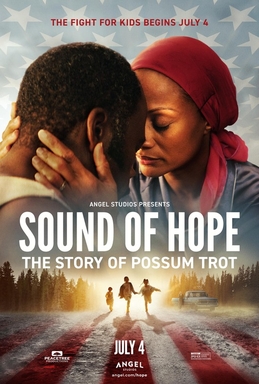
Possum Trot

I’m more than average familiar with Possums (the animal is common where I live in Missouri). A mom’s friend of mine once named her first born Possum – I was stunned. She passed away and both of her kids (the other one she named Lynx) changed their names according to their dad who I once met and stayed in contact with for awhile.

imdb says of this film – Sound of Hope: The Story of Possum Trot is the true story of Donna and Reverend Martin and their church in East Texas. 22 families adopted 77 children from the local foster system, igniting a movement for vulnerable children everywhere.

One reviewer described it this way – “not your typical feel good adoption story. This movie is raw, real, and gives you an honest glimpse into the harsh reality of the traumas that children in foster care have experienced and what it takes for families to love them to healing and wholeness. The power of love, community, and hope was a clear message throughout !”

However, in my all things adoption group (which got me to look at this upcoming theatrical release) wrote – “It looks like there yet another movie pushing the savior agenda within foster care and claiming that foster children are unwanted. I volunteer for an annual summer camp that provides teens in local foster care with 3 days of fun activities and the organization sent me an invite to go see this movie with volunteers as a group. The trailer gave me enough information to know it’s not something I can support. I’m assuming the goal of the movie is to tug on people’s hearts and make them want to “save” children by fostering/adopting.”

Here is that trailer –

One adoptee said – I want to crowd fund Jordan Peel to make a horror film of the exact same to opposite plot.

One former foster now adoptive parent noted – LINK>Angel Studios is also heavily involved in the Tim Ballard/OUR drama. I wouldn’t support anything they make anyway. blogger’s note – so I went looking, as I suspected they are known for making “Christian” movies. I also looked up LINK>Tim Ballard and he was associated with the Operation Underground Railroad. Unfortunately, I do believe that we once watched LINK>Sound of Freedom with Jim Caviezel on dvd. He portrays Ballard.

One adoptee added –  “I would be curious though to know what gets classified as neglect. I feel like that’s a catch all phase that isn’t applied equally. Obviously, no kid should be abused. How does this actually support kids ? I feel like this will just piss people off without providing real concrete action to change lives. Adding, I just wanna see a movie/read a book from an adoptee that centers them.”

The Now Way

LINK>Adoption Birth Vlog example
MaryJane Lance – once again in pursuit of a child

Blogger’s note – This post is from an adoptee and is about children who are adopted and exploited on social media. The adoptee’s post is below –

Documenting the adoption journey has been an integral part of the overall adoption story. At one time the creation of lifebooks was meant to be a way of helping the child understand what it meant to be adopted. It served an important purpose to ensure that the child’s sense of self was rooted in their adoption..

Once social media became the established way of capturing our lives, lifebooks became obsolete in favor of blogs and vlogs. We now live in the age in which people make a living as content creators, much to the thanks of YouTube. From traditional profile books and listings with adoption agencies, to creating their own websites, featured news coverage and social media hashtags, prospective adoptive parents sought out every possible way to let the world know their story in the hopes of being matched with a child for adoption.

Posting one’s life on social media is native in today’s culture. And because it has well-established ways to monetize online content, these prospective adoptive parents have learned the business. So what is the big deal? It’s normal to post content about your family, right? Many family-run Youtube channels get views in the hundreds of thousands and millions. Everyone loves feel-good reality content.

Right now, the media is shedding light on the failings of the adoption industry. The Netherlands, home to the Hague Adoption Convention, has officially closed its international adoption program (again). South Korea is undergoing a comprehensive investigation revealing hundreds of adoptions involving the falsification of records. Holt International is linked to many of these cases. Dillon International has shut down. The Russian president was accused of committing war crimes by kidnapping Ukrainian children and adopting them into Russian families.

The Asunta Case was in the top 10 Netflix series based on the true story of Asunta Fong Yang. In the U.S. the media is putting a spotlight on the Stauffer Family scandal (2020) involving the rehoming of the boy they had adopted from China. The Stauffers became a YouTube sensation story having monetized their adoption journey. So, what is the scandal exactly?

Tik Root wrote an eye-opening Time magazine article, “The Baby Brokers: Inside America’s Murky Private-Adoption Industry” published in 2021. Prior to that was the Reuters report, “The Child Exchange” exposing the Yahoo child rehoming groups published in 2015. Last year, the media descended on the issues and ethics of child influencers. The Stauffers are one of countless adoptive families who have taken to social media monetizing their adoption journeys effectively exploiting Huxley for profit.

Exploiting children is nothing new, neither is adoption. So, where does the Stauffer Family fit into this picture? Why is this a big deal?

Here’s the adoptee’s perspective:
The adoption industry has reached critical mass and has been developing new ways to sustain it’s multi-billion dollar operation. No longer a taboo subject conducted through back doors held in secrecy only priests could hear, adoption has saturated virtually every level of society. In the confusion and chaos of a divided media, social opinion, subplots found in the DC and Marvel universes, K-Dramas, and TV shows, sports, gold-winning olympiads, tech leaders, musicians saying they will adopt a child, and celebrated family reunions on Good Morning America, the adoption industry is free to carefully and gradually change its course with little attention or resistance.

Issues from the current adoption system become course correction for the industry’s next leap forward into the already multi-billion dollar surrogacy market. With all of this attention on the adoption side of the industry, the surrogacy market grows virtually unnoticed. Children like Asunta Basterra and Huxley Stauffer (formerly known as), are victims of a known corrupt, exploitative industry. They are commodified and dehumanized in the name of adoption. They are bought and sold in a child trafficking scheme to later be disposed of or “rehomed” once their use has run out.

Despite the ongoing efforts of investigative journalists to expose these truths, the adoption industry has proven its power of propaganda ensuring people remain ignorant, confused and brainwashed at the expense of children’s lives. We must continue making every effort to send a clear and unified message to stop this crime. Stop commodifying and exploiting women and their children for profit. There are now 9 million adopted people in the U.S today. Our numbers are going to grow exponentially in the coming years. We have taken a stand against violating our rights. We have taken a stand against being stolen, kidnapped, and trafficked. And now we are taking a stand against being made into disposable people.

Cabbage Patch Adoption

An adoptee has a request – Looking back on Cabbage Patch Kids as an out-of-the-fog adopted adult hits me different than it did when I was a kid. I’m interested to hear what your thoughts are on CPKs — then and now.

blogger’s response – I remember them but I don’t think I ever thought about the adoption part even though both of my parents were adoptees.

There were over 50 comments. I’ll only share a few –

I never really connected the dolls with adoption issues per se, even though I knew there were adoption certificates but as a child I just legit thought they were just babies grown on a little cabbage farm, so they didn’t have parents. another one replied –  I’m with you there! I still remember the day I found out they didn’t grow on a baby cabbage farm. While it’s an amusing memory now, 7/8 yr old me didn’t think so. But wait !! Actually, they do. There is a cabbage patch farm you can go visit, where they are born from the mother cabbage! It’s kinda cool.

From the website story about how LINK>“it began in a cabbage patch . . .” – The Bunnybee led the way and Xavier followed. Bunnybees were flying all around sprinkling magic dust from the crystals onto the cabbages. Rows and rows of cabbages were everywhere. But, there was something different about them. Xavier blinked his eyes and squinted at what he thought was movement among the cabbage leaves. Xavier moved closer and soon could see that there were lots of small kids and babies sleeping and playing among the cabbages.

blogger’s note – found this “Pack the ‘Kids™ up for a trip to the new BabyLand General® Hospital in Cleveland, Georgia, voted one of the Travel Channel’s Top Ten Toylands. Beautifully situated in the North Georgia Mountains, this Southern Style home filled with Cabbage Patch Kids will capture the imagination of your entire family.”

Maybe I won’t include any more adoptee perspectives because I also found this sad story related to the dolls.

The dolls were originally invented by a Kentucky artist named Martha Nelson Thomas. Martha first started making them in the early 70s, and would “adopt” them out to family and friends. The dolls eventually caught the eye of Xavier Roberts, a Georgia man who ran a gift shop. After Martha denied him permission to sell her dolls, he stole the design and began making his own versions.

Xavier’s dolls, which each had his signature printed on the ass, became wildly successful over the next few years. Their popularity reached its peak in 1983, when shortages of the dolls over the Christmas period led to mini-riots in toy stores across the country. Through all this, Martha didn’t make a single penny from her creation.

In this video, we travel to Kentucky to meet with friends and family of Martha, and hear how the Cabbage Patch craze affected her life. We also traveled to Maryland, to meet Pat and Joe Prosey, who believe they have the largest private collection of Cabbage Patch Kids on the planet.

Maybe just say NO to a Cabbage Patch Doll for your own living adoptee.

The Regret Never Ends

Sharing the feelings of one birth mother today –

I dropped my son I parent off at school yesterday, and switched to my playlist for the drive home, on shuffle, as per usual, cause I like to not know what’s coming on next, and My Little Love by Adele came on as I pulled into my driveway. This song typically makes me cry, so not unusual that I started to, especially with this weekend upon us and how many feelings come with Mother’s Day, as a 2x mother of relinquishment, who has had two miscarriage and is now a parent to one, and with the fact that “Birth Mother’s Day” is giving me full ick this year, the cry turned into a bawl.

And I found myself yelling in my car that she didn’t deserve what I gave her.

I’m so…I don’t even know, sad mad? Angry and heartbroken? Over twenty years ago I gave her two pieces of myself and they celebrate her this weekend, typically relegating me to today, the day before, and I’ve come to realize, she didn’t deserve any of it, she didn’t deserve to raise my babes, and it makes my whole body hurt and my heart ache to have not realized these things until my kids were adults and I can’t do a damn thing about it.

This is the first Mother’s Day weekend since I cut their adoptive mom out of my life last year and I feel like I’m in mourning extra this year, as now that I’ve experienced life without her the last seven months, I’m realizing I gave way more than she ever did, she got way more out of our “relationship” than I did, and, in the end, she still made me feel like I owed her more, and that’s who my kids celebrate as their mom, in my place, and I hate it so much. Can we just skip this weekend all together?

Falsehoods Are Common

A CPS lawyer is arguing that her clients (social workers) didn’t know that
you cannot lie in court in order to take a parents’ children away from them.

This came up in a thread where someone questioned – The mother was 19, they put her age as 16. I was 17 when this was dated, but this family wasn’t made known to me until March, 2018. 6 months into the pregnancy after being excluded prior. I am just wondering why her age isn’t what it actually was and if anyone has any ideas as to why she was listed as being younger? The dates are also listed differently.

I don’t really know the answers to this specific situation but I saw this behavior back in the mid-1930s in the surrender papers prepared by Georgia Tann related to my mom’s adoption. The ages of my genetic maternal grandparents were deliberately misrepresented as were the occupations of my grandparents.

It was noted – There’s quite a few court cases on YouTube where child protection workers were caught lying and forging documents to the courts or injecting themselves into families. There are so many lawsuits.

One person noted – The information packet my sister received also had false information like this. I believe this is a common practice in adoption. It was supposed to contain her identifying information and it was this bizarre package of lies and it was literally redacted in a lot of parts. I had no idea things like that happened in adoption until she showed me her redacted information package of lies and she told me how common it actually is for information to be falsified. It makes it more difficult for the adoptee to get to the truth/find their biological families.

One youth/family counselor wrote – When working with kids who are involved with Div of Children and Family Services (in Illinois specifically) I’ve experienced my kids caseworkers and the supervisors changing constantly. I really believe a lot of the records that are kept are incomplete and false because of high staff turnover rate, low oversight, rampant unchecked bias, and pure laziness on behalf of a lot of the workers. They care a lot less about the paperwork being true and more about it matching whatever case they are arguing to the judge. It’s maddening and makes it difficult for EVERY entity involved to know what is even going on. That is absolutely insane, and a very clear example of how harmful it is that these adults (Child Protective Services workers/shady adoption agencies) simply don’t care to make sure the information is truthful or correct for the kids’ sake at ALL. The paperwork serves them, not the kids. None of it serves the kids.

An advocate notes – They just flat out lie and there was actually a case about it in California, I believe where they argued the right to lie. While some cases may be due to understaffing, a lot of it is just flat out corruption. They want that Title IV funding (LINK>Title IV-E – Federal Payments for Foster Care and Adoption Assistance) and they have to destroy families to get it. It always shocks me when people act like CPS/DHS/Adoption agencies aren’t corrupt. Because they are. Systematically. It is insane how many families have told me stories like this. It is absolutely a product of how the system is set up.