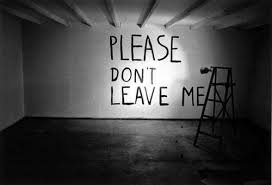
One Reason Why . . .

Today’s story from adoptionland –

Tonight our 9 year old daughter (we adopted her this year from foster care, has been in foster care since she was 4) was preoccupied and withdrawn at bedtime and I asked her if she wanted to talk. She said that she was just so confused and trying to understand why her birth mom “didn’t care about her enough to keep her and why she didn’t want her or love her”…and by the end of that sentence she was sobbing.

I just held her, rubbed her back, and held space for her. I’m just asking for…idk…input about how to best help her process her feelings? I did assure her that her birth mom DID and DOES absolutely love her, want her, and care about her, but at the time she was struggling so much with drug use (she had already been told all about the drug use in previous foster homes and we don’t know if she’s currently using or not) that she wasn’t able to take care of her and her brother.

After four years the mother consented to our daughter and her biological brother being adopted (before they came to us) but her rights were going to be terminated by Department of Child Services, if she didn’t consent regardless. We have open communication and contact with biological grandparents but not with the birth mom at this point (per her own request and the recommendation of the grandparents) but my hope and prayer is that some day we are able to establish a relationship with her and facilitate communication between her and the kids.

She has been in therapy for years (albeit a new therapist with every new foster care placement/move) and has been seeing a great one for EMDR (Eye Movement Desensitization and Reprocessing) for the past year. We see therapy as a healthy part of life and don’t really see an end date so to speak.

How do I help our daughter process the feelings of being unwanted, unloved, and abandoned by her birth mom?

One woman who responded wrote this sad perspective honestly – it never really helped me to hear that my birthmom loved me. I don’t think she knows how to love me as an adult and as a child it confused me more until I realized “oh yes, when people love you, they abandon you. That’s love”.

Another answered this with –  I have zero adoption experiences to relate to, but when I left my very abusive ex-husband I remember the moment I realized he loved me as much as he could, and it just was not enough for me anymore because it hurt and it was unhealthy. I don’t know how that could be discussed with a child about a parent, but I just wanted to say I relate to what you are saying about having confusing feelings about loving someone who hurts you.

One insightful commenter wrote – If she isn’t with a adoption specialized therapist, now is the time to find one. It is good she feels safe to communicate with you.

I have also used this Nuggets video with my kids. At the end I will ask them- do you think the bird could focus on her baby chicks in her nest? What was she able to focus on? Do you think she wanted to stop feeling bad? Do you think she would have wished she could do it over again and make different choices?

That’s sometimes how people who have addictions feel. They can’t focus/take care of/on us because they are trying not to feel so rotten. But they often wish they could do it over again, and love on their chicks and tell them that. Drugs cloud your world. It is hard though to not feel angry or sad or jealous that mommy couldn’t see you. That is about her, how she feels about herself because of the drugs. Maybe we can write mommy a letter and tell her how you feel. Or here is a picture of mommy, I can leave you alone and you can talk to her and tell her how upset you are. And then I will be right here for you when you are done. Because this is hard.

I also have scheduled to do something fun the next day to ensure they had some sort of time of short mental relief. Even if it was to go to the playground. Get that out.

Then, there was this sad personal story – I was adopted at 3 but my mom is very much still a drug user. And I’m dealing with the same issue with my husband’s niece even though she was adopted within her family. She’s 14 today and because I’m adopted also she comes to me and asks me why her mom doesn’t want her but has other kids. My mom had 4 total and all 4 of us were taken away. My 3 brothers were able to stay together with their dad whom tried to adopt me but due to my health from her drug usage, I needed more attention than he could give me (being the oldest) and having 3 younger boys to care for. My adoptive parents had the funds and support to care for me.

Yet another suggested this perspective – trying to make sense that the bad parts are bad. And sometimes there are bits of good. And those moments are the parent too. However brief.

And I do agree that honesty is always best as this adoptive mother shared – It is really important to REALLY hold space, and NOT give in to the urge to try to make her feel better. In reality you don’t know if her mom loves and cares for her – you are not in contact, and the mother has never told you this. We WISH it is so, we hope, we assume… But it is not truthful to pose it as a factual reality. Also, as another response said, if someone “loves her and cares for her” then love and care means abandonment and no contact. Not a great association. I wish you all the best. Sitting and grieving with another’s pain is so hard. Try not to turn away, or deflect with untruths to try to make her feel better. It hurts, that sucks – and nothing you say can make it better. But she needs to feel it, and grieve it and process it.

And another adoptive mother shares this as well – My kids were older adoptees and for good or bad have many answers others do not. I refuse to fabricate and project to “fill in gaps” and “make them feel better.” Saying the “right” thing often comes off as bullshit. My best answers are “I don’t know.” “How can I help?” And sometimes, “Let’s punch something!” Negative feelings are valid and don’t need amelioration; they need to be expressed. It’s our natural impulse to want to make people feel better, but sometimes, it’s only through feeling bad, that we can begin to work through and heal. This is their journey; I’m on the sidelines supporting not dictating plays.

Tainted Love

I heard this old song from the 70s and immediately, I thought of current events, our president and his supporters since the election was called in favor of the opponent. However, as the lyrics kept playing in my head, the words of so many adoptees who’s perspectives I have read for the last 3 years started forming themselves into the truth of this situation.

The sad truth is that no matter how much love an adoptive parent has to give the adopted child there will always be something tainted about it. Not that the adoptive parent could do anything to prevent that or that their love is not genuine and heartfelt.

An adoptee begins with a serious strike of perceived abandonment at the start of their relationship with the adoptive parent. It matters not the reason really – it is a fact. The parent who gave birth to them isn’t there. This happens as well in divorce when the two parents that were one entity for the child split apart. I know that one. Coming of age in the early 70s, I bought into the idea of male/female equality and that extended itself in my own perspective to the two parents. Either one was equal to the other. In a divorce, it really didn’t matter which parent raised the child, both were equally the parent. And it is true as far as it goes.

Since learning about adoption trauma and the impact of mother loss, I have had to accept that it really wasn’t the same. Not that I can change the way things came out but I do understand the errors in my own thinking at the time. I remember clearly explaining to my daughter regarding the divorce – you still have a mother who loves you and you still have a father who loves you but we won’t all be living together anymore. That was true as well. What I didn’t conceive of at the time was that she would not grow up with me but with him. And decades later, come to find out, it wasn’t the good situation that I thought it was but I was never told until very recently.

So, back to adoption. Fact is, an adoptive parent is never going to be the same as the parents the child was born to. There are many issues. There is the feeling that if the adoptee doesn’t live up to the adoptive parents expectations, they could send the child back. While that may sound like a far-fetched worry, it actually happens and causes what are called second-chance adoptions. So there is an insecurity and people-pleasing aspect to being an adoptee.

If the parents actually have biological children AND adopt, there are differences in the parental response to the children, even if that is NOT the intention of the adoptive parents. It has been explained as – your house is on fire and you can’t save ALL of your children. Which would you chose ? Your biological/genetic child or the one you adopted ? Sadly, the answer is obvious excluding issues that preclude a choice at all.

And I have read more times than I would like to admit to that adoptees can be difficult to love and tolerate. They act out. They often do not understand themselves why they behave that way. These are deep seated psychological issues. It is always recommended that a trauma/adoption informed therapist be employed to salvage a truly destructive and dangerous situation. Yes, it gets that bad sometimes.

Now you know why those words “tainted love” inspired me to write today’s blog.

Messed Up Perspectives

“My door is open for your baby (even at 3 a.m. I’ll take your baby so this doesn’t have to be a choice)(and I won’t say your name) I will even go to a different state to save your baby. Just message me if you don’t want your baby…

I look at the news. I recently saw the negligence suffered by a 4-Month-old boy. The baby passed away from lack of nutrition and dehydration. They also found worms in his diaper… another baby was rescued from a plastic Walmart bag… many babies dying… one child’s death due to negligence is too much!

For anyone who has a baby or is pregnant with one who doesn’t want the baby because you are too far along to get an abortion… my door is always open! Before you decide that the only option is to throw your baby in the trash, don’t do it! Bring that baby to my door. I promise, no questions will be asked or judgments passed. I’ll give you my address and my family will welcome your baby with open arms.

Note: leave the birth notice sheet so I can register your baby as my baby

Also hospitals, police stations and firefighters are other options. Leave the baby in the right hands and get away. No charges will be filed. Strength is to ask for help. The strength is to put another one before yourself. There’s help.

This is a safe place for your baby.

Okay, so let’s break down what isn’t right about the thinking here.

First, this isn’t a way to promote yourself to adopt a baby.

Second, if you found a baby or a woman left her baby on your door step you have to call the police. You will get in trouble with the law if you don’t. Especially going to a different state with the baby that’s kidnapping.

Third, you will not adopt the baby. The baby will go into foster care and the police will investigate the situation. Not every baby was abandoned by their mom or mom doesn’t want her baby. Sometimes babies are kidnapped or mom is in danger. Sometimes they find dad to take the baby because he might not know he has a child.

Fourth, infanticide is very different. Women who kill their babies often have mental health issues and disassociate from their pregnancy. These women wouldn’t necessarily leave their babies at a fire station or your home.

Fifth, I see a lot of these posts focus on the person writing it, not the baby or mom. Safe haven laws don’t exist for people to adopt. Safe haven doesn’t mean no questions asked or adoption. It doesn’t mean no charges filed or the parents will not be found. Safe haven isn’t a way for a hopeful adoptive parent to adopt. Asking a woman to list your husband as the father or register her baby to you is fraud.

Abandonment Part 2

In you haven’t already read the previous blog – Abandonment Part 1 – you will need that context to fully understand today’s follow-up.

So after sharing her backstory, the woman’s story I shared added these questions.

Am I delusional for wanting to adopt ? Is adoption really that bad? How can I help my daughter ? I know her situation is different than an adoptee but some of the feelings seem to be the same. Do I continue to push for a relationship with her dad’s side of the family, when they don’t seem to want to be involved ? I’m ok with continuing to push but sometimes it seems it hurts my daughter more.

Now for some selected responses (there were 109, indicating a “hot” topic in my adoption community) –

The very first one totally surprised me. Consider looking into uterine transplantation so you and your husband can have your own child which is what you really want…there are several programs out there…. To which, the woman actually admitted that she was already researching that. Who knew ?

The next one is one I had thought of myself as I read this woman’s story – Help your daughter before you even consider adding a stranger’s child to your family dynamic. Beyond that, the thought occurred to me that that daughter who it is said wants a sibling, will soon be mature enough to leave the house. If this couple adopts an infant or young toddler, the adoptee will be there “alone” for many years, unless they adopt more than one (and I’m not in favor of adoption – just to be clear).

Along these same lines of thinking came the next response – Don’t you think bringing in another child would add to your daughters issues ? Can you and your marriage handle two traumatized children ? I’d stop thinking of adding a child until you get your other child in a healthy mental state.

And back to a core issue –

My first thought is to continue to foster a relationship with your daughter’s paternal family….but, accept that it may not be what you want it to be at this time. Guide your daughter to this acceptance too. Their lack of reaching out is disappointing….do you know why they have become so resistant to contact ? When you reach out to them, do they respond ? The biological dad appears to be entwined with a woman who is controlling and dismissive. He made a choice and it is disappointing. You and your daughter can be upset with him….and hope one day he might change his mind about contact. Both can be true. His lack of effort for contact appears to be about his lack of control and maturity to deal with challenging issues.

The last thought I’ll share is from the same woman as above but it really appeals to me and at the end, I’ll share why.

Adopting? No. Your focus needs to be on your daughter and supporting her during this time to adulthood. Once she is independent and on solid footing you could revisit foster/adopt. Whenever I read about a teen struggling with emotional stuff I turn to horses. I suggest you investigate therapeutic equine programs in your region. It has been shown that being around horses (caring for them, riding, therapy with them) can be a positive in a teens life. Furthermore, it is a confidence builder!!!!! Handling and riding a 1000 lb animal is exhilarating and mood boosting….offers a child new adventure….promotes focus and maturity….and helps balance brain chemicals. If not therapeutic horse program….find something she enjoys with a passion & go after it with gusto – it will give her joy and purpose and conversation, and balance the difficult emotional stuff her paternal family offers.

My youngest sister was a lifelong horsewoman. It may have been working with horses that actually pushed her decline into mental illness (most likely paranoid schizophrenic though it is obvious to me now that the vulnerability and even a few brief psychotic episodes may have occurred earlier in her life, I’ve also been told that she was sexually exploited by an older man at the horseback riding stables she frequented, so there is that too). Anyway, eventually, she was placed in a locked facility for observation but our parents were of the mind they lacked the financial resources to keep her there.

When she was scheduled to come out, I tried calling many such places. She was so good at caring for horses and I thought perhaps we could get her employment with access to a therapist but no one was willing to take on the liability – sadly. I had thought that getting her away from people and the craziness of society and putting her with horses might bring her back out of it. Now, she has been in that state for over a decade and admitting that the life she believes she lives as a secret agent is a delusion is probably no longer possible for her to accept. I will always worry and care about her.

Abandonment Part 1

Abandonment is a common, often unconscious, trauma issue in adoptees. However, there are many variations. When parents divorce and when one or both of the original parents of a child re-marry, it is not uncommon that the parental relationship of either the mother or the father suffers. More often it is the father, in my case in the mid-1970s, I was the absentee parent though I never thought of myself as having abandoned my precious daughter, she may have had experiences of that because at times I was not accessible to contact due to the partner I was living with.

Today’s story isn’t my own but another one where the abandonment behavior was even more extreme and where the original mother is considering adoption because her daughter wants a sibling (and many times after my divorce, my daughter did express to me the same desire for a sibling). In her case, her dad remarried a woman with a daughter from another marriage and then they had a daughter together. A yours, mine and ours family. Quite a bit later in time, I conceived and gave birth to two sons with my current, second husband. Here’s that story from a woman who has joined my adoption community.

I’m a 38 year old married woman with 2 children. 20 year old female stepdaughter and 14 year old bio daughter who is not my husbands. I had a hysterectomy 4 years ago and was devastated. My hubby and I don’t have any children together. I was invited to join this group because we have seriously been considering adopting. I wanted to learn as much as possible before starting the path.

Here’s my realization and questions. My 14 year old is amazing. Her bio dad and I had a great relationship until he met his now wife. Once she came into the picture his relationship with his daughter started to change. He saw her less and less, skipped visits, ignored me, etc.. then one day when she was 9 he served me papers and wanted to sever his custody. I was shocked. I didn’t understand. His daughter loves him. We never had any issues, I didn’t even ask him to ever pay a dime in child support. I have only just wanted them to have a relationship. There was no talking to him or his wife. They made up their minds. I refused to sign off.

They wanted my hubby to adopt my daughter and even though my hubby would do it in a heartbeat I refused. I wanted my daughter to be able to go to him one day and have the right to know why he gave her up. So I have full legal and physical custody and he has waived all visitation. I told my beautiful 9 year old girl that her daddy just needs a break from being a dad. That he has a lot of work and I’m sure he will see her soon. Yes I lied. I was hoping he’d come to his senses. So far he hasn’t.

During this time I have really tried to foster a relationship between his parents and my daughter. Also his sister and her kids. I WANT my daughter to have a relationship with her family. They really don’t know why he did this other than to say that his wife doesn’t want kids, did not like that her husband and I were on friendly terms (I am happily married, just wanted a good relationship with my ex for the sake of my daughter), and gave him an ultimatum… his daughter or her. He chose wrong.

Over the years the relationship with his parents has gotten strained. I have to be the one to reach out to them. They always mail birthday and Christmas gifts but don’t ever ask to see her. I offer to drive her to their house and pick her up, really everything to keep peace and give her a good relationship with them. She’s 14 now and hasn’t seen her dad since she was 9. She does know the truth behind his abandonment now.

We have been through YEARS of therapy. A suicide attempt, partial hospitalization, etc… she has a lot of issues in regards to this. We work on it every day and let her know how much we love her and that she is not worthless. She just doesn’t know/understand why her dad would do this to her.

Anyway, that’s my back story. So here is my other situation. I want to adopt. I want to be able to give a loving home to a child who may not have one currently. I’m not delusional in thinking that adopting is this sunshine and rainbows situation where there wouldn’t be trauma and issues. Seeing how my daughter has suffered with abandonment I have some insight.

Yes, I know it would be different because my daughter still has one bio parent where an adopted child possibly wouldn’t. I’m also completely open to having an open adoption where the child would have a relationship with their parents. I’m not going to lie to you all and say there isn’t a selfish component here. Yes, I DO want a child. I have grieved over the loss of being able to have any more children biologically. I just feel that we have a lot of love and support to offer.

I am going to leave it here for today and not go into her questions or the responses because this is long enough.

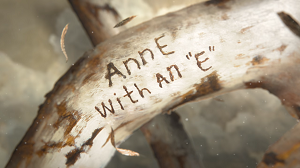
Anne with an E

I’m only vaguely familiar with Anne of Green Gables.  Anne has been a bona fide cultural icon for over a century, ever since Canadian author L M Montgomery first debuted her in 1908.  Anne was orphaned as a baby and in care until age 12 when she is adopted. She experienced a lot of abuse during her time in care.

We don’t have commercial TV or streaming in our home – while we do have internet the limited allowance and expense when adding onto that prohibit our streaming anything beyond a few youtubes and that costs us a lot as it is.

However, I was reading about this version in the all things adoption group I belong to and I became intrigued.  The woman who brought this to my attention describes it as – “a very dark portrayal, with depiction of trauma, flashbacks, so many feelings of abandonment, as well as the difficulties her adoptive parents have in relating to her.”  That was enough to get me looking into it.

Another woman said –  “The first season is the darkest with the flashbacks. As it goes on, it’s not as dark but continues to deal with a lot of other feelings that people not raised by biological family go through.  I honestly loved this series. I felt it was a more honest portrayal of children who were in foster care and adopted than I have seen in a long time.  This show helped my children discuss the hardships that adopted people or abused/traumatized people deal with.”

Another woman said – “The other depictions we saw didn’t seem to focus so much on the trauma. We listened to the book as we drove up to Prince Edward Island and there’s definite evidence of her struggles in there, but this series took it to another level and made it real and made the connections very visible of past trauma, fear of abandonment, and the inner world she creates to get away from it all.”

Vanity Fair had a review of this series.  They note that in the first episode Anne with an E graphically depicts, via chilly flashbacks, the years of abuse Anne sustained before she came to live with the Cuthberts.  While Anne likely did suffer some torment during her tenure with the Hammond family, Anne with an E ramps up the trauma by having Mr Hammond die of a heart attack brought about by beating the tar out of poor Anne.

This version retains some of Anne’s eccentricities—a fierce imagination and intricate fantasy life, as well as a fondness for high-flown language.  This is an Anne with PTSD.  Anne of Green Gables endures as a cozy story that reveals the resiliency of the human spirit through small-scale, domestic victories and setbacks, as well as the mundane, everyday tragedies of human life.

In episode 4, the town’s minister takes misogyny to its historic depiction because Anne doesn’t want to go back to the school where she has continued to suffer abuse.  He tells her adoptive mother – “This problem is easily solved.  If the girl doesn’t want to go to school, she shouldn’t go. She should stay home and learn proper housekeeping until she marries. And then the Lord God said, ‘It is not good for man to be alone I shall make a helper for him.’ There’s no need for her to bother with an education. Every young woman should learn how to be a good wife.”

The Vanity Fair review complains that “Anne with an E seems to think Anne’s triumphs are only noteworthy if she’s continually told she can’t succeed, when in fact her unfettered brilliance needs no such clumsy opposition.”  Judge for yourself.  Don’t know if I’ll ever watch this but maybe if it comes out on dvd.  Clearly, it spoke to the wounded hearts of the people in the adoption group I belong to.


The Wounds and Heartbreak of Adoption

In truth, we have to integrate our wounds into our understanding of who we are and what we are really capable of so that we can be whole human beings.  Only from there can we begin the process of healing the brokenness, the broken-heartedness within ourselves that is then the foundation for beginning to heal that in our larger society.
~ Rev Angel Kyodo Williams, Radical Dharma

Many adoptees seek a reunion with their original families to heal the woundedness and heartbreak of being abandoned (the adoptees’ perspective) by their original parents. If it goes well, it goes a long way toward healing those wounds. If it goes badly, the wound becomes further infected unless the adoptee can somehow reflect upon the disappointing experience to find wholeness within their own self.

An adoptee may ask –

When do I get good enough so that my despair goes away ?

Who will love me enough when they see who I really am ?

The shadows and vague memories of what happened to me are hard to sit with. Why do I keep running everyone away ?

Will I suffocate in the silence of my lack of identity, my lack of knowing the origins of my birth ?

What use does crying my tears really do for this pain in my heart ?

Systems of power and abuse depend upon not acknowledging the suffering they cause.  The rainbows and unicorns version of all the good adoption does fails to acknowledge the suffering that the adoptee experiences and the suffering the mother who gives up her child carries the rest of her lifetime.  Often that suffering is so painful, the mother will reject her child, who is only seeking to reconnect with her, because the mother fears being rejected by her child, when her child knows the reality of the mother that gave birth to her.

It is a horrendous cycle of unending suffering in many cases.  My heart breaks for the reality.  And I really don’t have answers, only empathy and compassion for the entire situation.

Am I capable of enduring suffering, facing martyrdom ?
And alone ?
Again the long loneliness to be faced.
~ Dorothy Day

The Sad Fact of Rehoming

A women writes – “I used to be a support coordinator for developmental disabilities, I saw people put their kids in medical group homes. I can not fathom making that choice. Of course parenting kids with medical needs is hard, that’s what home health support is for. If you’ve made money off your parenting, you should actually parent.”

One person quoted from an article: “With international adoption, sometimes there’s unknowns and things that are not transparent on files and things like that,” James Stauffer said. “Once ‘H’ came home, there was a lot more special needs that we weren’t aware of and that we were not told.”

The issue is a couple that re-homed their adopted son because he had developmental disabilities.  The woman quoting the article commented on the issue – “Oh, cool, I wasn’t aware that if you gave birth to a kid, you have some sort of guarantee that nothing ever will happen in that human’s life that will require more than Leave it to Beaver style parenting. Sorry this kid didn’t fit into your perfect little mold and dared to be human and have problems. Hope none of your kids born to you biologically get into a car accident or come down with a serious illness or get cancer. Cause clearly you’ll just dump them, too??? Yeah. Probably not.”

Another woman wrote – “My daughter has autism and she’s the most honest, compassionate, nature loving and sweetest girl I’ve ever meet. I’m glad that I changed my mind on adoption and even more so now!”

I remember my OB having “the conversation” with us about “possibilities” such as this woman shares –  “I was told my oldest had Down Syndrome. (Mind you we were teenagers when we found out we were expecting.)”

“My OB said it does not matter how I feel about it but you do have options. I remember looking at her and asking what she meant. And she said well some people cannot handle finding out their child is not ‘standard’ so they chose to abort or put up for adoption. I remember how crushed she looked telling me.”

“I said nope absolutely not. He is us and we are him and we will figure it out together He was perfect and healthy and no Down syndrome.”

“My aunt fostered special needs kids, I fell in love with “J” and wanted my parents to adopt him. He was so fun and loving and knew no meanness or sadness. I won a young authors contest writing about him. I’ll always hold him close to my heart.”

When I was a teenager, I volunteered at a summer camp for special needs kids.  It was a life-changing experience for me.  My husband and I have worked for most of our business life together in various aspects associated with our county’s sheltered workshop.

To Imagine Disability Otherwise, a TEDtalk. This woman was my sister-in-law in my first marriage. Her child was born before my daughter with severe birth defects. This led her to make disabilities her life’s work. She has a strong belief in supporting conventional lifestyles for disabled people.  I am proud to know where her life took her.

Sadly Needing A Second Chance

It is a sad fact but more common than anyone could ever wish for that some adoptions fail and give rise to attempts to have someone else re-adopt a child.  What are the issues?

Audrey recently turned 8 and was adopted domestically when she was 6. She has a very strained, competitive relationship with the other child in her adopted family and has failed to form a healthy attachment to the family. They feel that Audrey will be happier, calmer and more likely to attach to a family who has no other children in the home under the age of 12 (a mature child). A family who is familiar with attachment issues would be a plus! Her family is willing to consider a single parent without other children to take their focus away from Audrey, as well as a 2-parent family.

Yet, consistently, these second chance “offerings” go on to describe the child in very glowing terms.

Audrey’s adopted parents describe her as creative, funny, sometimes stubborn, flexible, playful, helpful and artistic. She enjoys playing with Barbies and practicing her mothering skills with her Baby Alive doll. She is a great helper when she is one-on-one with someone. She likes to help with food prep, cleaning, and laundry, and likes to hear that she’s done a good job. Audrey has a set bedtime and falls asleep quickly. She sometimes likes to read a book before lights out.  She enjoys painting and often uses drawing as a means of communicating her feelings and memories. She loves to play board and card games. She can be very funny and sweet, especially when she feels that you are giving her your full attention. She is a mix of girlie-girl and tomboy—she likes dressing up in her mom’s high heels and wearing makeup; but will also play in the mud, climb trees and ride her bike. She is keen on taking off her training wheels soon so she can ride her bike independently!

Audrey has a good imagination and can easily entertain herself. She is a fairly organized child—neither messy nor overly organized. She likes to read and is currently enjoying Fancy Nancy and Dr. Seuss books. She is obsessed with unicorns, so if she can find a book about those, she will read it too! Her favorite foods are peanut butter, pizza and Indian food. She has a different favorite color for every day! Her adopted mom will say, “What’s your favorite color today?”

Audrey is in the 2nd grade, does very well in school and loves school. She gets mostly A’s. She loves the structure, the friends, the teachers and the social aspect. She attends a private school with a small teacher/student ratio and she thrives in this environment. Math is her favorite subject; she enjoys the challenge of solving problems. Her teachers report that she is “a joy to have in class—wonderful and sweet!” She is a worker bee—she loves to be given a task to accomplish for the teacher.

What is it about adoption that causes such a contradiction in the description of a child’s personality?  It is the fact that trauma is present and too often adoptive parents don’t want to work through the core issues with patience and tolerance.  They only want harmony and so if an adopted child is seen by them as the source of disharmony in their family – then they will seek to be rid of the child as though human beings can simply be thrown away if their use is not satisfying.