Schizophrenic Identity

Lately, I’ve been reading a book with the title Healing the Split by John Nelson MD. The subtitle is “Integrating Spirit Into Our Understanding of the Mentally Ill”. It is a topic of interest to me. I’ve not read very far into the book and it is a lot of pages but it seems worth the time. I give it approx an hour a day but am taking notes, so I don’t go very far but do have lots of time to digest the content.

This caused me to think about how it might apply to adoptees. It cannot be anything but a bit odd to know you were born to someone else – not the parents who are raising you. And that you had a different name at birth but the people who are raising you changed your name. You have no knowledge of genetic relatives, no natural mirror of your self that most people have their whole lives and no family medical history of any quantity or quality to convey to your doctor.

It is known that adoptees in general suffer more mental health effects than the general population and given what I just outlined above, it can come as no surprise that an adoptee might. While genetics always contributes some vulnerabilities in any person, adoptees have slightly more mental health problems – such as depressive symptoms, bipolar disorder, higher neuroticism and loneliness. Researchers into the impacts have found a slightly elevated genetic risk of depression, schizophrenia and neuroticism among adoptees. Personally, I believe this could be the result of conflicted feelings in the gestating mother. Not that I am a scientist or expert in this field.

The adoption of children may be a fundamental method of building families for some couples. However, adoptees often face subsequent adaptive challenges associated with family stress at the time of birth and during the adoption process. How could it be otherwise ? The main factor in these effects is both environmental and genetic.

It is known that psychiatric disorders, which includes depression, anxiety and schizophrenia are, to varying degrees, inheritable. The good news is that adoptees in a study reported being happy and satisfied with their lives. When compared to the general population, the study participants were more likely to be male, to smoke, have less education, attain a lower income, and to experience more stressful life events. 

Research found that genetic risk and adoption are both predictors of psychiatric problems. So, importantly both adoption and genetic risk contribute only a small amount to the individual differences in mental health. It does not surprise me that there are many factors that contribute to the development of mental health problems in any individual. It is also not surprising then that adopted children may face both special environmental and genetic risks which lead to adjustment problems and potentially mental illness. 

When A Mother Doesn’t Want Her Child

Today’s adoptee story (not my own story) – Being adopted is having all of your rights stripped from you the minute you take a breath and become declared a human. That was my case. I had what is called a closed adoption.

There are many reasons people put their child up for adoption. Some women are coerced. Some have their children stolen. Some women just don’t want their child. That was me.

My birth mother named me, wrote down all of the non-identifying information about herself, her parents, my birth father, and his parents, and walked away to a fresh new start.

She had the child. She didn’t abort it. Many would agree that makes her a born again saint.

This is where no one wants to admit that the child will probably have many problems. That child was just given your epigenetics. The feelings you had while pregnant are now part of who that child is.

As for my mother, we have to assume things because she never used her words because she would never meet me or speak to me. She made me a living abortion by never having any responsibility or accountability for her actions. I assume she felt shame, guilt, embarrassment, anger, anxiety, and depression.

When my sisters and cousins met me, everyone said how much I looked like my mother and acted like her.

My emotions were torn.

I had always wanted to look and act like my family. Now I do, and the woman that gave birth to me is also the cause of my trauma. I wanted to rip my DNA out of my body.

I had suffered from anxiety, depression, and suicidal ideation for most of my life. I had been given Prozac and Zoloft when I was in my mid 20’s. They caused me extreme pain in the back of my head. I came off of them and took an overdose of muscle relaxers one night and ended up in a psych ward over the weekend.

When I met with the doctor, he told me the prescriptions would have killed me had I not stopped taking them. I was having a reaction because of my low blood pressure. I did see a psychologist a few times after that, but it wasn’t any help.

I spent many years thinking I was fine after that. I had also learned not to let anyone really know what I was thinking after that.

I was in what is known as the “fog.” I went on with my life. I worked a lot and drank. I thought if I just stayed ahead of what I felt, I was ok.

The pain from adoption is there, whether we admit it or not. You can see it in people’s eyes when you say you’re adopted. They get that I’m sorry look. With so many people aware of the trauma adoption causes, you would think it would change.

As for me, I am doing everything I can now, to fix my epigenetics from my mother.

Romanian Orphanages

An estimated 100,000 Romanian children were in orphanages at the end of 1989, when communism ended. The high number is linked to the pro-family policies pursued by former dictator Nicolae Ceausescu. In 1966, the regime banned abortions and contraceptives to keep the population from shrinking after World War II.

I remember hearing about these children long ago. Today, I was reminded of them by a link to an article in The Atlantic. Maybe what I heard about was the public execution by firing squad of Romania’s last Communist dictator, Nicolae Ceaușescu, who’d ruled for 24 years. This past Christmas day was the 30th anniversary of that execution and the discovery of his network of “child gulags,” in which an estimated 170,000 abandoned infants, children, and teens were being raised. Believing that a larger population would beef up Romania’s economy, Ceaușescu had curtailed contraception and abortion, imposed tax penalties on people who were childless, and celebrated as “heroine mothers” women who gave birth to 10 or more. Parents who couldn’t possibly handle another baby might call their new arrival “Ceauşescu’s child,” as in “Let him raise it.”

To house a generation of unwanted or unaffordable children, Ceauşescu ordered the construction or conversion of hundreds of structures around the country. Signs displayed the slogan: the state can take better care of your child than you can.

At age 3, abandoned children were sorted. Future workers would get clothes, shoes, food, and some schooling in Case de copii—“children’s homes”—while “deficient” children wouldn’t get much of anything in their Cămin Spital Pentru Copii Deficienţi, a Home Hospital for Irrecoverable Children. The Soviet “science of defectology” viewed disabilities in infants as intrinsic and uncurable. Even children with treatable issues—perhaps they were cross-eyed or anemic, or had a cleft lip—were classified as “unsalvageable.”

In an era devoted to fighting malnutrition, injury, and infection, the idea that adequately fed and medically stable children could waste away because they missed their parents was hard to believe. Their research led to the then-bold notion, advanced especially by John Bowlby, that simply lacking an “attachment figure,” a parent or caregiver, could wreak a lifetime of havoc on mental and physical health.

In the decade after the fall of Ceaușescu, the new Romanian government welcomed Western child-development experts to simultaneously help and study the tens of thousands of children still warehoused in state care. Researchers hoped to answer some long-standing questions: Are there sensitive periods in neural development, after which the brain of a deprived child cannot make full use of the mental, emotional, and physical stimulation later offered? Can the effects of “maternal deprivation” or “caregiver absence” be documented with modern neuroimaging techniques? Finally, if an institutionalized child is transferred into a family setting, can he or she recoup undeveloped capacities? Implicitly, poignantly: Can a person unloved in childhood learn to love?

In the fall of 2000, the Bucharest Early Intervention Project was launched. The BEIP study would become the first-ever randomized controlled trial to measure the impact of early institutionalization on brain and behavioral development and to examine high-quality foster care as an alternative.

The researchers employed Mary Ainsworth’s classic “strange situation” procedure to assess the quality of the attachment relationships between the children and their caregivers or parents. In a typical setup, a baby between nine and 18 months old enters an unfamiliar playroom with her “attachment figure” and experiences some increasingly unsettling events, including the arrival of a stranger and the departure of her grown-up, as researchers code the baby’s behavior from behind a one-way mirror.

100 percent of the local community kids living with their parents were found to have fully developed attachment relationships with their mothers. That was true of only 3 percent of the institutionalized kids. Nearly two-thirds displayed contradictory, jerky behaviors, perhaps freezing in place or suddenly reversing direction after starting to approach the adult. 13 percent were deemed “unclassified,” meaning they displayed no attachment behaviors at all.

As early as 2003, it was evident to the BEIP scientists and their Romanian research partners that the foster-care children were making progress. Children taken out of orphanages before their second birthday were benefiting from being with families far more than those who stayed longer. The next year, the Romanian government banned the institutionalization of children under the age of 2. Since then, it has raised the minimum age to 7, and government-sponsored foster care has expanded dramatically.

Meanwhile, the study continued. When the children were reassessed in a “strange situation” playroom at age 3.5, the portion who displayed secure attachments climbed from the baseline of 3 percent to nearly 50 percent among the foster-care kids, but to only 18 percent among those who remained institutionalized—and, again, the children moved before their second birthday did best. The benefits for children who’d achieved secure attachments accrued as time went on. At age 4.5, they had significantly lower rates of depression and anxiety and fewer “callous unemotional traits” (limited empathy, lack of guilt, shallow affect) than their peers still in institutions.

Sadly, about 40 percent of teenagers in the study who’d ever been in orphanages, in fact, were eventually diagnosed with a major psychiatric condition. Their growth was stunted, and their motor skills and language development stalled.

My source for today’s blog has much more content. Can an Unloved Child Learn to Love ? by Melissa Fay Greene in The Atlantic.

Dear Adopted Child

Dear Adopted Child,

I see so many letters addressed to birth parents and hopeful/ adoptive parents. Again you’re left out. The most import part of this equation and yet you’re continuously left out.

I really fucked up, I went against nature, I altered your brain chemistry, and I’d go as far to say committed and act against humanity. Yet I am the one likely to get sympathy. While you internally struggle. People will mourn for me and chastise you for being “ungrateful.”

I reached out to the agency, I allowed them to strip your birth father of his rights, and I chose your parents. I allowed the opinions of strangers to seep in and convince me that I was not good enough. I knew in my gut that I was making the wrong decision, that this didn’t feel right. I selfishly thought of myself. How could I possibly be a single mother of two if your father left me? How could I provide the life you should have? As if the quality of life is measured in what physical possessions one owns. At the end of the day I selfishly said I was putting you first, when really cowardly I was putting myself.

When we found out your gender, I felt ecstatic and devastated. A girl, what I had always wanted. Yet I couldn’t find the courage to keep. I knew it was wrong when your adoptive parents did a gender reveal. I chose not to speak up, as if offending them would suddenly make myself undesirable. I broke down at home and doctors appointments. Instead of viewing that as a sign that I was making the wrong choice I got prescribed anti depressants.

At your birth I asked your adoptive parents to be there. When I checked in I begrudgingly asked if the hospital had my adoption plan. There were so many times I could of said no. I could of not chose this path to take. I let them whisk you away after birth, I let your adoptive parents keep you in their room. I could’ve demanded you be brought back to me, thrown a fit that this wasn’t right or acceptable. I chose to selfishly crumple into myself, to say that our pain was worth it so two strangers could be happy. I didn’t advocate for us, for you.

I signed the paperwork, I didn’t make a peep during my revocation period, I congratulated your adoptive parents on the down fall of our family. I let them strip you of your names. I let you become a legal stranger to us.

Nothing can undo what I’ve done, or the choices I made. At the end of the day I’ve caused your pain. Your trauma was hand delivered to you by me. I’m sorry.

I can’t rectify this wrong, nothing I say or do can fully heal it. I can promise I won’t leave you again, and that everyday I’m learning, I’m listening to grown adoptees so I can be the me you will need.

With Regrets,

The Furious First Mom

Women Behind Bars

Women’s incarceration has increased 800 percent over the past thirty years. The incarceration rate for black woman is double that of white women. Woman are more likely than men to be imprisoned for drug-related offenses. 62% of women in state prisons have minor children, many of whom are forced into foster care or left with relatives who scarcely have the financial resources to care for them.

The separation of families is now widely understood as a human rights crisis also at the Mexican border, yet comparatively little attention has been paid to the destruction of black families in the era of mass incarceration. One in four women in the United States has a loved one behind bars, and the figure is nearly one in two for black women. When men are locked up, the women who love them are sentenced too. They suffer from social isolation, depression, grief, shame, costly legal fees, far-away prison visits (often with children in tow) and the staggering challenges of helping children overcome the trauma of parental incarceration. When loved ones are released from their cages, it is often women who are faced with the daunting task of supporting them as they struggle and often fail in a system rigged against them.

~ from The New Jim Crow by Michelle Alexander

According to The Sentencing Project, my state of Missouri had the 3rd highest rate of female imprisonment in the United States in 2017. Thirty-eight percent of youth incarcerated for status offenses (such as truancy and curfew violations) are girls. More than half of youth incarcerated for running away are girls.

Case in Point

Dorothy Gaines’s life changed when Alabama state police raided her home for drugs. Police found no evidence of Gaines having possessed or sold drugs, yet federal prosecutors charged Gaines with drug conspiracy.  Gaines was a former nurse and devoted mother living in Mobile, Alabama. A self-described “PTA mom,” she always brought snacks to the football field where her son played on the team and her daughter was a cheerleader.

She did not know that her then-boyfriend was dealing drugs. Though the state dropped all charges, federal prosecutors charged Gaines with drug conspiracy eight months later – charges that she disputes to this day. She refused to plead guilty or provide testimony against other defendants, and so, was convicted and sentenced to serve 19 years and 7 months.

She says, “My son jumped in the judge’s lap at sentencing and asked not to take away his mother.” Leaving her children, Natasha, 19, Chara, 11, and Philip, 9, parentless, Gaines was accompanied by marshals to federal prison – her first time on an airplane.

Dorothy explains, “I was always a mother that never, ever went anywhere without my children. I missed taking my children to the park, going to their school, while I was in prison. They wrote me and told me those were the days that they missed, too. Phillip and Chara’s father died when they were two and three. That’s why my children were so distraught: because all that was taken away.”

Thankfully, in December 2000, Gaines received a commutation from President Bill Clinton. Gaines’s advocacy work includes using her own resources to help youth see their incarcerated parents. “My going to prison has not been in vain,” said Gaines. “I will fight until everything has been changed.”

Two Adoption Related Fantasies

I really wasn’t in the mood to write during my daily session at my deceased in-laws cabin.  I suppose it is the death of Ruth Bader Ginsberg last night that has me de-motivated and distracted.

I thought – how to honor her life then.  I remembered seeing “STEINEM” in large letters at the top of the spine on a book in my mother-in-law’s bookcase.  I was aware of her as a feminist when I was coming of age in the early 1970s.  My mother in law was a lifelong feminist.  So I thought, I won’t try to write, I’ll just read a little today.

I chose the essay – Ruth’s Song (Because She Could Not Sing It) – because.  It should be obvious why.  I read this –

My ultimate protection was this: I was just passing through, a guest in the house; perhaps this wasn’t my mother at all. Though I knew very well that I was her daughter, I sometimes imagined that I had bee adopted and that my real parents would find me, a fantasy I’ve since discovered is common.

~Gloria Steinem, from her book Outrageous Acts and Everyday Rebellions

It is common for adoptees to have fantasies about their natural mother finding them.  My mom wanted to find her mother but when she got the tiniest bit close to that goal, she was told that her mother had died a few years earlier.

Much of this essay is about Steinem’s mother’s mental illness.  I can relate.  My youngest sister is seriously mentally ill.  And my mom had this obsession that each of her daughters was mentally ill.  We each ended up in an institution at least briefly.  I was dragged in by my dad for observation.  After about 3 days, I was released as I was not a threat to anyone except perhaps my own self.  My parents were never willing to financially invest in mental health care for their children, even when it was warranted.

I also know my mom once seriously thought about committing suicide.  I don’t know what the trigger was but she changed her mind because she actually did care about her daughters.  At least, that was what she told me.

Adoption can have a psychological toll.  It is known that adopted children are more likely to struggle with emotional or behavioral disorders ranging from depression, anxiety, and ADHD to suicidal thoughts and substance abuse.

Adoption is the difficult process of gaining a child by removing him or her from another family.  There is trauma associated with separating a child from the mother in whose womb the baby developed.  Children are commonly unable to vocalize or even identify what they are feeling and so it is unlikely they will ask for help.

Symptoms of mental illness in children can be difficult to identify. Signs of emotional or behavioral disorders, like outbursts and sleep issues, are common in many stages of development without adoption as an added issue.  As a parent, pay attention to age-inappropriate emotional responses, as well as symptoms that last longer than normal or don’t improve regardless of continued efforts.  Seek professional help.


Feeding With Love And Good Sense

My topic today started out being about foster parents who resent feeding their foster children.  Of course, not all foster parents are that way but it seems that some are.  It appears that some people foster solely as a source of extra income.

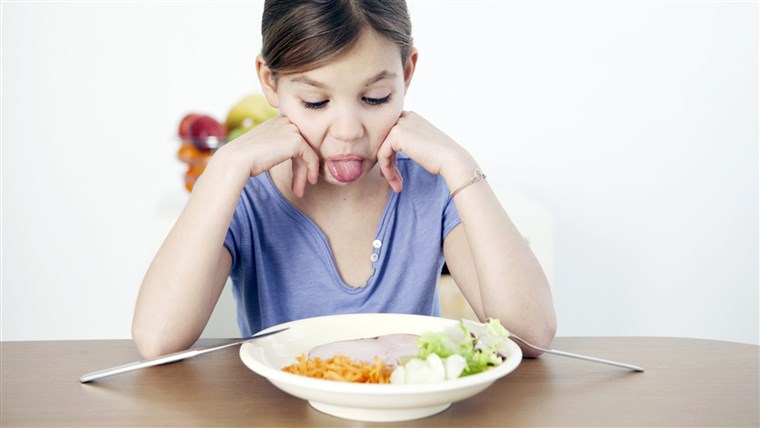
It is well known that foster children often have some very serious traumatic effects that cause them to display a variety of behaviors.  Picky eating has been linked with psychiatric problems, including anxiety and symptoms of depression.  The mental problems sometimes worsen as the picky eating becomes more severe.  That untouched plate and look of disgust on your child’s face at mealtime might be a sign.

My older son was eating Salmon at 18 mos of age.  This amazed my parents.  At the time, I had read a book by Ellyn Satter titled Child of Mine: Feeding with Love and Good Sense.  Because of what I read in this book, when a family friend made a separate meal for her daughter, I thought it wrong but kept my judgement to myself.  Satter advises – It is a parent’s job to put good quality food on the table.  It is the child’s job to eat.  And mostly I agree.

Except that along came my younger son.  I believe he has texture issues.  He also developed car sickness at only a few months of age, which we eventually treated with a preventive tincture of ginger and peppermint with definite success.  There is no way you can force this kid to eat anything he doesn’t want to.  He’ll simply throw up and we have so much experience with those outcomes in the car, we have no desire to cause more of them.

Even so, he is healthy and according to his pediatrician of normal weight.  It’s hard to tell with kids while they are growing up.  They bulk up and then shoot up.  I do my best to provide him with nutritious meals – even though some could be questioned by dietary purists.  And I do cook for him separately.

Even so, my kids are not traumatized.  I simply cannot understand any person willing to take on the challenges of children who have ended up in foster care and then take a hard-hearted attitude towards feeding them.

Related statements from a foster parent –

“When you get a child that comes to you and their family was on food assistance etc. – which I have nothing against but when they say ‘I don’t eat leftovers’, it really erks me. We had to use assistance many years ago and the amount they give you, was more than needed.  You could buy name brand everything and eat like kings.  I just said, ‘we don’t have that luxury, we have to pay for our food. So you’re going to have to get used to it.’ And its only maybe twice a week and definitely, I am not making something just for her.”

Some additional comments from a couple of foster parents to the above –

“We’re not personal chefs. Prepare them for the real world.”

“Foster kids eat what they get. I serve the same thing until they eat it. If they don’t like it, they can go to bed hungry.”

Personally, I do NOT believe ANY child needs to go to bed hungry, if it can be avoided.  Period.  In my family, no one is forced to eat leftovers but thankfully, my husband thinks they make a great, quick lunch.  One final note – this country has an obesity epidemic and the causes are multiple.  However, I do believe that allowing children to only eat what they feel like eating, teaches them to read their body signals.  In fact, in our household, only the main meal is served as a family.  The other times we eat, is when our hunger drives us to seek satisfaction.

Words Of Encouragement

Life changes, never forget that it can.

It is perfectly acceptable to wish for better days to come.

There is nothing wrong with wishing for better income, more stability, and an ability to give MORE.

Years from now, you may realize something startling –

Your wish came true.

You will realize that those “better days” that you once could only dream of are now your reality.

It can be so easy to feel discouraged and just want to give up. Keep your hopes for better alive. Dreams can come true.  I know.  I’ve seen my own come true in amazing ways.

I remember one Christmas with my daughter when she was just a toddler. I bought the tiniest tree. I painted little wooden ornaments. I bought her a little bra and underwear set, patent leather shoes and lacy socks and one of those children’s microphones she could sing through. We didn’t have much but we did have a Christmas. Life is full of ups and downs. Change is constant and can be a source of hope when nothing seems hopeful at all.

HUGS of encouragement for you, who in a season that can feel so discouraging and depressing for a lot of people, must somehow carry on.  You are never truly alone in difficult moments.  Others are struggling and some are overcoming those same kinds of struggle.

Separation Trauma

This subject comes up frequently in adoptee groups.  Also mentioned is RAD – Radical Attachment Disability.

Children are seriously harmed when they are separated from their parents. There has been quite a bit of research that proves that harm.  When a court becomes involved in a child welfare case, it is important to balance the harm of removing a child with the risk of abuse or neglect that the child faces by remaining in the home.

When that is apparently necessary, it is still important to preserve a child’s relationship with their family of birth.  The effects of separation from their original parents on children is always devastating.  Such children are at increased risk for
developing heart disease, diabetes, and even certain forms of cancer.  Even when children are in the care of parents who may not be able to meet their needs, they still organize their behaviors and thinking around these relationships and go to great lengths to maintain them.

Other ways that separation from their original family can impact children includes developmental regression, difficulty sleeping, depression and generally acute stress.

The younger a child is when they’re exposed to the stress of separation, the more likely it is that they will have negative health outcomes caused by dysregulation of stress hormones and a response to that flood of them.  That dysregulated stress response can lead to architectural changes in the brain.

Family separation may also lead to long-term chronic medical conditions like cardiovascular disease, hypertension, obesity and decreased longevity.

A Never Ending Sorrow

Adoption is trumpeted today as a universal good thing. For infertile couples who wish to have a family, it is a solution. For religious organizations and fellow-travelers, agencies that use the mantle of religion – it is STILL a BUSINESS.

What is rarely talked about is the long-term mental and physical effect of surrendering a baby to others for adoption.

One expects short-term grief.

What of the long-term lasting impact – 4, 25 years later ?

We go on, have lives and live a code of silence with a toxic aftermath continuing.

Mothers compelled to search for their children are prone to lowered self-esteem, anxiety and worry about the child, required more doctor visits and attributed their physical and mental problems over the years to the adoption.

Many had parental pressure to surrender their child to adoption.

They had little or no emotional support during the pregnancy and relinquishment.

There were few or no opportunities to talk about their feelings related to the surrender and there was a lack of social support for their depression.

We should care more about mothers and their children as a society.