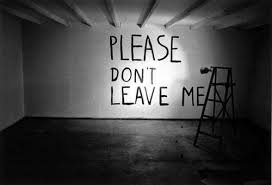
Abandonment Part 1

Abandonment is a common, often unconscious, trauma issue in adoptees. However, there are many variations. When parents divorce and when one or both of the original parents of a child re-marry, it is not uncommon that the parental relationship of either the mother or the father suffers. More often it is the father, in my case in the mid-1970s, I was the absentee parent though I never thought of myself as having abandoned my precious daughter, she may have had experiences of that because at times I was not accessible to contact due to the partner I was living with.

Today’s story isn’t my own but another one where the abandonment behavior was even more extreme and where the original mother is considering adoption because her daughter wants a sibling (and many times after my divorce, my daughter did express to me the same desire for a sibling). In her case, her dad remarried a woman with a daughter from another marriage and then they had a daughter together. A yours, mine and ours family. Quite a bit later in time, I conceived and gave birth to two sons with my current, second husband. Here’s that story from a woman who has joined my adoption community.

I’m a 38 year old married woman with 2 children. 20 year old female stepdaughter and 14 year old bio daughter who is not my husbands. I had a hysterectomy 4 years ago and was devastated. My hubby and I don’t have any children together. I was invited to join this group because we have seriously been considering adopting. I wanted to learn as much as possible before starting the path.

Here’s my realization and questions. My 14 year old is amazing. Her bio dad and I had a great relationship until he met his now wife. Once she came into the picture his relationship with his daughter started to change. He saw her less and less, skipped visits, ignored me, etc.. then one day when she was 9 he served me papers and wanted to sever his custody. I was shocked. I didn’t understand. His daughter loves him. We never had any issues, I didn’t even ask him to ever pay a dime in child support. I have only just wanted them to have a relationship. There was no talking to him or his wife. They made up their minds. I refused to sign off.

They wanted my hubby to adopt my daughter and even though my hubby would do it in a heartbeat I refused. I wanted my daughter to be able to go to him one day and have the right to know why he gave her up. So I have full legal and physical custody and he has waived all visitation. I told my beautiful 9 year old girl that her daddy just needs a break from being a dad. That he has a lot of work and I’m sure he will see her soon. Yes I lied. I was hoping he’d come to his senses. So far he hasn’t.

During this time I have really tried to foster a relationship between his parents and my daughter. Also his sister and her kids. I WANT my daughter to have a relationship with her family. They really don’t know why he did this other than to say that his wife doesn’t want kids, did not like that her husband and I were on friendly terms (I am happily married, just wanted a good relationship with my ex for the sake of my daughter), and gave him an ultimatum… his daughter or her. He chose wrong.

Over the years the relationship with his parents has gotten strained. I have to be the one to reach out to them. They always mail birthday and Christmas gifts but don’t ever ask to see her. I offer to drive her to their house and pick her up, really everything to keep peace and give her a good relationship with them. She’s 14 now and hasn’t seen her dad since she was 9. She does know the truth behind his abandonment now.

We have been through YEARS of therapy. A suicide attempt, partial hospitalization, etc… she has a lot of issues in regards to this. We work on it every day and let her know how much we love her and that she is not worthless. She just doesn’t know/understand why her dad would do this to her.

Anyway, that’s my back story. So here is my other situation. I want to adopt. I want to be able to give a loving home to a child who may not have one currently. I’m not delusional in thinking that adopting is this sunshine and rainbows situation where there wouldn’t be trauma and issues. Seeing how my daughter has suffered with abandonment I have some insight.

Yes, I know it would be different because my daughter still has one bio parent where an adopted child possibly wouldn’t. I’m also completely open to having an open adoption where the child would have a relationship with their parents. I’m not going to lie to you all and say there isn’t a selfish component here. Yes, I DO want a child. I have grieved over the loss of being able to have any more children biologically. I just feel that we have a lot of love and support to offer.

I am going to leave it here for today and not go into her questions or the responses because this is long enough.

Is It Really The Same ?

It often comes up in the adoption group I am a member of whether it is really possible to love adopted and genetically related (biological) children equally.  Many doubt it and some from experience.

A woman who gave up a child for adoption writes –

I am not sure if I could love an adopted child the same. I mean, it would be a child so of course I would love them. But love them as my own? I can’t honestly say yes.

People always point out how my son and I are so similar. Yes we look alike. But he has my anxiety, my compassion, my sensitive nature. If I had adopted a child, if people told me we were so much alike, some part of me would think they were just pacifying me.

I can’t imagine being adopted and having these thoughts. I struggle with the fact that I have a family member out there that I sentenced to these thoughts. I wish there was a lifelong revocation period for real.

An adoptee responds –

I used to laugh at people when they said me and my a dad look so much alike- we don’t. I used to love to say- that’s funny cause I’m adopted, just to make them feel silly. Somehow it made me feel better to discredit the mention of resemblance.

One woman made the point that an adoptive parent simply has no “biological” obligation to the adopted child.  That is hard to argue with.  A legal obligation certainly.  A financial obligation, one would hope.  I know my mom had told me her adoptive parents couldn’t disinherit her and her adopted brother because Texas law forbid that.

One woman notes she has seen this in spaces where the adoptive parents can remain anonymous. She says, adoptive mothers who have both biological and adopted children do validate the inequality, especially if put in the context of a theoretical question like – “if the house was on fire…who would you save ?”..  Certainly, adoptive parents who have only adopted children do believe they love them the same as if they were their “own” offspring but when the comparison is there in reality ?, that clarifies the issue.

A very honest example matches my illustration above –

I was raised by my natural mom but we are very different people. My next sibling and her always clicked in this way that she and I never did and it definitely f**ked with me.

I don’t know if it’s related but the entire narrative about how you’re supposed to love an adopted or fostered kid from the getgo “like they were your own” always struck me as really f**king bonkers and super gross and violent towards the kid in question.

Like, you’re strangers. They don’t even know if they’re gonna like you yet, leave them the alone and let them figure out their feelings in their own time and space.

One more, as an adoptive parent I would never speak for all adoptive parents, but in my experience as both a mother to a biological and an adopted child, it is NOT the same. There is more nuance, more complexity, more layers. I have often likened it to a marriage commitment. I choose to love her no matter what. Sometimes the feelings are there; sometimes they’re not. But I would also say that it’s true for every relationship. True love is a commitment and a daily choice.

Be sure to choose love regardless of whether the child is adopted or your own.  Love is a state of being and how one acts towards another person.  Love does not need a genetic relationship to exist.  If the love isn’t there, find yourself a good therapist !!

What is C-PTSD ?

Most of us have heard of PTSD but until this morning, I didn’t know there was a more severe version called Complex-PTSD.

Most people who have looked at adoption very closely already know that trauma is an aspect of having been surrendered to adoption for most adoptees.  I’ve become so steeped in it that I can recognize effects now in statements made by an adoptee that to them a vague issues they still don’t know the source of.  This lack of awareness occurs most often in teenagers and young adults.  Most mature adoptees have worked through many of these and may have had some counseling or therapy to help them uncover the underlying emotions and possible sources of these.

Complex PTSD, however, is specific to severe, repetitive trauma that typically happens in childhood – most often abuse.  On the surface, both PTSD and C-PTSD both come as the result of something deeply traumatic, they cause flashbacks, nightmares and insomnia, and they can make people live in fear even when they are safe.

The very heart of C-PTSD – what causes it, how it manifests internally, the lifelong effects (including medically), and its ability to reshape a person’s entire outlook on life – is what makes it considerably different.

PTSD typically results from “short-lived trauma”, or traumas of time-limited duration. Complex PTSD stems from chronic, long-term exposure to trauma in which a victim has limited belief it will ever end or cannot foresee a time that it might. This can include: child abuse, long-term domestic violence, being held in captivity, living in crisis conditions/a war zone, child exploitation, human trafficking, and more.

The causal factors are not all that separates PTSD from C-PTSD. How their symptoms manifest can tell you even more. PTSD is weighted heaviest in the post-traumatic symptoms: nightmares, flashbacks, hyperarousal/startle response, paranoia, bursts of emotion, etc.

C-PTSD includes all the symptoms of PTSD as well as a change in self-concept. How one sees themselves, their perpetrator, their morals and values, their faith in others or a god. This can overhaul a survivor’s entire world view as they try to make sense of their trauma and still maintain a belief that they, and the world around them, could still be good or safe.

When an adult experiences a traumatic event, they have more tools to understand what is happening to them, their place as a victim of that trauma, and know they should seek support even if they don’t want to. Children don’t possess most of these skills, or even the ability to separate themselves from another’s unconscionable actions. The psychological and developmental implications of that become complexly woven and spun into who that child believes themselves to be — creating a messy web of core beliefs much harder to untangle than the flashbacks, nightmares and other post-traumatic symptoms that come later.

The effects are usually deeply interpersonal within that child’s caregiving system. Separate from both the traumatic events and the perpetrator, there is often an added component of neglect, hot-and-cold affections from a primary caregiver, or outright invalidation of the trauma, if a child does try to speak up. These disorganized attachments and mixed messages from those who are supposed to provide love, comfort and safety – all in the periphery of extreme trauma – can create unique struggles.

Credit for this blog and for the beginning of my education in this new concept goes to Beauty After Bruises.

Clueless

“Hey guys.I’m a single woman who’s plan was to start applying to adopt/foster in my state. Sad story was that my social worker said that I wasn’t allowed to receive any government help like 0. I have to have a job which that’s mandatory at least with this agency. And I’m not complaining about having a job either or I’m still planing on working at some point the thing that caught me off guard was her response to government aid must be 0. Yes all the way from food stamps to government funded apartments that’s a huge No, causing disqualification to apply. I spoke with my therapist and since I have bipolar 1 she told me that it would be best to postpone the plan of adoption/foster care all together for now, my therapist even said that she does not want me to feel sad if at the end foster/adoption care is not an option for me even if I truly wanted to make a difference, since the agency is strict on keeping government out of the picture.
Any thoughts?
Advice?
Does this sound fair or unfair ?”

It’s hard to know where to start . . .

Not surprisingly, came this satirical response –

Um. Totally unfair. You should totally be jobless and on government assistance because you’ll get PLENTY of money to live on saving these kids from their parents on government assistance. If you take like 8 kids at a time you’ll make serious bank, and BONUS if you take some older kids with the younger kids you never have to do anything because the older kids can do all the cooking and cleaning and diaper changes! Yay! Also, f**k this bitch.

More to the point, came this one –

Someone sounds like they need to get their own life in order before, erm, “helping” (themselves to someone else’s children)…

And even more to the point –

Yes, it is very reasonable. FYI, they may also want to talk about your being bipolar, review your meds and/or want to talk to your therapist or get a statement from them that they recommended you would do well with foster care. Here’s the thing: all of the kids in foster care are going through big time trauma. They need someone who is financially and emotionally stable to help them through it.

In a lot of cases, poverty and mental illness have a lot to do with why the kids came into care. It’s kinda hypocritical to take them out of that just to place them right back into it. For example, the case plan might say that the parents have to get a job to get the kids back. So in the meantime, they stay with you, but you don’t have a job?

It’s great that you want to help, but what do you mean by foster/adopt? If you’re getting into foster care to adopt, just don’t, you won’t have the right mindset and it will not be good for you or the kids. What do you mean by your agency keeping government out of the picture? Foster Care =government, so I’m not really understanding that.

And finally –

She should talk to all these birth families who lose their biological children for bipolar disorder and because they were seeking mental health help and were in poverty or disabled. This post makes me angry because it seems so out of touch with reality.

Foster kids are not a prop or little adventure to embark on. You can’t just (or SHOULDN’T just) be a foster parent because you randomly decide you “love kids” and “it’s your calling.”

You can’t just decide you’re gonna be a foster parent when nothing in your life is in order to do so.

Mental health, unemployment, needing to rely on the system….. these are some of the causes for kids to be removed from their biological parents.  Our society would be better off extending the services and finances to the natural families so that they can keep their own children.

Please Don’t Make Me Stay

This is how an open adoption can become really tricky.  I read this morning about a situation where the biological child is allowed to sleepover at their original parents home every other weekend.  What is happening is that at the end of the weekend, the child does not want to return to the legally adoptive parents.

Now the adoptive parents are mad and are blaming the biological parents for the situation.  They are insisting that the child choose between the two sets of parents.  If the child does not, they will sever the adoption.

After the adoptive parents insisted on the child being returned early, which the biological parents complied with, now the child is screaming and crying that their biological parents should come and get the child.  That this child doesn’t want to be there anymore.

Not surprising, the adoptive parents are blaming the biological parents for causing the child to behave that way.  They also blame them for now breaking up what had been in their own minds a happy home.

It is clear that they ALL need to go into therapy. The child should be seeing an adoption trauma competent therapist.  The adoptive parents also need to see a therapist to help them understand the child’s behaviors and triggers.  While in therapy, the adoptive parents should also work through their own fears and insecurities.  And the biological parents should be in therapy as well.  It is difficult to explain to their child why they cannot legally come and get her without the adoptive parents permission.

These are the kinds of wounds MOST adoptees are all too familiar with.  Once the child is surrendered (not a decision that child made for their own self) and the adoption is finalized, then the living with this situation begins and for the adoptee, the processing of this reality will consume their entire lifetime.

That is why the adoption group I am a part of is always counseling mothers and/or their partner to try to raise their child before taking this permanent step (and as the case above reveals – can be terminated – which is how some children end up in second adoptions, which just compounds the trauma for the child).

Adding Insult To Injury

We are living through uncertain times.  Many people feel un-moored from their usual sources of confidence that all will be well.  Children who have been adopted or are in foster care find their worlds upended.  Lacking consistency, routine, and an overall feeling of stability and security as their personal worlds are being shaken up again by the Coronavirus and the efforts to contain the spread of that infection.

Schools have closed and public community events through which diverse people usually bond are cancelled.  Instead of joining together in common experience we are forced to isolate ourselves from one another.  At least we have modern technology to keep us connected while maintaining a safe distance from one another but life is not routine or what we would conventionally expect as we wake up each day.

For those parents who still have jobs to go to while their children are alone at home, the struggle can be significant.

One of the responsibilities that foster parents face is transporting the children in their home to visitations with their birth parents and biological family members. Often times, visitations take place at child welfare offices, while other times, visitations may occur at public places, such as parks, restaurants, churches, and other public venues. Visitations are important as they help to maintain the relationship between both child and adult. Along with this, many foster parents have very strong relationships with the birth parents and during visitations, trust is built and children can grow and develop in a healthy fashion, as a result.

Yet, those public spaces are now closed to most of us in most locations throughout the United States.  And coming out of the usual wintertime season of colds and flu can complicate things because many of us have all had one thing or another since Thanksgiving and our immunity is generally low.  Essential services such as therapy sessions, drug counseling, and even court appearances have also been affected by Covid 19.

All families face difficulty at this time in our collective history and families with the additional challenges of trauma and regulations face an additional burden on top of the difficulties they face every day.  All families are concerned, and confused, looking for answers and receiving little guidance.  There is no school, foster care related visits are being cancelled, church services are cancelled, and generally all children are now isolated from the friends they depend upon in their everyday lives.  The challenge in an era of social distancing is physical, and tangible, but can’t be solved by throwing dollars at it.

Stay safe, be well.  Come together – though at a distance.  Keep the efforts to slow the spread of this virus going until the assurance that it is once again safe to have greater contact with our fellow human beings becomes more certain.  Patience is necessary and flexibility too.

Don’t Adopt

So for years you have been trying to conceive and after several miscarriages, you have decided there is only one way to get that baby you have been dreaming of – adopt one.  Just don’t do it.

I am the child of two adoptees and both of my sisters gave up children to adoption and for the last few years I have really gotten an education about what adoption does to people.  I belong to a group which discusses the reality of adoption among all the members of the triad – the original parents, the adoptees and the adoptive parents and the bottom line understanding is – please just don’t do it.

Your first order of business should be to let some time pass before you start thinking about adoption. It is very important that the feelings of loss and grief are given time to take their course. Realize that you may look at a child you adopt and think: What if?, or: I wish… or: would my own child look/behave/be different?  It is important that you work through these questions BEFORE any child is adopted. Seek the help of a therapist.

Then realize this – there are no positives for the baby or their mother in infant adoption. Pregnant women are targeted by agencies so they can make money from selling their babies. It’s an unregulated baby broker business with big money involved.  Among those who know (adoptees who are now mature adults) infant adoption is looked at as terrible because of the unethical practices that come with it.  Beyond that simple fact is the loss of the child’s natural family and true identity.

About the only idea that is acceptable would be adopting children who are in foster care whose parental rights have been legally terminated.  And even in this case the plan should be for an adoptive parent to do everything they can to keep some kind of relationship open for the child with the natural family in any way possible. Guardianship is preferred over adoption but many states won’t allow guardianship as a long term option.

Adopt someone who wants to be adopted, and is old enough (13 or older) to consent to adoption.  Adopt a legally available child from the foster care system.  Do not change their identity in any way.  Be sure you have complete medical records so they can live a more normal life as they mature.  Babies grow up.  The child you adopt will be grown very quickly but the damage you could do will last a lifetime.


Doing More Harm Than Good


It is recommended for those persons seeking separation related therapy that they seek out adoption competent practitioners.  Otherwise, an effort to address the wounds created by relinquishment – whether into an adoptive family or foster care – may cause more harm than do any good.

Many conventional therapists accept the “adoption is amazing” mentality and have not researched or studied the deep unconscious wounds that such persons have suffered.  One adoptee describes her personal experience this way – “I saw a therapist who shut down (and shut me down) any time I mentioned the trauma I had experienced in relation to adoption — both my own and that of my children. I wound up leaving therapy and haven’t gone back since.”

This is a personality based outcome – the therapist’s personality.  Another describes her good experience this way – her therapist was “absolutely amazing and had no experience in adoption at all, but she chose to research and learn.  I can’t thank her enough for helping me through some horrendous PTSD adoption memories.  It honestly all depends on the therapist and which ones are more likely to open to the reality or not.”

Those adopted in infancy are likely to experience pre-verbal trauma.  This is trauma that happened before the adoptee could speak/comprehend language. This is trauma held in the body but the sufferer is not able to verbalize the memories / put this into words – even as an adult – because their brain was not developed enough at the time the trauma occurred to make sense of the related emotions.

Some adoptees are diagnosed as ADD when they are actually PTSD and medicated as children.  This solution merely puts a band aid on the problem.

One horror story conveyed by an adoptee went this way – “I had a psychiatrist who locked me in a room, in the child psych ward with no interaction with anyone in order to ‘break’ me and force me to talk to him. Didn’t work. Further isolation of someone who already feels isolated.”

So one suggestion is to look for a therapist trained in trauma.  The truth is there isn’t one universal “type” of adoptee trauma.  If you wish to seek therapy, look for someone you connect with, that you feel heard by. Someone who is open-minded will be more effective than someone who shares your view of adoption. A good therapist will not allow their previous biases/perceptions to impact giving you solid therapy.